IBM’s Moonshot Ambition In Healthcare
This article is a part of our series Tech Giants In Healthcare. Previous titles included Amazon’s Dive Into Healthcare: A 2021 Update Is Apple Going […]

6 min | · Updated

This article is a part of our series Tech Giants In Healthcare. Previous titles included
- Amazon’s Dive Into Healthcare: A 2021 Update
- Is Apple Going Into Healthcare?
- Google’s Masterplan for Healthcare
- Microsoft Makes a 16-billion Dollar Bet On Healthcare
Take a deeper dive into what these companies aim for in medicine with our e-book, Tech Giants In Healthcare.
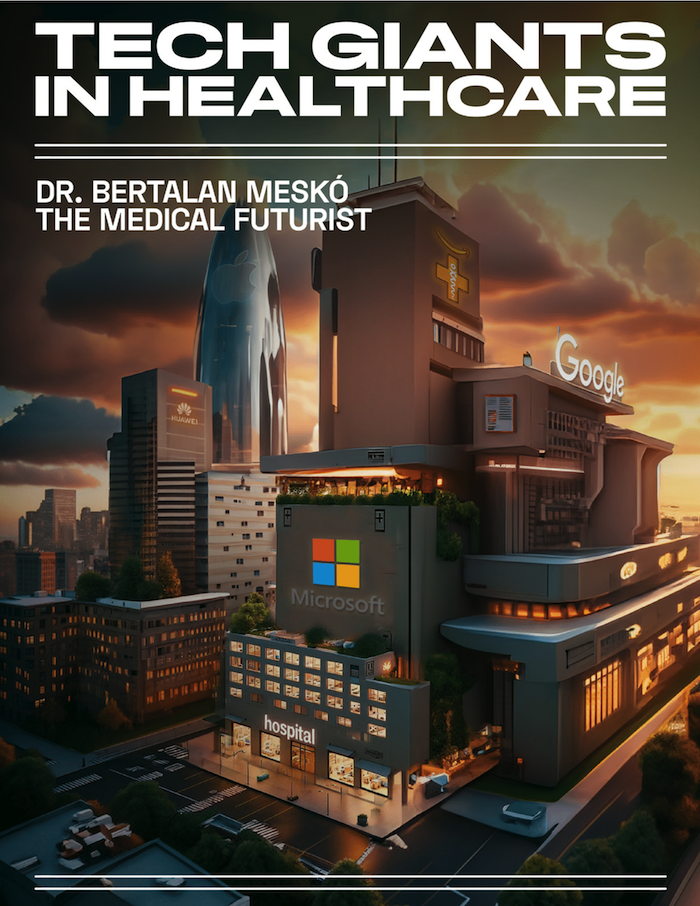
Tech Giants in Healthcare – Updated Edition
This comprehensive guide, Tech Giants in Healthcare, clarifies how and why big tech companies step into healthcare, and breaks it down from one market player to the other in what direction they are going, what tools they are using and what horizons they have in front of them.
Back in 2015, IBM’s previous CEO, Virginia Rometty famously said that IBM’s “moon shot will be the impact we have on healthcare.” Under the Watson Health banner, the tech company has been leveraging its expertise in cognitive computing to assist medical decision-making. In its wake, Watson Health attracted several partners and made a series of acquisitions to forge ahead of its vision.
But in recent years, the tech giant’s moonshot ambition seems to have waned. It faced management issues and had to lay off part of its Watson Health workforce in 2018. After four years of working on a mission “to eradicate cancer” that cost over $62 million, the MD Anderson Cancer Center severed ties with IBM Watson. In fact, over a dozen of its clients and partners stopped or diminished their projects. The health A.I. branch also received wide criticism following reports that questioned its diagnostic prowess while pointing out potential risks to patients’ safety.
Nevertheless, IBM still has some interest in the healthcare industry but recent developments indicate a change in trajectory in this field. Let’s look at those.
The Watson sale
The biggest healthcare news regarding IBM came early this year. In February, the Wall Street Journal reported that the company is considering the sale of its Watson Health arm. After having spent years developing the branch and having invested considerable resources into it, IBM abandoning these efforts altogether comes as a surprise.
In addition to Watson Health’s previous challenges and negative press, other reasons can be attributed to the decision. Even if the unit brings in around $1 billion in annual revenue, the WSJ’s sources say that it isn’t thought of as being currently profitable. The report also notes that exploring a sale might be “in part because physicians were hesitant to adopt artificial intelligence.”
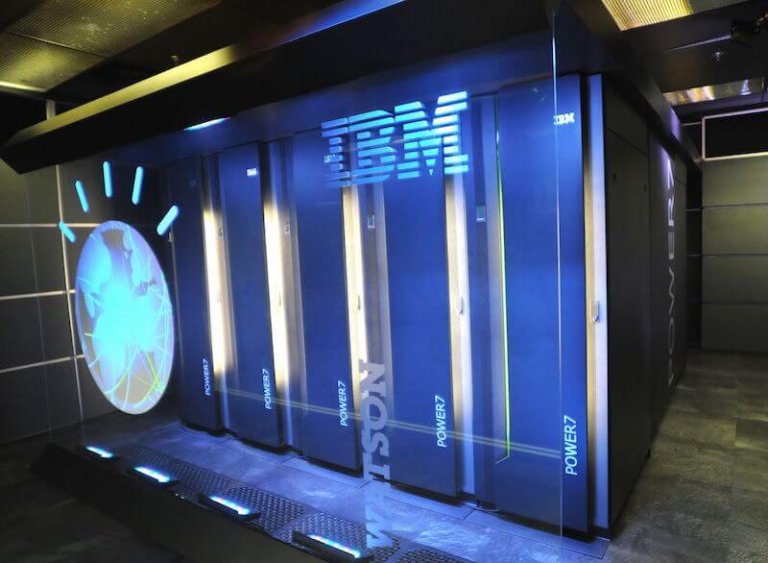
However, IBM hasn’t officially announced that it is parting ways with Watson Health and exploring A. I.’s potential in healthcare doesn’t seem to be completely off the table. In February, IBM researchers shared new findings regarding an algorithm they trained. The A.I. was able to predict with 75% accuracy who among elderly patients could develop Alzheimer’s based on writing patterns.
The company also held the IBM Watson AI XPrize; whose winner, a startup using A.I. to devise malaria elimination strategies, was announced in late June. So while Watson Health might part ways with IBM, the company is still betting on A.I. for its moonshot impact on health.
Repurposing its computing expertise
While the fate of IBM’s flagship A. I. branch is unclear, the tech giant is exploring new avenues in healthcare to deploy its computing expertise.
Last October, the tech giant launched its Digital Health Pass for enterprises. Leveraging blockchain technology, it helps companies verify their employee health status’ in a secure way. The State of New York announced in March that it would be piloting the health certificate app; including for events at Madison Square Garden.
“In choosing to test a flexible and accessible tool that places the security and privacy of personal data at its core, this can be a national example of how new approaches can help safely reinvigorate economies while also protecting public health,” said Steve LaFleche, General Manager, IBM Public and Federal Market.

Also in March, the company announced a partnership with Moderna to investigate the use of technologies like A. I. and blockchain for COVID-19 vaccine distribution. With IBM’s technology, the pharma giant would provide authorities with vaccine traceability so as to better keep track of the status of specific vaccine batches as they proceed through the supply chain.
These recent moves indicate a radical turn from how Watson Health’s focused on becoming a key A.I. doctor assistant.
Leaning towards quantum computing
Another area that IBM has been approaching in healthcare is quantum computing. In late March, the Cleveland Clinic and IBM announced a decade-long partnership aimed at harnessing quantum computing for medical research. Through this endeavour, they hope to discover new strategies to cope with public health crises like COVID-19.
“Through this innovative collaboration, we have a unique opportunity to bring the future to life,” said Cleveland Clinic CEO Dr. Tom Mihaljevic, in a statement. “These new computing technologies can help revolutionize discovery in the life sciences.”
The Medical Futurist also talked with Dr. Frederik Flöther, an IBM Quantum Industry Consultant, in May for more insights about quantum computing in healthcare.
With IBM’s new partnership with Cleveland Clinic focused on quantum computing, we can expect more news to emerge from the project in the future. The tech giant might also lean on applying quantum computing in healthcare via similar collaborations.
Exploring new horizons
Even if it’s not confirmed whether Watson Health will be separated from IBM’s healthcare endeavours, it seems like they won’t make it their only path in the industry. While they are keeping a focus on A.I., they are also exploring B2B services and quantum computing as ways to redeem themselves following past failures.
As such, despite its rocky past in healthcare, it looks like IBM is very much still in the game but it is broadening its horizons in the field to demarcate itself from its competitors.
To learn more about the recent developments of those competitors, read our e-book dedicated to the topic, Tech Giants In Healthcare.
Written by Dr. Bertalan Meskó & Dr. Pranavsingh Dhunnoo
|
At The Medical Futurist, we are building a community for making a bold vision about the future of healthcare reality today. If you’d like to support this mission, we invite you to join The Medical Futurist Patreon Community. A community of empowered patients, future-oriented healthcare professionals, concerned health policymakers, sensible health tech developers, and enthusiastic medical students. If there were ever a time to join us, it is now. Every contribution, however big or small, powers our research and sustains our future. Click here to support The Medical Futurist from as little as $3 – it only takes a minute. Thank you. |