Amazon’s Dive Into Healthcare: A 2021 Update
What do the publishing, film and healthcare industries have in common? They are all fields that tech giant Amazon ventures into. But even though healthcare […]

8 min | · Updated

What do the publishing, film and healthcare industries have in common? They are all fields that tech giant Amazon ventures into. But even though healthcare is the latest the company got involved in – at least publicly -, Amazon is making leaps in the field. We explored those leaps at length in our dedicated e-book, Tech Giants In Healthcare. For a deeper dive and a bigger picture of its long-term plans, we would recommend you to get a copy.
With this article, we are kicking off a new series that provides a snapshot of what a given tech company is working on that is relevant to healthcare. We will focus more on their most recent developments so that you can consider these articles as supplements to the e-book.
We’re starting with Amazon: exploring what the company has been focusing on in recent months. As Sandeep Unni, senior director at technology analyst Gartner, recently told ZDNet:
“If anyone can break into spaces as entrenched in healthcare, it’s probably someone like Amazon.”
So let’s explore Amazon’s recent healthcare bets and contemplate what might come next for them given those recent developments.
Aiming to disrupt the pharmaceutical industry
When in 2017 Amazon received drug distribution licenses in over 10 U. S. states, the news sent traditional players in the pharmaceutical market into a frenzy. The company had already sold over-the-counter medications in the U.S. before. Now it could sell prescription drugs online, further disrupting the distribution chain. Through private label drug manufacturer Perrigo Amazon also produces its own line of OTC drugs.
Amazon’s pharmaceutical plans further expanded when it acquired startup PillPack for nearly $1 billion in 2018. PillPack is itself an “online pharmacy” that delivers medicine directly to its clients. This was a clear indication of its commitment to break into the remote healthcare industry; a commitment that was put on display recently.

Last November, Jeff Bezos’ company expanded its remote pharmaceutical service further when it launched Amazon Pharmacy in the U.S. The service allows clients to order a “mix of generic and brand-name drugs”; and even lets them connect to a pharmacist online for any relevant queries. Launching it in 45 states and accepting most insurance plans, The Verge called it Amazon’s “biggest push into the healthcare industry yet.”
Amazon’s bet on remote care
However, remote pharmaceutical services aren’t the only remote component of health that Amazon is looking into. In fact, the tech giant might be more interested in this remote and digital component of the industry as a whole.
This March, Amazon Care, the company’s telehealth branch, expanded into 21 more states in the U.S. Previously, the service was only available to Amazon’s own customers; but the company announced that Amazon Care will also expand to other companies across the U.S. in the summer.

Amazon could very well tie in its telehealth services with its Amazon Halo fitness band, which debuted in early access last August. It can measure sleep and activity levels, as well as monitor the user’s voice tone to analyse their emotional state during the day. And more features are being pushed onto the device.
This June, Amazon announced the “Movement Health” feature that uses a smartphone camera and A. I.-based software to create custom workouts to improve the user’s stability, mobility, and posture based on their fitness level.
This consumer-facing approach isn’t new for Amazon. It also equipped its iconic Alexa-powered devices, like the Echo and Dot, with health-related extensions. For example, users can ask the digital assistant for advice regarding breastfeeding and first aid. Moreover, Alexa also helps in diagnosis and improves medication management and adherence.
Recent turbulences
Despite being a newcomer to the market, Amazon has made steady strides in a clear attempt to become a leader. But the company’s path hasn’t been such a smooth one. In fact, at the beginning of the year, one of its major partnerships fell through.
Amazon, together with Warren Buffett’s Berkshire Hathaway and J.P. Morgan Chase, set up the health care company Haven three years ago. This venture aimed to provide healthcare services and insurance at a lower cost to these companies’ employees. It also included the potential to expand to other firms as well. However, the companies parted ways in January, with Amazon forging ahead with its Amazon Care program and J.P. Morgan Chase setting up its own healthcare business unit with similar aims as Haven.
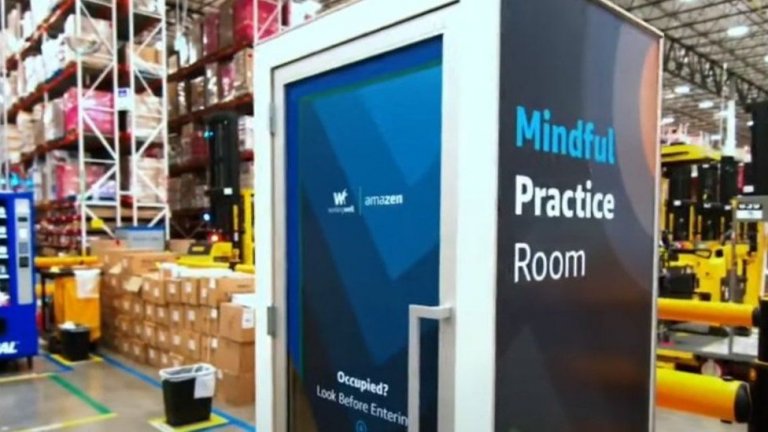
Another glaring failed approach to healthcare Amazon took was the ‘wellness chamber’ they introduced in May for stressed staff. The tiny booth lets Amazon employees follow guided well-being activities in an extremely confined space. News site Motherboard described it as a “coffin-sized booth in the middle of an Amazon warehouse.” We can expect more such failures from Amazon. But we can also expect it to keep treading towards its healthcare vision.
The future of Amazon’s healthcare vision
With the steps that the company has taken so far, we can expect Amazon to further push where it has the supply chain and the experience to support the process; whether it’s for telehealth or drug delivery. They might even combine the latter with their drone delivery plans to accentuate Amazon Pharmacy’s radical approach to drug delivery.
If patients express interest in their telehealth approach, providers will listen. Perks they offer to Amazon Prime subscribers might make their offer more enticing. For Amazon Pharmacy, Prime members will be getting free, two-day delivery on orders as well as discounts when paying without insurance. A similar model for Amazon Care isn’t unlikely, which can turn the company into an important telehealth provider.
Now that Amazon has been rolling out its Amazon-branded fitness tracker, anything that can be sent to patients remotely might fall into their area of interest. We’ll see more wearables coming from the company and maybe even at-home lab tests. In fact, in March, Amazon received emergency FDA approval for its at-home COVID-19 testing kit; and it became publicly available to U.S. customers in June.
Amazon is betting heavily on healthcare with moves that aim to make it a leader. However, it’s not dismissing the need for competition altogether. “What we don’t want to see is a handful of big entities, big companies, big healthcare systems dominating a sector;“ Amazon Vice President Dr. Babak Parviz said. “So a healthy sector will have large companies, many mid-sized companies, and many, many startup companies.”
Is the sector turning into a healthy one as Dr. Parviz envisions? To find out, we will explore the developments of Amazon’s big tech competitors in healthcare in our subsequent entries of this new series of articles.
Written by Dr. Bertalan Meskó & Dr. Pranavsingh Dhunnoo
|
At The Medical Futurist, we are building a community for making a bold vision about the future of healthcare reality today. Dr. Bertalan Mesko, PhD, the Director of The Medical Futurist Institute, launched The Medical Futurist to help individuals, companies, and governments understand how digital health technologies bring healthcare into the 21st century. “Digital health technologies empower patients to become proactive in their life; empower medical professionals to do their job being supported by advanced technologies, and companies and policymakers to make better decisions about their future.” – Dr. Bertalan Meskó To support this transformation, Dr. Meskó and The Medical Futurist team is working relentlessly analyzing the latest trends in digital health and bringing insights to the 800,000+ readers and followers of our publications, along these principles:
For 2021, we commit to another year of high-impact reporting that helps people navigate the jungle of digital health and to see where it is heading. With no shareholders or billionaire owners, we set our own agenda and provide unbiased insights that are free from commercial and political influence. If you’d like to support this mission, we invite you to join The Medical Futurist Patreon Community. A community of empowered patients, future-oriented healthcare professionals, concerned health policymakers, sensible health tech developers, and enthusiastic medical students. If there were ever a time to join us, it is now. Every contribution, however big or small, powers our research and sustains our future. Click here to support The Medical Futurist from as little as $3 – it only takes a minute. Thank you. |