Why Using Technology Means Progress In Healthcare
Those of you who follow The Medical Futurist channels closely know how much we support digital health technology. It is not without a reason – […]

Dr. Bertalan Mesko, PhD
10 February 2022
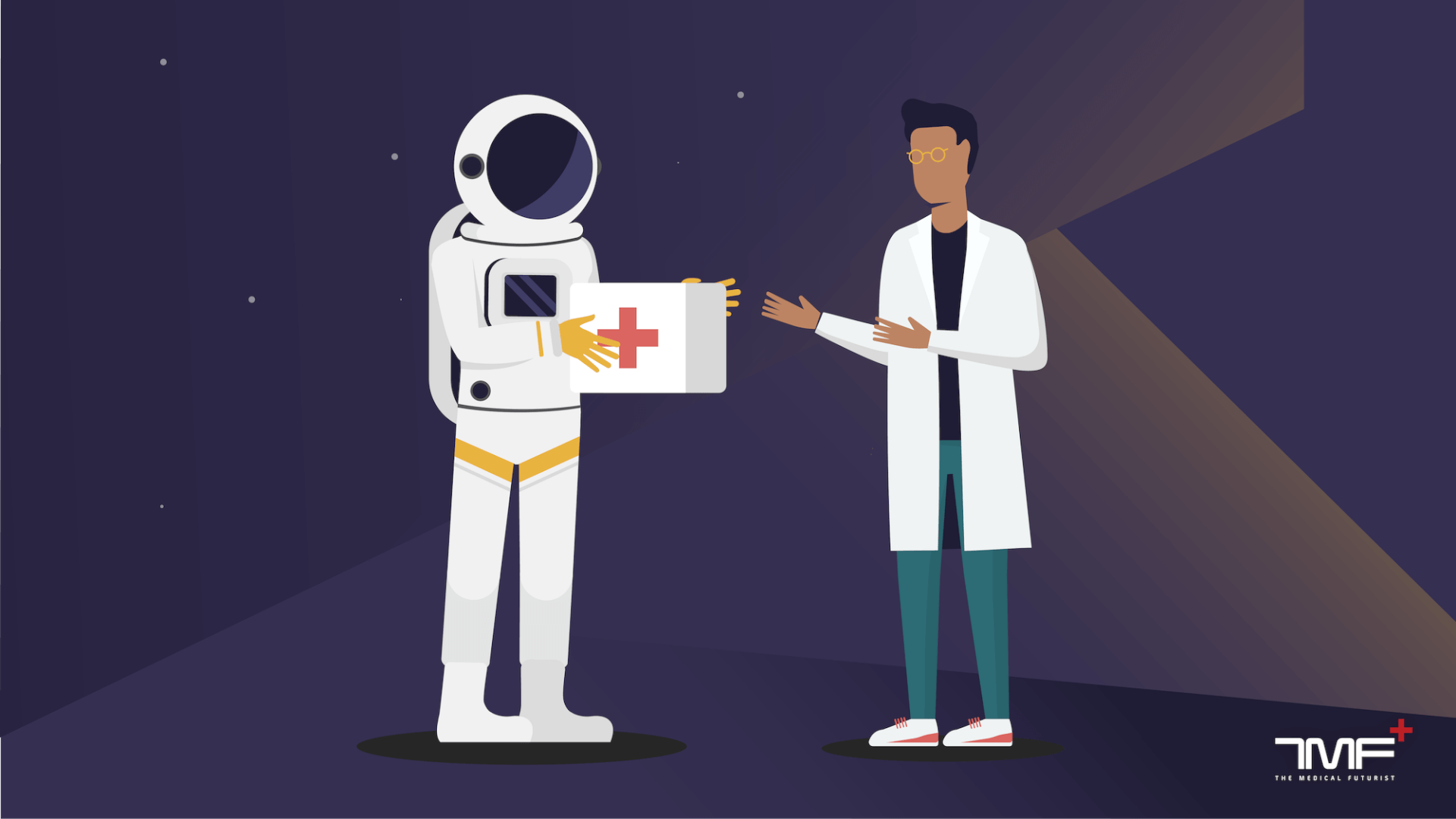
Those of you who follow The Medical Futurist channels closely know how much we support digital health technology. It is not without a reason – and it’s not the technology itself, but the fact that digital health technologies add to the advancement of medicine altogether. They directly contribute to the innovation in medicine, and hence, the wellbeing of patients.
Technological progress has helped humanity eradicate diseases, fight poverty and starvation, and, more recently, it is helping us to cope with a deadly pandemic. At The Medical Futurist, we envision a future where doctors and patients work together on an equal level for better health, using technology as a platform to elevate the quality of care.
In order to bring our vision to make it a reality today, we need to disseminate this idea widely, and from time to time we need to revisit where we stand.
This article serves this very purpose.
Changing landscape in medicine
Since the dawn of modern medicine, technology has played a role in healing and treating people. So much so that it has become increasingly difficult for doctors to help someone without using digital health tools. Some more than others, but today there are certain medical professions that have become specifically device-dependent – for example surgery or dentistry.
With the appearance of the first personal computers over 30 years ago, and, even more significantly, of the first smartphone, the walls of the ivory tower of medicine started shaking. In the decades since, the role of patients and the position of the doctor, and thereby the 2000 years old status quo in healthcare has changed. Patients started to rely more on the internet, finding studies, articles about healthcare issues or peer support – and doctors ceased to be the keyholders to the tower. Instead, their role is changing to become a supportive guide in an equal-level partnership.
Such technological transitions have taken place in healthcare before, but these could never lead to a meaningful and cultural transformation of the status quo. I summed up the most important milestones in an infographic, showing how technological innovation has led to this new era in medicine.
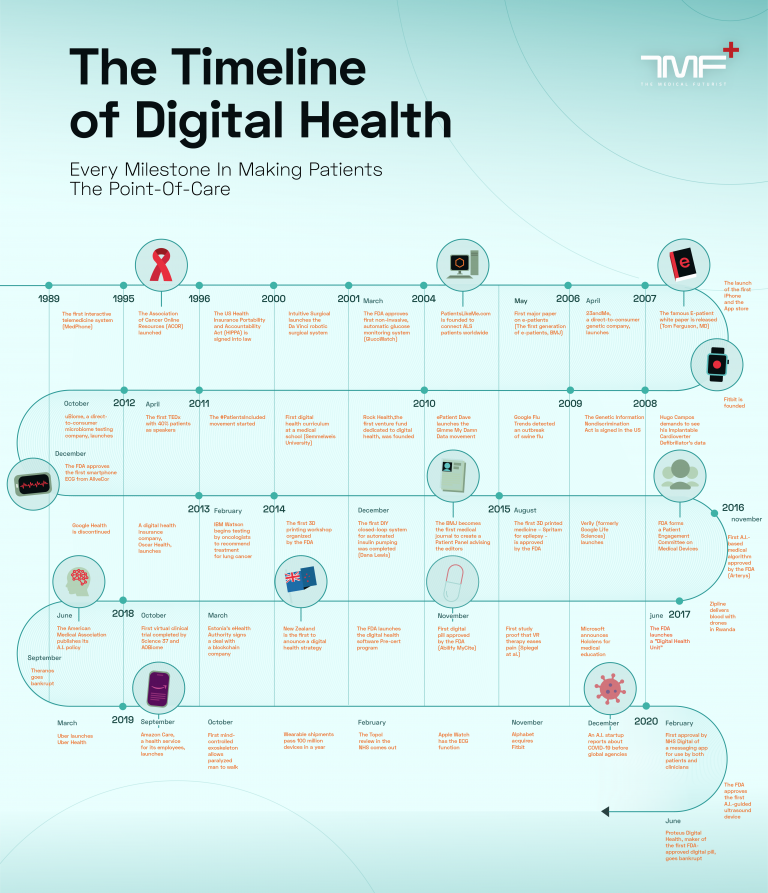
Digital health makes patients the point-of-care
This is an overwhelmingly speedy process for all participants, and that’s exactly why people still don’t really know how to share data with their doctors or medical professionals. Instead, they feel lost in this jungle of information pouring towards them.
COVID-19 has elevated all these trends to the next level. All at once, millions started using telemedical and remote care services; and hospitals or clinics did not shy away from using the latest technologies in care, from disinfecting robots to delivery drones. Some institutions even set the base for the cultural transformation by preparing staff and themselves to facilitate these changes with practical support. This is the key to digital health.
All technological innovations need a changing mindset to make them work: a cultural change, and that’s exactly what we, at The Medical Futurist are working on. With no agenda other than scientific progress itself, we aim to facilitate the technological transformation of healthcare and this cultural paradigm shift, wherein disruptive technologies providing digital data are accessible to both caregivers and patients.
Such technologies can make the patients become the point of care and, equipped with all the data and information, a valuable new member of the medical team.
This is the purpose of all our channels – and this will be the goal of
The Digital Health Course by The Medical Futurist.
Sharing knowledge: The Digital Health Course
In a matter of weeks, The Medical Futurist team will be showcasing a new undertaking we’ve been working on for months now. Culminating all there’s to know about digital health, the course, available worldwide as of March 2022, collects all there’s to know about the digitisation of care and how technological innovation has led to this new era of medicine.
The course will outline all there is to know about digital health and lead participants towards a hands-on learning experience towards not only the understanding of the basics of digital health but also to learn skills like forecasting and how to use it in everyday life, how to understand and even influence digital health trends.
We also have a chapter on doing business in medicine, bringing both good and bad examples to the table and teaching participants the basics of forecasting. This will be the tool for participants to really become better at seeing into the future. Follow us for more information on this course!
Where will healthcare evolve?
Where this change will take us is the next level of medicine. It will be another paradigm shift that I expect humankind to get to in a matter of 20-30 years. It will be a similar transformation, but its focus will be the role and place of automation. In the meantime, the technological transformation will not only become an auxiliary tool but also a driving force towards a new model in medicine.
Fasten your seatbelts.
|
At The Medical Futurist, we are building a community for making a bold vision about the future of healthcare reality today. If you’d like to support this mission, we invite you to join The Medical Futurist Patreon Community. A community of empowered patients, future-oriented healthcare professionals, concerned health policymakers, sensible health tech developers, and enthusiastic medical students. If there were ever a time to join us, it is now. Every contribution, however big or small, powers our research and sustains our future. Click here to support The Medical Futurist from as little as $3 – it only takes a minute. Thank you. |