The Technological Future Of Surgery
The future of surgery offers an amazing cooperation between humans and technology, through which surgeries reach high levels of precision and efficiency.

13 min |

Key Takeaways
Technological advancements, including robotics, AI, and digital health, will fundamentally transform the surgical profession.
To preserve the human component, surgeons may need to place greater emphasis on doctor-patient relationships, communication, and empathy.
There is a significant gap between theoretically possible outcomes and realistically expected results in the mid-term, especially outside of top-tier clinics in the wealthiest countries.
“Any sufficiently advanced technology is indistinguishable from magic.” This quote by Arthur C. Clarke pretty much sums up the future of surgery. It offers fantastic cooperation between humans and technology, which could elevate the level of precision and efficiency of surgeries so high we have never seen before. AI, surgical robots, 3D printing and new imaging methods are already used on a wide scale of procedures. But there’s much more to the future of surgery than that.
Although robotic-assisted surgeries are not yet the mainstream way of operating patients, these procedures are already used in 70+ countries around the world, millions of times each year. According to some widely used – although hard to source – statistics, some 15-20% of the surgeries in the United States have robotic assistance.
With AI technologies rising, surgeons can enlist additional technological aids, as algorithms will certainly play a role in their future lives, from helping in surgical planning to designing custom implants. It is time to see how new technologies will transform this medical specialty.
Here, I collected the technologies that will significantly impact the future of surgery.
Step zero: surgeons to rethink their profession
Before touching base with technology, we need to think about the human quotient of the department. Surgeons bear huge responsibilities: they might cause irreparable damage and medical miracles with one incision on the patient’s body. With the rise of digital technologies, the operating rooms and surgeons are inundated with new devices to make the least cuts possible. We need to deal with these new surgical technologies to make everyone understand that they extend the capabilities of surgeons instead of replacing them.
Surgeons also tend to alienate themselves from patients. Human touch is not necessarily the quintessence of their work; however, as technological solutions find their way into their practice taking over part of their repetitive tasks, it would make sense to rethink their stance. Treating patients with empathy before and after surgery would ensure their services are irreplaceable also in the age of robotics and artificial intelligence.

1) Virtual reality
In April 2016, cancer surgeon Shafi Ahmed performed an operation using a VR camera at the Royal London Hospital. It was a huge step for surgery, and anyone could participate in it, in real time. Ever since, companies like Osso VR, ImmersiveTouch, OramaVR or Fundamental VR have used VR as both training or imaging solutions.
VR can elevate the teaching and learning experience in medicine to a whole new level, replacing students peeking over the surgeon’s shoulder during an operation. By using VR, surgeons can stream operations, allowing medical students to be in the OR virtually, using their VR goggles. Helping doctors practise procedures or life-saving moves is invaluable.
Beyond surgical training, VR can also be used to help patients understand their procedures and manage pain and anxiety. The technology has the potential to improve patient outcomes by allowing for better pre-operative planning and more precise surgical execution.
And although this hasn’t (yet) become the norm in medical training or education over the past years, leading universities and institutions certainly make use of the technology.
Even more: virtual reality training can contribute to the efficiency of healthcare systems in rural areas, just as the Orlando Medical Institute is delivering emergency medical training in Florida for pediatric emergencies. This is the future.
2) Augmented reality
As there is a lot of confusion around VR and AR, not to mention MR, let me clarify: AR differs from VR in two essential features. AR users do not lose touch with reality, while VR completely shields you from the physical world. Mixed reality combines the features of VR and AR. And if you hear someone talking about XR (or extended reality): this is the umbrella term for all the before-mentioned realities.
These distinctive features have a huge potential in helping surgeons become more efficient at surgeries. Whether they are conducting a minimally invasive procedure or locating a tumour in the liver, AR healthcare apps can help save lives and treat patients seamlessly.
The first AR-backed spinal fusion surgery took place in 2020 in the U.S., where an FDA-approved AR Guidance system helped surgeons visualise the 3D spinal anatomy of a patient during surgery – it was just as if doctors had X-ray vision. The team at the Johns Hopkins Hospital praised the tool for accuracy, safety and operating efficiency. Another company, Proprio supports medical professionals by creating AI-supported ultra-precise 3D images.
EchoPixel’s True 3D medical visualisation system allows doctors to interact with patient-specific organs and tissue in an open 3D space. It enables doctors to identify, evaluate, and dissect clinically significant structures immediately.
3) Surgical robotics
Surgical robots today have 3D cameras that record operations. The video streams to a computer screen somewhere nearby beyond a plexiglass as the doctor proceeds with the operation.
Surgical robots are the prodigies of surgery. The most commonly known surgical robot is the da Vinci surgical system, and, believe it or not, it was introduced 25 years ago! It features a magnified 3D high-definition vision system and tiny wristed instruments that bend and rotate far more than the human hand. With Intuitive’s da Vinci, surgeons operate through just a few small incisions – no wonder that it has been used in over 14 million procedures worldwide to date.
Within this procedure, the surgeon is 100% in control of the robotic system at all times. The robot’s added value is to assist the surgeon in suturing, dissecting and retracting tissue. Surgical robots can dramatically increase operations’ precision, but the real breakthrough will only come with entirely autonomous robots in the operating rooms. That’ll probably take a while, but there’s definitely a place for robots in healthcare.

4) Minimally invasive surgery
In the 18th century, after Edison produced his lightbulb, a Glasgow physician built a tiny bulb into a tube to look around inside the body. But it wasn’t until the second half of the 20th century that fibre-optic threads brought brighter light into the caverns of the body. Even later, tiny computer chip cameras started sending images back out. Finally, doctors could not only clearly see inside a person’s body without making a long incision but could also use tiny tools to perform surgery inside. One of the techniques revolutionising surgery was the introduction of laparoscopes and then endoscopes.
Minimally invasive surgery allows fewer but more precise cuts and fewer incisions, leading to less pain and faster recovery. The medical device start-up Levita aims to refine such procedures with its FDA-approved MARS Magnetic Surgical System. This innovative technological platform utilises magnetic retraction during laparoscopic surgery. The company has come a long way in the past few years, their first FDA approval was for a solution for laparoscopic gallbladder removal, while MARS is aimed to assist a wide range of abdominal surgical procedures.
Vicarious Surgical, a next-generation surgical robotics company, aims to increase the efficiency of surgical procedures. The Vicarious system has an exceptional reach and the ability to “replicate” all the moves of a surgeon – and more. It creates a single incision just 1.5 cm across that still allows through two robotic arms and a camera.
5) 3D printing and simulations in pre-operative planning and education
Complicated and risky surgeries lasting hours need a lot of careful planning. Existing technologies such as 3D printing or various simulation techniques help a lot in reforming medical practice and learning methods, as well as modelling and planning successfully complex surgical procedures.
In March 2016, in China, a team of experienced doctors decided to build a full-sized model of the heart of a small baby born with a heart defect. They pre-planned an extremely complicated surgery on the tiny heart. This was the first time someone used this method in China. The team of medical professionals successfully completed the surgery. The little boy survived with little to no lasting ill-effects.
Researchers at Penn State University have been working on skin and bone bioprinting for at least a decade. They have repaired skin and bones by bioprinting during surgery in rat models. Face and skull injuries are particularly difficult to fix as there are many layers of various tissues. During such operations, Ibrahim T. Ozbolat, Hartz Family Career Development Associate Professor of Engineering Science and Mechanics, Biomedical Engineering and Neurosurgery, Penn State and his team printed both bone and soft tissue. “It took less than 5 minutes for the bioprinter to lay down the bone layer and soft tissue,” the professor explained. They hope to translate this research to human applications.
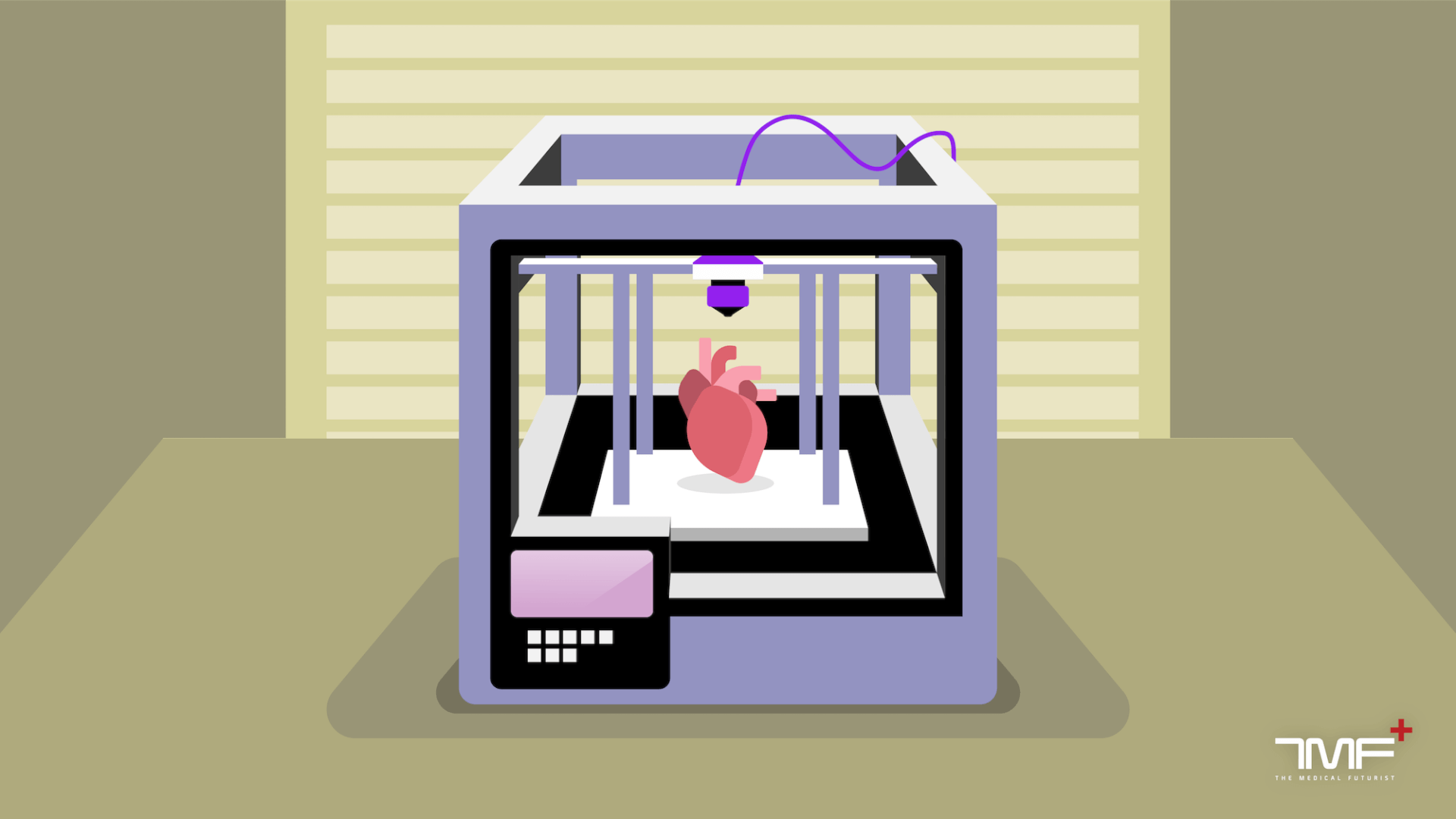
3D printing technology also started to get a foothold in medical education. To provide surgeons and students with an alternative to a living human being to work on, a pair of physicians at the University of Rochester Medical Center (URMC) developed a way to use 3D printing to create artificial organs back in 2016. They looked, felt, and even bled like the real thing. Ever since 3D printing has been taking over institutes as it increases future physicians’ more profound understanding of anatomy and pathology, leads to a better understanding of the procedures and improves trainee skill set and confidence.
We’ve been hearing about 3D-printing in medicine for a while now, but progress has been slow so far – mostly due to the high costs. This might start to change. Stratasys has announced a 3D printer that is targeted at hospitals, medical device manufacturers and research institutions, designed for the production of realistic, patient-specific anatomic models. Materialise offers 3D Printing in Medicine Course as hands-on training for hospitals to train personnel about the technology and what it can do in a hospital setting.
6) Remote surgery
Remote or telesurgery lies in the intersection of 5G, robotic technology and wireless networking. In the long run, it might be redefining the field enabling surgeons to perform operations on patients who are geographically distant.
This addresses many traditional pain points: the need for physical presence and the logistical challenges of scheduling, and allows real-time collaboration among surgeons across the globe, thus improving accuracy and outcomes. This advanced technology, theoretically, allows high-quality surgical care to reach medically underserved areas, including rural regions, battlefields, and remote environments like submarines and space stations.
Despite its transformative potential, telesurgery faces several limitations and challenges. High initial costs and maintenance expenses can be prohibitive, and there are significant concerns regarding patient safety and data privacy. The risk of cyber-attacks and unstable internet connections can jeopardize the integrity and success of surgical procedures.
7) AI’s growing influence
Artificial Intelligence will revolutionise the surgical profession, impacting every stage of the surgical pathway, from pre-operative planning to post-operative care, enhancing decision-making and improving patient outcomes.
In the pre-operative phase, AI can aid in early and accurate diagnosis by analysing medical images, identifying potential risk factors, and suggesting personalised treatment plans. Intraoperatively, AI-powered tools can provide real-time guidance to surgeons, augmenting their skills and precision. Post-operatively, AI can monitor patient recovery, predict complications, and facilitate efficient discharge planning.
However, algorithms will not only impact the surroundings of the operating room. They will also streamline administrative tasks, optimise resource allocation, and enhance surgical training and education. By automating routine tasks, AI frees up valuable time for surgeons to focus on complex decision-making and patient care. Additionally, AI-powered simulations can provide surgeons with immersive training experiences, honing their skills in a risk-free environment.
The integration of AI with robotics, sensors, and other cutting-edge technologies promises to redefine surgical procedures, making them less invasive, more precise, and ultimately more successful. However, the growing reliance on AI also raises ethical considerations. Ensuring patient privacy and data security is paramount, as is addressing potential biases in AI algorithms. It is crucial to establish clear guidelines and regulations for the responsible use of AI in surgery.
The future of surgery lies in the collaboration between human expertise and AI capabilities. By harnessing the power of AI, surgeons can enhance their skills, optimize decision-making, and ultimately deliver better care to their patients. The integration of AI into the surgical profession holds the promise of a new era of precision, efficiency, and improved patient outcomes.
The key: human-technology cooperation
The future of surgery, just as the future of medicine, means close cooperation between humans and medical technology. I cannot stress enough that robots and other products of rapid technological development will not replace humans – instead, those medical professionals using AI will replace the ones who don’t. The two will complement each other’s work in such a successful way that we have never seen nor dreamed about before.
But only if we learn how to do so.
Learn more about the technological future of medical specialities from our e-book!

|
At The Medical Futurist, we are building a community for making a bold vision about the future of healthcare reality today. Dr. Bertalan Mesko, PhD, the Director of The Medical Futurist Institute, launched The Medical Futurist to help individuals, companies, and governments understand how digital health technologies bring healthcare into the 21st century. “Digital health technologies empower patients to become proactive in their life; empower medical professionals to do their job being supported by advanced technologies, and companies and policymakers to make better decisions about their future.” – Dr. Bertalan Meskó To support this transformation, Dr. Meskó and The Medical Futurist team is working relentlessly analyzing the latest trends in digital health and bringing insights to the 800,000+ readers and followers of our publications, along these principles:
We commit to high-impact reporting that helps people navigate the jungle of digital health and to see where it is heading. With no shareholders or billionaire owners, we set our agenda and provide unbiased insights that are free from commercial and political influence. If you’d like to support this mission, we invite you to join The Medical Futurist Patreon Community. A community of empowered patients, future-oriented healthcare professionals, concerned health policymakers, sensible health tech developers, and enthusiastic medical students. If there were ever a time to join us, it is now. Every contribution, however big or small, powers our research and sustains our future. Click here to support The Medical Futurist from as little as $3 – it only takes a minute. Thank you. |