A First-Hand Experience About Switching To Telemedicine During COVID-19
The secrets to switching to telemed: 1. willingness to adopt the technology 2. resources 3. new ways of implementing remote care into existing methods

Dr. Bertalan Mesko, PhD
6 August 2020

We see the world of healthcare shifting towards remote care solutions – and they are expected to stay even after the pandemic. The technology in healthcare has already been ready for it. Most of its solutions proved particularly useful – so these, too, are likely to stay with us. Remote care is the new norm and doctors, patients and hospitals see the advantages. What they often can’t see is the actual path that leads to using this technology.
The Medical Futurist team has always been proud to offer both empirical as well as factual solutions. From what would make doctors use digital health to the handbook on the fight against COVID-19, we never shied away from providing practical support to the transition. In this article, we are giving first-hand experience on how a healthcare clinic made the shift and started using telemedicine.

The Shift – In The Matter Of Days
With the main focus on sports injuries, Jonathan Bell is a Consultant Orthopaedic Knee Surgeon at Wimbledon Clinics in the United Kingdom. Their work at the clinic did not differ much from that of any other orthopaedic hospital in the world. Well, maybe they are somewhat closer to famous tennis courts. But when COVID-19 hit, they needed to re-think their entire workflow. They shifted to telemed solutions in the matter of days. Jonathan Bell was at the centre of it all. He helped us understand the practicalities of such a direct transformation.
“The aim was, initially, just to try and replicate our usual services remotely” – he said about the shift they launched in a mere five days. “Once systems were in place, we went fully remote for all admin and clinical staff.”
Before the pandemic, Wimbledon Clinics barely provided any telemedicine. Being a sports clinic, much of their work was insurance-based – insurers refused to reimburse for telemedicine and telephone calls.“About 70-75% of our work is based on insurance. It has always been difficult to offer remote consultations.” But as the pandemic hit, insurers all agreed to provide cover during lockdown; so the clinic could offer a wider range of services.
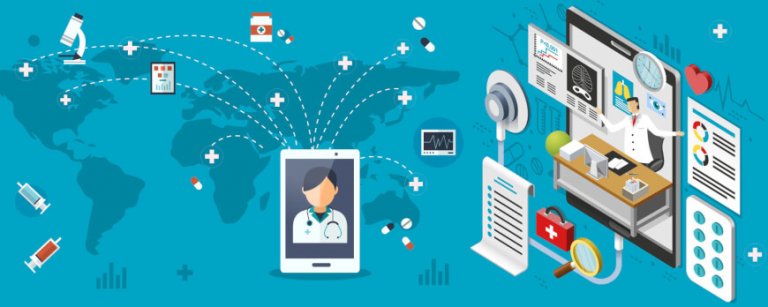
Step One: replicate usual services remotely
First, administration. “From the decision to go off-site to being fully operational remotely, we spent five days working with admin. We wrote down all processes.” Simple tasks, like how to write a prescription needed to be solved, how it can be done remotely and not on a piece of paper. “We wrote all the processes and I put together a pack of information for our clinicians on how to do a video call, how to record notes, how to get them into the online records, how to scan. I did electronic pdf’s of all forms. I set out to run my whole practice from an iPad Pro.”
This needed to be worked out with every single department: from radiology to the pharmacy. Every step had to be consulted with the IT department, to make sure all data is well protected on the way. “This was one of the biggest challenges as we had to persuade these departments to allow us to work in a very different way.”
Step Two: Focus On The Patient
Bell coached his team on what patients want from consultations as many of them weren’t sure how they would be able to do this. It included focusing on the patients’ wants not needs, specifically probe their actual fears and concerns, and to explore what they can do for themselves. “In short, I showed them how to ask the right questions so that the patient would tell them what they wanted,” he said.

Step Three: Look Into The Future And Cooperate
Bell also built a team of about 20 physio practice owners as a “mastermind group”, and besides regular online sessions sharing thoughts on COVID-19, they also shared the knowledge built at Wimbledon Clinics – and pretty soon at other practices. “Within a week we had nearly 20 practices up and running with remote consultations. It took the hospital where we work another 6 weeks to match us in terms of the offering.”
“That put the practices in my mastermind group way ahead of their competitors, and gave us a step in the patient pathway that has proven to be very effective.” In other words, they created the online physio capability so that they were able to offer a treatment pathway, not just a diagnosis.
“I have rehabilitated knee replacements and ACL reconstruction successfully almost entirely through Zoom physios” – Bell explained.

Step Four: The Right Platform and Practice
The remote platforms they tested were Skype, Zoom and Webex. Initially, Skype was the best as most users had it on their computers. But they soon found Zoom working better. With people getting more and more familiar with the app, the workflow also became smoother. The lockdown situation also enabled physicians to become more flexible with time.
Clinicians ran all video from their own equipment at home. “We have a company that books our new patient appointments and we trained them to offer the video calls. We wrote a piece for them to help overcome patients objections to video as initially patients were reluctant to accept that a video call would have any value.”
They sent a Jot form survey to every patient allowing them to share the satisfaction data. “Our patient pathway included new consultation, ordering of investigation, sending out prescriptions, ordering of ultrasound-guided injections. We also had a list of physios who could offer video physiotherapy.”

The Conclusions
The results were unquestionable. Most patients enjoyed the comfort and the uniqueness of telehealth. About 95% of the people who answered, said the video consultation was “worthwhile” or “very worthwhile.” Bell’s team even analysed the different types of calls. Follow-ups, new patients, getting results – all scored similarly in terms of satisfaction.
Video consistently scored a bit better than the telephone. But there were a few negative comments, too. “We had a few patients who said they didn’t value the experience at all. In one the clinician hadn’t spent enough time and detail as I suggested above.”
The biggest surprise for them was the extremely high level of satisfaction. “I asked if patients would have valued the remote experience the same outside of lockdown. 60% said that this would have worked at any time.” This made Bell’s team offer video consultations as a permanent feature.
And the downside? Elderly patients found it technically more difficult. “This age group are also rather more old fashioned in their expectation of being examined and, I think, find it a bit more difficult to understand the value.”
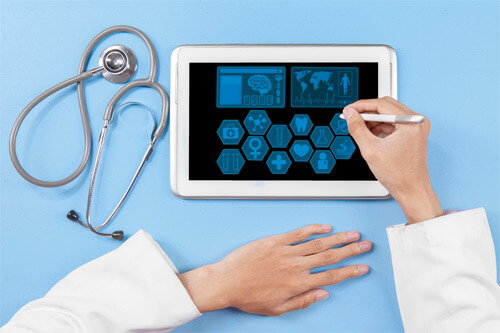
“I will not go back to paper”
Bell’s team at Wimbledon Clinics is currently developing what they’ll use in the future. “There will be a balance.” But there will be remote care – also in other departments.