Cardiologists’ Dream Device? – The Withings BPM Core and the Viatom Armfit+ Joint Review
1 in 4 men and 1 in 5 women have hypertension worldwide, the WHO estimates. As for the most common arrhythmia, atrial fibrillation (AFib), it […]

9 min | · Updated
1 in 4 men and 1 in 5 women have hypertension worldwide, the WHO estimates. As for the most common arrhythmia, atrial fibrillation (AFib), it affects some 33.5 million individuals globally; with its prevalence expected to double by 2030. These cardiovascular conditions need regular monitoring so as to prevent severe complications. For instance, hypertension can lead to heart and kidney failure, while AFib can lead to stroke.
For long, monitoring these conditions relied on measurements taken from bulky devices available only in medical facilities; a sphygmomanometer (or blood pressure monitor) for hypertension and an ECG monitor for arrhythmias. With the advent of digital health technologies, such medical-grade monitors became affordable, more portable and available outside of the confines of the hospital.
The credit-card sized KardiaMobile6L is FDA-cleared to indicate AFib and can be used virtually anywhere. As for the light and portable iHealth Clear blood pressure monitor, it measures the systolic, diastolic blood pressure and heart rate in merely 30 seconds at home. However, even though they both monitor the user’s cardiovascular system, they are separate devices. They must thus be bought separately and also take up storage space. Moreover, cardiac arrhythmias can manifest among those with hypertensive heart disease; in fact, one is more likely to develop AFib if they have sustained high blood pressure (BP).

From a practical point of view, it would make sense to integrate both a BP and ECG monitor into a single device. I have recently tested two such devices, the Withings BPM Core and the Viatom Armfit+. Withings is the company behind the ScanWatch smartwatch, which I fell in love with. As for Viatom, they created the CheckMe Pro; or the closest thing we have to Star Trek’s Tricorder. Given how they delivered exciting products before, I was excited to see what their new devices had to offer and I will share my findings in this joint review.
Slipping on the Withings BPM Core and Viatom Armfit+
When I first wore the Withings BPM Core, I noticed a strange button on the side of the device. As it turned out, it is a digital stethoscope which listens to your heart sounds when you push it against your chest to detect signs of valvular heart disease (VHD). The latter involves defective heart valves, which pose a risk to heart failure and may require surgical intervention.
It won’t replace a general stethoscope but supplements the BP and ECG measurements of the device to give deeper insights into one’s measurements. These readings are obtained as easily as slipping the cuff onto the arm and pressing a button to get a three-in-one cardiac status checkup.
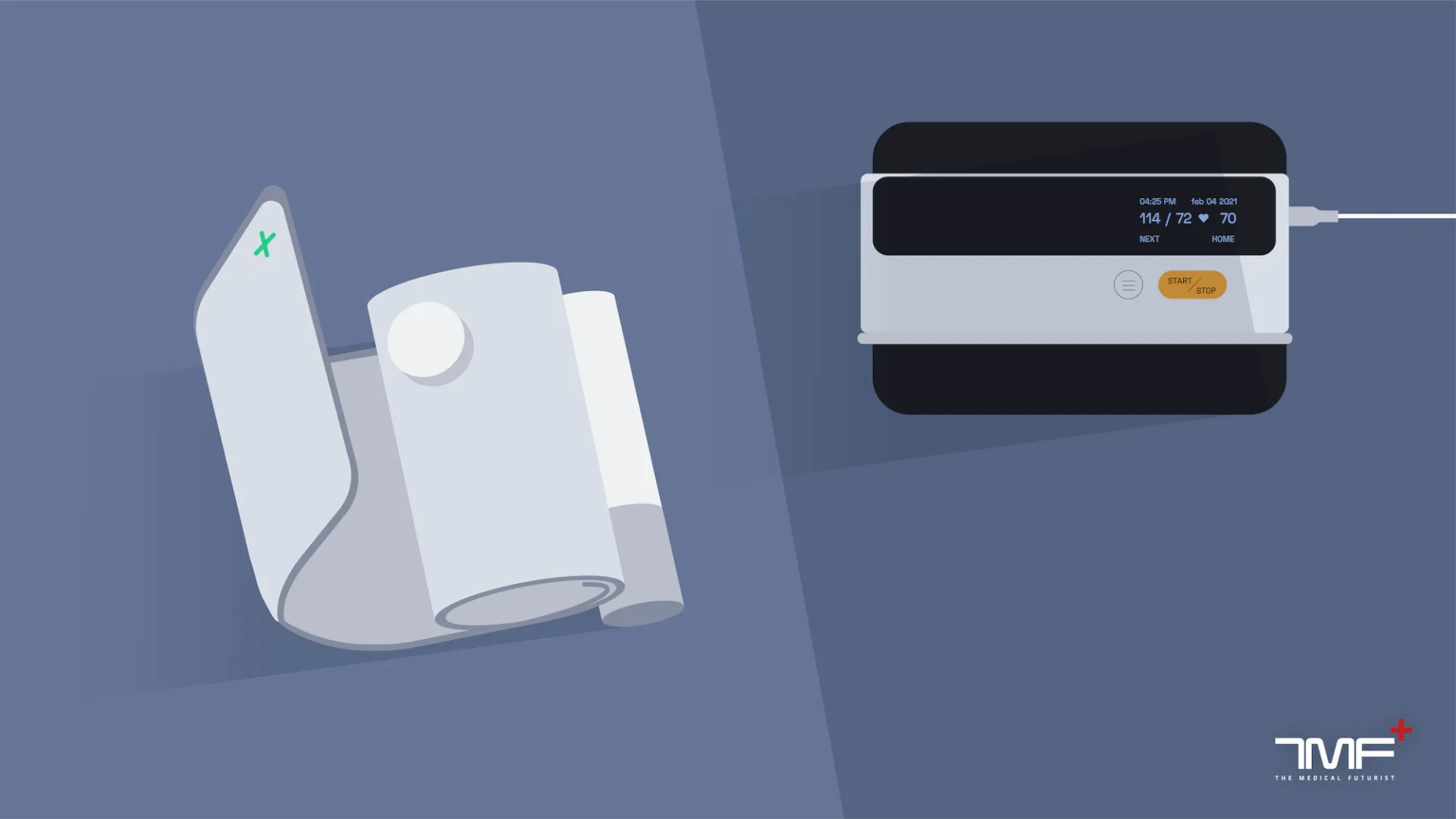
The Viatom Armfit+ lacks a digital stethoscope, but this gives it the advantage of being lighter and smaller. In contrast to the Withings BPM Core, readings for BP and ECG have to be taken separately with this monitor. Slip the cuff onto your arm to measure your BP; and hold the device between your two palms to get an ECG reading.
In this sense, the Withings BPM Core is easier to use as it gives all readings at once. The Viatom Armfit+ requires extra steps to get BP and ECG readings respectively. But even then, both give accurate results extremely fast, in about a minute for the BPM Core (with blood pressure and ECG) and around the same time doing the two readings separately for the Armfit+; a pace that would amaze cardiologists.
Gathering multiple cardiovascular readings from a single device
When it comes to the readings themselves, both monitors deliver accurate measurements on the device itself. I compared the readings to each other and I compared both to those from the iHealth Clear, which I found to be accurate before. BP reading is as you would get from a traditional monitor with a systolic and a diastolic parameter. They indicate heart rate as you would expect; and as for ECG, the displays only say whether it’s normal or not.
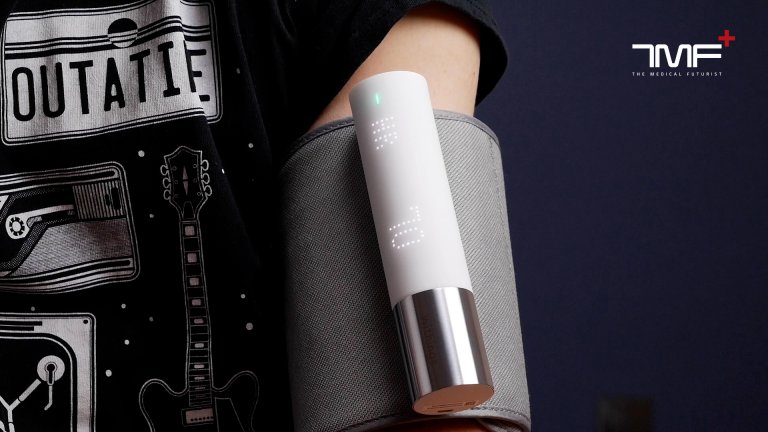
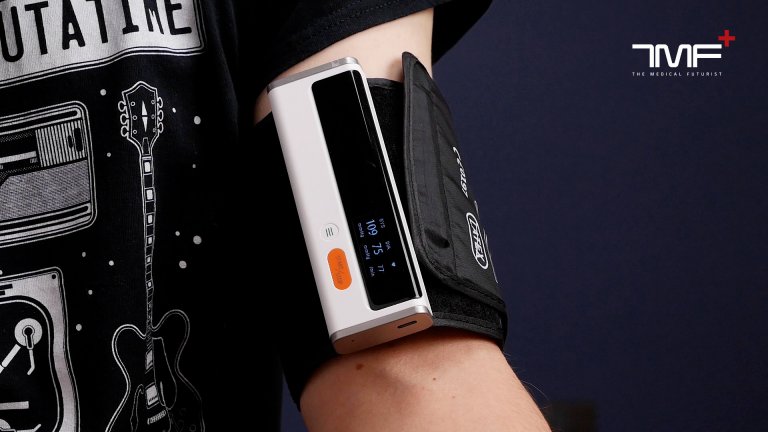
Getting readings from the Viatom Armfit+’s screen is great. It is clear, easily readable and the information is concise. The Withings BPM Core’s screen is rather peculiar. It displays information in the form of dots and I found it a bit hard to read; although I’ll admit that it has a cool aesthetic. At first, I couldn’t even read some words clearly; but then I familiarised with it.
Even if you might have some trouble reading measurements from the devices, they can both pair with a companion smartphone app to store the collected data. This allows you to further analyse or share the results.
While the readings are accurate, none of these devices have been approved by the FDA. Withings’ BPM Core did receive CE clearance for medical devices for its part. Withings also says that it developed the BPM Core in collaboration with cardiologists from two major hospitals in Paris; while Viatom makes no such note on its website for its Armfit+. Nevertheless, both companies have years of experience in manufacturing quality medical devices, some of which even bear the coveted FDA approval.
And while they output readings comparable to traditional BP monitors, they are both easier to wear and are thinner and lighter than traditional ones; with the Viatom Armfit+ being the thinner and the lighter one, as mentioned earlier. As such, they are not only well-adapted for patients with cardiovascular diseases but also for a physician to easily carry in their labcoat.
For the tech savvies and for the less tech-focused: an option for both
When it comes to consumer digital health tools, they are usually heavily reliant on the tech side, with companion apps and a mandatory internet connection. This aspect poses a barrier for those who are not that well-versed in dealing with technologies. I was happy to see that with the Armfit+, Viatom accommodated that demographic.
As with every other Viatom device, the setup is super easy as there is none. You can use the device right away and every result will be on the device’s own screen. There are two options (ECG or BP) and two buttons, one for switching between options and one for on and off. It’s super easy to use and takes away the need for an app. However, the company also accommodated those looking to share their medical data wirelessly. By pairing their device to the ViHealth app, users can store and visualise the recorded readings. Since the app is not available in Europe at the moment, I was unfortunately unable to test it myself.
The Withings BPM Core’s design is more like a traditional digital health device, with more reliance on the tech side. To begin using it, I had to connect it to my smartphone app (Healthmate) and also to my WiFi. This might be an issue for people not being good at dealing with technologies or simply if you don’t have a WiFi connection readily available. Thankfully, you don’t need the phone after that and you can take measurements by the touch of a single button.
Similar concepts, different devices
All things considered, both the Withings BPM Core and the Viatom Armfit+ are very capable devices to allow anyone to monitor their cardiac health at home and subsequently share measurements with their physician. They are also well-rounded devices for a doctor of the 21st century to quickly and accurately measure patients’ BP and ECG, with readings easily stored in digital format.
The main difference is the price. The Withings BPM Core is more expensive at €250, but it also has an additional digital stethoscope which the Viatom Armfit+ does not have. The latter itself costs around €100, which is rather affordable for a multi-sensor device.
Personally, I prefer the Withings BPM Core because of its digital stethoscope feature and sleek design. However, I’d recommend the Viatom device in a healthcare setting and for people who are not so good at dealing with technologies and smartphones. Both have their place in healthcare and I’m perfectly convinced that the future belongs to such “combined” devices.
|
At The Medical Futurist, we are building a community for making a bold vision about the future of healthcare reality today. Dr. Bertalan Mesko, PhD, the Director of The Medical Futurist Institute, launched The Medical Futurist to help individuals, companies, and governments understand how digital health technologies bring healthcare into the 21st century. “Digital health technologies empower patients to become proactive in their life; empower medical professionals to do their job being supported by advanced technologies, and companies and policymakers to make better decisions about their future.” – Dr. Bertalan Meskó To support this transformation, Dr. Meskó and The Medical Futurist team is working relentlessly analyzing the latest trends in digital health and bringing insights to the 800,000+ readers and followers of our publications, along these principles:
For 2021, we commit to another year of high-impact reporting that helps people navigate the jungle of digital health and to see where it is heading. With no shareholders or billionaire owners, we set our own agenda and provide unbiased insights that are free from commercial and political influence. If you’d like to support this mission, we invite you to join The Medical Futurist Patreon Community. A community of empowered patients, future-oriented healthcare professionals, concerned health policymakers, sensible health tech developers, and enthusiastic medical students. If there were ever a time to join us, it is now. Every contribution, however big or small, powers our research and sustains our future. Click here to support The Medical Futurist from as little as $3 – it only takes a minute. Thank you. |