Top 10 Healthcare Technology Trends To Watch In 2025
I comment on last year’s 6 healthcare technology trends and then share 10 new ones for 2025.

Dr. Bertalan Mesko, PhD
15 January 2025

Key Takeaways
Every year, I share not predictions for the upcoming year but medical and healthcare technological trends it’s worth paying attention to.
I comment on last year’s 6 healthcare technology trends and then share 10 new ones for 2025.
Using established futures methods could empower healthcare leaders to do similar analyses.
Every year, I share not predictions for the upcoming year but medical and healthcare technological trends it’s worth paying attention to. As my job as The Medical Futurist is analyzing every single major announcements, study and press release, and even more importantly, make sense of those for a worldwide audience, there are some exciting trends and developments that stand out.
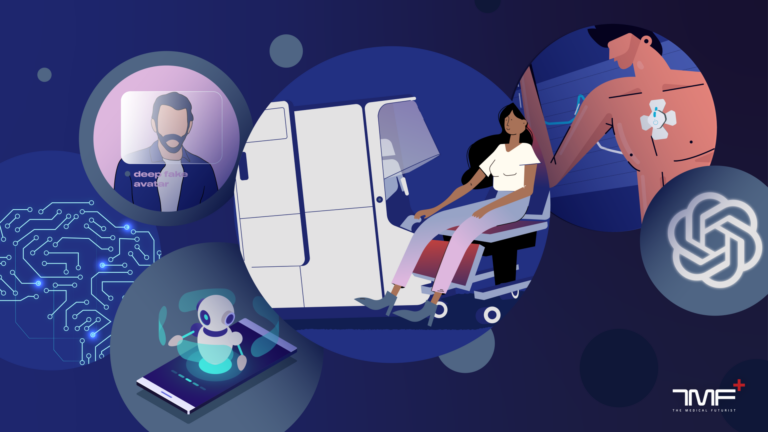
First, I comment on last year’s trends then I share my hot takes for 2025. I hope you will find both useful.
- The rise of generative AI platforms in healthcare: I expected many patient-oriented ChatGPT-like tools and indeed a lot of them have become accessible.
- Multimodal large language models (M-LLMs) for hospitals: It was too early to call this. The rise of M-LLMs is unquestionable, but I haven’t yet seen good examples at hospitals. Roche has made one for internal use though.
- Blood testing reimagined: Companies like Tasso that develop at-home blood kits and Vitestro that is making a blood drawing robot have been publishing great results.
- Evidence-based digital therapeutics: Over 2000 papers and studies only in 2024. A booming field, however, mostly in mental health for now.
- Blood pressure’s PPG revolution: Even companies developing smartwatches are switching to PPG technology to measure blood pressure. It’s not as unimaginable when it was when Omron came up with the first BP smartwatch.
- AI digital twins: On target but not for the purpose I had in mind. Instead, companies are creating at-home kits for biological digital twins.
Besides analyzing the major news and announcements, I also use the futures method called trend analysis. Therefore, here are some trends that are worth highlighting for 2025:
Things I’m very positive about:
1) I start with my boldest statement: 2025 will be the year of practical longevity.
What I mean by that is longevity finally becoming mainstream. Not the research part and the quest for increasing telomeres, but the part that is more than just healthy living and involves a lot of technologies, supplements, screenings, and habits to maximize our lifespan. Eric Topol will release a book about it while Bryan Johnson’s Don’t Die is becoming a worldwide movement around the idea.
2) AI scribes on the rise:
We started with voice-to-text applications and now the field if maturing towards generative AI agents that can transform a patient-physician conversation into a medical record. Such tools could be the Holy Grails for physicians to be able to finally spend enough time with patients. Here we will extensively analyze their role in medicine.
Things I hope to see:
3) Ozempic’s connection to digital health
I described in an analysis why not investing in digital health technologies for companies developing GLP-1 agonist medications is a missed opportunity. These medications got regulatory approval only by following a calorie-reduced diet and exercising. The latter two are almost impossible to achieve without digital health support. Pharma companies should build on that.

4) CGMs for not only diabetic patients
Continuous Glucose Monitors (CGM) have become an accessible technology for many patients with diabetes. However, I see an even bigger role such a technology could play in the lives of patients without diabetes. Being able to accurately measure your blood glucose constantly and get feedback on your lifestyle habits is priceless, as I’ve experienced it myself. For that, we need devices that are reliable and affordable globally.
5) Generative AI across the healthcare spectrum
The FDA has over 1,000 AI-based, approved devices in its database and it’s easy to expect that database to pass the milestone of 1,500 devices this year. But generative AI poses regulators a challenge on another, unprecedented level. Even generative AI marketplaces have appeared for clinicians where they can use basic models to build upon them instead of them developing AI themselves. I only hope regulators will follow the FDA’s lead in this and in regulating adaptive algorithms too.
6) SLMs bring AI to the masses
Small Language Models (SLMs) have relatively small number of parameters, and can, for example, run on an average mobile phone, without internet access. This technology could bring not only AI, but generative AI, to the masses, even to low-resource regions.

7) Futures methods becoming mainstream
The era when researchers and clinicians share their opinions about the future without using established futures methods with which they could analyze potential futures accurately with easy must come to an end. And I’m not saying this because I wrote a book on the subject. However, because crucial decisions should not be based on highly subjective analyses, but practical methods everyone can learn.

Just some observations:
8) Wearables hit a roadblock
It seems it’s not enough to measure vital signs and health parameters anymore, but some companies might want to transform their products into digital therapeutics if they can prove their claims in peer-reviewed studies. Hyfe comes to mind, a global leader in AI-powered cough detection, tracking and classification, as they announced that they would be expanding into chronic cough treatment with the world’s first digital therapeutic.
9) The new medical team
During the digital health and AI paradigm shifts in healthcare, new medical teams have started to form. Teams that include the patient, a healthcare professional, and an AI technology. Skinvision could be a good example and I’m the reason why. As my genetic risk for skin cancer is high, I have a dermatologist, Skinvision’s AI, and myself in the medical team. Similar formats can be expected from companies developing AI for health purposes.
10) Companies with expensive hardware have a hard time
Companies that develop hardware such as virtual reality devices, robotic exoskeletons or 3D printing technologies have vanished in the past year. It seems others working on algorithmic solutions might have an advantage.
In the meantime, we at The Medical Futurist, will be here to analyze everything that matters in healthcare and medicine for you.