Sibionics Blood Glucose Sensor: Review
This device aims to simplify and enhance diabetes management. Let’s see how it works.

5 min | · Updated

Key Takeaways
This continuous blood glucose sensor is intended for individuals aged 18 and older and is designed to monitor interstitial fluid glucose levels.
While it provides valuable insights for glycemic management, it should not be used as the sole basis for treatment decisions or therapy adjustments.
I tested it and shared my personal experience with it.
As The Medical Futurist, I often explore the latest advancements in digital health technology to assess their potential impact on patients and healthcare systems. I have tested a continuous blood glucose sensor before, but recently, I had the opportunity to test a different blood glucose sensor from Sibionics.
But before I even start: As always, I do not accept sponsorship for these reviews, I just ask for a device to test.
The system they developed is intended for individuals aged 18 and older and is designed to monitor interstitial fluid glucose levels. While it provides valuable insights for glycemic management, it should not be used as the sole basis for treatment decisions or therapy adjustments.
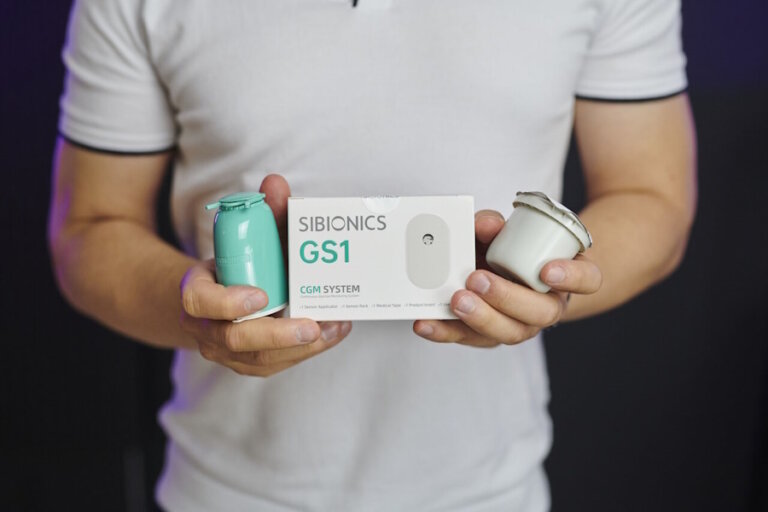
In short, their device aims to simplify and enhance diabetes management. Notably, their CGM system offers these features and I’ll comment on each based on my experience with using it.
14-day continuous monitoring: Provides real-time glucose readings for up to two weeks without the need for finger-pricking or scanning.
– True. The experiment lasted exactly two weeks before the device prompted me to remove it.
High accuracy: It is claimed to deliver precise sensor readings to support effective glycemic control.
– This I cannot confirm or deny as I had nothing to compare it to. Measuring my blood glucose through finger pricking could help compare but these are actually two different kinds of measurement. When buying a device, we have to rely on the company’s claims and regulators cross-checking those.
Data reporting: Allows users to export Ambulatory Glucose Profile (AGP) reports and share real-time glucose data with healthcare providers or caregivers.
– True. I got a PDF I could send to my primary care physician. It contained all the important data and results.
Customizable alerts: Features adjustable glucose alarms to notify users of hypo- or hyperglycemic events.
– True, but it provides no guidance on how to set the alerts. A physician’s recommendation would definitely be crucial here.
User-friendly app: Includes an intuitive application for easy data access and management.
– I had no issues with the app or the registration process.
Calibration-free operation: Eliminates the need for manual calibration, simplifying the monitoring process.
– It was definitely easier to set up than if calibration was needed.
Water resistance: Rated IP28, ensuring durability during daily activities.
– I had showers with it every day and running and exercise sessions for about 10 times. No issues, it stayed on for two weeks.
Unboxing and First Impressions
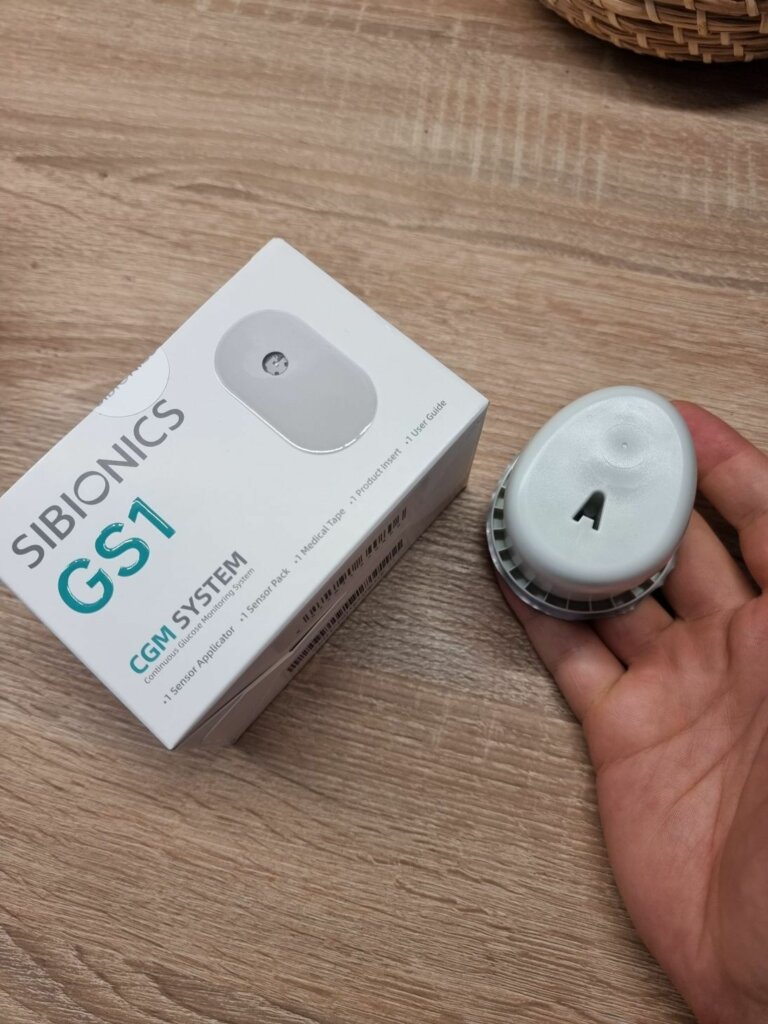
The Sibionics sensor arrived well-packaged, with clear labeling and instructions. Unboxing the device, the minimalistic design immediately stood out. The compact size and lightweight build suggest that portability and user comfort were priorities in its development.
I registered in a minute, used the QR code on the box and got the device connected. It was not clear first that I cannot pair the device until I put it on my arm. The adhesive they provided was also important in making sure it won’t fall off for two weeks.
Daily Use
I had a mild discomfort/pain with the other device, but not this time. Maybe I found a better spot to put the device on. Over the testing period, I used the sensor to monitor my glucose levels under various conditions [three types of exercise, having 5 meals a day, giving a long presentation, etc.]. The readings seemed to be consistent.
Once I had a low reading alert while running and I stopped out of worry, even though I felt nothing. It must have been a technical issue.
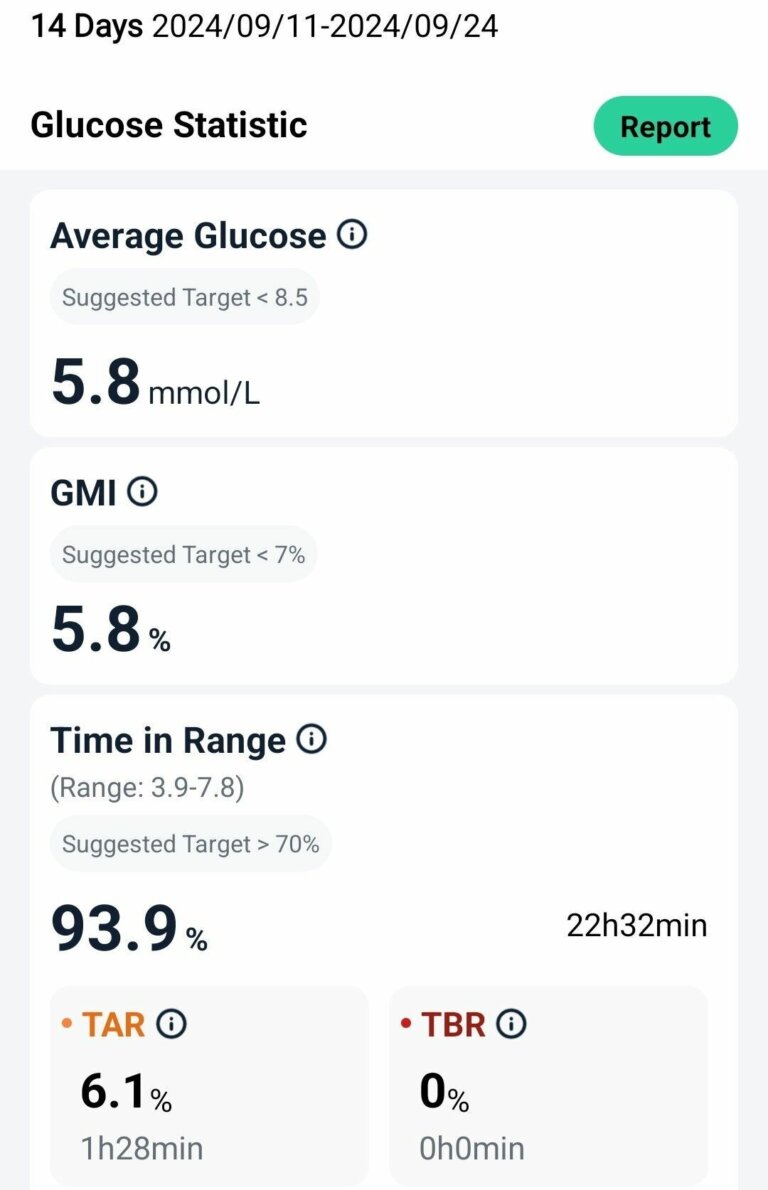
Based on my two weeks with the Sibionics CGM, it seems my diet is working well and my blood sugar is fairly stable. I only had one significant spike after a mocktail, so I’ll be more cautious about sugary drinks in the future.
User Interface and App Experience
The accompanying app is intuitive but maybe for first time users, it doesn’t really help understand which results to pay attention to. I’ve learnt to follow what percentage of the time my readings spend above and below the thresholds.
That’s what matters when you measure interstitial blood glucose for weeks. Individual measurements, therefore, are not so important. There are thousands of those by the time you finish the two weeks.
Time Below Range (TBR) and Time Above Range (TAR) provide a more complete picture of a person’s glucose levels, enabling a more data-driven approach to diabetes management.
Strengths
- Comfort: The lightweight and ergonomic design makes it easy to wear for two weeks.
- Data insights: Provides detailed glucose trends, aiding better decision-making.
- Ease of use: The setup process and app integration are user-friendly.
- Cost and availability: This is the only CGM I know about that is globally available and the price is much lower compared to other CGMs.
Limitations
- Accuracy concerns: I haven’t seen studies or clinical trials from the company proving the device’s accuracy compared to other CGMs.
- Data integration: I essentially got a PDF at the end but there was no way to export the data in other means.
Conclusion
The Sibionics blood glucose sensor represents a significant step forward in affordable digital diabetes management. It could be the device that opens up blood glucose management not only for patients with diabetes but for anyone who wants to better understand their blood glucose levels. If peer-reviewed studies were available to prove its accuracy, I would even claim it to be the best device on the market.
As always, I encourage readers to consult with their healthcare providers before adopting new medical technologies to ensure they fit within their treatment or health management plans.