Great Concept With Unfulfilled Promises: The Omron HeartGuide Blood Pressure Smartwatch Review
When the Omron HeartGuide blood pressure smartwatch was introduced at CES 2018, I knew I had to test it. The device promises everything that’s mind-boggling about digital health technologies: a wearable health sensor with FDA-clearance for blood pressure readings that’s technically very difficult to achieve. At first sight, it seemed like the innovation that could put an end to inconvenient blood pressure cuffs and traditional measurements. Now that we have tested it, the picture seems to be less rosy: although the FDA-cleared blood pressure evaluation is impressive, it may take years until the wearable truly becomes user-friendly everywhere for all demographics. Now, let’s see the details!

8 min | · Updated
|
THIS ARTICLE HAS NOT BEEN UPDATED SINCE 2019. THE INFORMATION SHARED IN THE ARTICLE WAS ACCURATE AT THE TIME OF ITS PUBLICATION, BUT IT MAY BE OUT OF DATE NOW. BROWSE OUR LATEST ARTICLES HERE |
When the Omron HeartGuide blood pressure smartwatch was introduced at CES 2018, I knew I had to test it. The device promises everything that’s mind-boggling about digital health technologies: a wearable health sensor with FDA clearance for blood pressure readings that’s technically very difficult to achieve. At first sight, it seemed like the innovation that could put an end to inconvenient blood pressure cuffs and traditional measurements. Now that we have tested it, the picture seems to be less rosy: although the FDA-cleared blood pressure evaluation is impressive, it may take years until the wearable truly becomes user-friendly everywhere for all demographics. Now, let’s see the details!
The only blood pressure smartwatch on the market
The Japanese tech company, Omron, is one of the biggest players in the health technology market, especially when looking at the blood pressure monitoring device segment. It has a long tradition in creating blood pressure cuffs and monitors. At CES 2018, the enterprise introduced its forward-looking medical innovation, the Omron Heartguide blood pressure smartwatch, which went through clinical testing throughout that year. By the end of 2018, the FDA gave the device the green light, that means it is able to take medical-grade blood pressure measurements. That’s impressive because for tracking blood pressure it isn’t easy to develop a technology, not to speak about doing it in a portable way. At the moment, there is no other smartwatch on the market that’s able to reliably track this vital parameter.
As I test plenty of devices throughout the digital health technology spectrum, I already reviewed a couple of traditional blood pressure cuffs, for example here and here. Naturally, I was very excited to test the promised Holy Grail, so I ordered an Omron HeartGuide. It turned out that the company doesn’t ship outside the US, and as a consequence, its accompanying app doesn’t work in Europe. As I’m an unstoppable Jedi-user, I asked an American colleague to test the app for me, and ship the smartwatch to Europe – just to be able to take a peek at the first-ever blood pressure smartwatch.
Bulky design for the male user
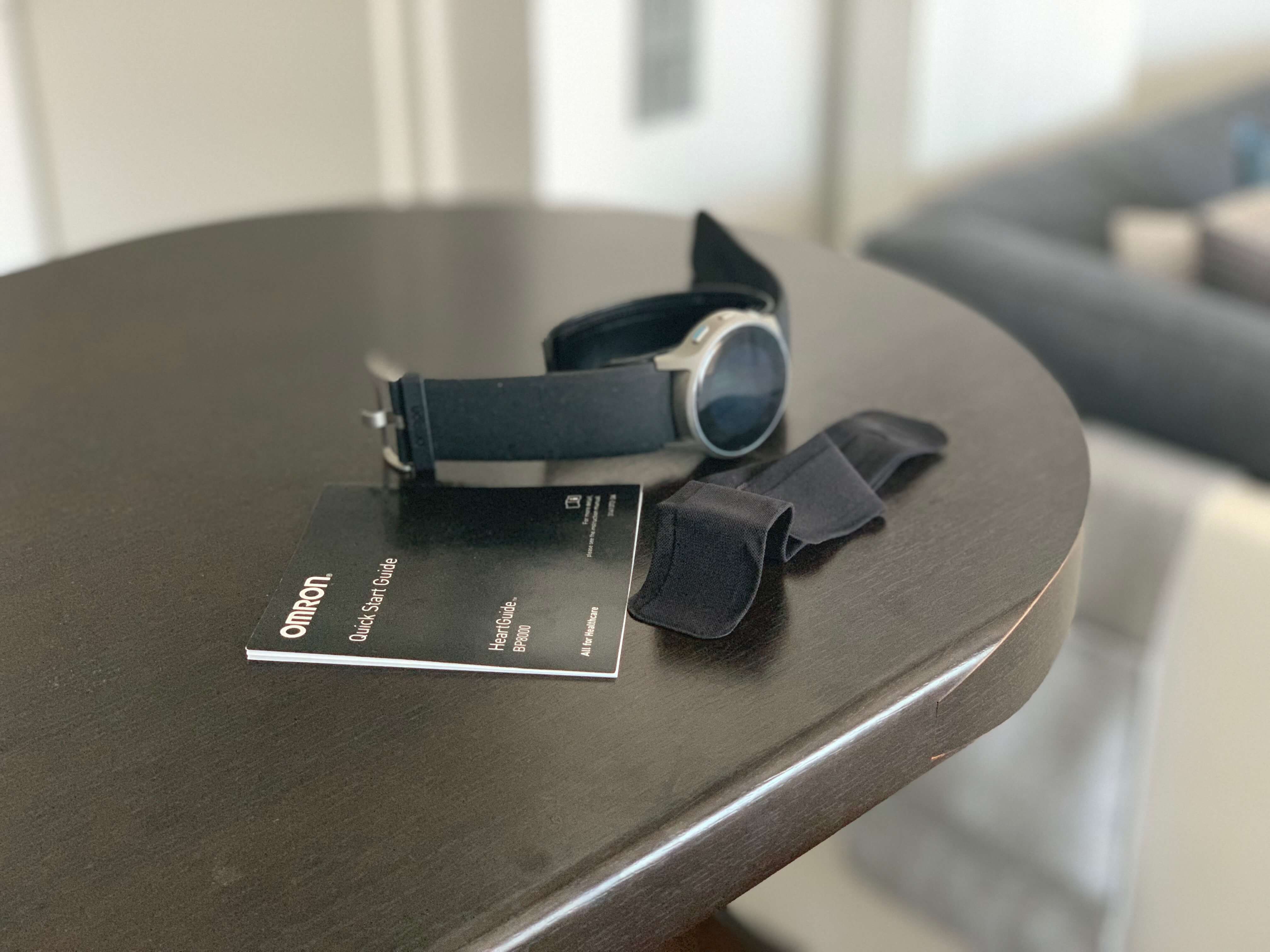
When I opened the box, I found the blood pressure monitor alongside various guides, the charging clip and charging cable, two replacement cuff sleeves, and an AC adapter. I quickly noticed that this device was not designed for everyday use and certainly not designed for women or people with smaller wrists. The smartwatch, although its display looks appealing, feels bigger and heavier than a usual one. It obviously doesn’t fit the definition of comfortable and for 24/7 use, and I cannot imagine someone wearing it all day long unless for self-defense or arm muscle-building purposes.
Looking at the black, geeky and bulky design, the target audience should clearly be men over 60 – who figured they should be concerned about their blood pressure readings and definitely don’t care which shirt to pair their cargo pants with. It’s a pity that so far, developers seem to have left out female audiences with smaller wrists. Although Omron has a smaller-cuff and larger-cuff model planned, they need separate FDA clearances because of different blood pressure algorithms. Thus, we still have to wait a bit until they appear on the market: the larger-cuffed model is expected next year, and the smallest-cuff version will arrive by the end of this year.
How does the measurement fare?
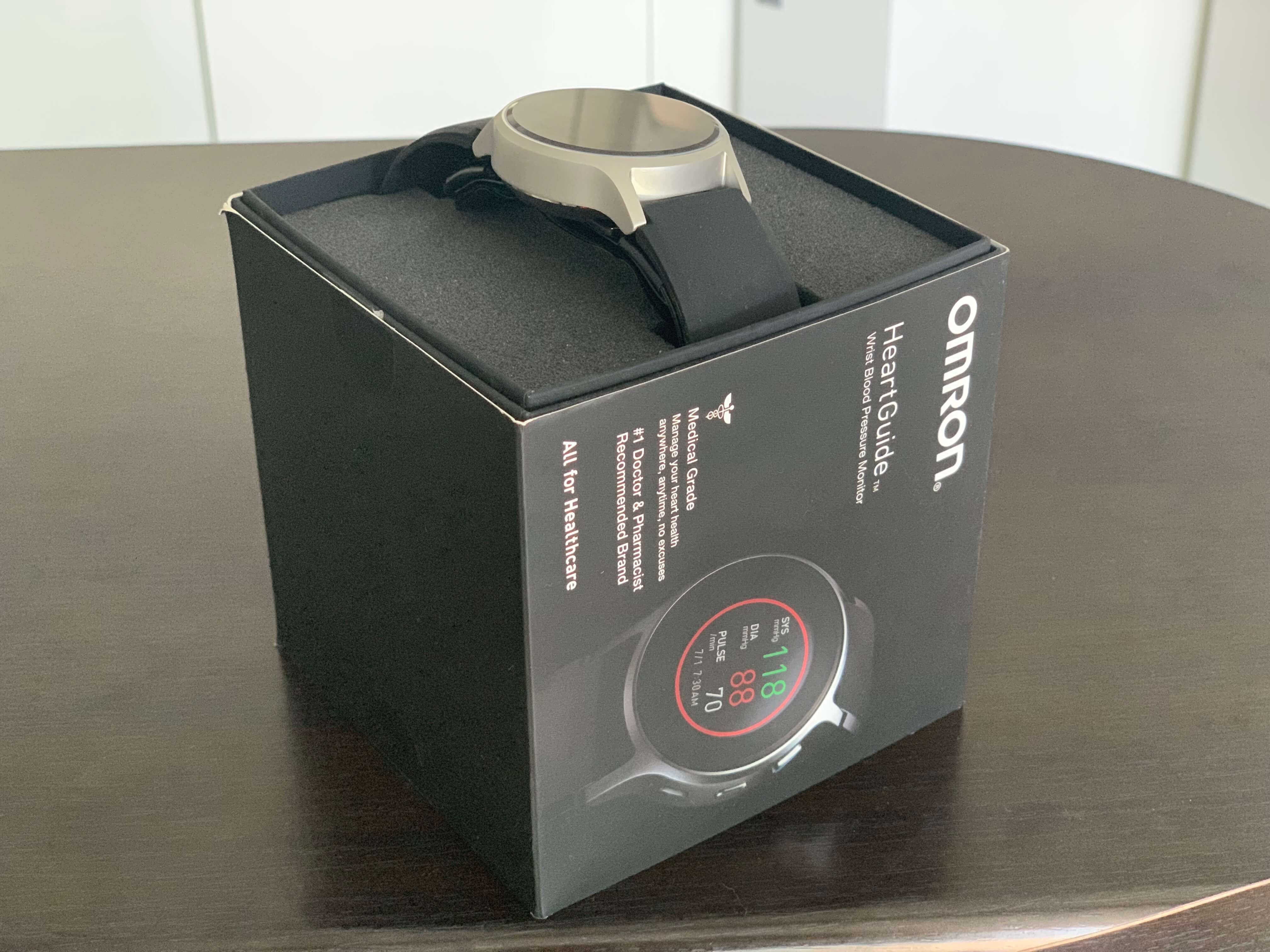
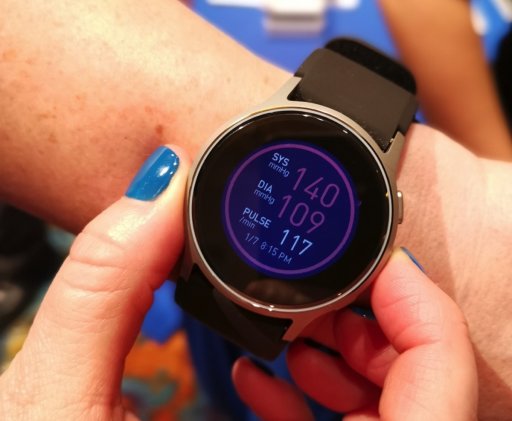
The wrist strap is the bulkiest component of all, although that has a special reason: the layer under the large rubber strap is the inflatable micro-cuff, using the same underlying technology as a blood pressure arm cuff. When you lift your arm with the smartwatch close to your heart, the micro-cuff starts to inflate – and the measurement begins. It’s tricky because you approach your heart with the display of the smartwatch facing outside, thus you cannot see what happens on the display. Did the measurement start? Is it already finished? Is there a problem? You have absolutely no clue, but if you check the display, you’ll definitely interrupt the measurement and have to start all over again.
Me, my wife, and my American colleague, Rafael Grossmann, tried the Omron HeartGuide blood pressure smartwatch several times and compared it to traditional blood pressure cuffs. For me, the smartwatch showed fairly similar readings. My wife compared the HeartGuide with the Omron Intellisense M6 Comfort, a traditional blood pressure cuff. When she measured her blood pressure on her left wrist and right arm at the same time, the HeartGuide showed 108/76 with a pulse rate of 91, while the M6 Comfort read 129/89 with a pulse rate of 86. She also measured these values several times one after another, and the HeartGuide always showed somewhat lower readings (106/73, 112/79, 113/69, 105/71) than the traditional one (125/75, 130/92, 127/77, 118/79).
Rafael Grossmann said that in his case, the diastolic pressure was slightly higher on the device than on a regular arm cuff, but he believes the measurements have been very consistent and fairly accurate. Well, I believe that while the HeartGuide’s inflatable wrist-cuff is rated for 30,000 uses, it should be somewhat recalibrated as it isn’t quite as accurate as it should be.
What else than blood pressure?
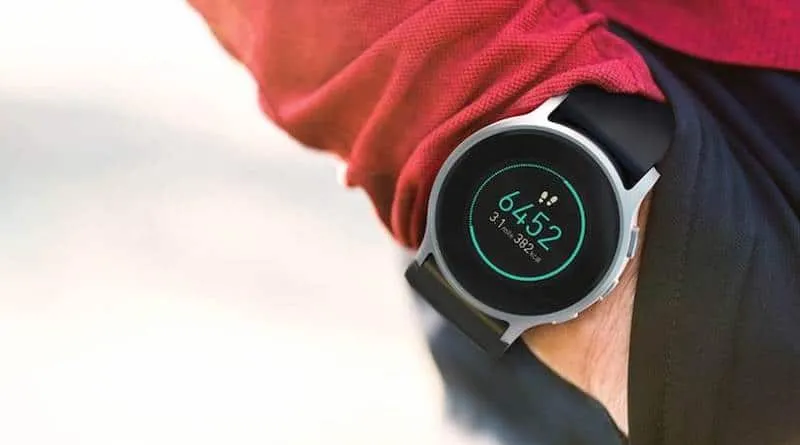
It’s the disease of our modern technological universe that one measurement isn’t enough anymore. You don’t want to buy a smartwatch that’s only able to evaluate blood pressure as you don’t want to put another wearable onto your arm for activity or sleep tracking. That’s why trackers usually aim for multifunctionality. In the case of the Omron HeartGuide, the watch doesn’t have a touchscreen, instead of that, there are three side buttons that handle blood pressure readings, fitness statistics, and Bluetooth pairing. In addition, it measures the basics: shows the passing of time, step count, and logs how many hours the user slept without deeper analysis. It can get notifications of incoming calls and text alerts, but can’t actually read the text.
The company says a typical user can expect to charge HeartGuide 2-3 times per week depending on the frequency of feature use. To charge, you clip it onto a dongle that snaps to the cuff’s edge.
A future update that awaits FDA clearance will take nocturnal readings while sleeping, for results that no current blood pressure device can even do, and might help raise awareness of unknown conditions while sleeping, or effects of medication at night. However, that might be a challenge to develop that feature as currently, you have to lift your arm to get any measurement – and you don’t have that option while sleeping. Nevertheless, I’m honestly pretty curious about what solution Omron will find for this issue.
The Omron Heart Advisor and recommendations for improvement
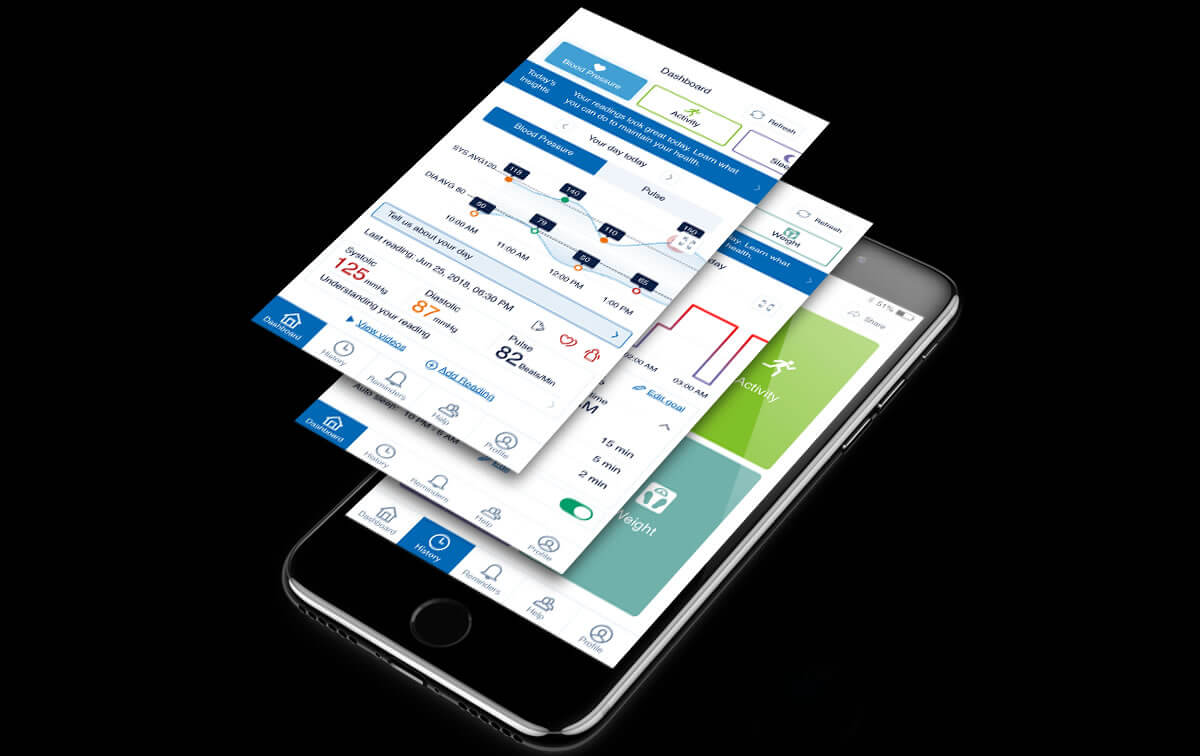
Omron’s Heart Advisor app syncs readings, plus step count and a log of hours slept, to a HIPAA-compliant cloud service. Although, as I mentioned before, the app doesn’t work outside the US, thus I wasn’t able to test it. That should be remedied soon and I hope that the company will be able to ship the device to many more places also outside the US.
However, Rafael Grossmann said that the interface is fairly clear and simple to use, he was very pleased with the software. According to him, the highlights of the app were the reminders that tell the user when to get a blood pressure reading. With regard to improvements, though, he mentioned that he would love to see the battery life of the device extended, as well as a more universal charging cable.
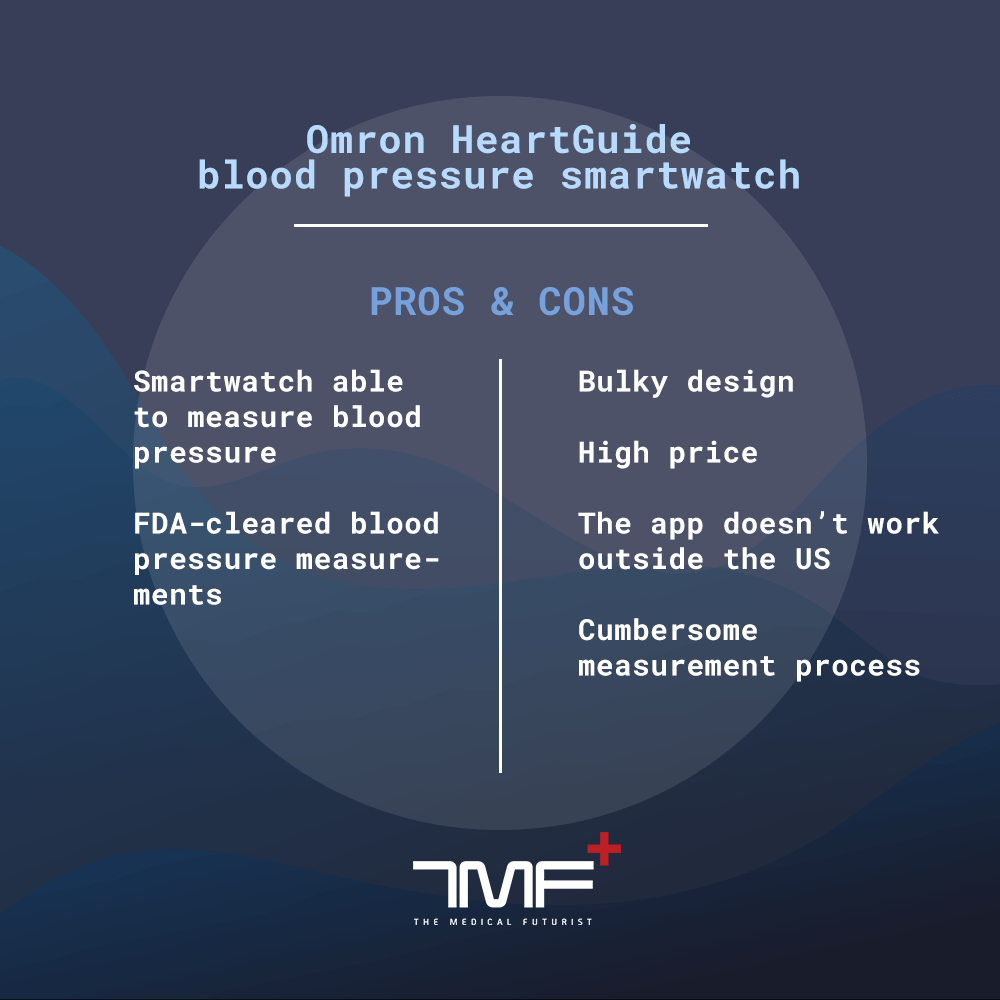
Moreover, with 500 dollars, the price of the device is very high compared to a standard blood pressure cuff from any drug store. Thus, at the moment, the Omron HeartGuide blood pressure smartwatch is not affordable for many people in need. Rafael Grossmann also believes that the smartwatch is a useful way of recording and documenting blood pressure readings throughout the day, but it’s unfortunately not for everyone. I understand that it’s very difficult to develop an FDA-cleared wearable blood pressure monitor and it may take years until the company can adjust all the features to real user needs. However, I hope that Omron will go down this road as fast as possible moving towards a more affordable HeartGuide with user-friendlier features accessible to a wide range of people around the globe. Until then, the blood pressure smartwatch remains a great concept with unfulfilled promises.
|
At The Medical Futurist, we are building a community for making a bold vision about the future of healthcare reality today. If you’d like to support this mission, we invite you to join The Medical Futurist Patreon Community. A community of empowered patients, future-oriented healthcare professionals, concerned health policymakers, sensible health tech developers, and enthusiastic medical students. If there were ever a time to join us, it is now. Every contribution, however big or small, powers our research and sustains our future. Click here to support The Medical Futurist from as little as $3 – it only takes a minute. Thank you. |