My Excel Health: What Can You Learn From My 2018 In Numbers?
Being a data-maniac, I created a health data system to document my vital signs and the progress towards the goals I set in areas of my life which I want to improve. Here’s what I learned in 2018 and what you could get to know about yourself with the help of my Excel spreadsheet system about physical, mental and cognitive health.

8 min | · Updated
|
THIS ARTICLE HAS NOT BEEN UPDATED SINCE 2019. THE INFORMATION SHARED IN THE ARTICLE WAS ACCURATE AT THE TIME OF ITS PUBLICATION, BUT IT MAY BE OUT OF DATE NOW. BROWSE OUR LATEST ARTICLES HERE |
Being a data-maniac, I created a health data system to document my vital signs and the progress towards the goals I set in areas of my life which I want to improve. Here’s what I learned in 2018 and what you could get to know about yourself with the help of my Excel spreadsheet system about physical, mental and cognitive health.
My Excel Spreadsheet Method – A health data system for experimentation
There was no tracker, health sensor or wearable back in 1997 when I started to quantify my health to live to my fullest physical, emotional and mental capacity – for as long as possible, but at least beyond 100 years.
I started to collect data on a piece of paper – and as a starter, I advise you to do the same. (okay if that’s too old-school then in a spreadsheet). I gave a score from 1 to 10 to my mental, physical and emotional health, and I disciplined myself to follow through every day. Starting in 2016, an Excel spreadsheet took over the paper notes, and I’ve been refining the system step by step ever since – according to the technological changes (new fitness trackers such as my latest fitness pal) or my changing needs. For example, based on my system, I figured out that I need daily exercise to keep my mental health, so in 2017, I intensively exercised 27 minutes on average every single day. Last year, I had 25 minutes of intensive exercise on average per day, and I trained 150 hours altogether.
It might be beneficial to log your activity in one way or another to see your progress over time and get an idea what goals are realistic to achieve. Don’t worry, it only takes 2 minutes from your day to give a score to yourself from a scale from 1 to 5 in various areas if you already have the system, but reach out to me if you have trouble starting it or following through! But first, let’s see some data from 2018!
See the interactive visualization of my data here. Check all the tabs above the charts.

1) Mental Health
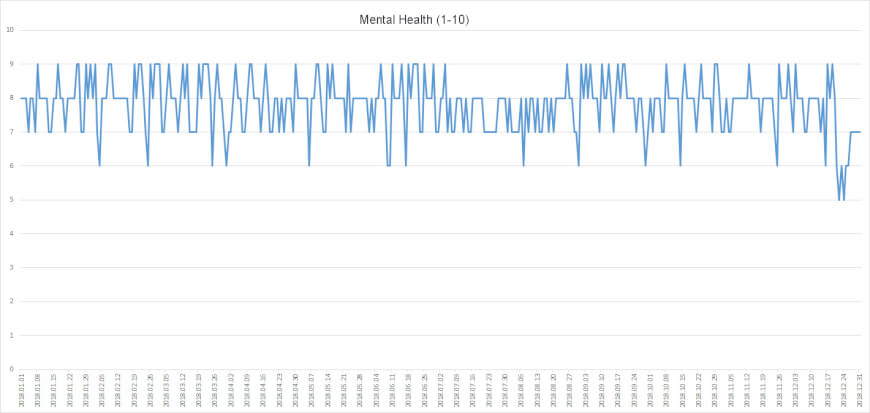
For me, mental health means a high level of cognitive abilities through which you are able to solve complex problems and you are able to focus. In 2018, I had countless days I spent focusing on the things that matter to me the most. I have to say measuring focus is highly motivating: if you already have four days with high levels of focus, you won’t be that hard on yourself on days where your brain melts or you will allow yourself an easier day without remorse.
2) Sleep
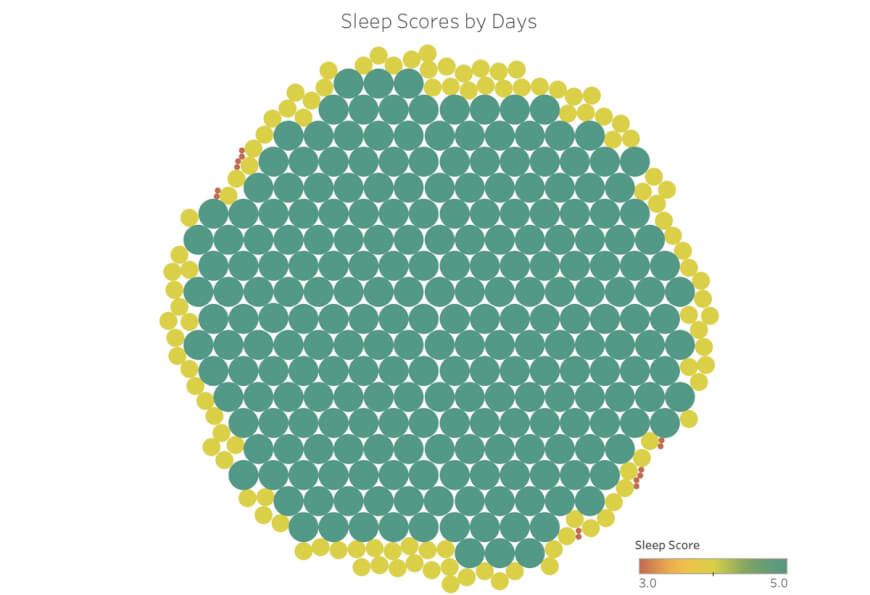
A balanced life is grounded in good sleep. No, it’s not a motivational quote from Paolo Coelho, but that’s the essence of more than 20 years of experience with my quantified self. The secret is that you have to know your chronotype, your sleeping habits and pair it with a great smart sleep alarm. If you want to start the journey to a refreshing bedtime, start it here – with or without sleep apps and sleep sensors.
3) Meditation
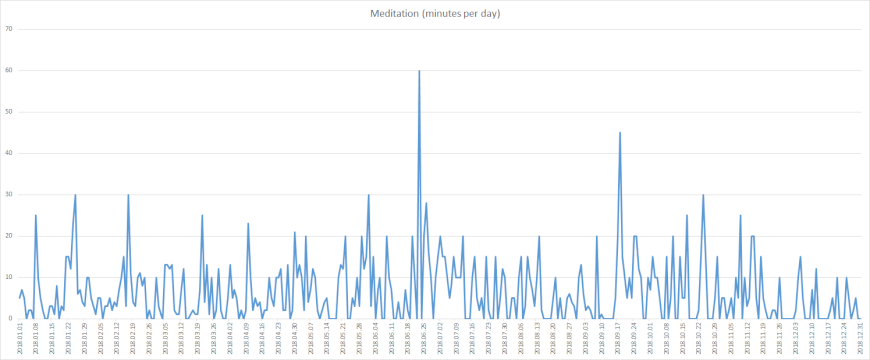
I measure it in a number of minutes spent meditating without interruptions. However, I have to be honest with you, this is the area where I have to make the most progress. I already tried many tools and methods, but I haven’t found the ultimate one for me so far – but I don’t give up! You cannot live a fully healthy emotional and cognitive life without meditation, so I’m relentlessly searching for my method. At first, I used the awesome Headspace application, and I also tried the Muse and PIP. Recently, I meditate the most frequently when I’m on the plane. In 2019, I will rename the category for seeking the experience of flow – so not really motivation but the sense of flow either in having a coffee, during running or meditation. So I had to realize that the real goal here is mindfulness or flow, while meditation is only a method for that.
4) Daily reading time
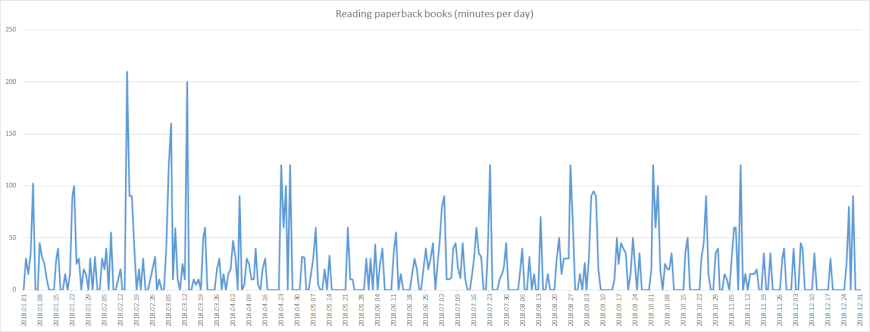
I measure it in a number of minutes spent reading printed books without interruptions. Of course, reading is not about quantitative but rather the qualitative aspects, but a geek like me gets inspiration in data. My target was 20 minutes per day. I have the most time for reading when I’m traveling and sit for hours on a plane. However, if you also want to return to the printed word, I recommend you create your small ritual before going to sleep. Every single day, I try to dedicate some time to reading before I go to sleep – that way I expect that time in bed when I read and I can sleep much better than before. The spikes probably represent flight times.
5) Daily learning time
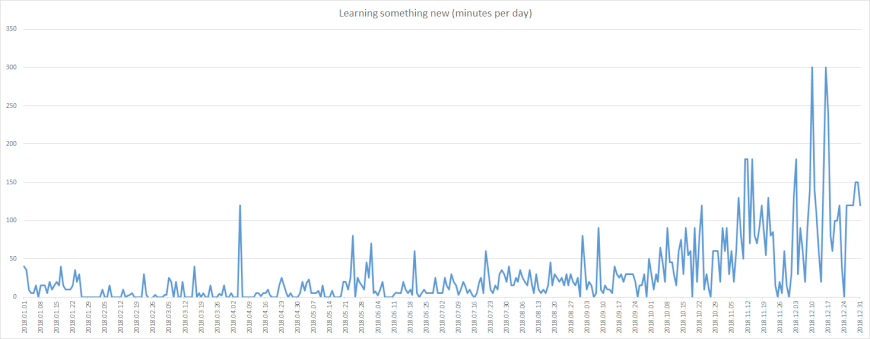
In the previous years, I measured my learning time in learning new languages, first of all, Spanish. However, I realized that the most significant in this respect is to learn something that stimulates your brain every day – no matter what that is. Lately, I discovered chess and I completely immersed myself in it. From the data, it is visible how I got hooked on chess in September and started to spend most of my free time with it. Naturally, the key is to find something that fits your personality and interests – it’s just the bonus that it will also keep you cognitively in shape.
6) Physical activity
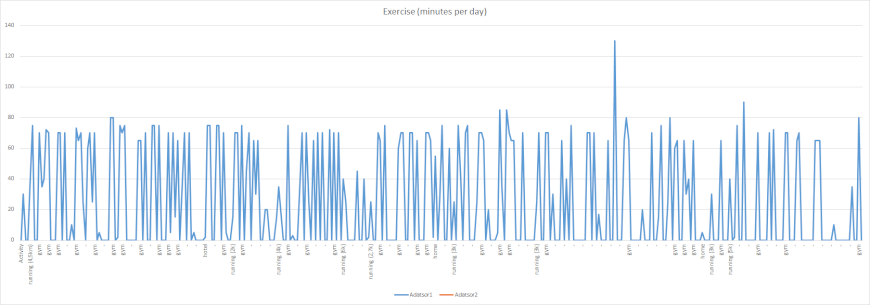
I need to exercise almost every day to be able to focus on my cognitive tasks. Moreover, I literally want to be ready if the chance of becoming an astronaut arrives and I need to get in excellent shape, so if I have the chance, I intensively exercise every day – for 30 minutes on average.
7) Summary and implications
From the measurements of last year, we created various charts which show some quite interesting correlations, causation, and results.
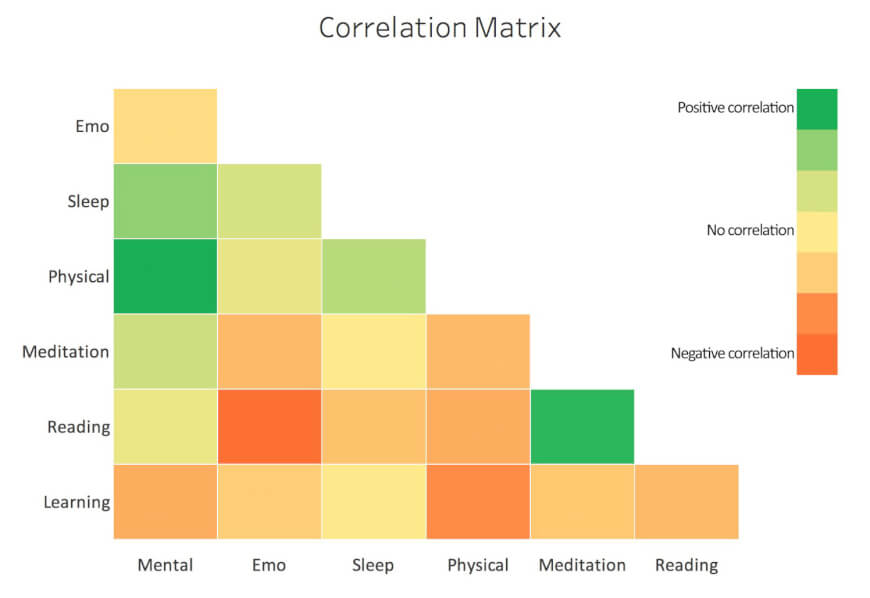
The correlation matrix shows negative and positive correlations between various values. For example, it is visible that physical and mental health correlates: if I work out on Monday, my mental health score will be higher on Tuesday. To a large extent, the same goes for high scores of sleep and mental health, which isn’t a huge surprise.
On the other hand, the correlation between meditation and reading doesn’t mean causation: the values just happen to move in tandem because I usually read and meditate a lot when I travel long distances, so they just happen in the same time frame for the same reason without any real causation.
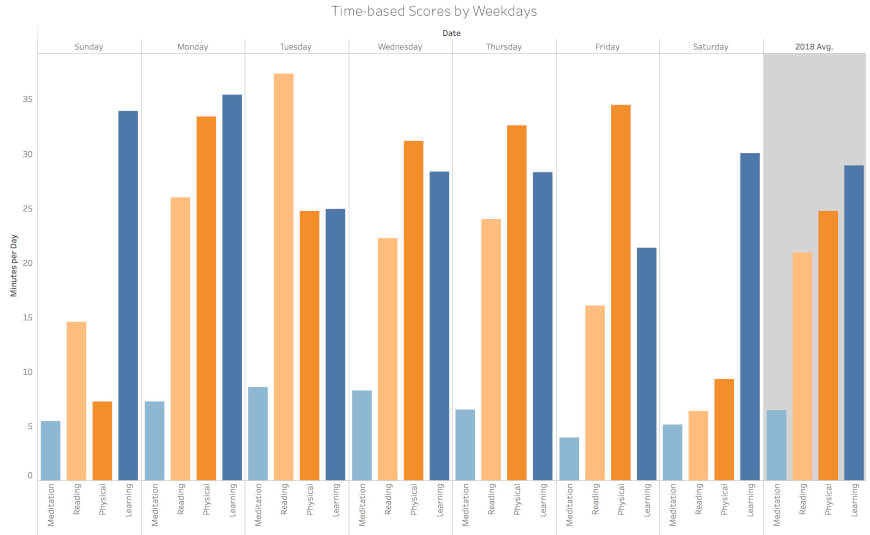
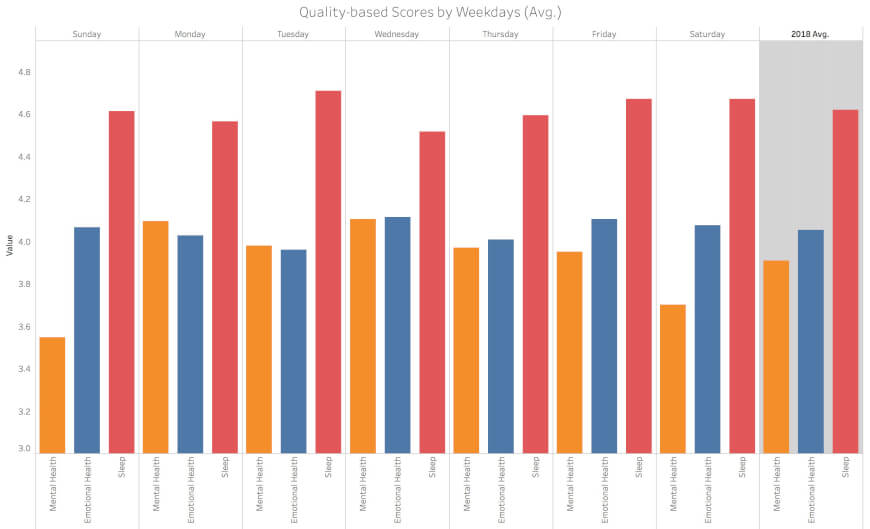
Looking at the weekly average data in both graphs, it’s visible that Mondays are the best days for me (I’m completely the opposite of Garfield) when I can start working and doing the things I love – and my enthusiasm can peak on Tuesday. Regarding learning, my peak days fall on the weekend, when my little daughter, Mira, sleeps during daytime, thus I can spend the most time with her. The secret must obviously be time management, careful planning, and rigorous implementation.
On the other hand, I only include measurements into my system which I want to change or enhance. For example, family time is sacred for me and I know for sure that I will devote a lot of time for that, that’s why I don’t include it in my Excel spreadsheet. Another important aspect of the system is that it’s flexibly changing every year according to the experiences from last year – together with me and my needs.
All-in-all, it’s a fun experiment, an extraordinarily interesting learning curve and a great challenge every year. Let me know if you want to try it and if you want some pieces of advice on how to start it – I would be more than happy if you reached out.
See the interactive visualization of my data here. Check all the tabs above the charts.
|
At The Medical Futurist, we are building a community for making a bold vision about the future of healthcare reality today. If you’d like to support this mission, we invite you to join The Medical Futurist Patreon Community. A community of empowered patients, future-oriented healthcare professionals, concerned health policymakers, sensible health tech developers, and enthusiastic medical students. If there were ever a time to join us, it is now. Every contribution, however big or small, powers our research and sustains our future. Click here to support The Medical Futurist from as little as $3 – it only takes a minute. Thank you. |