It Came From Outside – 5 Great Examples of Technologies from Outside of Healthcare
This article will explore 5 of our favourite examples of technologies initially alien to healthcare but that are becoming integral parts of it.

6 min | · Updated
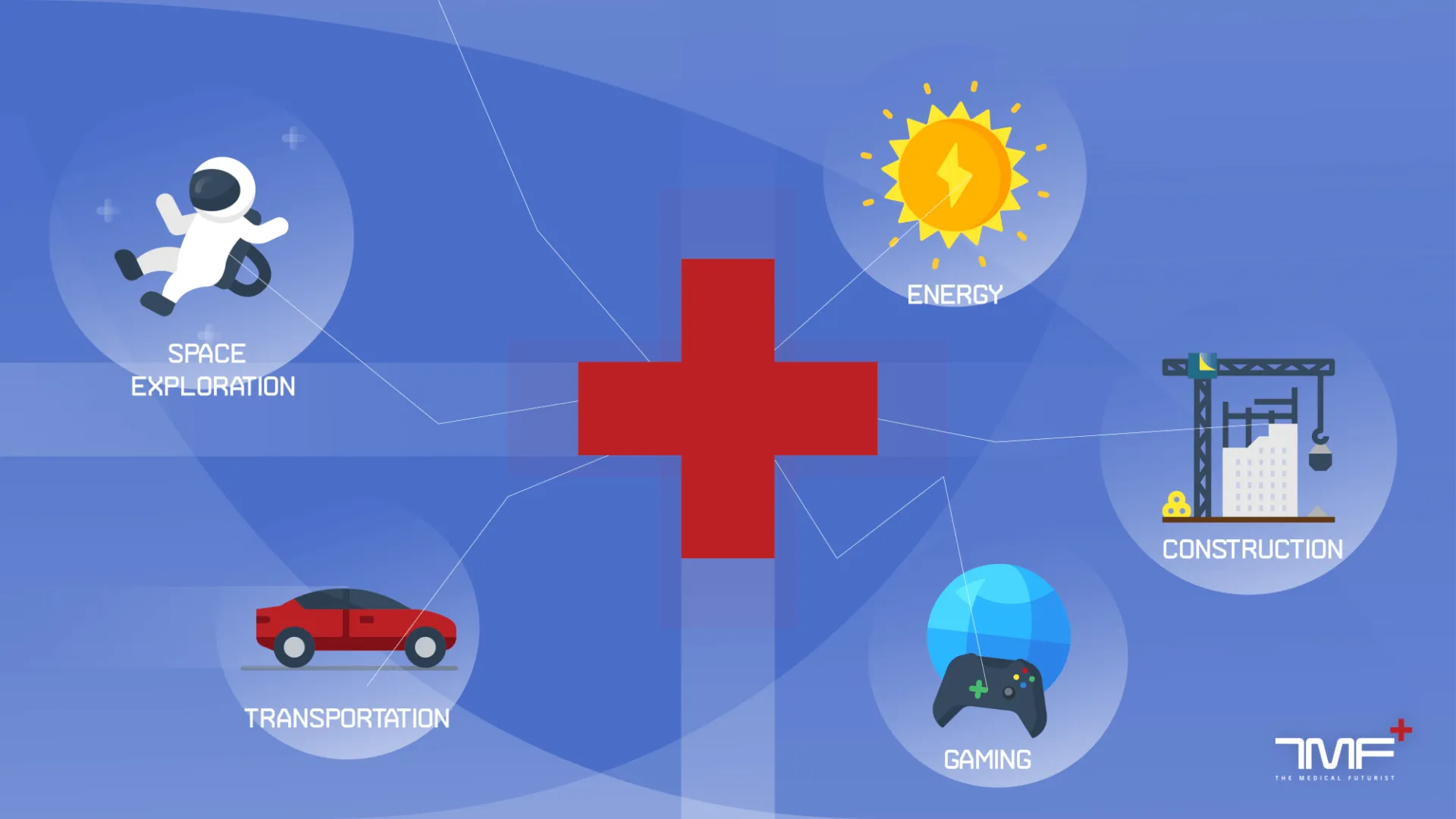
Disruptive technologies are by definition innovations that challenge the status quo of established markets. In healthcare, “disruptive” has become an omnipresent adjective with the advent of digital health. We’ve come across smart forks, a smartwatch with a built-in blood pressure monitor, a ring that tracks your sleep, among many devices which show how technology can help people become more health-conscious and make more informed decisions at home. Sure, they sound like straight out of a Star Trek episode, but such sci-fi-esque devices are realities, freely available to be purchased by the public.
However, the concepts or technologies behind those disruptive devices in the healthcare setting often come from fields traditionally unrelated to it. This article will explore 5 of our favourite examples of technologies that were initially alien to healthcare but are becoming integral parts of it.
1. Want to cure diseases? Let’s play a game!
If your Mum told you as a child that video games aren’t any good, then now you might want to give her a call to tell her that she was wrong. Case in point: Foldit, an online computer game where players can contribute to better understand proteins and ultimately, help curing diseases. By solving puzzles, anyone, without any prior biochemistry knowledge, can try to fold protein structures as perfectly as possible to reach a high score and improve their global rank. The highest scoring structures will then be analyzed by scientists to better understand a given protein’s structure (or how it “folds”) and determine its potential use in curing diseases and finding new vaccines.
So far, the crowd-sourced solutions from Foldit have yielded promising results. In 2010, researchers published their findings about how results from Foldit’s community of gamers provided results which were as good as or even better than algorithmically computed solutions. A year later, in 2011, Foldit players generated protein models that helped better understand an AIDS-related problem that kept baffling scientists for years, and the gamers outdid the latter ones in merely 3 weeks! While breakthroughs of that amplitude have become less prominent, Foldit is still going strong with regular updates and scientific publications.
2. Ridesharing to the doctor
You can ask people in rural and poorly-accessible areas worldwide, they will all report the same: lack of proper transportation is a significant barrier to access to healthcare. Even if transportation facilities are provided by the government, significant gaps are still present in the access to such facilities. With around 3.6 million people missing their doctor’s appointment annually as a result of poor transportation services, ridesharing services like Uber and Lyft found a niche to fill.
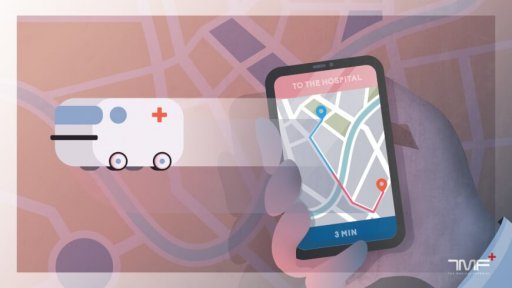
Launched in 2017, Uber Health provides a HIPAA-compliant technology for healthcare organizations to manage and monitor rides for patients and staff to and from hospitals. In late 2019, Lyft expanded its non-emergency medical transportation (NEMT) rides for Medicaid patients in more states, reaching out to millions.
Other companies and startups like Circulation, Kaizen Health and Veyo are also offering on-demand NEMT ride-ordering services for patients to reach hospitals in a secure and reliable manner. Circulation even claims to have on average a 91% patient on-time rate and a reduction in no-shows by 68%.
3. Another block in the chain
With the increased digitization of healthcare and the accompanying need to secure data, the healthcare sector turned to a technology that one would have thought was tied solely to the financial system: blockchain. Developed by a cryptic individual, or a group of equally cryptic individuals, as the underlying technology behind the cryptocurrency bitcoin, blockchain has found a new home in healthcare.
By offering security through transparency, blockchain is becoming an increasingly attractive security measure in healthcare. In fact an IBM Institute for Business Value blockchain study found that the healthcare industry was faster and more open to adopting blockchain than any other industry that they’ve surveyed. Applications of blockchain in healthcare range from securing patient’s health records, like Estonia and Dubai are already doing, to tackling counterfeit drugs with a barcode record system that can be tracked from manufacture to the end user.
4. Automating tasks to bring the era of the art of medicine
When A.I. started to go mainstream, some feared an algorithm going rogue à la Skynet, while others clamored about being replaced by computers. Similar concerns were voiced when the technology was being implemented in healthcare. However, at The Medical Futurist, we don’t think that’ll be the case.
On the contrary, we believe that physicians and A.I. solutions will work hand-in-hand to bring the real era of the art of medicine, rather than compete against each other for the same job. By automating mundane administrative work and even serving as a virtual assistant to physicians, A.I. will free up doctors’ valuable time so that they can spend it more with patients and elucidating medical conditions.

Stakeholders in the healthcare market seem to be betting on the potential of A.I. in this area as well. It is even estimated that the global market size for artificial intelligence in healthcare will increase from roughly one billion in 2016 to more than 28 billion U.S. dollars in 2025.
5. Now you can print out biotissues, pills, casts and more!
If you had told Chuck Hull, the father of 3D printing, that he would see within his lifetime his technique used to print medical prosthetics, tissues and even pills, he might have been tempted to pitch the idea for a new sci-fi show. However, the technology has evolved to actually allow these then-seemingly far-fetched ideas to become reality.
3D printers can make wonders, especially for those in dire medical conditions. Last November, scientists from the Rensselaer Polytechnic Institute in Troy, New York, developed a method to 3D print living skin, complete with blood vessels which can be crucial for burn victims. NGOs like Refugee Open Ware are using 3D printers to provide refugees from war-torn areas with 3D-printed prosthetics. 3D printing is also taking the pharma industry by storm. Other than printing regular drugs, 3D printing is also being investigated for making multi-layered “polypills”. These pills are made to contain several drugs with the aim to help patients adhere to their regiment and better manage their medications. Such applications of 3D printing in healthcare abound and we’ll surely keep seeing more pop up!
Now that we’ve come to the close of our 5 favourite technologies coming from outside of healthcare, we’d love to hear what you think of those. And if you have other examples that you’d like to share, feel free to do so on Facebook and Twitter!