The Medical Futurist Handbook to Fight Against the COVID-19 Pandemic
Under the threat of COVID-19, governments are taking drastic measures worldwide to break the chain of the virus’ transmission. You yourself are probably reading this […]

Pranavsingh Dhunnoo
11 April 2020

Under the threat of COVID-19, governments are taking drastic measures worldwide to break the chain of the virus’ transmission. You yourself are probably reading this at home under a national lockdown or by practicing social distancing, effective measures recommended by public health authorities. Such advice from local authorities and recognized health institutions have to be taken seriously.
Nevertheless, abiding to the #stayathome mantra does come with some caveats. It’s putting a strain on people’s physical and mental health who are forced to face the same walls every day. Relying on online outlets for information and news proves to be challenging due to widespread misinformation, termed as an ‘infodemic’.
The Medical Futurist team always strives to bring accurate news and resources to the public. With the ongoing pandemic, it has not been any different. With our expertise in digital health and technology, we aim to make living in the times of the pandemic a little easier with such methods.
As such, we present our handbook, featuring a collection of trusted resources you can use right now from keeping track of the disease’s spread in your country through digital health apps for your mental wellbeing to helping find a cure with your computer. Our curated examples, ongoing projects and reliable resources are here to aid in your fight against COVID-19.
Below you’ll find examples of selected technological efforts helping in these challenging times. We elaborate on these in our free e-book titled ‘Digital Health and the Fight Against the COVID-19 Pandemic – The Medical Futurist Handbook’. As we come across more resources, we will update it so that you have the most up-to-date resources handy.

Keeping track of the spread
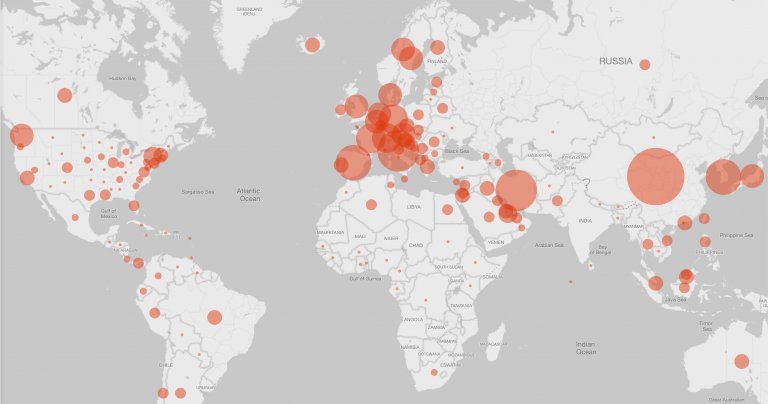
The statistics surrounding the novel coronavirus keep changing at such a fast rate that data from a couple of hours ago are already obsolete. To be in touch with the latest figures, online dashboards are our go-to solutions.
Johns Hopkins University’s online dashboard provides real-time data from all countries in the form of an interactive map. It collects data about the spread from various trusted sources and aggregates them in an easy-to-understand manner.
The interactive Bing map from Microsoft is another alternative. On top of showing the active, recovered and fatal cases globally and countrywise, it lists related news. However, its updates might not be the most timely ones, according to some reports. Nevertheless, it can give a general idea of the current situation.
Mental wellbeing at your fingertips
Juggling with the reality of the pandemic is putting everyone’s mental health under pressure. Half of the adults in the U.S. report high levels of anxiety due to the COVID-19, says the American Psychiatric Association. Thankfully, developers of mobile apps that help cope with the situation are lending a helping hand to both healthcare workers on the frontlines and people staying at home.
For instance, Headspace is giving away its Premium features to healthcare professionals working in public health in the U.S. The company also launched a new feature for free to the general public with meditations, sleep, and movement exercises.
Using cognitive behavioral therapy techniques, meditation, mood and health tracking, Sanvello’s app helps its users get through challenging times. Since we are all experiencing such times, the company made its Premium content freely available.

Remote risk assessment
Stuck at home and want to know if you should get tested for COVID-19 without having to go to the hospital? Dedicated chatbots are here for that!
The Emory University’s School of Medicine launched a ‘Coronavirus Checker’ that assesses your COVID-19 risk following some questions and gives recommendations according to the U.S. Centers for Disease Control and Prevention (CDC). The latter teamed up with Microsoft’s Healthcare Bot service to develop the Coronavirus Self Checker bot to help users make decisions about whether they should get tested. For U.S. users, it also shares the contacts of local health departments.
If you want the advice of a healthcare professional, then telemedicine services are ready-made solutions. Demands for these faced a surge amidst the pandemic. Some like PlushCare and Everlywell are working on at-home COVID-19 testing kits for their users.

Crowdsourcing solutions
We’re all in this together and we can each contribute to fight the pandemic, right at home. That’s why organizations are turning to people to crowdsource for solutions.
A free database with over 45,000 scientific articles pertinent to COVID-19 has been set up by researchers. This will allow scientists to easily find useful information on the disease and advance research in this field. Moreover, it can help A.I.-based algorithms to mine for insights. The Lancet also made content about the novel coronavirus published in its journals freely accessible via the Coronavirus Resource Centre.
Calling to creative minds is Agorize, an open innovation challenge platform. It launched the Code Life Ventilator Challenge to incentivise the community to create the best low-cost, user-friendly and easy-to-manufacture ventilator design. The top three in the list will be awarded cash prizes and their designs will be downloadable for free.

As mentioned, we further elaborate on these topics and more in detail in our free e-book. Moreover, we will update it with new and helpful sources in a timely manner. If you’ve come across relevant examples, don’t hesitate to share them with us on social media! In the meantime, we hope you enjoy the e-book and make the most out of it so that we can fight the pandemic together.