Winning the Battle Against Obesity – Digital Health Visions
If we used the existing digital health arsenal to its full potential, obesity could be efficiently dealt with. Here is how.

6 min |
Key Takeaways
Obesity is not just an individual problem, but a growing pandemic with serious health, social, and economic consequences.
We have a wealth of tools and knowledge available to combat obesity, but these have not yet been fully integrated into our daily lives and healthcare systems.
Kate’s story shows what we could achieve if we fully utilized all the available resources and knowledge in a systematic way to fight obesity.
When we discuss digital health, it’s easy to lose sight of the big picture. How can these new solutions seamlessly integrate into our lives, our healthcare systems, and our overall health management?
There are countless tech solutions out there, many of which are backed by solid scientific evidence. However, they have not yet become widely accessible. There is a huge gap between what we theoretically could do with the knowledge and technologies at our disposal – and what we actually make of this huge potential.
Meanwhile, obesity management remains a global challenge – increasingly so. According to the WHO’s figures, 1 in 8 people in the world lives with obesity. In 2022, 2.5 billion adults were overweight. Of these, 890 million were living with obesity. Why is this a problem?
Obesity increases the risk of type 2 diabetes and heart disease, it can affect bone health and reproduction, and it also increases the risk of certain cancers. Overall, being considerably above the ideal weight influences the quality of living, such as sleeping or moving.
So let’s see what the ideal scenario would look like, and how the digital health revolution could contribute to this issue if healthcare systems, doctors, patients, and regulators were to embrace these innovations.
Meet Kate: our protagonist in the fight against obesity
Meet Kate, a 34-year-old teacher, who has decided to lose weight after her smart scale calculated her BMI and it was over 30.
Following protocol, Dr. Barlow, her general practitioner takes action.
- He provides Kate with a free, evidence-based app called MealMate, designed to assist in maintaining a healthy diet. This isn’t just any diet app: it allows her to take pictures of her meals, and the algorithm immediately determines portion size and provides a detailed breakdown of calorie count, micronutrient and macronutrient distribution. Having millions of recipes in its database, it works with a high level of precision and customization. Kate is impressed by how effortlessly she can log her meals, track her calorie intake, and even receive personalised dietary recommendations. The app also offers a community feature, where Kate can join groups with similar goals.
- Dr. Barlow also pulls up Kate’s DNA and nutrigenomics test results, runs them through the genome-analytics AI assistant that also has access to Kate’s latest lab results, and calibrates MealMate accordingly – for example, to skip lactose.
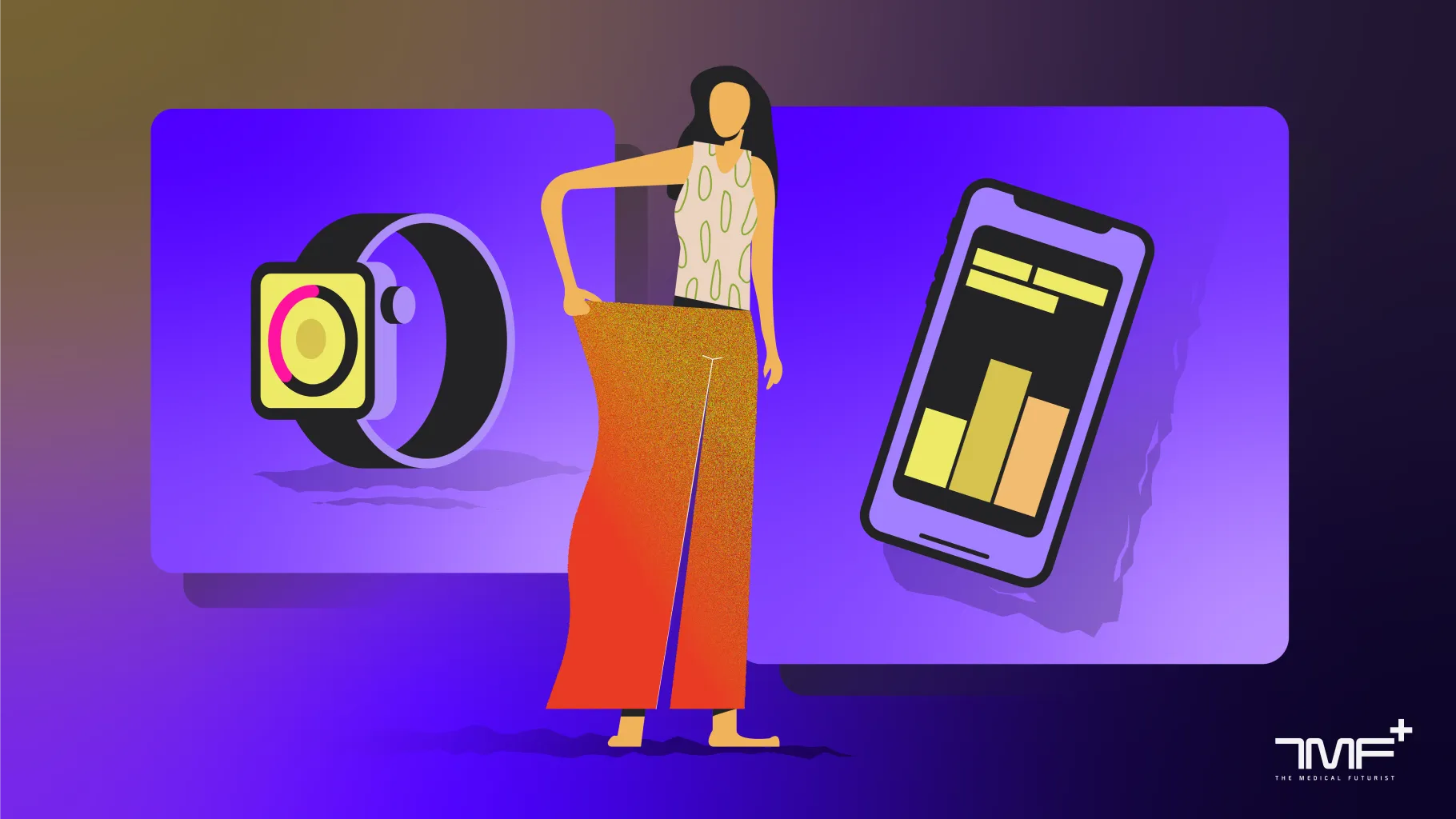
- In addition to the app, Kate’s doctor provides her with a health coupon code that grants a significant discount on a wearable sensor. Excited by the prospect, Kate gets the sensor and soon realizes it’s a game-changer in her fitness journey. It tracks her daily activity, from steps taken to calories burned, and syncs seamlessly with the diet app. It sends her gentle nudges to stay active, rewarding her with points for reaching milestones. These points can be redeemed for rewards, making the experience not only beneficial for her health but also fun and engaging. With the sensor’s data, Kate can see trends over time, set realistic goals, and receive tailored advice on how to enhance her fitness routine.

- Kate gets a generative AI weight loss assistant, Hugo, to provide round-the-clock support for the countless small decisions that arise throughout the day. Hugo has been trained on vast medical databases, can promptly answer everyday questions, works as a shopping guide in the supermarket, and even provides personalised recommendations based on Kate’s individual data and progress.
- The GP also shows Kate a list of online communities and forums where she can connect with other patients on similar weight loss journeys. These platforms offer a space for sharing experiences, exchanging tips, and finding motivation and support.
Reporting back to the doctor with all the data
Every week, Kate’s doctor requests a report on her progress. Even in her ideal world, we can’t quite imagine that these reports would be sent automatically to the doctor from various companies’ platforms. Instead, Kate downloads a report from her app and sensor, compiling all the data on her diet, activity, and achievements. She then emails her comprehensive report to her doctor, who reviews it to ensure Kate is on track and provides further guidance if necessary.
Kate and her GP schedule monthly check-ins to discuss her progress, address any challenges, and adjust the treatment plan as needed.
After Dr. Barlow analyses the data from the first six weeks, he takes a closer look at Kate’s diet as her weight loss trajectory remains under the expected despite following a proper menu and meeting her exercise goals.
- To fine-tune Kate’s dietary approach and exercise regime, they decide to use a continuous glucose sensor for two weeks to get a better view of her metabolism. Thus they discover that consuming oatmeal, usually considered a healthy breakfast option, causes a surprising spike in her blood sugar levels. They adjust Kate’s diet to include alternative breakfast options that better suit her metabolism.
Tangible results and financial benefits keep Kate motivated
After six months, Dr. Barlow reviews Kate’s lab results, weight, and health metrics. With a 10-kilogram (20-pound) weight loss, Kate feels more energetic, sleeps better, and noticeably pants less when climbing stairs.

Her cardio fitness values, cholesterol levels, and blood pressure have improved so significantly that her insurance provider has reduced her premiums.
Is there a future where digital health thrives?
While this is an idealised vision, the technologies and knowledge described in Kate’s story are largely available today. The challenge lies in integrating them seamlessly into our healthcare systems and making them accessible and affordable for everyone.
Through the support of her general practitioner, the integration of advanced technologies, and the motivation from tangible results and financial benefits, our imaginary friend, Kate has made significant strides in her health journey.
The ‘obesity pandemic’ is a result of our 21st-century lifestyle, and we pay the price on personal and societal levels as well. On the other hand, 21st-century technologies and knowledge can transform the fight against obesity, making healthier living a sustainable and achievable reality for many.
As we look to the future, making solid use of these technologies and channeling them into healthcare systems could bridge the gap between potential and practice. Kate’s success is not just a testament to her determination but also shows what’s possible when digital health tools are leveraged to their full potential.
Will it take time until such success stories become the norm? Where everyone has access to the support and resources they need to lead healthier lives? Of course. But this future isn’t just a dream; it’s a tangible possibility.