Finally A Good Wearable Blood Pressure Monitor: Aktiia Bracelet Review
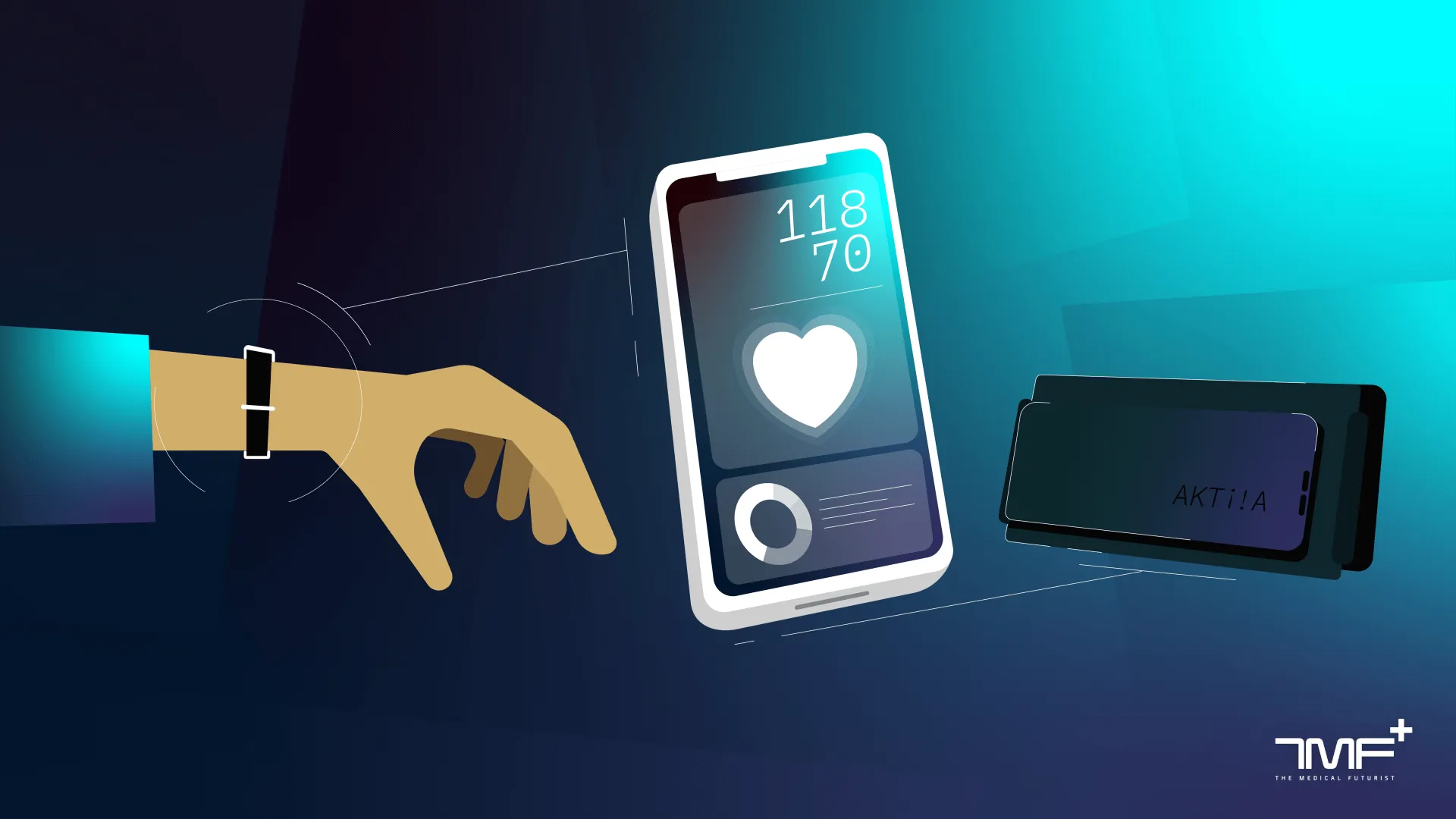
Aktiia is a wearable lightweight bracelet that is designed to continuously monitor blood pressure 24 hours a day without the need for prolonged use of a traditional cuff.

5 min |
Key Takeaways
The Aktiia Bracelet offers continuous blood pressure monitoring, providing readings without the need for a cuff.
The Aktiia Bracelet uses optical sensors and algorithms to deliver accurate measurements, which are validated against clinical standards.
The device is comfortable, user-friendly, and integrates with a mobile app for data tracking and health insights.
The digital health revolution has been lagging behind in at least one major field: blood pressure monitoring. For a very long time, there were no better solutions in the market than traditional cuffs. Even the first smartwatches (like the one I tested from Omron), were big and uncomfortable to wear. So it was time for companies to realise the future of BP monitoring lies in Photoplethysmography (PPG).
PPG is a non-invasive optical technique used to measure blood volume changes in the microvascular bed of tissue. It works by shining a light onto the skin and then measuring the variations in light intensity that result from changes in blood flow. As blood is pumped through the blood vessels, it absorbs and scatters the light, causing the intensity of the reflected or transmitted light to fluctuate. These fluctuations can be detected and analysed to provide information. Photoplethysmography is commonly used to monitor heart rate, blood pressure, and oxygen saturation levels in various medical settings.
Disclaimer: As always, The Medical Futurist is not affiliated with the company, the review is not sponsored, and it reflects my opinion. Companies/service providers first read our reviews after publication.
What is it?
Aktiia is a wearable lightweight bracelet that is designed to continuously monitor blood pressure 24 hours a day without the need for prolonged use of a traditional cuff.
What’s in the box?
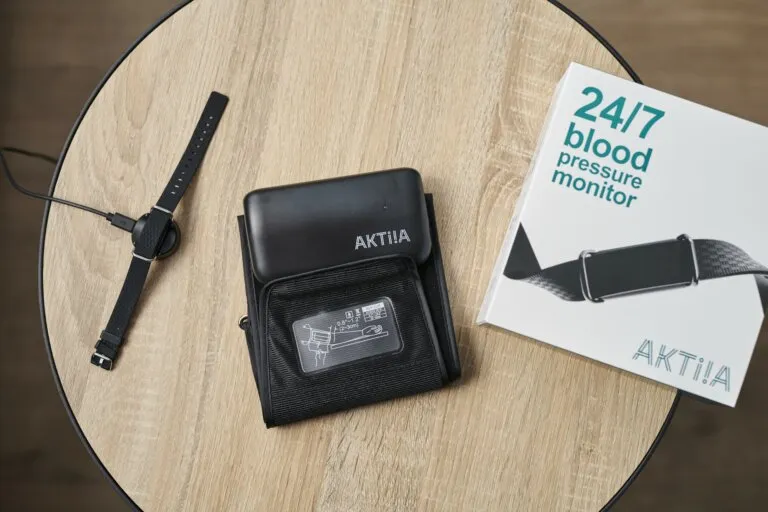
- The Aktiia bracelet
- A charging station and charging cable
- An Aktiia initialization cuff and its charging cable
- User manuals
How does the Aktiia Bracelet work?
The bracelet uses optical sensors and photoplethysmography (PPG) to collect signals from the wrist, which are processed by algorithms to estimate blood pressure. It automatically takes intermittent measurements throughout the day and night when the user is still. The device therefore provides repeated cuffless blood pressure estimates rather than a continuous, beat-by-beat measurement. It also requires initial and periodic calibration with a traditional upper-arm cuff.
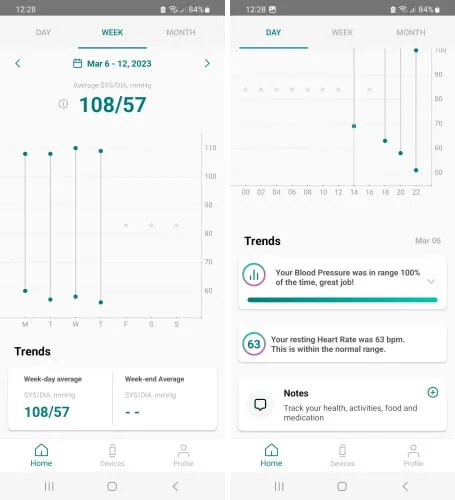
Setting up the bracelet was straightforward. First, I had to do three blood pressure readings with the provided Aktiia cuff on my other arm and that was all the preparation needed, I was ready to go. When the initiation process was completed, the app also informed me when I needed to repeat it to make sure that the bracelet’s readings were in line with the cuff’s.
Validation
This is of course the most important question of all. Aktiia has conducted several clinical studies validating its technology, and the device received European CE marking. However, a 2025 American Heart Association/American College of Cardiology guideline recommended against using cuffless blood pressure devices for diagnosing or managing hypertension because their accuracy and reliability in real-world conditions remain insufficiently established.
This does not mean these devices have no clinical value. They offer promising ways to monitor blood pressure trends over time, but their readings should not yet replace validated cuff-based measurements when making medical decisions.
Benefits of the Aktiia Bracelet
One of the main benefits of such a device is that it provides continuous monitoring of BP, which can help detect changes in BP that may not be detected by intermittent cuff-based monitoring. This can be particularly useful for people with hypertension or other conditions (including white coat syndrome) that require regular BP monitoring. Additionally, the bracelet tirelessly measures blood pressure day and night, providing a never before seen abundance of data. Lastly, it is non-invasive and does not require frequent cuff inflation, which can be uncomfortable for some people.
Limitations of the Aktiia smartwatch
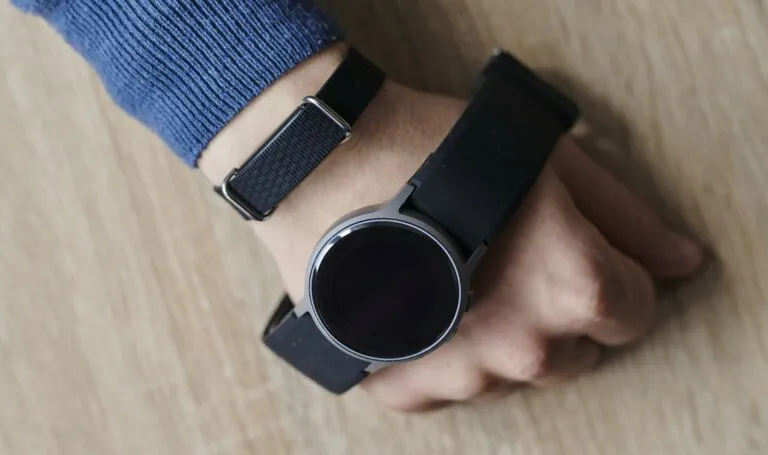
The Aktiia smartwatch is not intended to replace traditional cuff-based BP monitoring, particularly for diagnosing hypertension. It is also not recommended for people with certain medical conditions, such as arrhythmias, as continuous BP monitoring may not be accurate in these cases. It doesn’t do readings during exercises and is not water-resistant. It’s not a fitness tracker after all.
And to be honest, this might prove to be one major limitation in an era when smartwatches and fitness trackers are becoming increasingly popular: this device does one thing only. It does that thing exceptionally well, that is for certain, but I’m not quite sure how many people will invest a few hundred euros/dollars to get an additional bracelet besides their already existing wearable just to obtain more detailed information about their blood pressure while their medical professional might not even trust that data.
Update (November 2026): The current Hilo system has evolved since I tested the original Aktiia bracelet. It now offers IP68 water resistance, sleep and activity insights, and additional app features. These improvements address some of the limitations I identified in my original review, although the subscription requirement adds another factor to consider.
Availability
The technology I originally tested under the Aktiia brand is now marketed as Hilo in Europe, where it is available as a CE-marked Class IIa medical device.
An important milestone came in July 2025, when the FDA cleared Aktiia’s G0 Blood Pressure Monitoring System for over-the-counter use in the United States. However, the Hilo Core product currently sold in the US is marketed as a general wellness product and is not itself FDA-cleared as a medical device.
The European Hilo system also uses a subscription model. According to the manufacturer, an active subscription is required to continue using the bracelet and accessing its blood pressure data.
Summary and Rating of the Aktiia Bracelet
According to the World Health Organization’s 2025 Global Hypertension Report, approximately 1.4 billion adults aged 30–79 were living with hypertension in 2024, and only about 23% had their blood pressure under control.
A reliable wearable that continuously monitors blood pressure, without the need for an uncomfortable cuff, is the way forward in the digital health revolution. I haven’t tested similar products yet so I cannot compare the Akttia bracelet to other products, but this bracelet shows that non-invasive BP monitoring has huge potential for the near future.