The Top Digital Health Solutions In Epilepsy Management And What We Still Miss
Digital health tools are greatly helping epilesy patients, creating an ecosystem in which they are enpowered to have bigger control. Devices however still need to improve.

Dr. Bertalan Mesko, PhD
24 February 2022

Epilepsy is the 4th most common neurological problem, following migraine, stroke and Alzheimer’s disease in the frequency of occurrence in the United States. Young children and older adults experience epileptic seizures the most often, but all in all, according to statistics, when the incidence of epilepsy is looked at over a lifetime, 1 in 26 people will develop this disease at some time in their life.
If we look a bit further, the picture is even darker. According to recent statistics published by the WHO, approximately 50 million people worldwide have epilepsy, making it one of the most common neurological diseases. Meanwhile, CDC believes the number of epilepsy patients worldwide is around 65 million. Nearly 80% of people with epilepsy live in low- and middle-income countries, and according to WHO, some 70% of them could live seizure-free if they had access to proper diagnosis and treatment.
However, that is not the case for many, even in developed countries. A significant share of epilepsy patients do not react well enough to medication, and have to live with seizures.
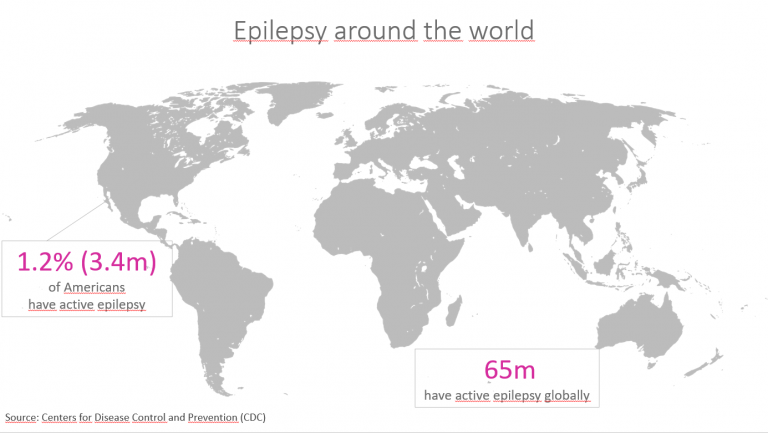
‘For the more than 3 million epilepsy patients in the U.S., just over half can adequately control their seizures with a single drug or a combination of two medications. However, about 40% have drug-resistant epilepsy’ – says Johns Hopkins’ neurologist and epilepsy specialist Gregory Krauss in this article reporting about the potential of a back-then-new, by now approved drug.
WHO currently believes that the number of patients not reacting to seizure control drugs is around 30% of all epilepsy cases.
The constant fear of unpredictable seizures, and the anxiety and isolation that comes with it
Researchers all stress the fact: living with epilepsy is living with a stigma that has been with us for thousands of years. Humanity has written records of the conditions from 4000 BC, records as old as the fear, misunderstanding and discrimination surrounding the disease.
While pharmaceutical researchers are doing their best to help patients living with epilepsy, the lack of universally working medication means that tens of millions of people have to live their life with the unpredictable nature of epilepsy, and with the constant fear of seizures.
It’s easy to understand how this undermines quality of life. The uncertainty of when one will have the next episode often leads to anxiety, isolation, and depression – on top of the significant primary health risks of epilepsy.
Which leads us to the question: how reliably can we predict seizures? Is there a solution?
This is where digital health solutions come to the picture
Long story short: unfortunately, we don’t have a sure-fire solution yet. But this does not mean that medtech companies are not working on a number of interesting and potentially revolutionary products to support people living with epilepsy.
These products belong to three different categories:
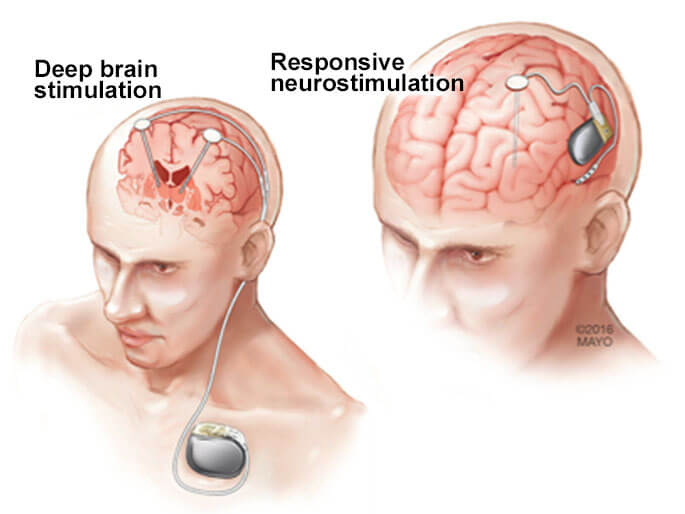
Implant devices – like VNS (Vagus Nerve Stimulation), RNS (Responsive Neurostimulation) and DBS (Deep Brain Stimulation). These devices are typically used to treat patients who are not responding to drugs and for whom brain surgery to remove the affected area is not an option. Also here belong the implanted EEG devices allowing the monitoring of patients for extended periods.
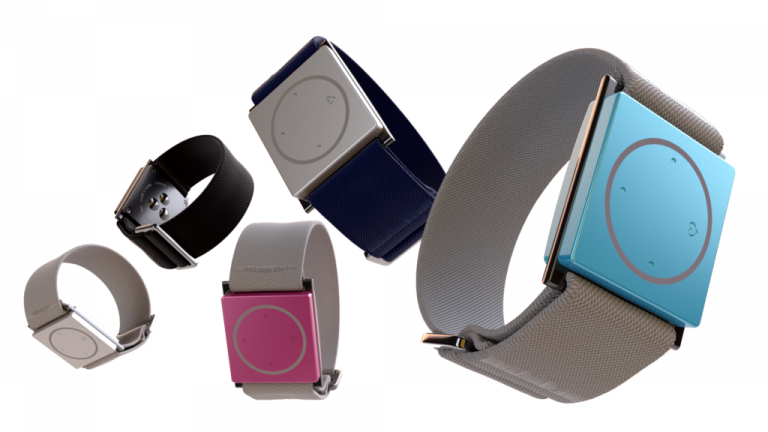
Wearable devices – like seizure detection watches, bracelets and headbands, behind-the-ear sensors, and similar. These are designed to notify the user and/or relatives, caretakers about a seizure or the risk of seizure.
Devices in the surrounding space – like under the bed detectors, and home video seizure monitoring/alerting devices monitoring unusual movement patterns potentially signaling epileptic episodes.

We need invisible devices
‘As good as these devices are, we still need to do better’ – says Dr. Adam Schmidt, Pediatrician, Digital Health Expert to The Medical Futurist.
‘We need invisible devices. Patients don’t want to wear anything that makes their condition obvious to the outside world. The stigma is so strong that many of them rather choose to not use the device, even if they know that they are taking a risk when doing so. Epilepsy patients dream of invisible, miniature, comfortable, and sensitive gadgets that are reliable enough to predict a seizure, but invisible enough so others don’t notice it. I believe we need something similar to a tattoo-like sensor, forwarding signals to a central unit. But it is not possible with the currently available methods, as there would be too much noise.
Focusing on the holistic approach
‘To make sure digital technologies can do their best to improve life for people living with epilepsy, we need to build an ecosystem: an environment in which epilepsy is monitored from a number of angles. Instead of focusing on seizures alone, treatments must be determined based on a holistic approach, considering not only acute episodes, but also the life the patient leads, his general and epilepsy-specific health condition, as well as external factors influencing the patient’ – says Dr. Schmidt.
This ecosystem has three basic building blocks:
1. Self-management
Besides treatments determined by the epileptologist, patients have responsibility for the maintenance of their life. They can rely on a number of techniques, apps and devices to support self-management, such as meditation apps, mood management apps, and anything that helps them regularly do sports, have good nutritional and sleeping habits. Focusing on these aspects helps patients learn more about factors provoking seizures, and with human and digital support can minimize their occurrence. These applications, these tools of patient education convey the knowledge of how patients can influence their own health conditions.
2. Active monitoring
The goal is to make sure epilepsy patients actively monitor their lives and condition via a number of applications, like digital epilepsy assistants and lifestyle apps. A number of digital seizure tracker apps are available, but we should also mention medication management apps, video tools allowing patients to record their appointments with their practitioner, list their questions before the appointment and provide an option to videos to show to their doctors. An appropriately managed seizure diary gives a profound general picture of the patient’s condition, which can serve as a basis for refining or modifying the treatment.
3. Passive monitoring
Passive monitoring devices can be worn on the body or placed in the patient’s surroundings, and their goal is to record seizures and inform relatives about their occurrence. Besides elevating the sense of safety, these are important tools to save patients’ lives in case of severe episodes. Devices reliable for predicting seizures are not yet available, but hopefully will be.
Hello, A.I., what can you do with the data?
Easy to understand that the more medical and lifestyle data we can collect about the patient, the more we can do. There is an ever-growing number of tools to support data collection: smart watches, wearable sensors, portable EEG devices. But collecting data alone won’t do much unless we are able to work with it. That is where A.I. algorithms step on stage: they process and organise the data we collected, and look for patterns and correlations between data and real-life events.

An example: there are undergoing experiments to figure out if it is possible to detect or even predict seizures based on heart-rate variability. The algorithm analyses the patient’s heart rate data in rest, before, during and after the seizures and tries to find patterns that only present themselves related to seizure episodes.
If we knew how dogs do it…
It is known for a while that some dogs – with years of careful training – are able to predict seizures and warn the patients. But how do they do it? We asked Dr. Adam Schmidt to explain how much we know about what dogs detect about seizures and how much we can utilise it.
There are two theories, but as all these studies and experiments involved a small number of patients and dogs, we have to be careful about their findings: there is simply not enough data.
It is possible that dogs can smell epilepsy, which would mean that there is a substance to be detected if we knew what to look for and if we had sensitive enough devices to detect it.
The other theory, however, says that dogs might recognise minute behavioral changes, undetectable for the human eye.
‘If we knew how dogs know, that would be brilliant. It is absolutely possible that we already have the technology to detect, but at the moment, we don’t know what we should detect. I predict that we still need a decade or two to get there. If I have to guess where on a scale from 0 to 100 we are in understanding how dogs detect seizures, I would say we are at 20, and probably even that is an optimistic guess.
If dogs indeed catch a change in behavior, and that is present in movement patterns, I believe it would be possible to detect the same pattern with an algorithm. If they smell the seizures… that would be much more difficult to replicate.