The Dark Side of Health Trackers
At The Medical Futurist, we’re great fans of wearables (or health trackers) that help you make more informed decisions when it comes to your health. However, we can’t stay indifferent to the potential risks which using these devices entail such as individual tracking, inaccuracies and even supplementing harmful behaviours.

7 min | · Updated

Say you’ve received a brand-new Fitbit for Christmas to get you started in tracking your exercise routine and reach your fitness goals. Great! However, there might be more going on behind the scenes of you keeping fit with the help of technology than meets the eye…
At The Medical Futurist, we’re great fans of wearables (or health trackers) that help you make more informed decisions when it comes to your health. However, we can’t stay indifferent to the potential risks which using these devices entail such as individual tracking, inaccuracies and even supplementing harmful behaviours.
Just like the Jedi Order’s Light and Dark side of The Force, health trackers also have contrasting sides akin to the Sith and the Jedi, and you might have unintentionally signed a pact with the dark side already… In hindsight, it might have been a better idea to have asked for a LEGO Millennium Falcon instead…
If you were oblivious about the flip side of the health-tracking industry, then join us as we explore the lesser-known, darker side of wearables.
Cyborgs under surveillance
While fitness and health trackers are practically turning us into cyborgs, they are also increasingly allowing us to be tracked in ways we might not be aware of. In an eye-opening piece published last December, the New York Times showed how, by using only a fraction of location data obtained from a location data company mining that information from various apps, they could track and identify people from military officials to Hollywood stars. A singer whose activities they tracked couldn’t even name the app that might have collected the data used, even though she was careful about limiting how she shared her location.

Source: https://www.nytimes.com/
And you know what tracks your every move, every second, everywhere? Your fitness tracker. The device and/or its companion app will thereafter present the collected data in a nice map for you to analyze your outdoor running session or hike. Sure, they might claim that your location data is anonymized and secure with no identifiable information but the New York Times’ article called it “child’s play to connect real names to the dots that appear on the maps”. And they showed how they could pinpoint a single user’s data and track that person’s routine.
If you consider that the global number of connected wearable devices is expected to amount to over 1.1 billion in 2022, then you are very likely to be among the owner of such a device which might be giving away your location history to potentially unscrupulous third parties…
When health trackers pose a risk to one’s health
Even though health trackers are advertised to improve one’s health, it can also work the other way round.
In an article published in The Conversation, the authors found out that in a study with 200 women with a Fitbit tracker, 79% felt pressured to reach their daily targets, while 59% reported that they felt their daily routines to be controlled by Fitbit. Such pressures can exacerbate feelings of anxiety that some feel with such devices strapped to their wrists. Similar concerns were also voiced by Twitter users who replied to Dr. Meskó’s recent tweet.

Source: https://theconversation.com
In other cases such pressures and the ease of analyzing one’s performance that wearables offer can even supplement harmful behaviours like addiction to exercise, a condition affecting about 3% of the exercising population.
Others, overly obsessed by the collected data, self-diagnose themselves with issues that don’t exist. In certain cases, people suffering from eating disorders had their condition worsened with the use of fitness trackers.
At that price, it should be accurate… right?
With the cost of wearables often reaching as much as or more than smartphones (the Apple Watch Series 5 starts at $400), potential buyers might be put off by the price tag of the more accurate ones while they’re more doubtful about the cheaper ones. Moreover, users might worry whether the data they get is accurate and practically useful. Some would like to use the data to support medical decisions but are not sure whether it could be used for that.
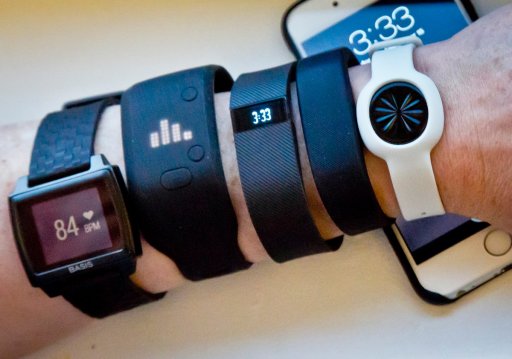
In fact, researchers at Stanford University School of Medicine found that out of 7 fitness trackers tested, 6 measured heart rate within 5%. However, not a single one measured energy expenditure well. Other experts are even pointing out the limitations of fitness trackers’ ability to measure even these devices’ basic feature of counting steps.
Source: www.navytimes.com
Some are even concerned about the increased prevalence of false positives with using over-the-counter devices like the Apple Watch for ECG measurements. “For the vast majority of people it will have either no impact or possibly a negative impact by causing anxiety or unnecessary treatment,” cardiologist Theodore Abraham, director of the UCSF Echocardiography Laboratory, told Wired.
I choose… what my device tells me to choose…
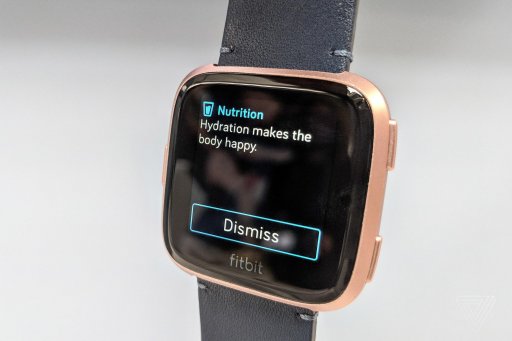
Fitness trackers can help you in myriad ways and will be sure not to skip reminding you of the great ways they can assist you. Been sitting for too long? Your fitness tracker will buzz to recommend you to stand up and stretch for a bit. Time for your daily afternoon run? Buzzing again, your wearable will send you a notification about this. Worry not, the built-in smart alarm will alert you when to sleep so that you can make it to that early morning meeting energized.
Source: https://www.reddit.com/
One could easily decide to ditch their wearable and go about with a piece of technology strapped to their body. But then waking up feeling energized or tired will depend on pure luck, or you might accidentally skip your planned workout session. Given the advantages that a fitness tracker offers, one might think twice before ditching theirs. As such, users’ freedom of choice becomes limited even if the advantages are known.
Where the grass is greener…
The grass might not be greener where those with wearables stand, given the risks enumerated above. However, there are steps that you can take to make fitness tracking safer if you’re still on the fence about strapping your new Christmas gift to your wrist.
It can help to know more about the device you are using, its company and the data they are collecting and how it is stored. Such information can be obtained by reading the wall of text in the user agreement you have to agree to before using a service. If you don’t agree with something, then consider if it’s worth trading your data for.
For tighter control over the data collected, the same authors of the New York Times article shared 3 quick steps that you can take. These include manually stopping location tracking by apps, disabling mobile ad ID and switching off location sharing in your Google account. Where applicable, you can also set up two-factor authentication on your accounts.
If you’re using a fitness or a health tracker to better monitor and/or attend to a medical condition, you should do so under the guidance of a medical professional. Moreover, any aberrant results you might come across should be cross-checked with a professional.
Additionally, we’d recommend that you use your wearables responsibly, and consider them as an add-on to maintaining a healthy lifestyle, without the devices themselves becoming hindrances in your life. Be sure to check out our Health Sensors & Trackers articles for more in-depth discussion and reviews of the latest devices.