The Body Map Of Health Trackers: Infographic
The health tracking market is booming. What with smart bracelets, smart beds and smart chest straps, the tracking industry has penetrated the lives of old […]

8 min | · Updated
The health tracking market is booming. What with smart bracelets, smart beds and smart chest straps, the tracking industry has penetrated the lives of old and young from the time they wake up in the morning to the time they hit the bed at night (and beyond). It’s no wonder that user penetration is projected to reach 25% of the adult population by 2022 in the US alone and that these devices are being adopted by over 30% of individuals across all age groups.
Naturally, I count among those adopters. I call myself a data geek, using the data accumulated from myriads of health trackers to help me make more informed health choices. I’ve compiled a 6-month sleep tracking experiment, tested sleep headbands, used smartwatches, among many others with The Medical Futurist team to share our experiences with you so that you can get an insight into the world of health tracking.
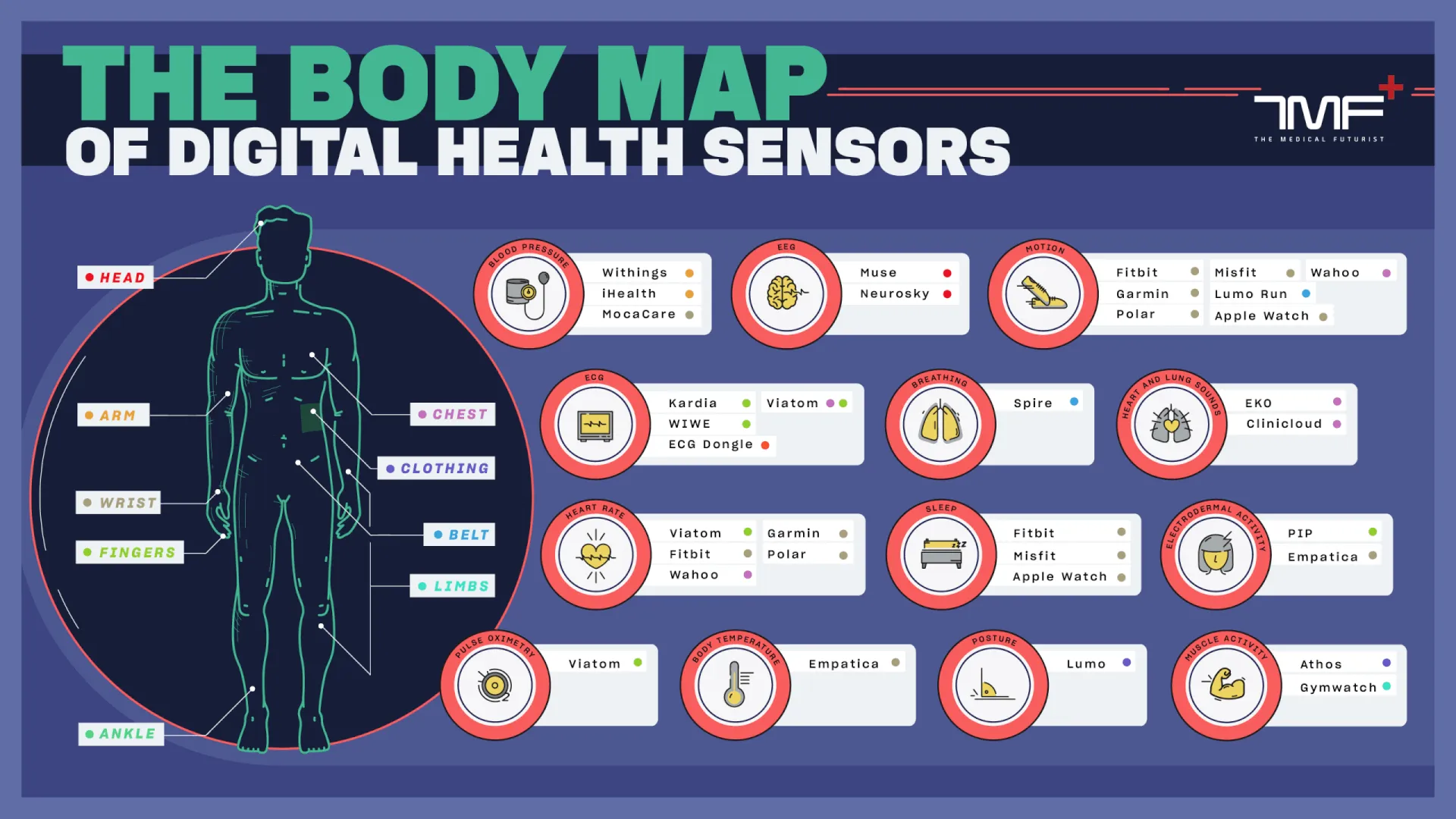
Digital health allows us to measure a gazillion of health parameters, many of which were confined to the ivory towers which medical facilities have been for centuries. We’ve created an infographic to show you what aspects of your body you can measure at home today with dedicated devices and even listed the top wearables for a healthy lifestyle.
Nevertheless, if you’re still on the fence, I will share with you what health trackers have helped me analyze and how they’ve subsequently helped me make more informed decisions. Let’s see them from head to toe!
Brain a-muse-ment: the Muse headband
First things first, let’s start with the head! The Muse headband is one which, once worn and powered on, measures your brainwaves by means of its 7 built-in sensors and aims to help you meditate via gamified sessions. By pairing it with a smart device and the companion app, you will get real-time feedback on your brain activity in audible forms: storms (active), sound of waves (neutral) and chirping birds (calm) where your goal is to reach a calm state.
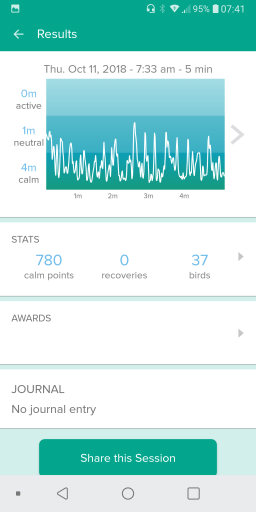
The Muse has an initially steep learning curve, but it helped me learn how to meditate properly through its immediate feedback. When I first used it, I found out that whenever I try to meditate, my brain is hyperactive, I cannot calm down and cannot relax. By training with it, I found out the main things that I personally need for a successful meditation session. Now I don’t have to use the device to try to reach mindfulness.
Such a device has the potential to help manage one’s stress, attention focus and even aid in serious conditions like depression, chronic pain and ADHD.

Keeping it close to the heart: Polar H10 Chest Strap
Strapping a chest strap like the Polar H10 around your chest might not be fashionable for at least some time (if ever) but you wouldn’t mind trading its look over its functions. The Polar H10 is a versatile add-on heart rate sensor for many existing gym equipment, apps and smart devices. With its accuracy and detailed tracking, it can help you better analyze your workout more than what your Fitbit is already allowing you to.
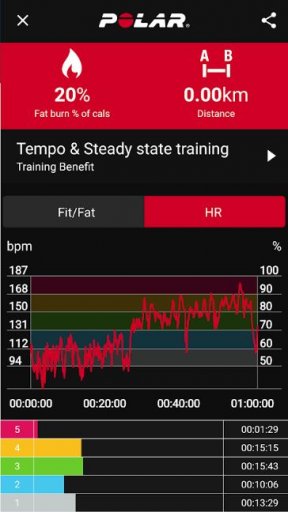
My favourite feature is the Orthostatic Test, which monitors how my body responds to training. By taking this 4-minute test in the morning, the app’s algorithm maps out how my cardiovascular system is performing based on my personalized results. I can subsequently fine-tune the routines with my trainer according to how much I can exert my abilities.
All-rounder around the wrist: Fitbit Ionic
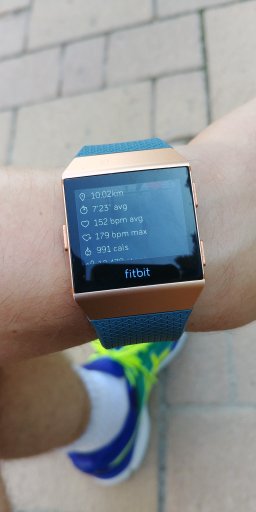
Wrapped around my wrist is one of my favourite devices. The Fitbit Ionic is not only an activity tracker that I can use in tandem with the Polar H10 to optimize my workouts. When it comes to activity tracking, the Fitbit Ionic monitors most of what you will need as a starter: daily steps, heart rate, calorie burnt, GPS. The live coaching feature gives me immediate feedback on my performance and to keep me motivated. Additionally, there are gamified notifications that allow me to keep track of how I’m progressing towards my goals.
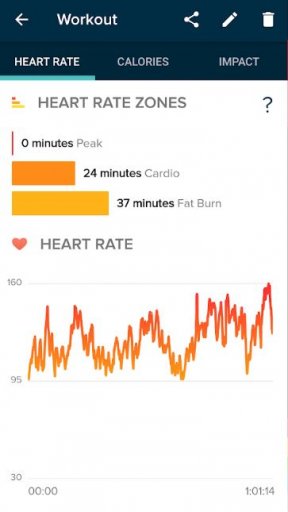
On top of these, the Ionic also a great sleep tracker which, once paired with a smart alarm app, wakes me up at the optimal time every morning. This is what I consider as the holy grail of health tracking. It doesn’t end there as the Ionic packs smartwatch features, allowing you to load music and receive notifications from your phone. If you’re looking to get started with health tracking, you can’t go wrong with the Fitbit Ionic.
At your fingertips: PIP
Stress is an integral part of our lives. From navigating through the traffic during your commute to wondering if Jim Hopper will come back in Stranger Things 4 to basically anything you have to do to, well, live, there is a stress factor. While some manage it better than others, we could all use a little help from technology, especially when it’s literally at our fingertips!
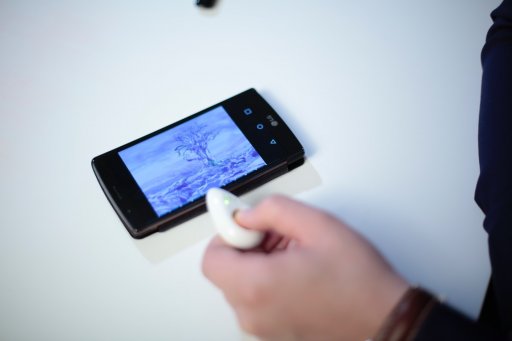
PIP is a tiny device that I hold between my thumb and index finger which monitors my stress level by measuring my sweat activity (the more stressed we are, the more we sweat). I get live feedback through its companion app on my smartphone, which uses audiovisual feedback to externalize my body’s changing stress levels.
This device helped me realize that when I focus on reducing stress, I conversely get more stressed. So the answer to reducing my stress lied in meditating more, and technology, in the form of the Muse, has already helped me improve on this.
Heart-thumb-knee tap: the KardiaMobile6L
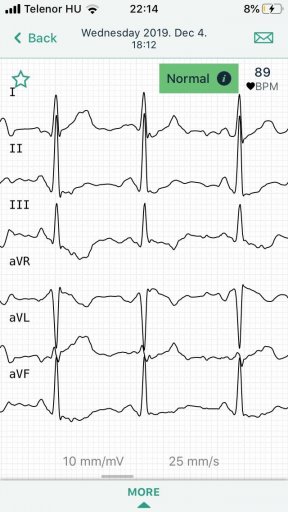
This slim and tiny device offers surprising medical-grade measurements to detect erratic heart rhythms. In fact, it’s the only FDA-cleared device to identify atrial fibrillation (AFib) and abnormally high/low heart rates (tachycardia/bradycardia). Packing a 6-lead ECG for added security and precision, the KardiaMobile6L is an engineering wonder, especially when you consider that it fits right in your pocket!
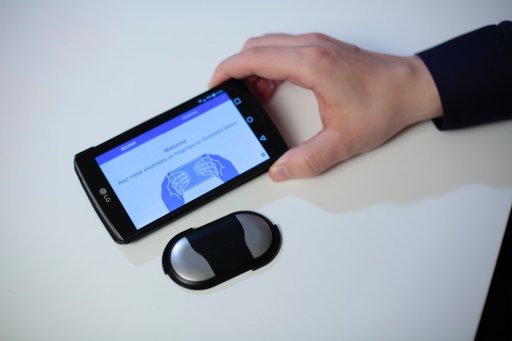
This one is my go-to option to make sure I don’t have AFib. The latter is a condition where a fast-beating heart (upto 175 beats per minute) compromises blood pumping, leading to blood clots, stroke, heart failure and other potentially fatal complications. It affects some 2.5% of the population in western countries and is the cause of around 158,000 deaths every year.
If I can detect it right at home and take preventive measures with the help of a health tracker, I won’t miss the chance to do it. By touching the top electrodes with my thumbs and the bottom one with my ankle, the KardiaMobile6L gives me detailed readings of my heart activity in mere minutes and if there is a risk of AFib, it will advise me to seek medical attention. I can even share the results with my physician. With its ease to use and elegant effectiveness, the KardiaMobile6L offers unparalleled empowerment to healthcare professionals and patients alike.
The ultimate, all-in-one package?
Well, with all of these separate devices required to measure one’s health parameters, it can get cumbersome to manage all of them, not to mention affording a dedicated device for every part of your body. So what about an all-in-one package to monitor all of one’s health status, the promise of Star Trek’s tricorder? This will be the ultimate health tracker and some companies are already working towards this vision.
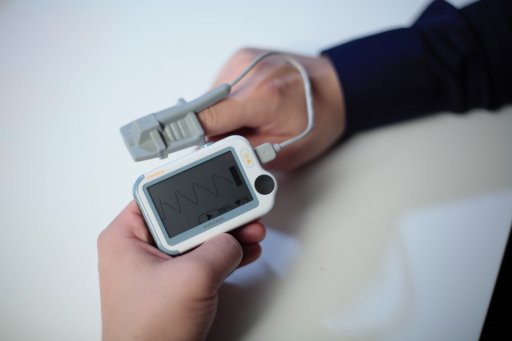
Viatom CheckMe Pro is such an all-in-one device that I use to do a check-up once a month: ECG, heart rate, and oxygen saturation. It offers even more tracking features through its integrated thermometer, a blood pressure tracker and an electrocardiogram. I can even attach it to my arm to track my sleep while cosplaying as a sleeping cyborg! While it is geared towards healthcare professionals, you can consider investing in one if you would rather own a single device with FDA-approved sensors that measures most of your parameters. Its light and portable aspects can come in handy as an adequate medical Swiss knife for medical aid in humanitarian crises or remote areas.
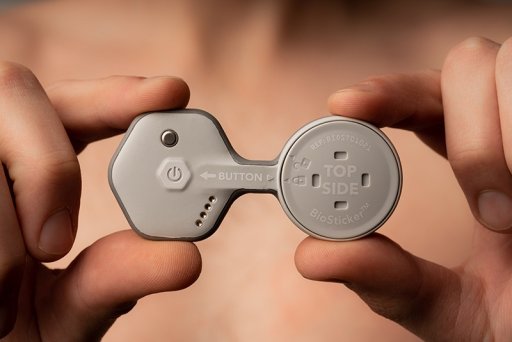
Foraying into the realm of real-life tricorders is BioIntelliSense. Its FDA-cleared BioSticker is an inconspicuous strip of electronics that you stick on your body and will continuously monitor vital signs like respiratory rate, heart rate, skin temperature, body position, activity levels, sleep status, gait and more (!) for up to 30 days. Like the company puts it, it’s a “stick it on and forget it” patient experience. The device is not out for sale yet but with innovations like these, we’re inching closer to the fabled all-in-one health tracker package.
Did you start tracking your health with wearables? What did they tell you? Do share your story with us!
Guide to the Future of Medicine: Technology & Human Touch
The Guide to the Future of Medicine provides an eye-opening, reassuring and accessible roadmap to tomorrow’s potential. By preparing for the inevitable waves of change, you can make informed decisions about how technology will shape your personal well-being or your business environment, and stay healthy and afloat amidst the waves of change.