Feeling sick? There’s an app for that! – The Big Symptom Checker Review
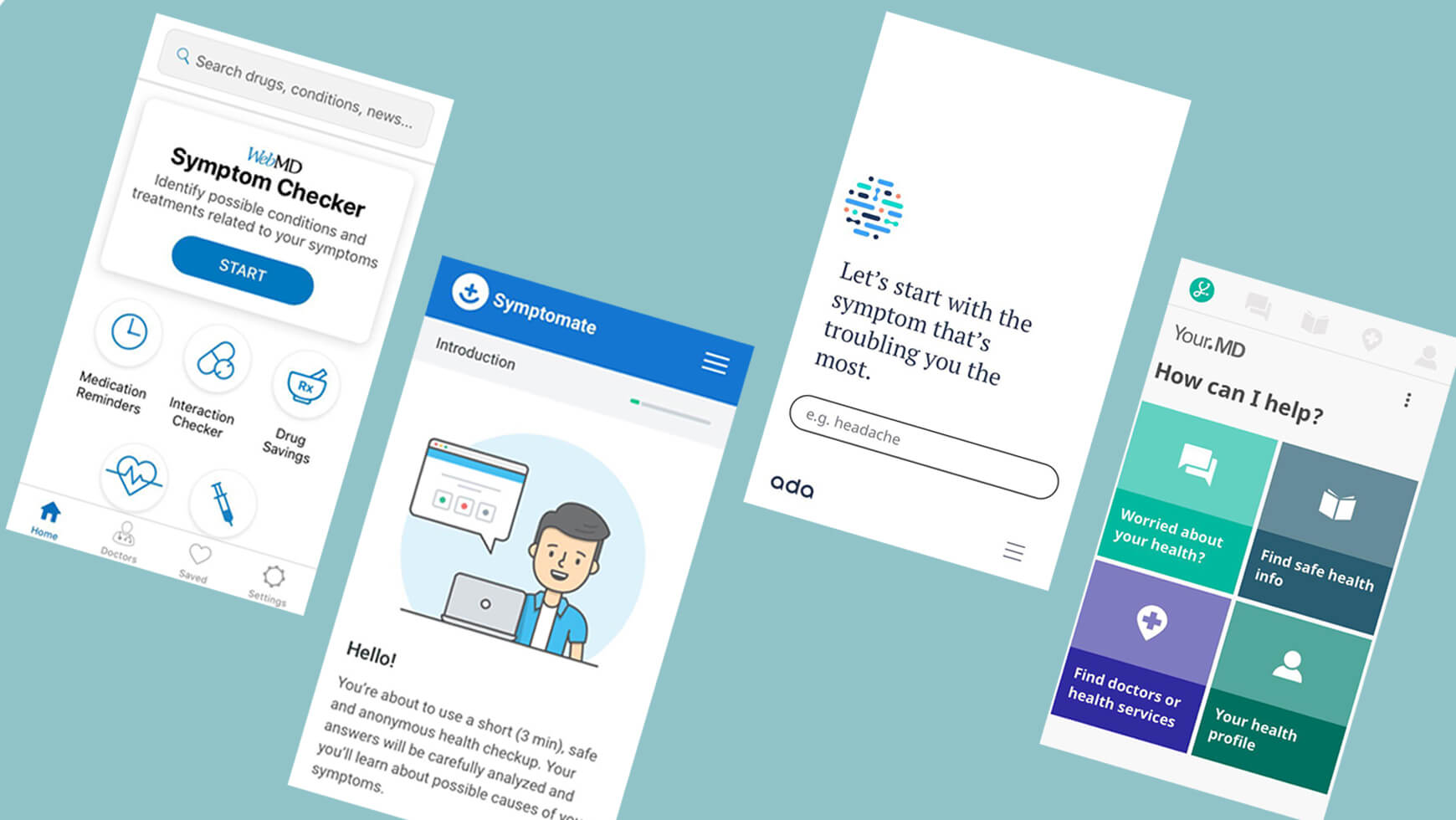
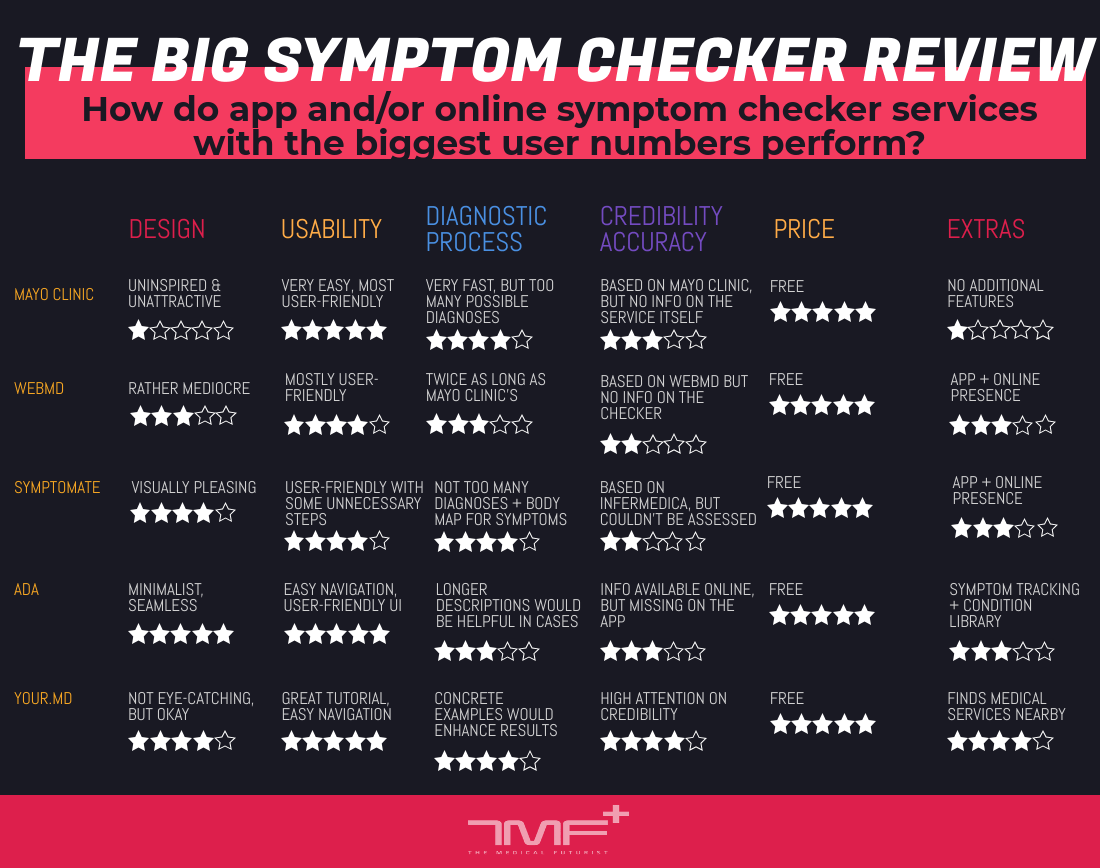
Do you feel under the weather but don’t want to go to the doctor yet? Are you searching for a solution to inform yourself about any possible condition from the comfort of your home and with the ease of your phone or computer? Of course, there’s an app for that! Not only one, but numerous. Join us as we test how well several services perform at gauging possible diagnoses based on one’s signs and symptoms. We entrust our diagnosis with the Mayo Clinic, WebMD, Your.MD, Symptomate and Ada symptom checker services. Here’s our big symptom checker review.

Dr. Bertalan Mesko, PhD
30 September 2024
2024 Update: Please note that large language models like ChatGPT have started to sort of replace traditional symptom checkers and we haven’t checked the quality of the examples listed here since 2021.
Do you feel under the weather but don’t want to go to the doctor yet? Are you searching for a solution to inform yourself about any possible condition from the comfort of your home and with the ease of your phone or computer? Of course, there’s an app for that! Not only one, but numerous. Join us as we test how well several services perform at gauging possible diagnoses based on one’s signs and symptoms. We entrust our diagnosis with the Mayo Clinic, WebMD, Your.MD,Symptomate and Ada symptom checker services. Here’s our big symptom checker review.
The age of symptom checkers
Are you feeling nauseated, shivering or have a sore throat, but you’re not sure whether you have to go to the doctor or you can just have simple cures at home and spare the GP visit? In the age of the technological revolution, one can expect to have apps that can point the user towards their possible condition as well as easy solutions at the reach of their fingertips. And that’s exactly what symptom checker services promise.
However, as with so many other products and services, the average user has to make a choice. Which one is the best? Which one fits my needs the most? We are here to help you. The Medical Futurist team tested several symptom checker services in the last couple of weeks both on their smartphones and their computers in order to determine how the most widely used ones, such as Mayo Clinic, WebMD, Symptomate and Ada operate, what are their most and least appealing characteristics and services. They are all free services requiring an internet connection but they do vary in their mode of operation and features. We will focus on numerous aspects including user-friendliness, the
Now, without further ado, let’s test our symptoms. We’ll let you in on a secret that the algorithms didn’t know: we’ll use the same conditions and their associated symptoms to test each service. These conditions are common cold, gastro-esophageal reflux disease (GERD) and lactose intolerance.

Mayo Clinic Symptom Checker: Minimalist or Uninspired?
Mayo Clinic needs no introduction, being renowned worldwide for its clinical practice and contribution to research. However, it is surprising that in spite of its reputation, its symptom checker is restricted to its website, without a smartphone app version. But don’t judge a book by its cover, right?
From the design-aspect, this symptom checker feels rather bland, greeting the user with lines and lines of text in an unattractive layout. However, if you give it a chance, the process is fairly easy, broken down into 3 steps where you choose from a symptom, related factors and finally get the possible causes. The whole process can take as little as 2 minutes, and it will output a series of possible conditions, which sometimes can be a lot (our lactose intolerance symptoms yielded 24 possibilities while common cold listed only 7).
And… that’s about it! After getting possible conditions, the Mayo Clinic Symptom Checker ends as blandly as it started, giving you some advice as to when to seek medical care given similar symptoms as you listed. The most likely conditions according to your symptoms will be listed first and you can click on each and be redirected to the website’s information page about the condition, which also lists treatment options. Overall, it feels uninspired, as a nice-to-have feature developed as an also-ran feature for the website. But then again, it is nice to have a free service.
Verdict: 2.5/5 Quite accurate but restricted to the browser. Its unattractive design and the too-long lists of possible conditions that can swamp the user make Mayo Clinic’s Symptom Checker one of our least favorite ones under the radar.

WebMD Symptom Checker: Your friendly online doctor
On top of a browser version, WebMD’s Symptom Checker is also featured in an app. It is also broken down in a stepwise fashion, with twice as many steps as Mayo Clinic’s service. To begin, you will have to enter your age and gender, after which you can select or type in your symptoms. This step is then followed up by some more questions to determine which symptom is bothering you the most and if you are on meds and/or have had any conditions in the past. Thereafter, it will give you a list of possible conditions which you can then click on and find more details about, including treatment options and also some nice statistics about the disease.
For the common cold, we got over 10 results, with even more available but less likely conditions. Lactose intolerance yielded more than 15 but the actual condition was the second in the list, and so, quite accurate. GERD was also accurately diagnosed, and the app suggested 14 other possibilities.
Using WebMD’s service was quite intuitive and the layout was attractive enough to keep us checking through the various possibilities given our symptoms. Speaking of options, the ones listed were quite extensive and can get you to keep on scrolling but it might be a safe bet to stick to the most likely ones. Moreover, it’s WebMD that we are talking about here, which is often the go-to website that internauts flock to in order to diagnose their new weird rashes or any medical condition they have heard from their favorite series. Its reputation precedes itself due to its highly qualified medical staff and numerous prizes.
Verdict: 3/5 A user-friendly service with the advantage of being available as both a smartphone and a browser service but it also overloads the user with possible conditions.
Symptomate – The symptom checker for a thorough check
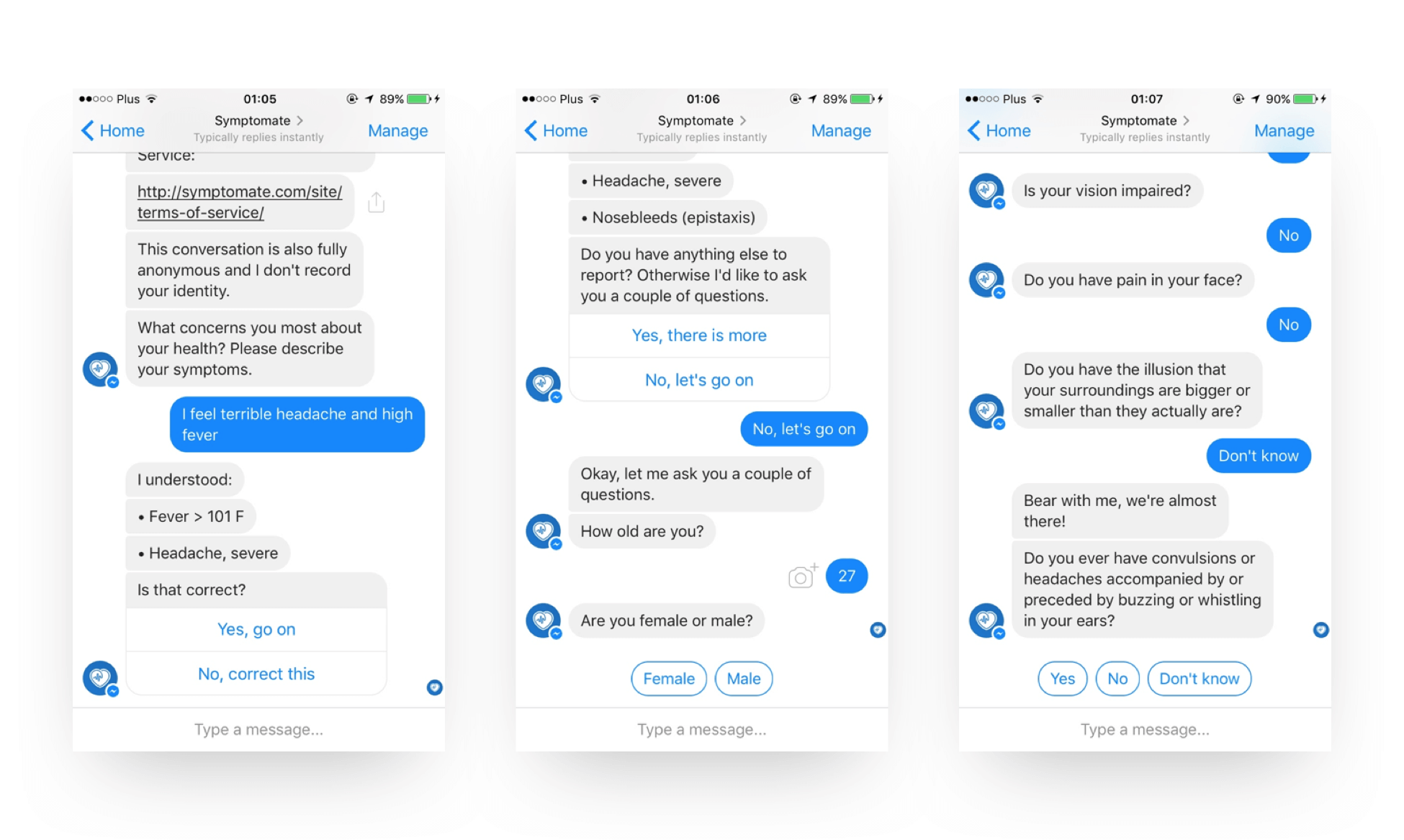
The name of Symptomate might not ring a bell but its team is highly dedicated to digital health. On top of its symptom checker app, the company also has a chatbot and voice assistant integration to, well, check symptoms. The start-up has doctors and medical content editors on board who use evidence-based information to feed their algorithm which is used to provide diagnoses.
In a similar vein to WebMD, Symptomate’s symptom checker is available both as a smartphone app and as a free browser service, and they both work in a similar fashion. It will first ask about your general information like gender, age, inquire about any conditions that you might have and then get into the specific symptoms.
Symptomate’s method of gathering symptoms is the most interesting in this bunch. In addition to typing them down, it has a feature where you can just select the body part affected in its included map and then select the associated symptoms.
Following this, it will show a map of the world and tell you to select the regions which you visited in the last 12 months. While this can be important in the case of certain diagnoses like tropical diseases or areas with recent viral outbreaks, we found it to be an extra step which could have been asked only given certain specific complaints by the user.
Afterward, Symptomate will ask more detailed questions related to the user’s symptoms like intensity and duration. When all this is done, the app will provide a list of possible medical conditions (about 5, starting with the most likely), recommended lab tests and it will also show how long the interview lasted. Interestingly, it has a feedback form at the end of every “consultation” that allows you to gauge how well it performed and also write any feedback you might have.
Verdict: 4/5 A thorough symptom checker with some extra steps that are nevertheless present for a better diagnosis.
Your.MD – A health guide and symptom checker
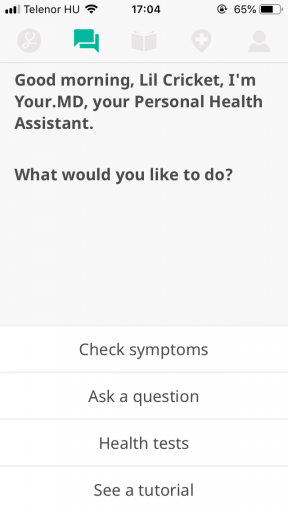
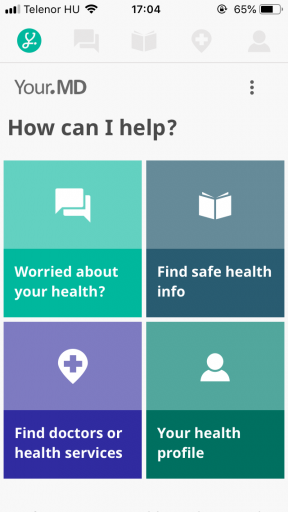
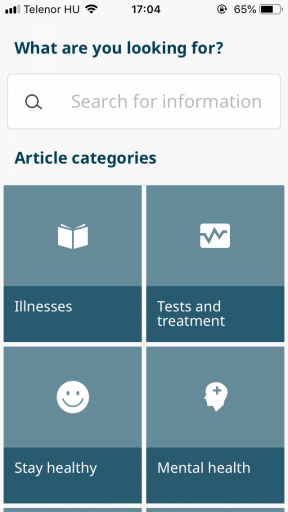
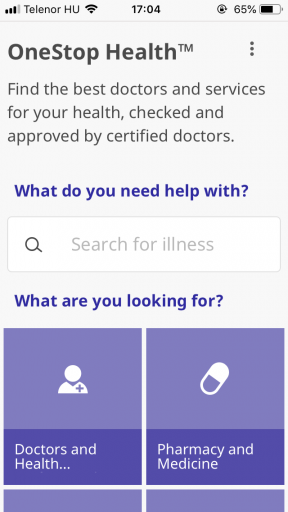
Your.MD is accessible on multiple platforms, it is both available as a free iOS/Android app and as a browser service. In the app version, a short tutorial walks you through the symptom-checking process and the additional services. The simple interface and clean design intuitively guide the user through a fairly large number of navigation options. In addition to the symptom checker, Your.MD offers an article library that deals with the most common health topics and OneStop Health, a service that enables users to find relevant and trustworthy public and private health services and products nearby to help them get better faster. Although the company informed us that the service works globally, it didn’t work for our team located in Central Europe.
The symptom-checking process is very straightforward. As a starting point, you can freely enter whatever is bothering you. Then you will be prompted to answer questions pertaining to providing symptoms that are more specific. When communicating with the bot sometimes we had the feeling it was not a robot, as almost all of the further questions were very relevant. In our test, lactose intolerance and common cold came out as first options on the list. Yet it had some difficulty identifying GERD in case of a female member of the team. After answering a question about her sexual activity, the algorithm detected the signs of a possible pregnancy and she could not report any other symptoms to redirect the diagnosis. That’s where Your.MD certainly has room for improvement.
If the bot can not find any causes for the symptoms or it detects a serious diagnosis, the app will suggest a visit to the doctor. The final consultation report goes through the identified symptoms, diagnosis, treatment and also features a ‘When to worry’ section enlisting cases when immediate medical consultation is recommended. At the end of the process, a chatbot asks for feedback or a feedback tray slides up depending on whether you use iOS or Android.
Verdict: 4/5 An easy-to-use symptom checker with a wide range of complementary services. It would be ideal to implement an option to give feedback or instant notification when the algorithm enters a dead-end street, not only at the very end of the consultation process.
Ada – The personal doctor in your pocket
The company started in 2011 has doctors, scientists, and engineers on board who all help develop the app’s A.I. Of note, Ada functions only as a smartphone app without a browser counterpart. The A.I. itself functions as a chatbot with a personal touch, even the UI looks like your favorite messaging app. It’s user friendly, very easy to navigate and has a minimalist, seamless design. While the other checkers we’ve tested so far work anonymously without the need to create an account, Ada requires one. Nevertheless, the app does allow other users to operate it.
Starting off, it will ask only one symptom, which we found to be quite divisive because this tends to get the A.I. to ask more questions, leading to the diagnosis process often feeling too long with too many questions being asked. But if more symptoms could be added at once, then the interview time would definitely have been shorter. Nevertheless, after this rather lengthy written conversation, Ada digests the input and provides 5 of the most possible conditions associated with the symptoms at the end of its assessment.
After getting your report and selecting a condition, Ada provides a plethora of additional services which were not present with the other symptom checkers. First, there are the online health services to which Ada can link you, e.g. Doctify to find a private GP nearby. If you’ve had it with the digital world, the app also shows you the closest clinics in your vicinity so that you can have yourself checked in the real world. More akin to the other symptom checkers that we’ve seen so far, Ada also provides more detailed information about the condition that you’ve selected, stats and treatments that you can use at home. However, the condition library would be better if they had categories we could browse through or a simple list with all major conditions like on their website. Finally, like Symptomate, it also packs a feedback option to help improve the A.I. for your personal experience.
Verdict: 4/5 Ada is the symptom checker with the most features that we’ve tested but it feels quite lengthy in its interview process which could be improved upon.

The future points to getting your diagnosis at home first
Symptom checkers are an innovative addition to digital health. They are convenient to use, and the ones that we’ve checked are all backed by a medical team. Nevertheless, these services should not be considered as definite diagnostic tools but rather as a guide to point the user towards possible conditions relating to their symptoms. Consulting an actual physician will help you have a more accurate diagnosis and subsequent treatment.
However, we expect these services to spread out more in the future and they have the reasonable promise to become the first line in primary care. Patients will most likely consult their symptom checkers and later on, their chatbots, about their symptoms first, which allows them to tackle simpler conditions on their own via the guidance of these services, and they will be referred to a human doctor only in case they have more serious issues. It’s gonna be a win-win situation: symptom checkers and chatbots will unburden physicians and help with the creeping crisis in human resources in healthcare, while patients will have expert opinions and the best possible care through their phones.
|
At The Medical Futurist, we are building a community for making a bold vision about the future of healthcare reality today. If you’d like to support this mission, we invite you to join The Medical Futurist Patreon Community. A community of empowered patients, future-oriented healthcare professionals, concerned health policymakers, sensible health tech developers, and enthusiastic medical students. If there were ever a time to join us, it is now. Every contribution, however big or small, powers our research and sustains our future. Click here to support The Medical Futurist from as little as $3 – it only takes a minute. Thank you. |