The Ultimate Sci-Fi Movie List To Prepare For The Age Of Artificial Intelligence
Would artificial intelligence spell the end of all humankind? What happens if it ‘spares’ us? How might childbirth, parenting, taking care of the elderly, or love look in the age of A.I.? The best sci-fi movies explore questions bordering the technologically impossible and its consequences. Moreover, they help humans imagine and prepare for the future. We compiled our favorite science fiction features about A.I. for a summer movie night. Read on!

10 min | · Updated
|
THIS ARTICLE HAS NOT BEEN UPDATED SINCE 2019. THE INFORMATION SHARED IN THE ARTICLE WAS ACCURATE AT THE TIME OF ITS PUBLICATION, BUT IT MAY BE OUT OF DATE NOW. BROWSE OUR LATEST ARTICLES HERE |
Would artificial intelligence spell the end of all humankind? What happens if it ‘spares’ us? How might childbirth, parenting, taking care of the elderly, or love look in the age of A.I.? The best sci-fi movies explore questions bordering the technologically impossible and its consequences. Moreover, they help humans imagine and prepare for the future. We compiled our favorite science fiction features about A.I. for a summer movie night. Read on!
Will humanity move to Mars or amalgamate with machines? Sci-fi has the answer!
Science fiction is a conversation between the technological universe and our society about the future. The genre feeds on the ground that technology offers, but cooks up the wildest ideas on the most extreme endpoints of the technologically possible and contemplates on the potential social, economic, or ethical consequences. It offers ideas about how to build a better world for our children – and scenarios about how to ruin our planet and species once and for all.
What could happen to humanity in the age of climate catastrophe? Could technology help the human race survive? Could we move to Mars and become an interplanetary species? What if we build technology that surpasses human intelligence? Will humans amalgamate with machines and enter a new era of consciousness? These are the most significant questions that the science fiction universe has raised lately – and as we can notice, the topic of artificial intelligence has a prominent place here.
As technology has immense potential in every area of life, including healthcare, let’s see how fears about an omnipotent A.I. destroying humanity or hopes about a technologically rooted intelligence helping Earthlings emerge as central topics in classical as well as the latest science fiction oeuvres.
1) The ultimate classic – 2001: A Space Odyssey
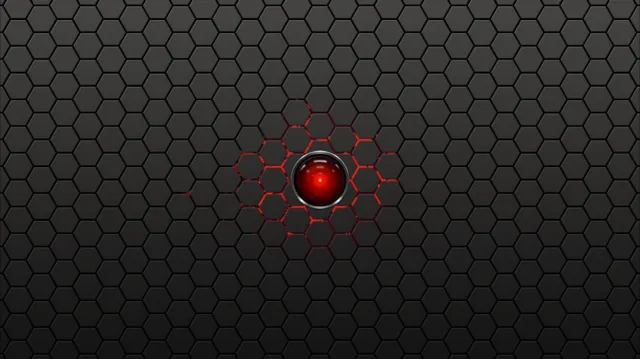
Stanley Kubrick’s majestic undertaking was to become the best sci-fi movie of all times from the very first stills, according to both the American Film Institute and The Rolling Stone magazine. It has an eye-opening story, a brave script, breathtakingly beautiful scenes and in 1965, at the time of its making, it looked utterly futuristic. We already contemplated on the fact how much it has to offer to medicine, but it’s also mind-boggling how sensibly, accurately, and in what a complex manner it grasped the topic of humans versus artificial intelligence. The latter is neither demonic nor cherubic, it just performs tasks and commands – no matter the consequences.
2) An artificial sense of humor – Interstellar
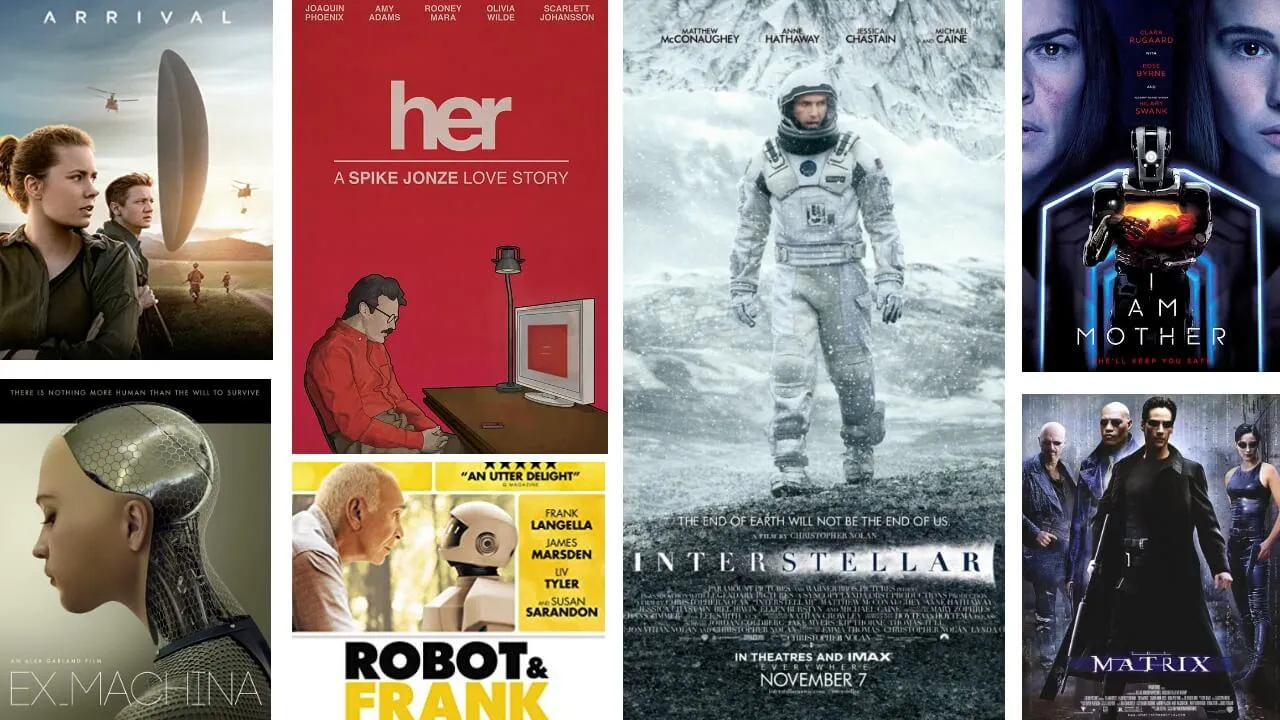
Christopher Nolan’s saga about the survival of humanity offers a perhaps surprising angle about artificial intelligence: it teaches audiences how to work together with an efficient A.I. system such as the TARS robot. It’s an excellent and very unique representation of a positive relationship between a human and an A.I.-powered machine. The robot’s design, the way it interacts with its human companions and the fact that its personality, including honesty and humor levels, can be set manually make it the most mature depiction of the future of robots.
3) Do machines dream of digital sheep? – Blade Runner & Blade Runner 2049
Although the iconic movie and its most recent sequel, both starring Harrison Ford, have their own universe and work according to their own logic, they can still be linked to current concerns about technology and society. Could an artificial entity be more empathetic and more humane than humans themselves? Could it genuinely take care of our species or understand our greatest hopes and dreams? Is it possible for machines to dream? Could it have a memory in relation to which it cannot decide whether it’s true or false? Well, these movies offer scenarios where the answer to all these questions is positive.
4) The sense of systemic logic – Arrival
This masterpiece of Denis Villeneuve cannot necessarily be linked unequivocally to artificial intelligence. However, the movie presents a completely different systemic logic than what humans are used to: instead of the humanly comprehensible linear one, the ‘other’ arriving on Earth uses the circular one. No matter whether it comes to language, sense of time, or operational logic. As it is so unfamiliar, it seems to be odd if not threatening at first. What the film teaches us is the importance of being open-minded and that of trying to communicate with an entity that doesn’t share any of the characteristics that make up humans.
5) God is dead – Ex Machina
Nietzsche’s famous sentence should be completed here with: ‘… and a robot killed it’. Ex Machina is the remake of classic tales about the creation surpassing its creator brought to the age of artificial intelligence. The movie goes way beyond the question of whether humans can create a robot with consciousness, and explores the relationship of Earthlings to such machines, and ponders on the nature of such intelligent creatures. Can an A.I. escape its black box if there are humans around? Well, Ex Machina says that it can, and humans might not be happy about it.
6) Trust issues – Moon
The basic topic of this movie is similar to that one in Ex Machina: the nature of the relationship between humans and artificial intelligence, and whether we can trust our creations to do what’s best for us. Whether the machines surpass their creators whom they should serve and manipulate for their own interests. In Moon, the A.I.-powered robot GERTY works closely with the protagonist played brilliantly by Sam Rockwell. It takes care of Sam Bell, the lead character when he’s injured – but at the same time, it doesn’t necessarily act as the protagonist assumes it would.
7) When machines perform – The Matrix
We don’t have to introduce the classic movie with Keanu Reeves, his long leather jacket, and the greenly luminous codes to anyone. It greatly shaped our popular culture and how we think about artificial intelligence and the world around us. Concerning artificial intelligence, one of the biggest lessons that could be drawn from the movie is that if an algorithm, here: agent Smith, has an objective that no matter what stands in its way, it will make that happen. Thus, we should be careful when programming commands into smart algorithms and we should always think many steps ahead. Otherwise, we could end up with A.I. robots using all of the Earth’s energy reserves just to complete their tasks.
8) The most sophisticated android – Prometheus
The Alien prequel featured a surgical robot performing major operations without human control and David, the highly sophisticated android with artificial intelligence. The makers of the movie also released an imaginary advertisement showing why someone in the future might want to buy such robots. I would definitely buy David which (or whom?) I consider the ultimate A.I. above all other movie characters.
9) The love for A.I. – Her
Spike Jonze’s beautiful work explores the question of whether you can fall in love with artificial intelligence. The movie delicately disentangles the steps that lead the main protagonist to love no matter that the partner is a bodiless A.I. entity. On a more philosophical level, Her was not about artificial intelligence and love, but the ultimate nature of love and the feeling of empathy without considering the agents who play these feelings out. This also means that technology and A.I. can perhaps teach our species more about love than we would assume.
10) Childbirth and parenting – I Am Mother
The Netflix original released in 2019 explores the question of whether and how could an artificial intelligence-powered entity raise a human child. In this movie, the presented A.I. does not want to destroy humanity – on the contrary: it wants to help repopulate the Earth after the extinction of mankind. The movie goes through the steps of growing an embryo in an artificial womb to teaching a teenage girl the basics of physics beautifully. In the meantime, it asks whether it’s possible for androids to be just as empathetic, loving, and ‘motherly’ as a real mother would. What do you think?
11) Grandpa got an A.I. – Robot & Frank
In our aging society, it is going to be more and more challenging to take care of the elderly population, and this movie focuses on a question whether technology, especially social companion robots with artificial intelligence could help. Robot & Frank also plays with the sentiments about the elderly and their relationship with technology and offers clues on how that might be changed. And of course, it explores the issue whether it is possible to look for friendship when one of the companions is a robot. Well, the movie says that we should not exclude this possibility for the future.
12) Grandiose explanations? – A.I. Artificial Intelligence
Steven Spielberg’s take on the issues of artificial intelligence and its relation to humans aims to be a comprehensive, all-encompassing, grandiose work – just as any other Spielberg feature from Jurassic Park to E.T. The emblematic movie director wants to explain how an artificial intelligence-based boy robot could work, what issues it might have with our species, and how technology could reinterpret such deeply human connections as the parent-children relationship. However, we had the sense that as it wants to say too much at once, it remains too broad-brushed.
And why do we recommend watching sci-fi movies for everyone?
For the same reason why the French army hired a sci-fi team to anticipate future threats. Science fiction explores the ‘big questions’ that we cannot see in the nitty-gritty of our daily lives. It offers explanations, it scares and awes us. It helps us prepare for the best and worst to come – and thus it can divert humanity from the actual threats and dystopic scenarios to happen. No matter whether you’re 10 or 80, whether you work for the government or you’re an entrepreneur, this is the best thing you can do right now for the future.
|
At The Medical Futurist, we are building a community for making a bold vision about the future of healthcare reality today. If you’d like to support this mission, we invite you to join The Medical Futurist Patreon Community. A community of empowered patients, future-oriented healthcare professionals, concerned health policymakers, sensible health tech developers, and enthusiastic medical students. If there were ever a time to join us, it is now. Every contribution, however big or small, powers our research and sustains our future. Click here to support The Medical Futurist from as little as $3 – it only takes a minute. Thank you. |