Reverse Innovation: When Disruptive Health Solutions Go West
Zipline drones populate the Rwandan skyline, portable electrocardiogram machines help doctors diagnose in clinics in rural India, easy testing lets cure children in Botswana. Beyond being brilliant medical innovations, at some point, all these technologies were brought to or should be applied to high-income countries after their success in their original settings in Africa or Asia – as they have been available for a fraction of the cost, they have represented a highly creative solution and/or the regulatory environment has allowed them to thrive. That’s what researchers call reverse innovation, and we tracked down the most prominent examples in digital health.

12 min | · Updated
|
THIS ARTICLE HAS NOT BEEN UPDATED SINCE 2019. THE INFORMATION SHARED IN THE ARTICLE WAS ACCURATE AT THE TIME OF ITS PUBLICATION, BUT IT MAY BE OUT OF DATE NOW. BROWSE OUR LATEST ARTICLES HERE |
Zipline drones populate the Rwandan skyline, portable electrocardiogram machines help doctors diagnose in clinics in rural India, easy testing lets cure children in Botswana. Beyond being brilliant medical innovations, at some point, all these technologies were brought to or should be applied to high-income countries after their success in their original settings in Africa or Asia – as they have been available for a fraction of the cost, they have represented a highly creative solution and/or the regulatory environment has allowed them to thrive. That’s what researchers call reverse innovation, and we tracked down the most prominent examples in digital health.
Necessity is the mother of (disruptive) invention
The idea of reverse innovation or as others called it “trickle-up innovation” and “innovation blowback” is connected to Clayton Christensen’s famous model of “disruptive innovation”. This encompasses a process by which a product or service takes root initially in simple applications at the bottom of a market and then relentlessly moves up, eventually displacing established competitors. Reverse innovation twists the term and challenges the existing and hidden narrative in disruptive innovation whereby it is assumed that high-income countries ought to be the sole driving force for innovation. Although the name itself could still be refined as calling it “reverse” already assumes that it counters a more “natural” idea about the direction of innovation.
Anyhow, the expression basically means taking an idea, technology or solution born out of resource constraints, tested out and adapted to conditions in developing countries and then bringing it to wealthier ones. For many, it’s one of the most promising avenues for improving performance and lowering health-care costs. On the other hand, it might also encourage environmentally sustainable solutions from the start, a leap from underdeveloped to even futuristic technologies as well as the implementation of such solutions which were not able to go to market in high-income countries due to legal and regulatory barriers.
Digital health is the perfect ground for reverse innovation as it encourages inexpensive, easy-to-use, point-of-care ideas often developed by actors that high-income countries usually leave out of tech innovations: the patient and the doctor. They both know exactly what they need, and with a pinch of creativity in resource-strained settings – as we all know that necessity is the mother of invention – they could figure out solutions which can also be adapted to traditionally more resourceful communities.

Why are these innovative solutions not adopted in high-income countries?
Strikingly enough, high-income countries are usually not rushing to implement lower costs, truly disruptive innovations coming from countries of the global South – regardless of the countless benefits. They are often criticized for yielding unreliable data from settings of vast health-care inequalities and less strict regulations.
In the US, The New Yorker finds that several reasons exist why reverse innovation proves to be difficult. First, the entrenched cultural bias: “how can we learn something from a place we are sending OUR expertise to? Secondly, there’s another culturally embedded preconception that leads people to believe that a solution in healthcare must be expensive to be good. It’s simple psychology. Would you give your mother the cheap or the expensive medication if you could afford both? The third argument reflects another cultural opposition, now stemming from the notion of (in)equality. If people bring technology from a low-income country to serve rural populations or other vulnerable groups in the US, wouldn’t they find it as another form of discrimination? As in, they cannot get the solution the upper social groups do, “only” a cheaper one?
And finally and most importantly, Ashish Jha, the director of the Harvard Global Health Institute, argues for The New Yorker that the U.S. health-care system is highly uncompetitive. If someone comes up with a “nice and cheap way of doing something, most hospitals are going to be skeptical. Why would they want something cheap if it’s going to lower their reimbursement?”
Now, that’s a system, and those are the biases that need to be changed. Disruptive innovation that is able to provide a cheap solution for a health problem for millions of people should be accepted no matter where it comes from. Even more impressive if brilliant minds without the resources of high-income countries and with the struggles of low-income countries come up with the right technological innovations. That should be embraced, celebrated and implemented as soon as possible. To encourage more and more solutions like these, we collected some excellent examples.
Great examples of reverse innovation
1) Medical drones from Rwanda to the US
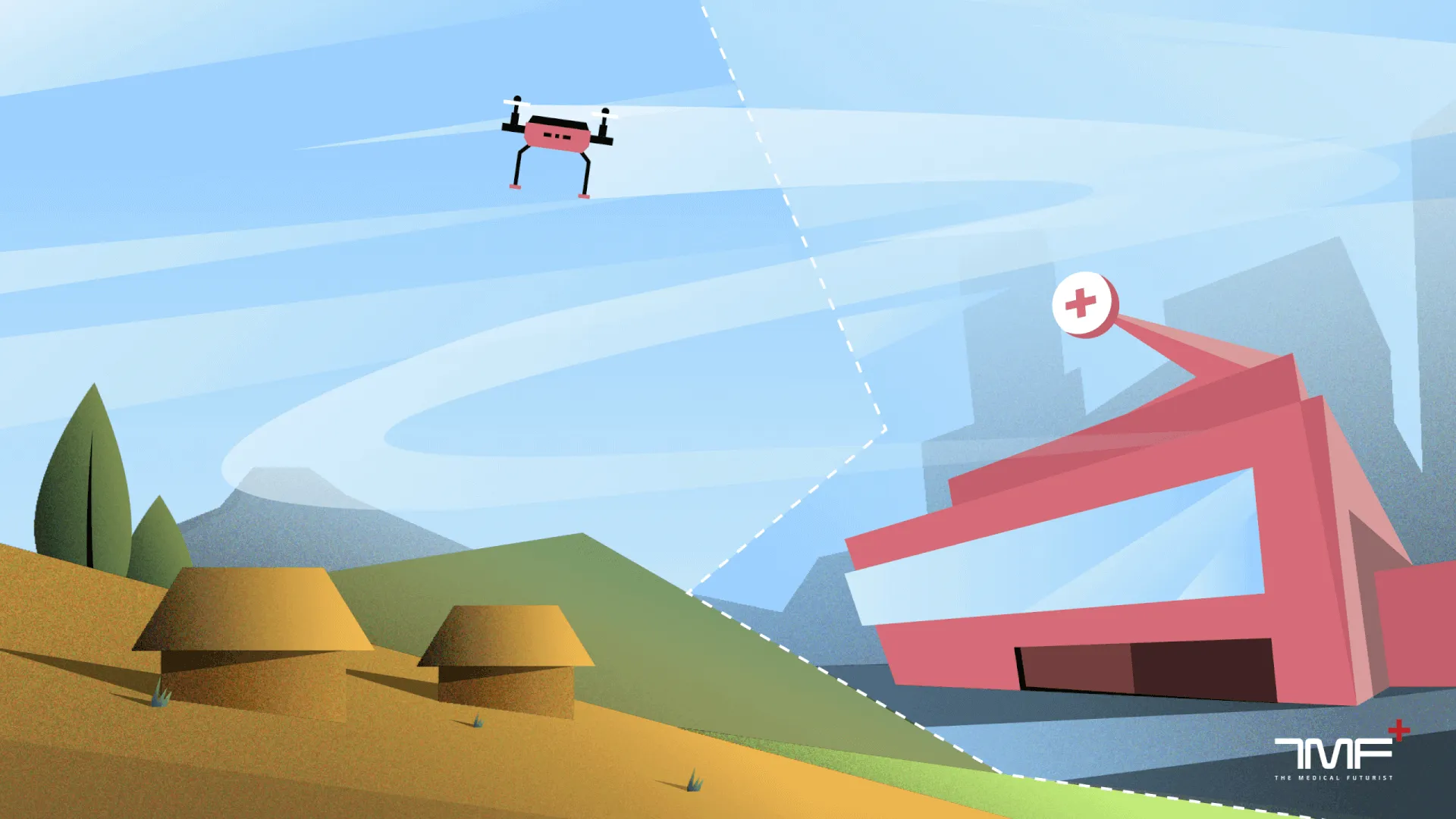
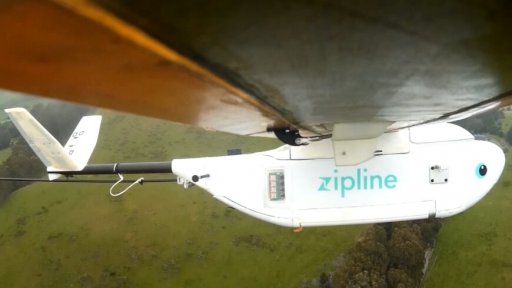
In 2016, the Rwandan government teamed up with Zipline, a medical drone manufacturing company to deliver medical supplies to five of its hospitals. The American start-up appeared earlier on the African market than in the US – as the government supported it and looser regulations allowed it. Within a year, Zipline planned to expand the program to nearly half of Rwanda’s 45 hospitals.
After its Rwandan success, the White House reached out to Zipline. They expressed interest in delivering medicine and blood to rural parts of the US. Thus, the start-up announced in August 2017 that it brings its system to rural and remote communities in Maryland, Nevada, and Washington, including some Native American reservations.
As proof of the company’s growth, in January 2019, Zipline broke ground on their first two distribution centers in Ghana, a West African democracy of 29 million people. In the first half of this year, they will begin providing most of the country with access to all medical products, with four distribution centers spanning from the dense southern regions surrounding Ghana’s capital, Accra, to the remote and arid north of the country.
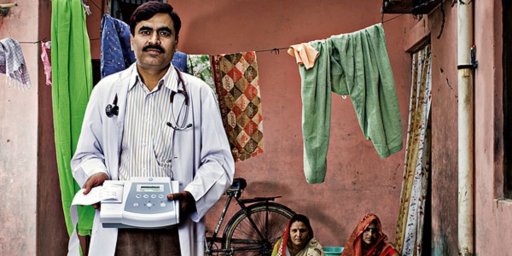
2) Portable ECG machine for rural India
When US-headquartered multinational company, GE, started to sell the same medical-diagnostic devices in India, they quickly realized that adaptation to the local settings means an entirely new approach to technological development.
Soon after that, GE Healthcare debuted its ultra-portable, battery-operated electrocardiogram machine specially designed for use in rural clinics in India – where mains electricity is either intermittent or non-existent. They sold that for $500. Intended as a solution for rural Indian markets where bulky, $20,000 machines made little sense, the product is now making inroads in the U.S. as a solution for first responders.
3) Kenyan telemedical kiosks for remote diagnosis
While U.S. patients rarely get a test that doesn’t cost $200, product developers who target Africa’s underprivileged population are creating complete systems that cost less than $200.
The Mashavu Project is bringing telemedicine to Kenya and Tanzania by tapping the creativity and social activism of college students while keeping equipment costs down. A team at Penn State University back in the US developed some inexpensive medical devices for the Mashavu Project, whose name comes from the Swahili word for chubby-cheeked, which generally translates into good health in many places. So-called Mashavu kiosks close the physical distance between healthcare providers and members of remote communities. Villagers visit Mashavu to determine if their problem warrants a lengthy and expensive commute to a health facility – or could be solved more simply at home. Such solutions were more than welcome also in rural communities all around the global North – from the Canadian Inuit communities until the German villages.
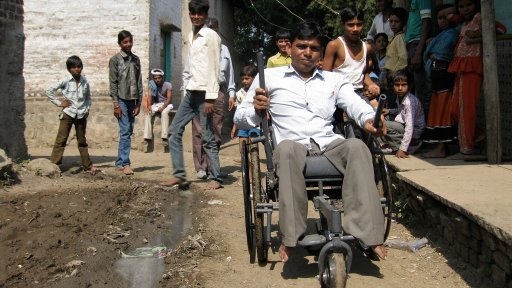
4) Off-road wheelchair manufactured in India
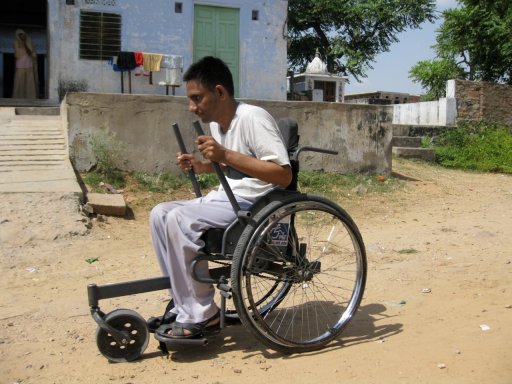
Amos Winter, an Assistant Professor of Mechanical Engineering at MIT and the Director of the Global Engineering and Research (GEAR) Lab, which creates technological solutions for emerging markets and developing countries, spent six years designing an off-road wheelchair for people in developing countries.
It is called the Leveraged Freedom Chair (LFC), manufactured in India and 80 percent faster and 40 percent more efficient to propel than a conventional wheelchair, while selling for approximately $250 – on par with other developing world wheelchairs. After its overwhelming success, the technologies that generate its high performance and low cost have been incorporated into a Western version, the GRIT Freedom Chair, which was modified with consumer feedback and sells in the United States for $3,295—less than half the price of competing products.
5) Treating babies with jaundice effectively
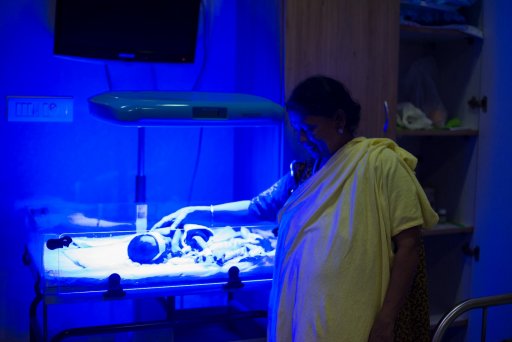
Some experts at Stanford University School of Medicine and D-Rev estimate that every year, over 6 million babies with severe jaundice are not receiving adequate treatment. In studies of medical facilities in India and Nigeria, D-Rev and Stanford found that 95% of devices evaluated in low-income hospitals and clinics did not meet American Academy of Pediatrics standards for intensive phototherapy. Maintenance was a key limitation in the delivery of treatment: approximately 1 in 3 phototherapy devices had at least one bulb burned out or missing. Compact fluorescent bulbs, commonly used in phototherapy devices, cost roughly $15 per bulb to replace and last four months. Many hospitals have trouble sourcing these bulbs and, with devices using an average of six bulbs each, they just can’t afford to replace them as needed.
D-Rev has designed and produced an excellent instrument which can solve the problem. With its medical device called Brilliance, hospitals can save over $240 per year on costly bulb replacements. Also, Brilliance can withstand a wide range of power fluctuations without changes in device performance. The company estimates that with its help, 124,800 babies with jaundice were treated who would not otherwise have received adequate treatment. A lot of rural hospitals and medical facilities with strained budgets in the global North could learn from the experiences of these care facilities – and save significant amounts of money in such a simple way.
6) Testing children for diarrhea in Botswana applicable to Canada
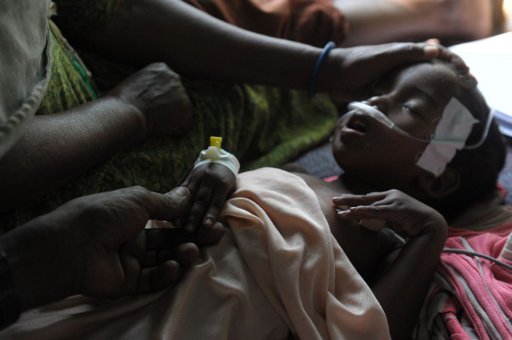
In Botswana, delays in diagnosing the cause of childhood diarrhea can amount to the difference between life and death. Some children die before a stool sample is collected and tested, says David Goldfarb, a pediatrician who teaches at McMaster University and the University of Botswana to the National Post. Using funding from Grand Challenges Canada, he designed a technology to speed up tests in Botswana that can also be used in the most remote corner of Canada, the Nunavut region, which has a very low population density.
Dr. Goldfarb’s solution, which costs as little as 25 cents, involves a swab covered with absorbent fibers and eliminates the delays in collecting a child’s stool sample. It also comes with a transportation tube that’s less prone to contamination than conventional transportation methods. Since stool samples from Nunavut are often contaminated by the time they arrive in labs hundreds of kilometers away, the swab could not only improve our understanding of the causes of childhood diarrhea in Botswana but also high up North.
7) Indian eye care system on the lead
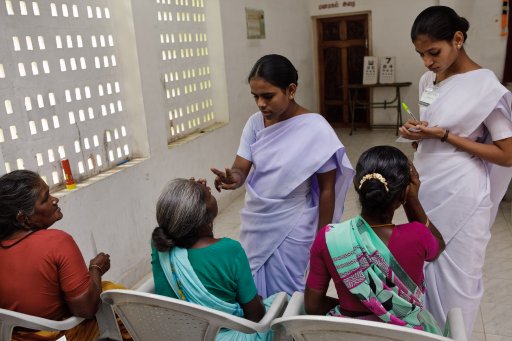
India’s Aravind Eye Care System, which performs over 350 000 ophthalmic procedures each year at multiple sites, has better patient outcomes at a lower cost per person than anywhere else in the world. The institution applied standardized checklist processes – modeled based on McDonald’s, which resulted in remarkable operation efficiency across all its rural and urban sites.
One of the key characteristics of the system is task shifting, where routine responsibilities ranging from clerking admissions to preoperative and postoperative assessments are transferred from doctors to less skilled, yet well-trained, staff. A common complaint from western clinicians is that too much of their time is spent on non-clinical and repetitive functions, which means that the Indian model would highly improve the satisfaction and productivity of clinicians – reducing the widespread burnout phenomenon.
Burkina Faso’s district health information system to be adopted in Europe?
Another study dealing with reverse innovations and potential examples to learn from for European, American or other high-income countries, cites Burkina Faso and its health information system as a best practice to follow.
In the small African country, the ‘district health information system’ is an advanced centralized digital patient information system, which has unified the health system across the entire country. European patient information systems are often far from unified and electronically available; adoption of such systems would provide considerable savings and improve health care provision and health status.
Looking at all these genuinely disruptive innovations, the only thing we wish for is more and more solutions coming from countries and regions traditionally not regarded as innovation hubs. We encourage healthcare players to organize more and more meetups and hackathons enabling co-creation among key stakeholders including healthcare professionals, end-users, scientists, engineers, and entrepreneurs – mixing low-income regions with high-income expertise and vice versa. So that real disruption could take place, and millions more could reap the benefits of cheaper and more accessible healthcare.
|
At The Medical Futurist, we are building a community for making a bold vision about the future of healthcare reality today. If you’d like to support this mission, we invite you to join The Medical Futurist Patreon Community. A community of empowered patients, future-oriented healthcare professionals, concerned health policymakers, sensible health tech developers, and enthusiastic medical students. If there were ever a time to join us, it is now. Every contribution, however big or small, powers our research and sustains our future. Click here to support The Medical Futurist from as little as $3 – it only takes a minute. Thank you. |