Learn Forecasting: How Can You Get Your Own Crystal Ball?
As a keynote speaker, I get a wide array of questions thrown at me. These range from thought-provoking ones through sarcastic remarks to more original […]

8 min |

As a keynote speaker, I get a wide array of questions thrown at me. These range from thought-provoking ones through sarcastic remarks to more original queries. However, a significant number of those questions revolve around futurists’ work. For instance, a physician once asked me about how futurists see their forecasts. While interviewing me, another journalist blamed futurists for always coming up with wrong predictions. The common factor to both of these examples is that they don’t understand what futurists actually do.
Many think that futurists spend their days hunched over a crystal ball with a tinfoil hat and report on whatever wild thought that crosses their mind. These misconceptions are justified by the numerous far-fetched ideas publicized but were only to grab media attention. However, futurists employ more scientific methods than the coveted crystal ball.
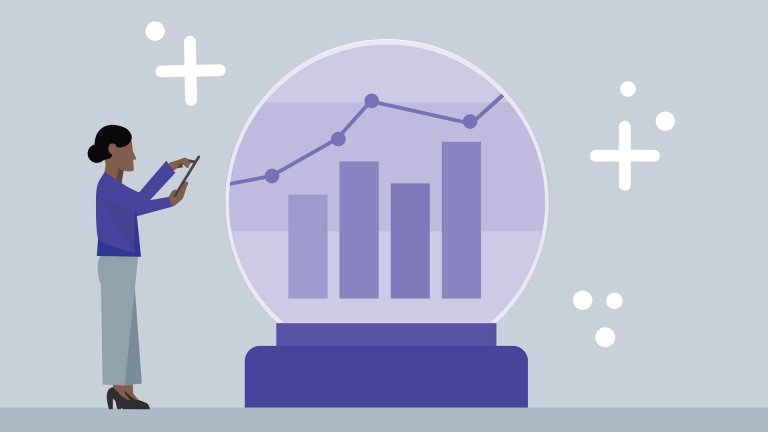
This article will help you better understand how futurists come up with forecasts; the challenges that come with crafting those; and resources that you can use right now to become a futurist yourself and get your very own “crystal ball”! On a more serious note, by understanding or even using the same methods that futurists do, anyone can distinguish hype from the actual trends that deserve attention because it might soon become a necessary skill.
More science, less crystal ball
Even though futurists often describe abstract concepts such as “computer-telecommunications hook-ups” (an early forecasting of online communication), they base their analyzes on actual science. “Futures Studies” is the science in question, and universities even teach it at Master’s level.
As a branch of social sciences, Futures Studies is comparable to its sister branch, Archeology. Archeologists uncover past history to better understand societies and human activity, and how it led to where we are now. Futurists do the same but in the opposite direction. We spend our time thinking about the future, analyzing trends and building potential scenarios that could be useful today. To do so, we employ several well-known methods such as scenario analysis for analyzing the future and possible outcomes.
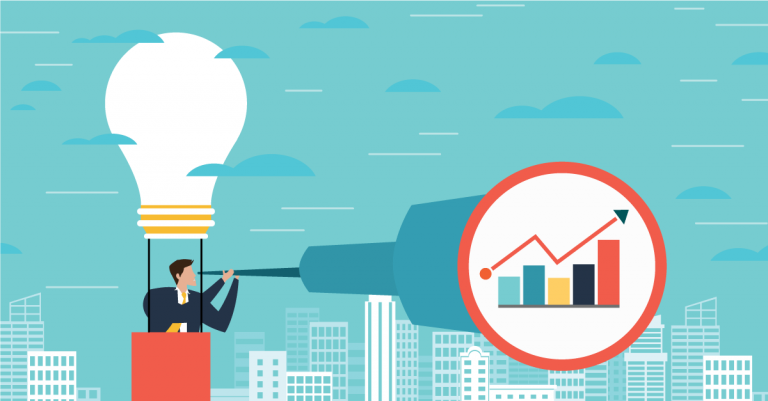
Unfortunately, we don’t own the DeLorean from Back to the Future to fetch data from or even see the future. Hence, the task of futurists is considerably challenging, leading to many forecasts going off track. As Marina Gorbis, Executive Director of the Institute for the Future (IFTF), a non-profit research and consulting organization based in Silicon Valley, says: “If somebody tells you they can predict the future, don’t believe them. Nobody can predict large socio-technical transformations and what exactly these are going to look like.”
Indeed, futurists don’t predict the future but rather think about possible upcoming scenarios by systematically studying trends and data available. The terms might get intermingled, but the condensed version of what we do is trend analysis and scenario building. But if no one can predict the future, then why think about it and make forecasts at all?
We should all be a little bit of a futurist
Science fiction writer William Gibson famously said that “the future is already here, it’s just not very evenly distributed.” The current world is full of signs that hint to where we’re heading. Detecting those signs is what interests futurists in order to better analyze them. Gorbis correctly mentions that “often these are things or developments that are on the margins”.
For example, at The Medical Futurist, we lay emphasis on the importance of artificial intelligence in healthcare. It shows promise in dealing with issues across the medical spectrum from alarm fatigue to crises like COVID-19. Even if the technology’s adoption isn’t currently widespread, it will find its place among doctors and they must prepare to collaborate with it. Therein lies one of the fundamental functions of a futurist: preparedness.
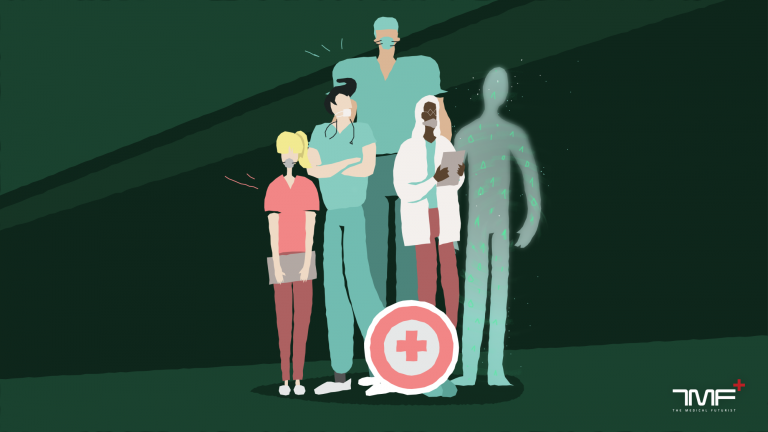
In a world full of advanced technologies, policies and changes taking place daily, forecasting is becoming a key skill not only for futurists. You have to become a bit of a futurist yourself. By analyzing trends and coming up with possible outcomes, we can better strategize around these topics once they materialize or you might already build a strategy during your forecast.
“Systematic thinking about the future is absolutely essential for helping people make better choices today, whether you are an individual or a member of an educational institution or government organization,” says Marina Gorbis. “We view short-termism as the greatest threat not only to organizations but to society as a whole.”
How to start forecasting
Fortunately, forecasting like a futurist is an acquirable skill for anyone. Amy Webb, a quantitative futurist and professor of strategic foresight at the New York University Stern School of Business, says that her task revolves around asking the right questions. In fact, half of a good forecast involves asking the right question; it has to have a purpose, certain parameters and some uncertainty. Let’s take an example to illustrate the concept.
Let’s say you are at a wedding and someone asks about the newlyweds’ chance of getting a divorce. Most people would think there’s a low chance of this happening because they seem happy here and now. However, every couple is (hopefully) happy on their wedding day. A good forecaster on the other hand would ask where they got married and thereafter look for divorce rates in that country or region. Then they’ll make an assumption about the probability for a divorce. This systematic, data-driven method is how we proceed on a forecast.
As for scenario building, I recommend aspiring medical futurists to expose themselves to science-fiction content during my Lessons In Digital Health course at Semmelweis University. Whether they are books, movies or video games, this genre has inspired futurists since the term was coined and gives a glimpse of what issues we could face in the future.

For instance, the 1997 movie Gattaca highlighted the inequalities brought about when designer babies are the norm. Star Trek on the other hand introduced the concept of a tricorder, or an all-in-one medical diagnosing device that we are now getting close to in real life. Even if those sci-fi media don’t offer solutions and often depict dystopian alternatives, they do offer a “what if” scenario which is helpful to build on your own forecasted outcomes.
In fact, picturing “what if” scenarios when we come across a new technology or development on a daily basis is the simplest way of becoming more future-oriented. “What if it becomes the next best thing?” “What if it snowballs into an ethical nightmare?” “How will stakeholders handle this?” “How will I deal with it?” Through such daily practice, you gradually train yourself to have a futurist’s mindset.
Getting good with the Good Judgement Project
Indeed, data and sci-fi insights are sexy to futurists; but where to practice some more of this other than crashing weddings or watching movies? For this, I highly recommend the Good Judgement Project (GJP).
Professors from the University of Pennsylvania founded GJP in 2011 for a forecasting tournament. It then grew to become one of the most popular forecasting services employed by governments and decision makers to obtain foresight into various topics. Some reports put the GJP’s members, or Superforecasters, as 30% more accurate than intelligence analysts who have access to classified information.
In 2015, a spin-off, the Good Judgement Open, was launched for the public to freely participate in. It engages its community in forecasts for a wide range of topics from the unemployment rate in Australia for August 2020 to whether Apple will announce a ridesharing partnership with a major automaker by the end of the year.
They even have video tutorials to start forecasting. These help you break down questions to make informed estimates and hone your forecasting skills sans crystal ball! If your forecasts get close to the actual results, you might even get invited to become a Superforecaster for GJP like I did!
Equipping a new skill
“If you are a futurist, you will get into the practice of looking for signals all the time,” notes Marina Gorbis. “When you wake up in the morning and read the news, you will look at everything through the lens of these signals. You will naturally ask about events: “Is this a signal of something? Why?” This kind of curiosity and the ability to continually sense while also sharing with others are very important.”
Having such a mindset when looking at current events will not only help you analyze them with a new outlook, but it will help you get better prepared for upcoming changes. If one of your forecasted possibilities comes to fruition, you are better prepared to manage the subsequent changes.
Futurist Alvin Toffler, who correctly predicted the rise of the internet and genetic engineering; defined “future shock” as a phenomenon where there is “too much change in too short a period of time”. As technological disruption upends our lives and becomes an integral part of it, we must prepare for such an eventuality. Technology is here to help us, more so in the medical field. By being curious about them, we readily embrace the change that technology brings rather than be disoriented by it.
At The Medical Futurist, our team of futurists will keep you up-to-date with the latest developments in healthcare and share our forecasts so that you can make informed decisions and have less of a future shock. Maybe you’ll join us in thinking about the future and once you do so, share your forecasts with us!