How To Make Life Worth Living Way Over Current Life Expectancy?
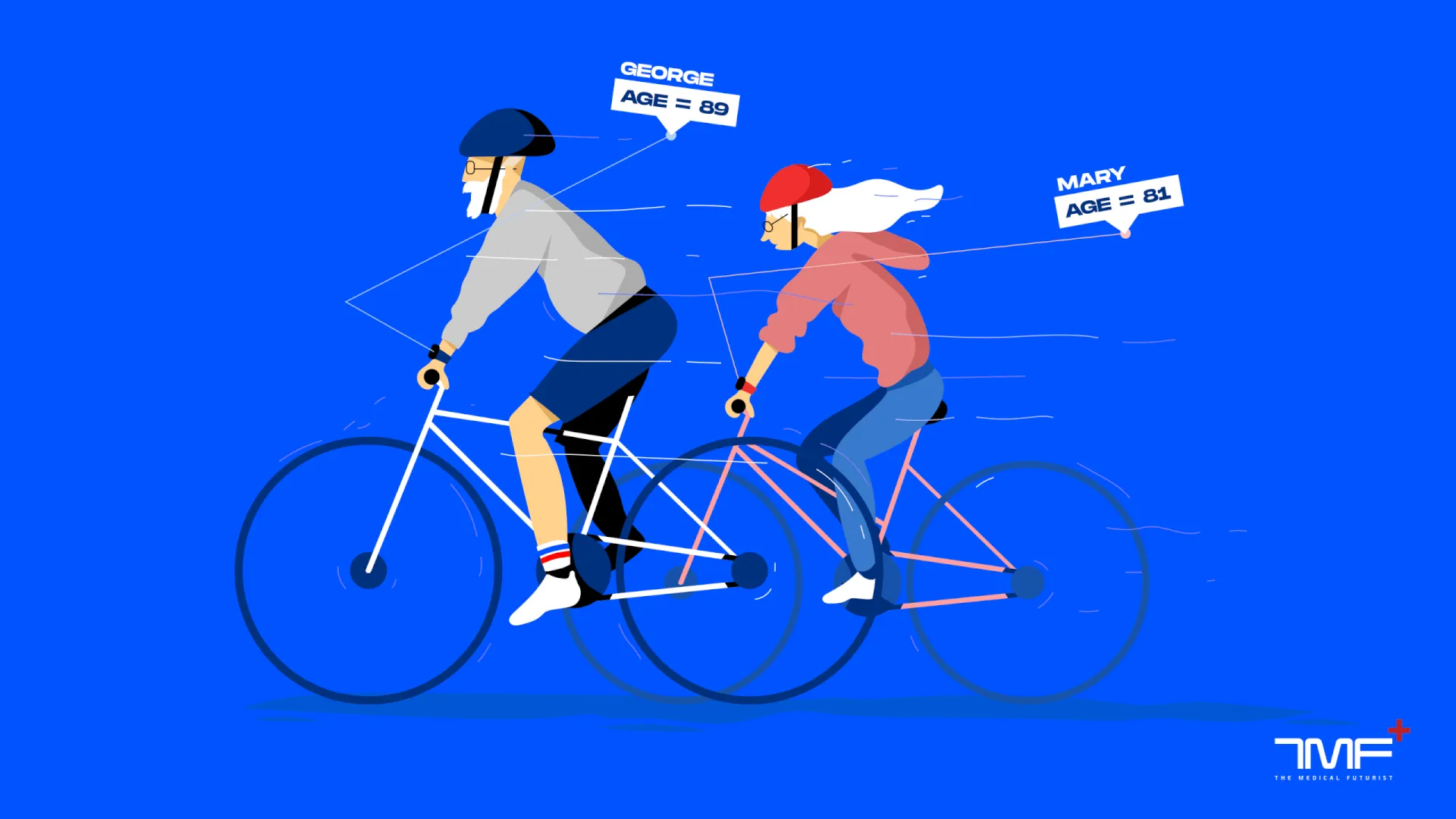
Unfair question: how long would you like to live if you could choose? 70? 80? 90? Everyone wants to live as long as possible, but would you like to live one more year if you’d know you’ll spend it without the ability to use the full range of your physical and/or cognitive capacities? Quality matters just as much as quantity – and with life expectancies reaching well above 80 in many countries, we should concentrate more and more on the former. So, how could technologies help aging society stay healthy as long as possible? How could innovation help make life worth living over 90?

10 min | · Updated
|
THIS ARTICLE HAS NOT BEEN UPDATED SINCE 2019. THE INFORMATION SHARED IN THE ARTICLE WAS ACCURATE AT THE TIME OF ITS PUBLICATION, BUT IT MAY BE OUT OF DATE NOW. BROWSE OUR LATEST ARTICLES HERE |
Unfair question: how long would you like to live if you could choose? 70? 80? 90? Everyone wants to live as long as possible, but would you like to live one more year if you knew you’d spend it without the ability to use the full range of your physical and/or cognitive capacities? Quality matters just as much as quantity – and with life expectancies reaching well above 80 in many countries, we should concentrate more and more on the former. So, how could technologies help aging society stay healthy as long as possible? How could innovation help make life worth living over 90?
To be or not to be – is this the question?
Humanity has been yearning for the secret of immortality since the first temple for the ever-living Gods was built, which might have been 12,000 years ago in Gobekli Tepe, according to the current state of archeology. On the other hand, concerns about the quality of eternal life must have emerged at around the same time – as some myths and legends demonstrate. According to the Homeric Hymn to Aphrodite, when Zeus was asked to grant prince Tithonus eternal life, the god consented. Nonetheless, there was no request for eternal youth, so for thousands of years, Tithonus grew old and withered.
The price of eternal life was the neverending suffering of old age. Although throughout the centuries, we gave up on finding the key to eternal life, the sentiment that with longevity comes the fast decline of human health remained. That’s reflected in the general view of societies about aging as well as the wishes of how long humans want to stick around. According to a 2013 survey by the Pew Research Center, most Americans don’t want to live much longer than the current life expectancy – 78 years. When respondents were asked how long they’d like to enjoy being alive, fewer than 10 percent choose 100 or older. Twenty percent want to live into their 90s. Thirty-two percent want to survive until their 80s. Thirty percent don’t want to make it past 80.

Why do most people want to die before they reach 90?
Probably because most people associate old age with an inevitable cognitive and physical decline, frequent, incurable, and painful health conditions, and loneliness. Inevitable changes in the operation of the human body occur with age – that’s what longevity research wants to reverse -; for example, blood vessels and arteries become stiffer so the heart has to work harder to pump blood. This can lead to heart problems and high blood pressure. People at an older age find it harder to see and hear, the skin gets all wrinkled and dry. The bones become more brittle, and there’s a sudden urge to go to the bathroom more often than before. Everything from cognitive abilities to sex life transforms to some point. And we haven’t even said anything about diseases yet.
Considering all the difficulties of aging, you would believe that people are generally gung ho about innovations, technologies, treatments, and solutions in medicines that would slow the aging process or keep up a high quality of life. However, as the survey by Pew Research Center shows that’s not the case. A slight majority – 51 to 41 percent of Americans – said that “if new medical treatments slowed the aging process and allow the average person to live decades longer, to at least 120 years old,” this would be “a bad thing for society.” Sixty-eight percent think that “most people would want these medical treatments,” but 56 percent, when asked whether “you, personally, would want” such treatments, said they wouldn’t.
We believe that one of the reasons for such pessimism is the lack of knowledge about the potential new treatments, cures or technological innovation that are gonna slow aging and raise the quality of life, while another reason is the misbelief that life could be other than miserable after 90. So to be able to picture spending time over 90 physically and cognitively well, working actively and spending quality social time, we collected a couple of technological innovations that promise the preservation of physical, cognitive, and/or social well-being, as well as the prevention of age-related decline. As most of these innovations are just around the corner, let’s peek into your life over 90.

Physical health and activity
Physical fitness and daily movement are critical to healthy aging. The UN recommends that adults over 65 should engage in at least 2.5 hours of moderate or intense training every week. No matter whether it’s jogging, walking, biking, swimming, doing yoga or dancing in one’s apartment, it’s the movement that counts. Fitness trackers tailored specifically for seniors’ needs, such as the OZO Fitness SC2 Digital Pedometer, could ensure that they are on the move tracking their step count or calories burnt while keeping an extra eye on their health parameters. In the future, digital tattoos will take the place of fitness trackers that will make sure that seniors are well-hydrated, active enough, and their vital signs are in the normal range. In case they would detect something unusual, they could contact friends, family, or even their GP.
Technology could also enhance physical activity and, perhaps, keep seniors longer on the job market. That would highly be beneficial for the elderly, as, for example, retirement causes brain function to rapidly decline. However, in a lot of cases, cognitive functions are able while the muscles cannot do the job. That’s where prosthetics and exoskeletons could come into the picture. It is easy to imagine how seniors working in warehouses or on construction projects, or as medical professionals who move around patients will use exoskeletons daily in order to extend their muscle power, stamina, and weightlifting skills. Exoskeletons are already helping medical professionals get through long hours of surgery. These innovations are already expected by the majority of the American population. In the above-cited survey, seventy-one percent of respondents thought that “there will be artificial arms and legs that perform better than natural ones.”
Stretching the concept even further and making it even more futuristic, perhaps 3D bioprinting could help replace failing organs, tissues, or systems inside the body in the next decades to come. For example, James Yoo and his team have developed a prototype that can create synthetic skin. A US-based company, drug manufacturer United Therapeutics, 3D bioprinted lung tissues. Although we are decades away from the successful application of bioprinted tissues in humans, we can definitely see their potential.

Eating and sensing the world well
Not only muscles could be enhanced through innovations. Although hearing and vision frequently get impaired with age, lots of technologies could remedy the lost capabilities – starting by the simplest and most widely used ones: glasses. However, in the future, glasses could be reinforced by augmented reality technologies so seniors could get extra information through their glasses to be able to navigate better through their everyday tasks. For example, see how a part of town looked a couple of years ago, how a given milk bottle looked before it got rebranded, or help identify the people who are approaching.
Regarding hearing, there are already innovative solutions which help people with hearing loss hear better: with TV Ears anyone can enjoy television shows clearly without turning up the volume. In the future, there might be phones which would slow down messages or ones that would help interpret foreign languages or strange accents better.
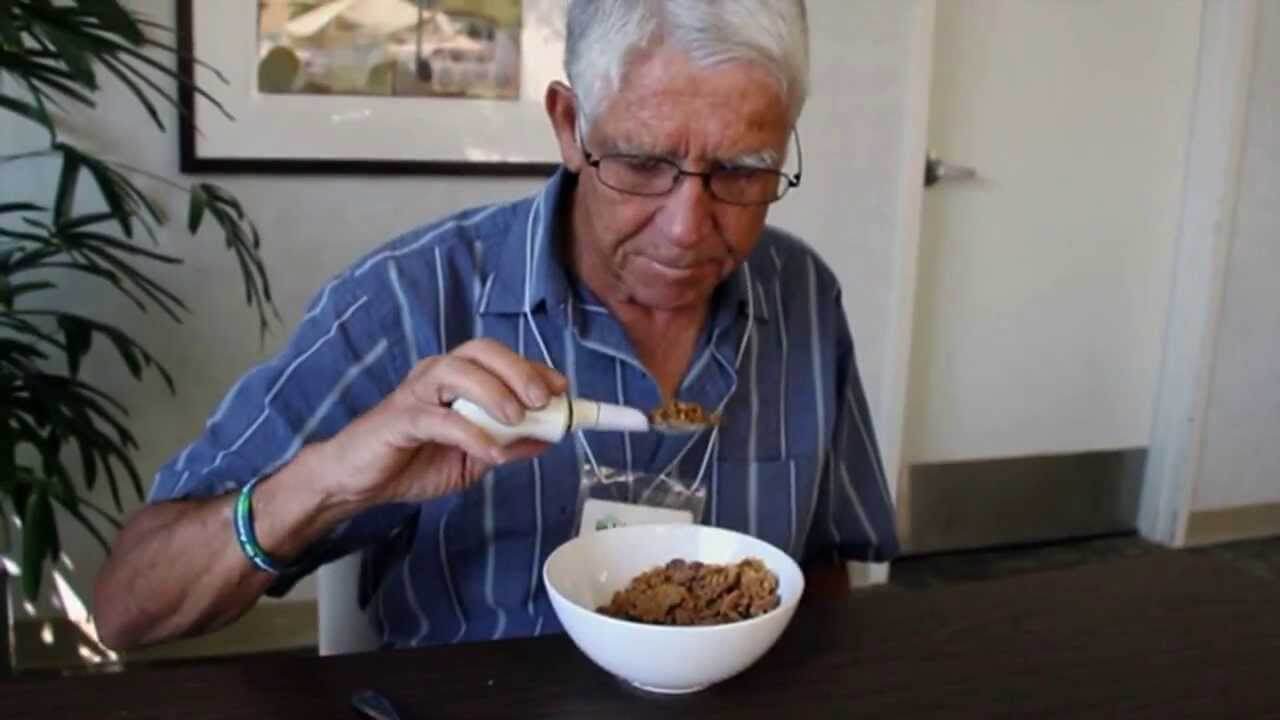
When it comes to food and eating, nutrigenomics could ensure that seniors get the right diet tailored to their personal needs, while smart utensils, such as the Liftware stabilizing handle might mean salvation for people suffering from hand tremor. These smart forks or spoons stabilize hand motion and enable the hand to shake 70 percent less.
Mental and cognitive health
Preserving mental and cognitive health, while keeping a vivid social life means in many cases the key to feeling young in spirit. That has a tremendous impact on subjective well-being and reflects also in better health indicators. A study found that brain function declines rapidly as soon as people stop stimulate their brains, usually after retirement. Apparently, alcohol, not getting enough sleep, no physical activity, smoking, high-fat or high-sodium foods, or being lonely could also add to early cognitive decline. Beyond trying to keep all these elements at the minimum levels, technologies could help stimulate the brain and keep individuals in the ‘brainiacs’ club even after 70 or 80.
For example, gameplay focuses and controls our attention, taps into our innate strengths, thrills us utterly and compels us to greater resilience in the attainment of more powerful and useful skills. That’s why gamified apps are perfect for improving and maintaining cognitive abilities – and that’s why seniors should try to keep up with technologies in general. Lumosity, Elevate, Peak, and many other cognitive games improve comprehension, focus, and even self-confidence. They are great tools to fight against all forms of dementia.
Just as virtual reality. While the creation of immersive simulations is great for making healthcare pleasant in general, VR is also an efficient means for lifting the spirit of anyone, including seniors. As bedridden patients could visit Iceland or go home for a while in their head without ever leaving the hospital walls, seniors could travel anywhere, try climbing Mount Everest, land on the Moon, or kayak in the Grand Canyon. In the future, seniors could also learn new skills, fight their fears, or continue their hobbies – although their abilities would not allow that anymore.
In addition, social companion robots could ensure that they never feel alone, and artificial intelligence-based chatbots or digital assistants could help them organize their social life – and never forget a meet up with family and friends.

While the rate at which life expectancy expands, has slowed down in the last years, the global population, as well as the overall age is rising, especially in developed countries. That’s why we believe innovation will have an increasing role in making the quality of extended life spans better. And many share our view: the Pew Research Center found that by the year 2050 – just 31 years from now – 25 percent of the respondents think it’s at least probable that “the average person in the U.S. will live to be at least 120.” Plus, sixty-nine percent think “there will be a cure for most forms of cancer.” Well, even we are a bit skeptic about the former (while completely agree with the latter), but what we are certain about is that technology will make life worth living more in the future.
|
At The Medical Futurist, we are building a community for making a bold vision about the future of healthcare reality today. If you’d like to support this mission, we invite you to join The Medical Futurist Patreon Community. A community of empowered patients, future-oriented healthcare professionals, concerned health policymakers, sensible health tech developers, and enthusiastic medical students. If there were ever a time to join us, it is now. Every contribution, however big or small, powers our research and sustains our future. Click here to support The Medical Futurist from as little as $3 – it only takes a minute. Thank you. |