Top 5 Healthcare Areas That Space Technology Can Enhance
David Bowie’s iconic song Space Oddity shares the story of fictional astronaut Major Tom as he is about to be launched into space. Its lyrics […]

7 min | · Updated

David Bowie’s iconic song Space Oddity shares the story of fictional astronaut Major Tom as he is about to be launched into space. Its lyrics capture how ground control on Earth keeps in constant communication with Major Tom throughout his space-faring journey, and this much is true. But what is shared between Earth and space is not limited to conversations. Terrestrial technologies are sent to space to assist in astronauts’ health and space tech does get adapted for humans back on Earth too.
Smart clothing manufacturer Hexoskin has worked with astronauts to design medical monitoring systems for Lunar and Martian missions. In early June, the handheld ultrasound Butterfly iQ was sent to the International Space Station (ISS) to help monitor and assess astronauts’ health. But even though Jeff Bezos is planning for a suborbital trip this July and Elon Musk wants to die on Mars, the rest of us non-billionaire humans will have to have our feet grounded on Earth; at least for now.
So what interests us is the spillover effects of these outer space missions’ on health tech; and how they can help reshape the future of healthcare. NASA has a history of licensing and transferring its technology for terrestrial uses, and it publishes how these turn into commercial products via its Spinoff publication.
While some of these might start sounding a bit… alien, such health tech development for extraterrestrial missions can find a firm footing back on Earth; and we’ll take a look at 5 areas where this can be the case. There’s no spacesuit required, so let’s dive right in!
1. Diagnosing the remotest patients
Inhabitants of the ISS represent patients living in extremely remote conditions. They live in a confined and isolated place, several hundreds of kilometers away from the nearest medical facility, which would take hours to reach. But many among those living on Earth can relate to those conditions. However, astronauts have access to cutting-edge technologies to remotely monitor their health; and these can be life-changing if adapted for those living in areas with limited medical resources on Earth.
VisualDX has developed a machine learning algorithm trained on clinical data that helps non-healthcare professionals to diagnose some conditions. After taking a picture of their issue and answering some questions, the software guides astronauts to reach a diagnosis; even if no physician is available. VisualDX is working on an offline mode for its app.
The Translational Research Institute for Space Health (TRISH) is assisting VisualDx to adapt the app for astronauts. It will enable them to help each other in case a medical professional is not present. It’s easy to see the advantage of adapting such a diagnostic tool for emergency situations and low-resource areas back on Earth.

NASA’s own machine learning algorithms have been adapted for healthcare monitoring on Earth itself; and no, it’s not going to lead to a HAL situation like in 2001: A Space Odyssey. Ejenta built on the agency’s algorithms to develop a cloud-based system that gains insights into patients’ health from wearables and medical records. “We’ve applied the technology to various health monitoring situations, and it functions in a way that’s very similar to the system at NASA,” said Rachna Dhamija, CEO of Ejenta Inc. Some studies even found that with Ejenta’s system, doctors could identify conditions in their early stages and prevent complications.
2. Downsizing labs
With full-fledged medical facilities not being an option, access to laboratory tools for further analyses of remote patients’ health status is limited, if not unavailable. To address this need on the ISS, NASA and the TRISH team decided to downsize the lab; perhaps by taking cues from Star Trek.
They are working with 1Drop Diagnostics, which previously developed a portable device capable of performing point-of-care blood analyses. The smaller, space travel-friendly version can measure a range of biomarkers to determine cardiovascular function, kidney and liver function from a small blood sample.

NASA also previously developed a nanosensor device that could help detect certain conditions in a non-invasive fashion. The small chip consists of a series of nanochemical sensors that can identify biomarkers in one’s breath. These can in turn help identify an underlying condition. For example, Type 1 diabetics’ exhaled breath contains acetone, which can be detected with such a device.
Back on Earth, equipping first responders with such point-of-care tools is a no-brainer, as they allow the assessment of one’s status and detection of conditions anywhere.
3. Next-generation wearables
Of course, astronauts need more of their vital signs monitored and they can do so like we do, with wearables. But space-ready ones can push the boundaries further regarding what we can expect from such personal health sensors.
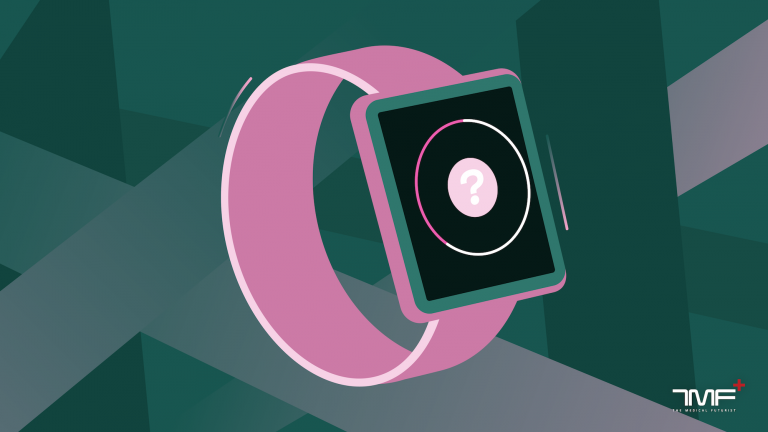
The first Mars mission-ready wearable, the EmbracePlus, comes from Empatica. It is a low-power smartwatch that can continuously monitor a range of parameters such as electrodermal activity, heart rate or oxygen saturation. It also uses an A.I. to support the user to interpret readings. The company even developed an on-wrist charger to enable non-stop health monitoring.
4. Enhancing cognitive performance
“Astronauts are high performing folks, and we want to keep them high performing”, says Jimmy Wu, Senior Biomedical Engineer at TRISH. And one way to keep them performing to the best of their abilities is to ensure that they maintain high levels of cognitive abilities. TRISH is investigating new ways to boost how astronauts perform mental tasks.
Collaborating with the City College of New York, they are exploring the potential for light in the near-infrared range to enhance the vascular and metabolic function of cells. Their technique involves applying safe levels of laser light to the forehead so as to improve brain function.

Another team at TRISH is investigating the use of ultrasound techniques to enhance astronauts’ performance. They developed a wearable that non-invasively stimulates specific areas of the brain.
These definitely sound like unconventional techniques. But they could lead to a smart headband that non-invasively helps people remain high-performing, even in adverse environments.
5. Extraterrestrial organs for terrestrial needs
Further down the line, we can see even more sci-fi-esque technologies from space than laser and ultrasound headbands to boost our brain performance. More specifically, tissues and organs from space could be brought down to the globe to address the severe shortage of organ transplants.
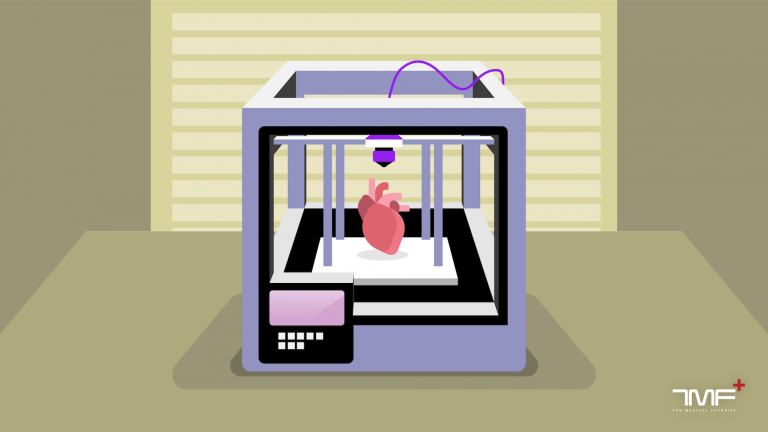
No, we don’t mean harvesting alien organs but bioprinting them in space. This is what Dr. Andrew Morgan has been experimenting on the ISS. The microgravity environment in the station is appropriate for 3D-printing tissues as it minimises the risk of collapsing under gravity. Even though experts expect that it could be over a decade before viable tissues and even organs printed with this method are transplanted into humans, it could provide customised organs with reduced rejection risks.
We explored some of the most promising and interesting ways that space tech could enhance healthcare on Earth. There are more experiments being conducted that could also be adapted for use on the ground. Are there any that you would like to see become turned into terrestrial practice?
Written by Dr. Bertalan Meskó & Dr. Pranavsingh Dhunnoo
|
At The Medical Futurist, we are building a community for making a bold vision about the future of healthcare reality today. If you’d like to support this mission, we invite you to join The Medical Futurist Patreon Community. A community of empowered patients, future-oriented healthcare professionals, concerned health policymakers, sensible health tech developers, and enthusiastic medical students. If there were ever a time to join us, it is now. Every contribution, however big or small, powers our research and sustains our future. Click here to support The Medical Futurist from as little as $3 – it only takes a minute. Thank you. |