This Is How A.I. Will Transform Medicine: The Same Way It Has Transformed Chess
By now, I’ve spent over one thousand hours playing chess at a professional level. Not to become the next world champion, but to better understand […]

6 min | · Updated
By now, I’ve spent over one thousand hours playing chess at a professional level. Not to become the next world champion, but to better understand the language of A.I. or the language of anticipation.
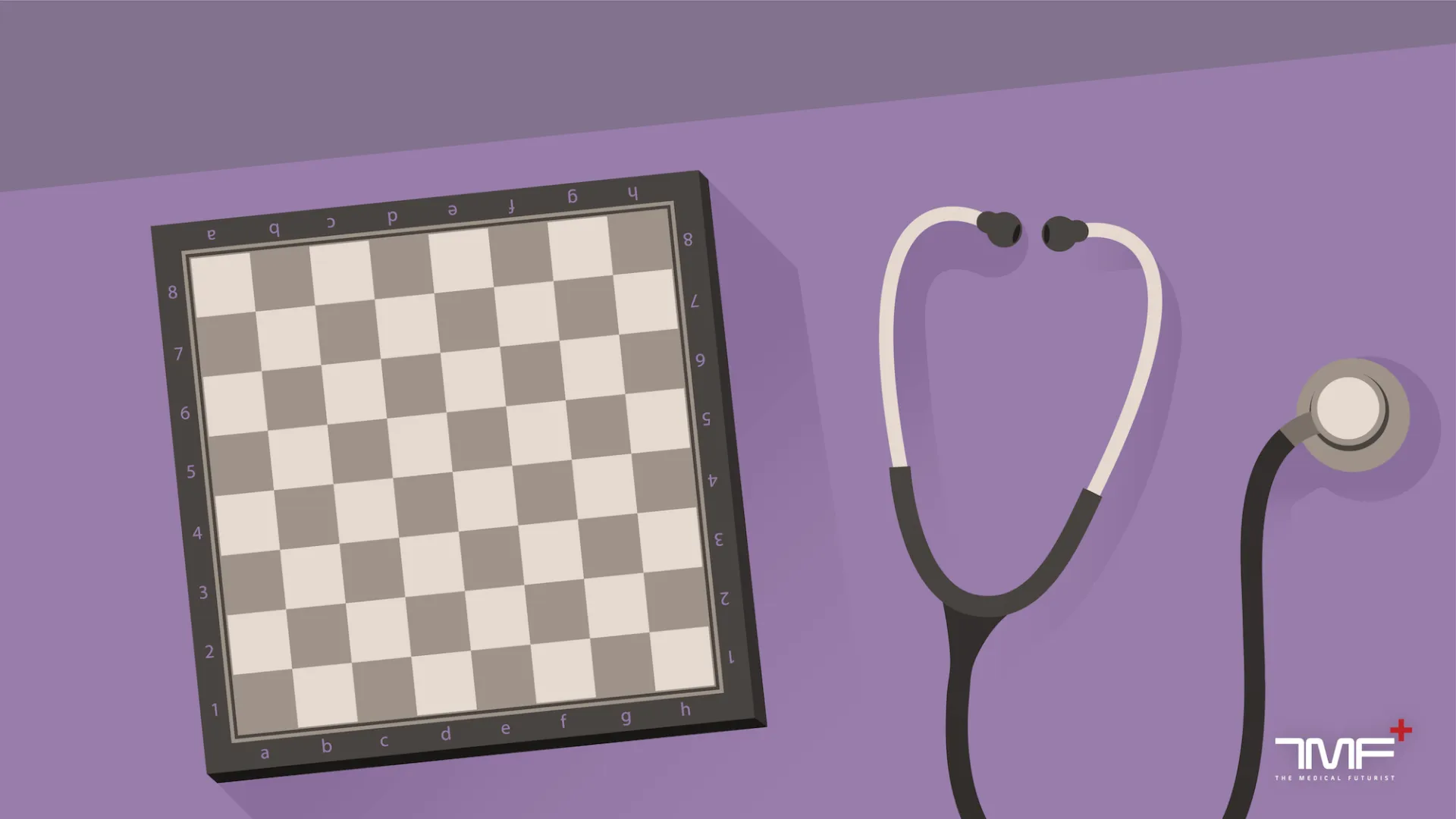
While on this journey, I also looked into the history of the board game and became convinced that it serves as the perfect metaphor for what is coming to healthcare. With their similar backgrounds and the integration of A.I. in the fields, their transformation will also bear similarities.
And by looking into the transformation that A.I. brought about to chess, we can derive insights into how this upcoming change will happen in medicine. This is what we will be looking at in this article.
The shared history between medicine and chess
Although from different eras, both chess and medicine originate from ancient times. In the 6th century CE for the former and as far back as 400 BCE for the latter if we consider the time of Hippocrates or the “Father of Medicine.” For centuries, both disciplines were led by intellectuals in their respective ivory tower. This tightly controlled aspect was because they both require exceptional skills in anticipation and strategic vision for successful execution.
For instance, if a patient has certain symptoms, one must know what effects a treatment will have on that patient before administering it. Similarly, a professional chess player chooses a specific opening move to get a specific response from the opponent. These extraordinary people contributed a wealth of knowledge, transforming those fields for hundreds of years with novel techniques and manoeuvres that helped generations to come.
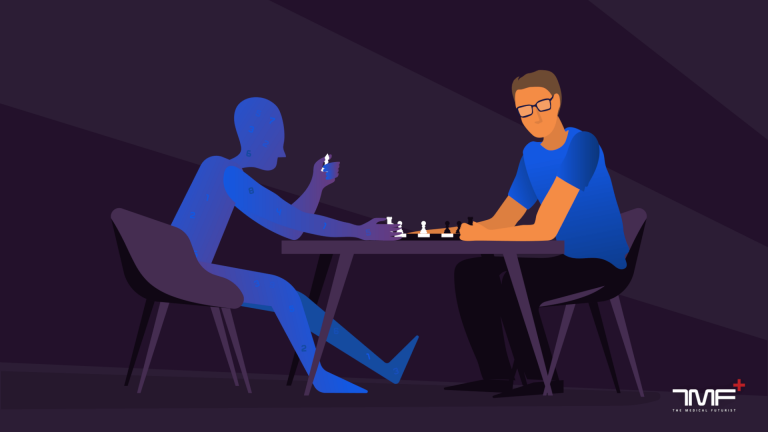
But in recent years, a new entity has been allowed to contribute and even launched a new era in both disciplines: artificial intelligence. This technology has disrupted chess more quickly than medicine since the board game involves fewer variables than medicine.
As such, the impact A.I. had on chess can be more easily analysed; and this can give us insights into what awaits medicine.
How A.I. transformed chess
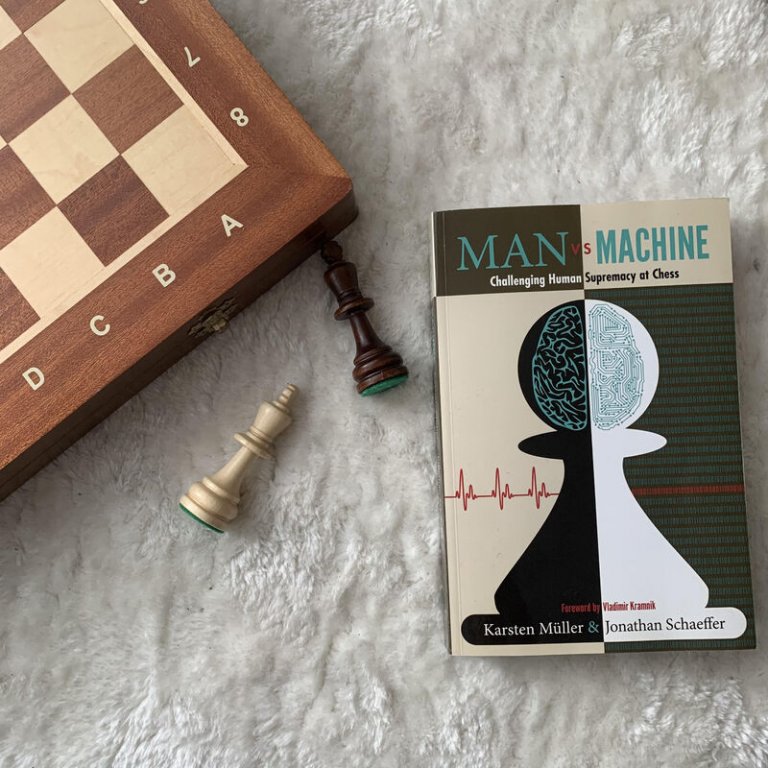
The book Man vs Machine brilliantly describes the entire evolution of chess machines. It begins with Wolfgang von Kempelen‘s late 18th-century machine, The Turk (a mechanical illusion that had an actual chess player hiding inside); then explores the first actual, yet rudimentary machines; and arrives at contemporary A.I. algorithms.
In fact, nowadays, it is such algorithms that reign supreme at the discipline and not humans. Google’s AlphaZero and Stockfish are the two A.I. that compete between themselves for the #1 spot. The beginning of their rule began in 1997: when IBM’s supercomputer Deep Blue beat Garry Kasparov, the world’s best chess player at the time. Experts thought that this would spell the doom of the board game; after all, who would want to play a game against an unbeatable A.I. that only gets better after each game?
But rather than ward humans away from the discipline altogether, A.I. ushered a new era in chess. Today, more people than ever – some 600 million – play chess regularly. They are and will remain far behind their A.I. opponents, but people have made peace with this fact and embraced the technology.
Subsequently, chess players are able to play at a higher level against each other since they practice with computers and derive new insights from them. Chess coaches use the technology to train their students. Even spectators enjoy a better experience of watching tournaments with live evaluation from chess engines that give a glimpse of what chess grandmasters have in mind.
Today, chess doesn’t exist without such technologies; especially A.I. Literally no player can play at a high level without working alongside computers; while knowing all too well, they won’t reach the A.I.’s level.
A shared future
This radical transformation – where A.I. and chess players collaborate – is one that chess grandmasters wouldn’t have expected some decades ago. However, this partnership did not happen overnight but took several decades to reach this point. A.I.’s takeover of chess was possible with increasing computing power; with assistance from the best chess players who could understand the language developers spoke; and through constant re-evaluation and fine-tuning spanning decades.
This quote from Man vs Machine by Monroe Newborn, computer chess developer and event organiser, sums up this transformation pretty well:
“Masters used to come to computer chess tournaments to laugh.
Now they come to watch.
Soon they will come to learn.”
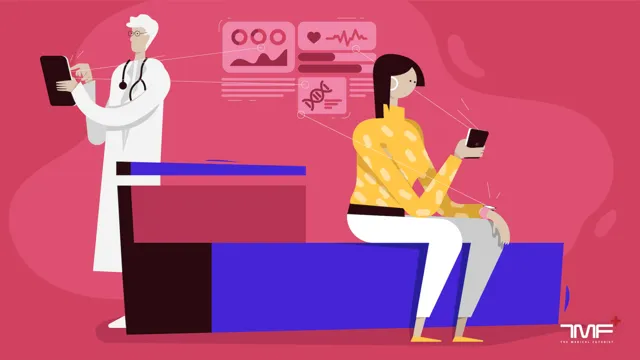
This quote aptly describes the type of transformation that physicians can expect from A.I. in healthcare. From distrust through curiosity to collaboration, the A.I.-physician relationship will follow such a transition before becoming mainstream.
What awaits medicine
At first, physicians will laugh at the medical evaluations A.I. can make. This is because some are tested only on controlled datasets and ideal conditions not representative of clinical realities. But as their analyses get refined over time with better data, these algorithms will start coming up with unique and interesting medical insights. This will warrant closer attention by medical professionals to curiously observe how those machines analyse well-known medical problems.
Further down the line, physicians will constantly learn from such insights and this will push them to study medicine with A.I. by their side. The importance of technology in the craft will become undeniable and it will become a must-have tool for the art of medicine; somewhat akin to the stethoscope of the 21st century.
No patient, physician, researcher, policy maker or developer will be able to cure or treat diseases without A.I.
Patients will get help from A.I. analysing their myriad of data. Algorithms will help physicians analyse millions of studies in mere minutes to assist in optimal decision-making. Policy makers will be able to better organize healthcare with the astronomical amount of data that A.I. can handle.
As such, it’s not that A.I. will put healthcare professionals out of their jobs, but those doctors who don’t use A.I. will be replaced by those who do. Just like chess took a new dimension with A.I., a similar scenario is likely to unfold in the field of medicine. Rather than a competition, the technology should be seen as cooperation that amplifies human performance.
Written by Dr. Bertalan Meskó & Dr. Pranavsingh Dhunnoo
|
At The Medical Futurist, we are building a community for making a bold vision about the future of healthcare reality today. If you’d like to support this mission, we invite you to join The Medical Futurist Patreon Community. A community of empowered patients, future-oriented healthcare professionals, concerned health policymakers, sensible health tech developers, and enthusiastic medical students. If there were ever a time to join us, it is now. Every contribution, however big or small, powers our research and sustains our future. Click here to support The Medical Futurist from as little as $3 – it only takes a minute. Thank you. |