The Future of Psychiatry: Telehealth, Chatbots, and Artificial Intelligence
Could a chatbot, an online community, or a telepsychiatry solution offer meaningful help for people who are fighting mental health issues? Could virtual reality, artificial […]

9 min |
Could a chatbot, an online community, or a telepsychiatry solution offer meaningful help for people who are fighting mental health issues? Could virtual reality, artificial intelligence, or genetics appear as elements of assistance in the toolkit of medical professionals in the fields dealing with the human psyche?
While we agree that medical fields requiring the most empathy and human touch will most probably not be swept away by new innovations, we looked thoroughly at how technology will appear in the future of psychiatry.
The human touch is indispensable in fields dealing with the psyche
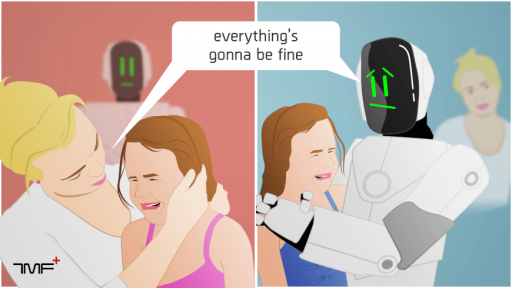
In 2018 we started a project to map out the universe of mental health apps. We tested 9 apps and devices altogether, with varying results. Within, we decided to Woebot, an A.I.-powered mental health chatbot to see how meaningful a conversation can be with an algorithm. While the technology is rapidly evolving, our experience didn’t quite give us the feeling of emotional support. It could not make us believe that it’s a viable alternative to a human. But the question is: should it make her believe that?
The human touch is a key part of practising medicine, and regarding the field of clinical psychology, clinical social work, marriage and family therapy, psychotherapy, psychiatry, or psychiatric nursing, human connection, understanding, and empathy build such a basic foundation that it is very hard to imagine how technology could play a meaningful role in it.
Regardless, a plethora of smartphone apps, virtual reality and telemedical solutions, experiments for creating artificial intelligence platforms and robots for therapeutic purposes through trying to “teach them” how to mimic empathy are underway, so we decided to look around how technology will appear in the future of psychiatry.
Mental health apps to support therapy
Many apps explicitly say that they can guide patients on their journey towards mental health and stability; some promise to guide clinicians to help their patients better. As an example for the latter, the American Psychiatric Association created an online tool to navigate psychiatrists through the bourgeoning mental health app world.
These tools range on a wide scale from harmless anger-soothing, meditation apps through mood trackers to PTSD, stress or anxiety management instruments. These tools offer a temporary solution for people suffering from mental health troubles when a therapist is not immediately available.
Online communities with peer support
Words of comfort, uncompromised attention, and empathy coming from members of a trusted group could work wonders. Especially when the community knows what they are talking about. Thus, online communities with peers going through the same problems could also offer tremendous help – especially in times when an offline alternative is not available.
For example, 18percent is a free online mental health community based on Slack, where one can receive peer-to-peer support instantly and constantly. The community offers free, 24/7 support in a moderated environment, with many channels that cover various mental health issues ranging from addiction through depression, mood disorder to OCD. 18percent is an official partner of the US Crisis Text Line and the National Eating Disorders Association.
Other similar applications, such as Togetherall or the ADAA online support group also provide online spaces where people suffering from various mental health troubles can come together and talk about their problems, with or without support from trained therapists.
Mental health apps’ and online peer communities’ greatest advantage is that they offer immediate help in the middle of the night or during other periods when a psychiatrist or psychologist isn’t within reach. Zach Schleien, Co-Founder of 18percent told The Medical Futurist that “children may use bots since they may be afraid to tell their parents that they are dealing with mental health issues. People who do not have the means to pay for therapy may turn to bots as a low-cost option. Individuals who are traveling or are unable to sleep late at night may speak with a bot since the “human” therapist will likely be unavailable”.
Telemedicine: connecting patients and therapists
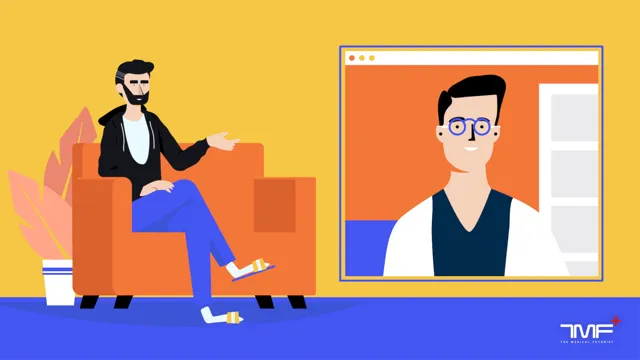
Telemedicine is also connecting those in need. Remote care solutions could work here even better than in the case of other specialties, as contrary to other fields, the patient doesn’t need a physical exam, but a meaningful conversation. Moreover, it could also mean a solution for the still prevailing stigma of “going to a therapist.”
Patients can schedule sessions with human coaches through smartphone apps. Doctor On Demand, teenager-focussed Ginger, or platform provider Cloud 9 make mental healthcare more accessible, connecting patients or those in crisis with mental healthcare professionals. Talkspace connects users with licensed therapists through messaging. The service is not meant to replace real, face-to-face sessions, and the therapists are trained to tell the users if they need more or different counselling.
Children’s Hospital & Medical Center in Omaha, which services multiple states in the U.S., provides another great example of the impact telemedicine psychiatry has on patients and providers. Children’s Omaha serves over 250,000 children, the vast majority of whom living in rural areas with limited or nonexistent access to psychiatric care. Using telepsychiatry, the health system has been able to reduce follow-up no show rates by 50 percent, eliminate the psychiatrist’s 26-hour weekly windshield time, and have one psychiatrist provide care to over 600 patients in the program’s pilot year.
Virtual reality against phobias
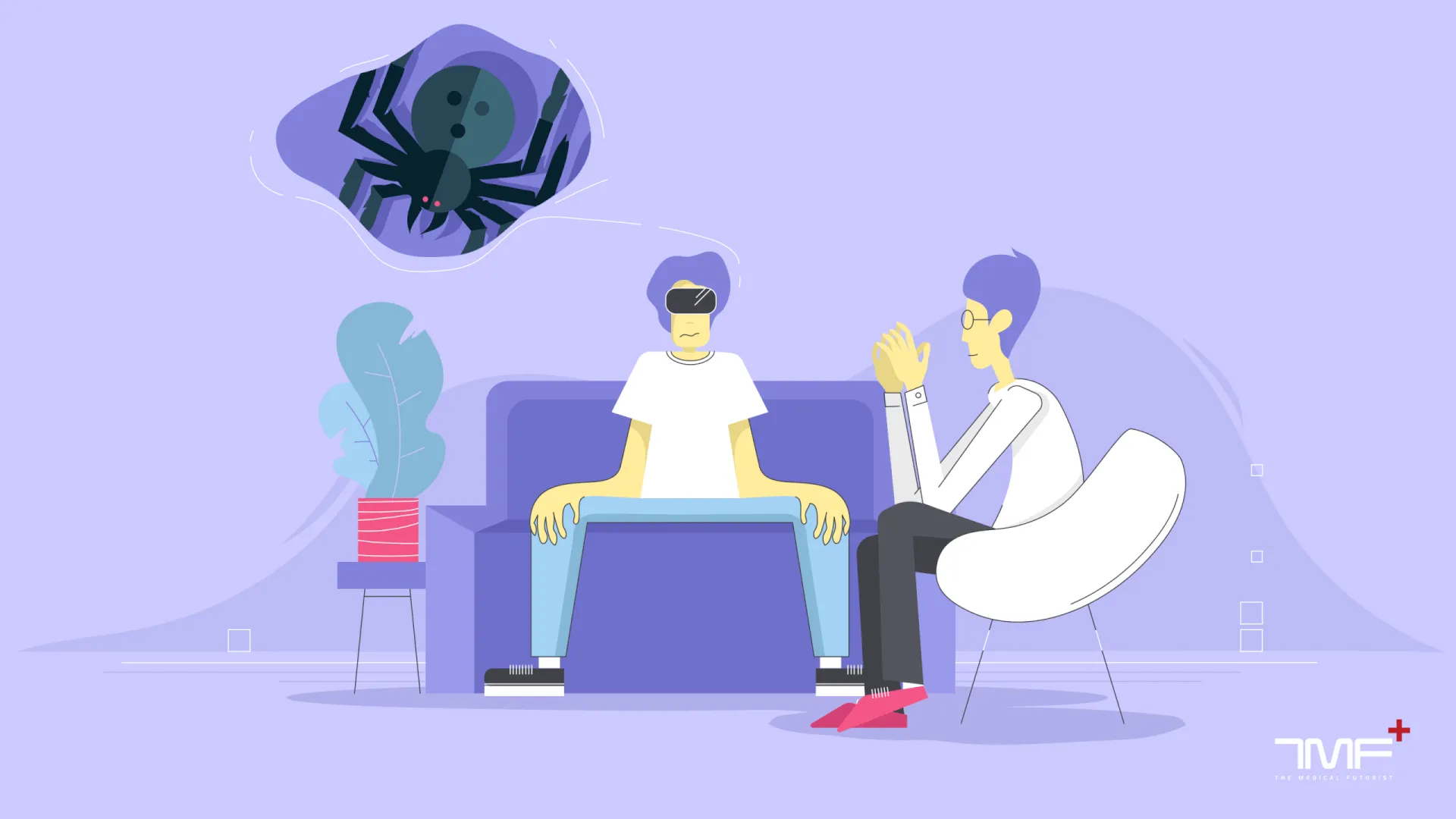
Virtual reality offers another brand-new way to treat mental health problems, such as anxieties, fears, and phobias. The immersive environment re-creates the fearful situation for patients – but it also offers them a safe place to get over their paranoia: they are under the control of physicians, and they can get out of the simulation any time.
The Spanish and American behavioural health technology company, Psious offers unique VR treatments for psychological conditions such as fear of flying, needles, various animals, public speaking, general anxiety, or agoraphobia. Virtually Better, the pioneering VR company founded in 1996, offers among others an exposure therapy for people suffering from anxiety disorders, specific phobias, or post-traumatic stress syndrome. Made for the mental wellbeing, Deep VR is a meditative virtual reality game, controlled by breathing.
Arachnophobia offers self-guided exposure therapy for people having an irrational fear of spiders. You are exposed to an increasing number of spiders in a room, and if that were not enough of a stressor, you are not allowed to move your hands or arms during the session. Richie’s Plank Experience places you on a plank, 80 stories above ground, to tackle the fear of heights. And people who are afraid of public speaking can face the dreaded situation with Limelight, which gives users the option of appearing in a business meeting, small classroom, or in a large hall as they give a speech.
Pharmacogenomics: finding the most appropriate antidepressants
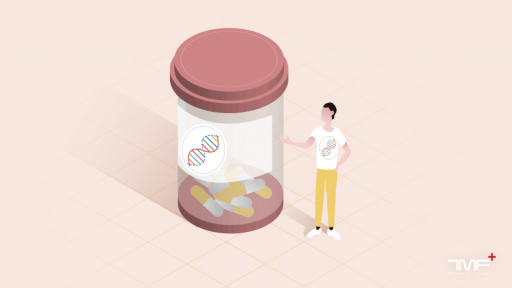
A specific strand in personalized medicine aims to revolutionize how we think about medication, which might also impact psychiatry and prescription medicine, e.g. antidepressants or antipsychotics. Pharmacogenomics deals precisely with this issue area. It is defined as the study of variability in drug response due to the genetic code. It argues that despite general sentiments, medications do not have the same effect on people.
Indeed, inherited genetic variations (such as in cytochrome enzymes) can influence the body’s response to drugs. Genetic screening in clinical practice will hopefully become routine soon, enabling psychiatrists to customize drug treatment to achieve better efficacy and tolerability for each patient. This will help us adapt therapies to address genetic variations within our ethnically diverse society.
Artificial intelligence: flag signs of depression and suicidal thoughts
A.I. can give a helping hand when it comes to the early detection of depression. The machine learning algorithm created at Vanderbilt University Medical Center in Nashville uses hospital admissions data, including age, gender, zip code, medication, and diagnostic history, to predict the likelihood of any given individual taking their own life. In trials using data gathered from more than 5,000 patients who had been admitted to the hospital for either self-harm or suicide attempts, the algorithm was 84 percent accurate at predicting whether someone would attempt suicide the following week, and 80 percent accurate at predicting whether someone would attempt suicide within the following two years.
A.I. can also detect depression from your voice – and it’s even eerily accurate. In fact, it’s twice as accurate in it than a human practitioner. “There might be as many as 1,000 smartphone-based ‘biomarkers’ for depression,” said Dr. Thomas Insel, former head of the National Institute of Mental Health and now a leader in the smartphone psychiatry movement. Researchers are testing apps that use artificial intelligence to try to predict depression episodes or potential self-harm.
What’s the future of mental health management via technologies?
In 2020, Brad Pierce from Virginia Commonwealth University investigated the magnitude of the changes in mental health due to COVID-19. “Telepsychology is different from in-person therapy. Each method has advantages and disadvantages over the other” – we quoted Pierce in our article on Telepsychology During COVID-19. As of today, telepsychology is not a “thing” but an everyday choice for patients and professionals.
Psychiatry, clinical psychology, and all the other medical fields dealing with mental health issues will always remain a personal profession. An intimate doctor-patient relationship cannot be built through chatbots, smartphones, or telemedical screens in these fields, although these solutions could alleviate the immediate need for a therapist. As Brad Pierce and his colleagues found, many practitioners feel they will conduct their practice online after the pandemic: “psychologists nationwide predict that 34.9% of their treatment will occur via telepsychology after the pandemic ends.”
As there is a lack of physicians worldwide, they might need to learn how to use technologies more and more alongside with the skill how to offer words of wisdom and empathy through screens, and how to offer peace of mind regarding data security.
|
At The Medical Futurist, we are building a community for making a bold vision about the future of healthcare reality today. If you’d like to support this mission, we invite you to join The Medical Futurist Patreon Community. A community of empowered patients, future-oriented healthcare professionals, concerned health policymakers, sensible health tech developers, and enthusiastic medical students. If there were ever a time to join us, it is now. Every contribution, however big or small, powers our research and sustains our future. Click here to support The Medical Futurist from as little as $3 – it only takes a minute. Thank you. |