Federated Learning Can Protect Patients’ Data In Hospitals
In The Matrix, Morpheus offers Neo the choice between two pills in the iconic ‘Blue Pill Or Red Pill’ scene; take the red pill and […]

7 min | · Updated
In The Matrix, Morpheus offers Neo the choice between two pills in the iconic ‘Blue Pill Or Red Pill’ scene; take the red pill and Neo learns life-changing truths or take the blue pill and Neo maintains his blissful ignorance. We could adapt this choice to healthcare A.I. nowadays.
Would you be willing to contribute your personally-identifiable biometric data to a for-profit company that stands to gain millions off your information by developing a “red pill-powered” A.I. in the hopes of improving healthcare?
If not, would you then be willing to let healthcare professionals use an undertrained, “blue pilled” A. I. to make decisions that will impact your well-being? This sick twist to Morpheus’ choice is a paradox that we are experiencing today with A. I. in healthcare: compromise our data for better, truth-seeking A. I. or keep our data for poorly-performing ones ignorant of real clinical data. And there are already examples to show for.
An oft-cited example is that of IBM Watson. During a simulation in 2017, the A.I. suggested a drug to a cancer patient that could be fatal to them. Other reports on internal IBM documents revealed further damning information including “multiple examples of unsafe and incorrect treatment recommendations”. While IBM refuted these allegations, the reports lay the blame on the training methods used to develop the software which involved a small amount of “hypothetical” or “synthetic” patient cases instead of real patient data. Addressing this would ideally require training the A. I. on a number of real patient data from various sources to output results that are more in-line with actual practice.

But this idealistic scenario is far from likely due to the privacy issues raised by sharing such data. So are we relegated to the two choices presented at the beginning of this article in order to benefit from the transformative force of A.I. in healthcare?
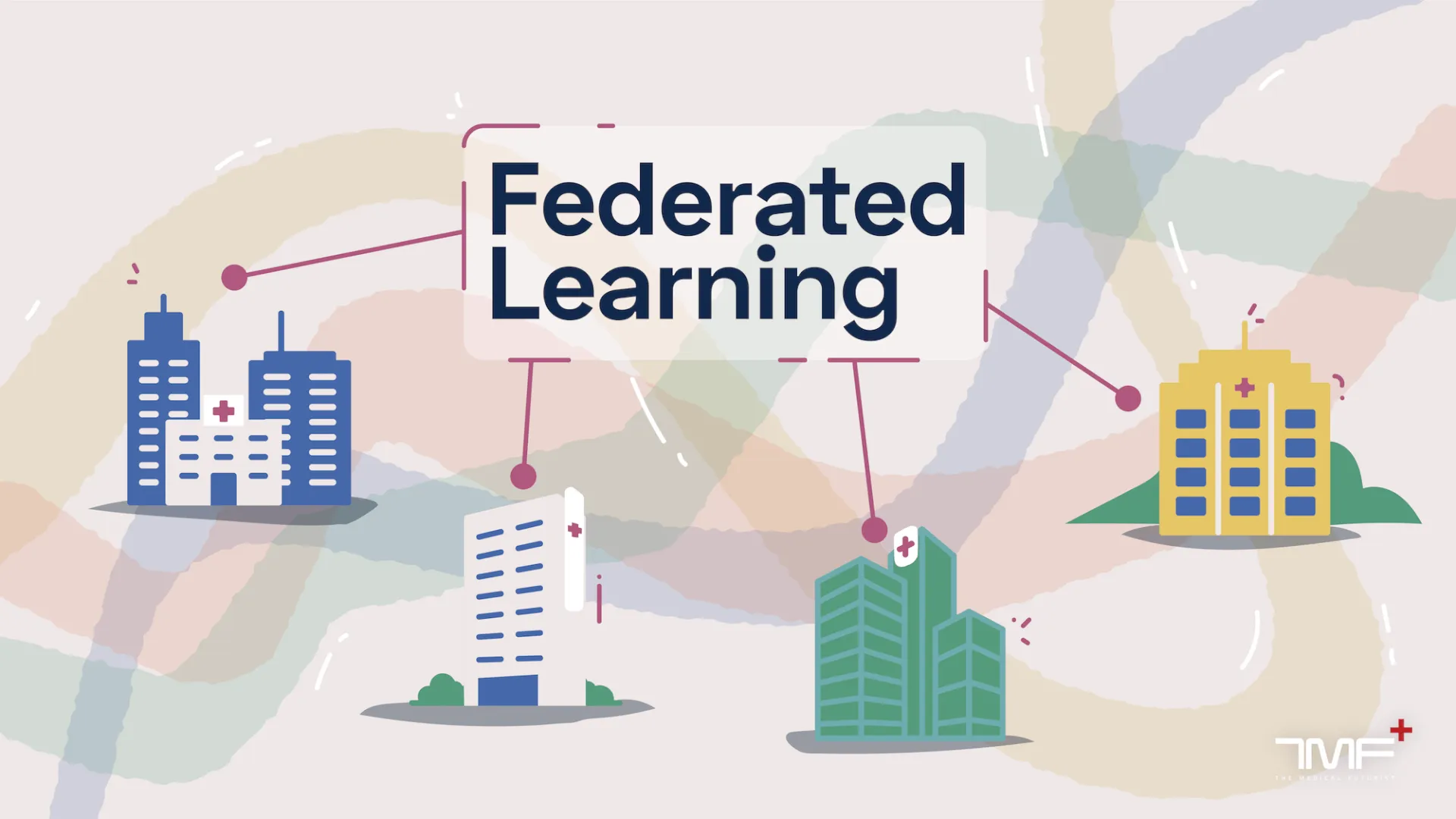
Recently, a privacy-first, competent A. I. training method that addresses the paradox with a “third pill” option has been showing promise: federated learning.
What is federated learning?
Nowadays, when talking about A.I., we most often focus on ‘machine learning’ (ML), which is one of A.I.’s subcategories. And this subcategory itself involves numerous types of learning techniques from supervised learning through inductive learning to ensemble learning.
The types of ML training method depend on the use case and in healthcare the dominant ones have so far involved supervised learning, unsupervised learning, reinforcement learning and deep learning. These involve a centralised model where the A.I.’s developers collect data from health records and sensors and feed them to the algorithm.
This is where privacy issues arise as the companies behind the A.I. tools are in possession of sensitive data. And even though health datasets are anonymised, researchers previously showed that these can be used to re-identify patients. This is where federated learning (FL) comes into play.
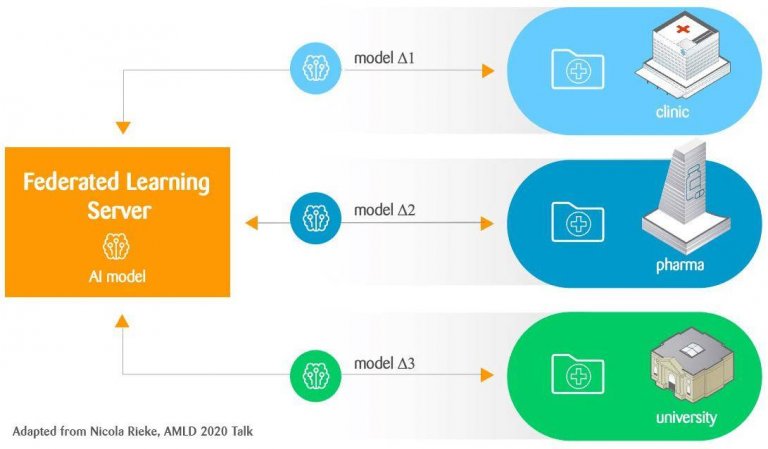
This machine learning technique was initially developed for other fields such as telecommunications, however, interest in applying this machine learning technique for digital health use cases has grown recently. This is because FL involves a decentralised training method of algorithms, thereby helping to address privacy issues.
With this method, participating institutions develop ML algorithms themselves based on data that they possess locally (e.g. from medical records). Then, they share these individually-trained algorithms – which are now devoid of personal data – to build a single, larger algorithm. This process is repeated to develop a high-quality A. I.-based software, all without sharing patients’ data outside of the hospital or devices.
There’s no A.I. without our data
This privacy-focused aspect of federated learning will become an increasingly attractive option for medical A. I. developers if they want to build trust among their user base. IBM’s case might have served as a cautionary tale; and the company is even reportedly planning to sell its Watson Health branch altogether. But other Big Tech companies like Apple, Amazon and NVIDIA want to make a lasting presence in healthcare; and they’ll want to do it in a trustworthy way given how many of them compromised personal data in the past.

But without patient data, we will simply not have A.I., and its potential in healthcare will remain untapped. Currently, medical records, wearables and health sensors almost continuously amass individual health data; and together these provide unprecedented amounts of individualised health metrics. But this leads to scattering of data which are even potentially incompatible across each system. However, smart algorithms could leverage this information to generate personalised insights; but only if they have access to a large enough pool of such quality data.
A compromise needs to be reached, which, until now, meant risking the integrity of sensitive information and relying on limited datasets. But the emergence of federated learning could bring a renewed trust in healthcare A.I. and the companies behind it. With this technique, algorithms could be trained on individual systems, even if incompatible, with the goal to develop a better, compatible A.I. from those developed separately.
A proven alternative
The question that comes to mind with this new method is whether it’s accurate enough to deal with healthcare decisions. The answer is a resounding yes. In addition to its privacy-focused approach, studies showed that such a technique performs comparably to other centralised ML models to deliver quality and reliable performance.
A follow up question would be whether tech companies developing A. I. tools care enough about preserving patients’ privacy to adopt a new model over those they already have experience with. If they want long-term adoption of their algorithms, this answer should also be yes.
Luckily, there are some promising instances indicating that the industry might shift in this direction. NVIDIA already went headfirst with such a training model with its NVIDIA Clara FL framework. The company launched a pilot program with the American College of Radiology to enable radiologists in the country to develop A.I. in their respective institutions based on their own data via federated learning so as to meet their clinical needs.
Owkin, an A.I. startup, is also putting federated learning to use in developing its healthcare A.I. solutions. Its Melloddy project employs the technology for drug development, while its Owkin Connect platform is used to research A.I. solutions among participating centres in the ecosystem.
Given its potential to develop useful algorithms without breaching patients’ privacy, federated learning positions itself as a win-win option for A.I. developers and patients alike. Its uses in healthcare are still at an early stage, but with some promising examples pointing to its adoption, a third pill option seems very real.
Written by Dr. Bertalan Meskó & Dr. Pranavsingh Dhunnoo
|
At The Medical Futurist, we are building a community for making a bold vision about the future of healthcare reality today. If you’d like to support this mission, we invite you to join The Medical Futurist Patreon Community. A community of empowered patients, future-oriented healthcare professionals, concerned health policymakers, sensible health tech developers, and enthusiastic medical students. If there were ever a time to join us, it is now. Every contribution, however big or small, powers our research and sustains our future. Click here to support The Medical Futurist from as little as $3 – it only takes a minute. Thank you. |