A.I. In Healthcare, 2021: 8 Exciting Insights From The E-Book
Far from being the futuristic promise it once was, artificial intelligence (A.I.) is an unavoidable eventuality in virtually all sectors. Heeding to its potential, governments […]

12 min | · Updated
Far from being the futuristic promise it once was, artificial intelligence (A.I.) is an unavoidable eventuality in virtually all sectors. Heeding to its potential, governments around the world are collaborating and taking steps to ensure the responsible development and use of A.I. One such recent example is the Global Partnership on Artificial Intelligence (GPAI) jointly created by 14 governments and the European Union in 2020.
Healthcare will also need to brace itself for this disruptive force. Already, the number of life science studies published around A.I. rose from 1,600 in 2010 to 7,300 in 2020. The technology is also making its way out of research labs as highlighted in practical examples. In France alone, 1 in 5 A.I. startups operate in the healthcare sector. In the pharmaceutical space, more than 230 startups are using the technology in drug discovery.
We have recently explored A.I.’s far-reaches into the healthcare world and shared our findings in our latest e-book, ‘A Guide To Artificial Intelligence In Healthcare’. It is aimed at being a comprehensive guide to help readers get a firm grasp of the possibilities and limits of A.I. in healthcare. For a deep dive into the subject, we would recommend you getting a copy on LeanPub.
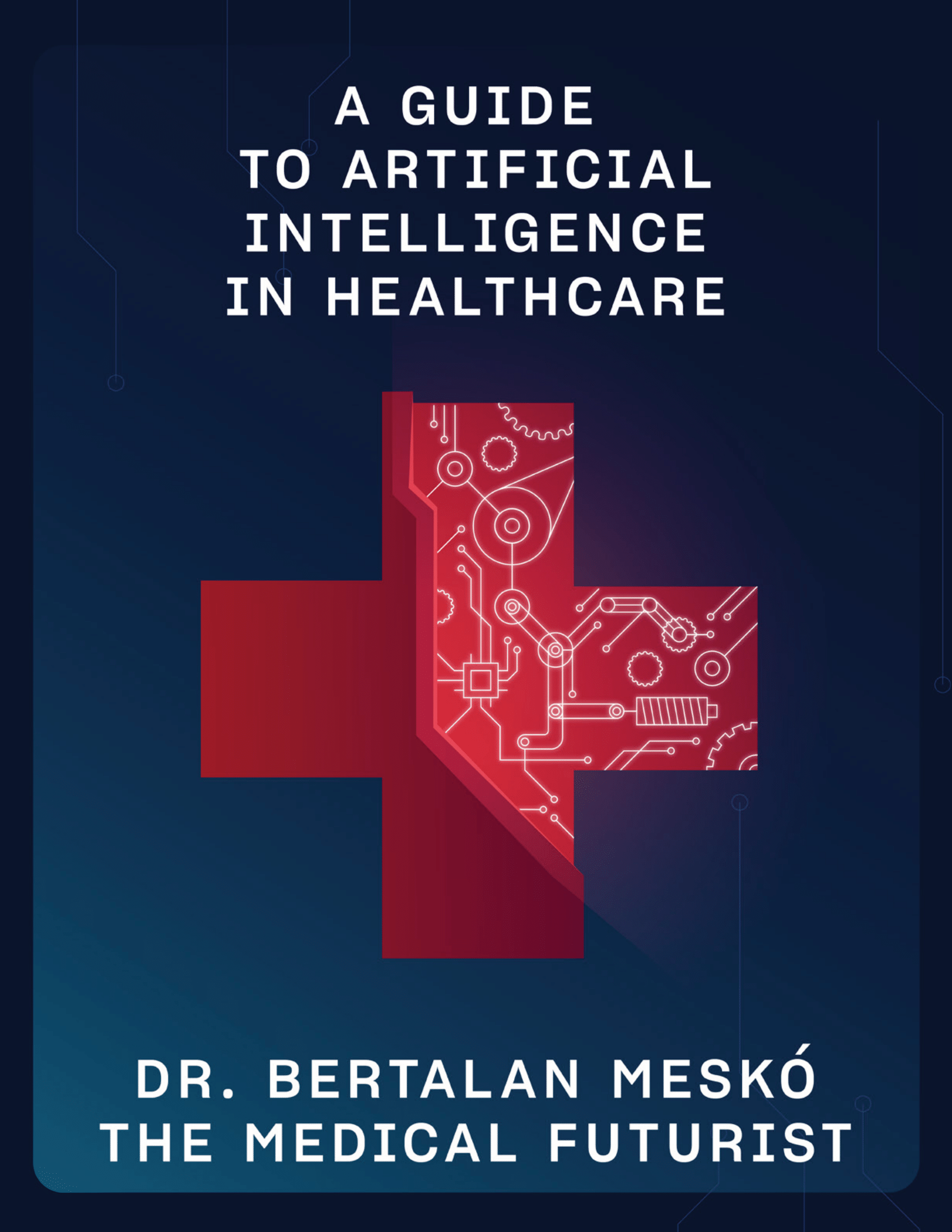
A Guide to Artificial Intelligence in Healthcare
Can we stay human in the age of A.I.? To go even further, can we grow in humanity, can we shape a more humane, more equitable and sustainable healthcare?
Our e-book aims to prepare healthcare and medical professionals for the era of human-machine collaboration. Read The Medical Futurist’s guide to understanding, anticipating and controlling artificial intelligence.
To have an idea regarding what you will be diving into, we will share 8 insights from A.I. in healthcare in this article. The e-book itself explores these topics and more at length.
1. Federated learning can help deal with privacy issues
As for developing competent, accurate A.I.-based tools, quality and quantity datasets are key to training the algorithms. But when it comes to applying those software programmes to healthcare, the fact that the data involved contains sensitive patient information can be problematic. Researchers previously showed that even anonymised health datasets can be used to re-identify patients. Others showed that, from computed tomography (CT) or magnetic resonance imaging (MRI) data, it’s possible to reconstruct patients’ faces. Such possibilities inevitably raise privacy concerns regarding whether we must reach a compromise to benefit from A.I.’s convenience in healthcare.

However, another machine learning (ML) technique has recently picked up steam in the healthcare field. Known as federated learning, it could efficiently address those privacy issues. This is because federated learning involves a decentralised training method of algorithms; thereby helping to address privacy issues.
With this method, several participating institutions train ML algorithms locally, without sharing patients’ data outside of the hospital. Subsequently, they share only model characteristics to improve decision-making. Studies showed that such an approach performs comparably to other ML models. But the advantage of this collaborative technique is that sensitive data does not leave the hospital.
2. Cloud computing could supply A.I. services without the need for health IT upgrades
In a recent article, we contemplated why national digital health strategies fail. Among the reasons is a focus on health IT upgrades over digital health. With such efforts, bringing A.I.’s invaluable help to the doctor’s office will take more time and resources.
However, with cloud computing, the need to upgrade health IT can be bypassed altogether. By offloading all the processing power to the cloud, only a strong and reliable internet connection will be needed to implement A.I. tools on existing infrastructures.
3. Regulation in better defining A.I.-based medical tech is lacking
With tech giants and startups alike stepping into the healthcare world with A.I. solutions, regulatory bodies and policymakers must step up their game in order to regulate the landscape for mass adoption. The U.S. Food & Drugs Administration (FDA) in particular has shown leadership regarding the adoption of A.I.-based medical technologies and even issued a regulatory framework for medical A.I.
However, several companies submitting their FDA-approved devices or software only mention their tools as A.I.-based on their website, without further explanation of why they credit them as such. Interestingly, these companies omit the mention of their solutions as A. I.-based altogether in their official submission for approval to the FDA. Having access to a database that helps discern which medical tools use A. I. from those that plaster the term for marketing purposes will become increasingly needed in the age of healthcare A. I. for practical and informational purposes.
While the U.S.-based regulatory body did not come up with such a comprehensive database, The Medical Futurist Institute did; and we are keeping this database up-to-date. While we did manage to get in touch with the FDA’s Digital Health team, they mentioned that they won’t take the database over. We hope that they will revise their decision and take the lead in better defining A.I.-based medical tech.
4. A.I. can discover unusual medical associations
When an A.I. analyses medical data, it takes into account the same factors a clinician does; but it will also factor in subtle correlations from peripheral data points that clinicians would not even think of considering. With such data mining and predictive abilities, A. I. can discover associations that are otherwise invisible to the human eye and brain.
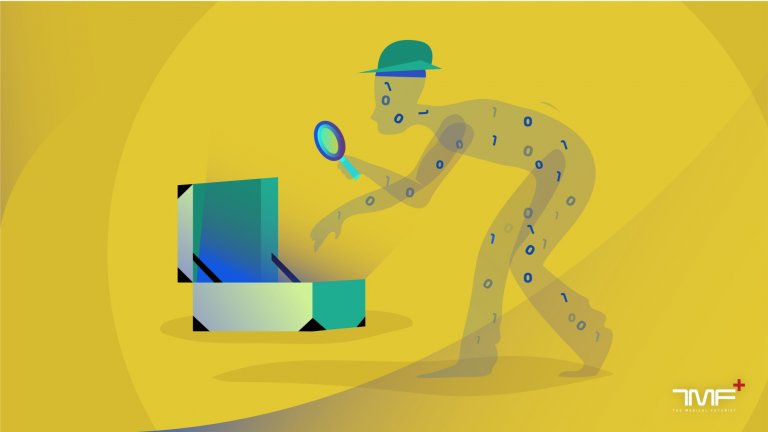
For example, Google researchers trained deep-learning models to identify signs indicating long-term cardiovascular risks from the data of over 280,000 patients. Subsequently, the A.I. taught itself what to look for in retinal images alone after having gone through enough data to identify patterns found in the eyes of people at risk. Traditionally, doctors would need to manually look at the retina, do blood tests and consider other factors like age and BMI in order to assess those risks.
Such deductions might surprise even the most trained physician, but cracking the reasoning as to how A. I. reached this conclusion will bring about the real era of the art of medicine. This process will rely on high levels of creativity, problem-solving and cognitive skills that the medical community possesses.
5. Practical applications will help get physicians on board
Traditionally, medical professionals have an aversion to adopting tools that aim to disrupt their revered craft. Take for example the doctor’s iconic and inseparable stethoscope. When an early version of the device was introduced in the 19th century by French physician René Laennec, his contemporaries were doubtful regarding it becoming common use. We now know how wrong they were! But it took several decades since Laennec’s introduction of an early stethoscope for a wide adoption of the tool. A.I. could follow a similar path and might even be termed as the stethoscope of the 21st century.
To help get physicians on board to adopt A.I. as an integral tool to healthcare institutions, practical applications that address common issues they face might be the key. For example, up to 99% alarms from patient beds can be false ones. With as many as 187 alarms per bed per day, the alarm fatigue phenomenon is endemic to the medical profession. It refers to the point when caregivers become desensitised to alarm signs and can miss those that actually need medical attention. But A.I. can help reduce such notifications received by the caregivers by up to 99.3%, and only hear those where their assistance is needed.
6. Medical professionals must be able to differentiate simple algorithms from A.I.
As the importance of A.I. in healthcare grows, so does the hype factor. Analysts already forecast the global market size for A.I. in healthcare to skyrocket to $28 billion in 2025. Profit-minded parties will want a share of this cake and claim that their product uses A.I. in order to attract inventions. In fact, many will only use a simple algorithm that only follows fixed rules without learning tasks as an actual A.I. does.
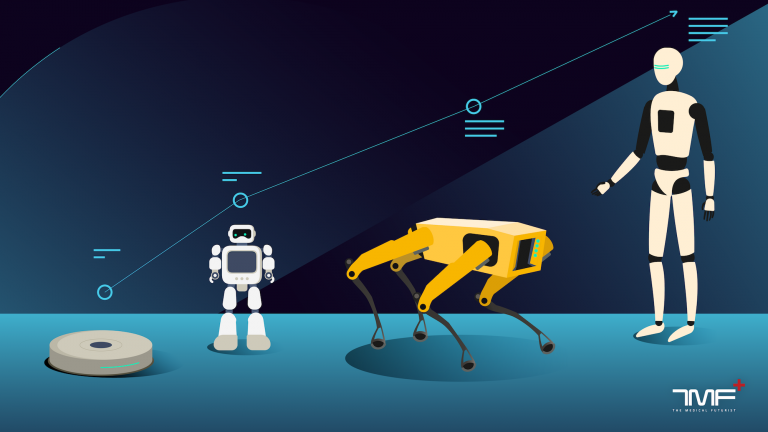
Being able to draw the line between actual A.I. and simple algorithms will become a need for medical professionals. If one purchases a consumer or clinical product thinking that the device possesses A.I. capabilities but does not output results as expected, who is to blame? Is it the fault of the company for not clearly describing the underlying technology? Or is the customer at fault due to a failure of due diligence from their part? In order to better address the relevant legal, ethical and social implications in medicine, professionals must be able to draw that line.
7. Chess’ fate awaits healthcare
When IBM’s supercomputer Deep Blue beat Garry Kasparov, the world’s best chess player, in 1997, experts thought it would be the end of the game. Who would want to play against an unbeatable A.I., many echoed. Today, smart algorithms still reign supreme at the board game, with Google’s AlphaZero and Stockfish competing for the #1 spot. But contrary to beliefs, even more humans are enthusiastic about chess. An early study estimated the number of chess players to equal to that of regular Facebook members. In 2020, Netflix series The Queen’s Gambit reignited interest in the game.
The message is that humans have made peace with the fact that they cannot beat A.I. at the game and will always be far behind it. But instead of leaving chess altogether, they embraced the technology and even used it to get better at the game. Chess players study A.I.’s innovative tactics for new insights so as to improve their own strategies. Similarly, chess coaches use the technology to train their students.
A similar fate awaits A.I. in healthcare. It is one that merges humans’ creativity and empathy with A.I.’s predictive prowess. Rather than a competition, the technology should be seen as a cooperation that amplifies human performance.
8. There are still many things we cannot expect from A.I. in healthcare
With A.I.-based technologies’ ability to discover unusual associations and even forecast public health crises, it might seem like the technology will replace every facet of healthcare. But this is far from being the case. In particular, the human factor is very much relevant and missing from A.I. That’s why there are as many things we can’t expect from such algorithms as we can expect from them.
For example, while A.I. expertly handles repetitive tasks, it cannot deliver empathy and compassion that treating patients requires. This will be the task of human professionals. Additionally, human reasoning is absent from A.I. The latter can be duped with adversarial attacks to misclassify diagnoses. But the same trick won’t work on humans, hence healthcare workers will very much be in demand. And these are only some of the many things that we cannot expect from A.I. in healthcare, as we previously discussed.
This wraps up our list of insights which we hope proved useful to you as we step into the A.I. age of healthcare. To continue your journey forward, we invite you to get a copy of our latest e-book dedicated to the subject. We designed it as a guide to accompany you in the era of human-machine collaboration in healthcare. We also welcome your feedback after reading it through!
|
At The Medical Futurist, we are building a community for making a bold vision about the future of healthcare reality today. Dr. Bertalan Mesko, PhD, the Director of The Medical Futurist Institute, launched The Medical Futurist to help individuals, companies, and governments understand how digital health technologies bring healthcare into the 21st century. “Digital health technologies empower patients to become proactive in their life; empower medical professionals to do their job being supported by advanced technologies, and companies and policymakers to make better decisions about their future.” – Dr. Bertalan Meskó To support this transformation, Dr. Meskó and The Medical Futurist team is working relentlessly analyzing the latest trends in digital health and bringing insights to the 800,000+ readers and followers of our publications, along these principles:
For 2021, we commit to another year of high-impact reporting that helps people navigate the jungle of digital health and to see where it is heading. With no shareholders or billionaire owners, we set our own agenda and provide unbiased insights that are free from commercial and political influence. If you’d like to support this mission, we invite you to join The Medical Futurist Patreon Community. A community of empowered patients, future-oriented healthcare professionals, concerned health policymakers, sensible health tech developers, and enthusiastic medical students. If there were ever a time to join us, it is now. Every contribution, however big or small, powers our research and sustains our future. Click here to support The Medical Futurist from as little as $3 – it only takes a minute. Thank you. |