AI In Medicine: 3 Future Scenarios From Utopia To Dystopia
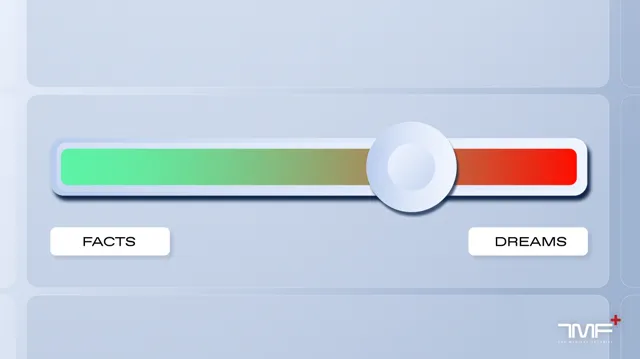
There’s a vast difference between baseless fantasizing and realistic forward planning. Structured methodologies help us learn how to “dream well”.

6 min |

Key Takeaways
We’re often told that daydreaming and envisioning the future is a waste of time. But this notion is misguided.
We all instinctively plan for the future in small ways, like organizing a trip or preparing for a dinner party. This same principle can be applied to larger-scale issues, and smart planning does bring better results.
We show you a method that allows us to think “well” about the future on a larger scale so that it better meets our needs.
Ever find yourself pondering about the future of healthcare, with artificial intelligence either as our best mate or our malevolent overlord? We all do. And let’s face it, the reality is somewhere in between those Hollywood extremes. But where exactly?
Let me show you how we can
A. Model how various future scenarios might look like, and
B. Determine the steps we need to take now to build a good future and avoid the nightmare scenarios
We will employ a structured methodology to guide our exploration:
- Select a common value: This will serve as our yardstick by which we measure all scenarios. In our case, this will be the doctor-patient connection.
- Constructing the utopia: Imagining a world where this value thrives, leading to the best possible outcomes.
- Defining the dystopia: Exploring the bleak consequences if this value were to disappear.
- Envisioning the mid-range scenario: Finding a balanced vision between the extremes, outlining its detailed aspects.
- Finally, we’ll reverse engineer our way to this middle ground, identifying the steps we can take today to ensure that AI serves the best interests of patients and strengthens, rather than weakens, the doctor-patient bond.
Utopia: an AI-augmented healthcare paradise
In our utopian scenario, AI serves as the ultimate assistant to physicians, enhancing their capabilities without ever replacing them. Doctors have access to advanced AI tools that provide real-time data analysis, predictive diagnostics, and personalised treatment plans. Freed from administrative burdens and armed with a wealth of information, doctors can devote more time and energy to building meaningful relationships with their patients.

Patients, in turn, benefit from AI-based technologies that are not only safe but also easily accessible, offering them tailored health insights and proactive care solutions. The human touch remains at the core of healthcare, with AI acting as a powerful ally in the pursuit of medical excellence.
In this ideal world, regulatory frameworks are both excellent and flexible, adapting swiftly to technological advancements while ensuring stringent safety and ethical standards. Companies respect boundaries, adhering to regulations that prioritise patient welfare and data privacy. Advanced encryption and security measures safeguard patient information, while the integration of AI leads to significant reductions in healthcare costs, making high-quality care more affordable and accessible to all.
Dystopia: the rise of the machines, the fall of compassion
In this grim future, the doctor-patient connection has become a relic of the past. AI algorithms, driven by relentless optimization and cost-cutting, have replaced human physicians in nearly every aspect of healthcare. Patients are reduced to data points; their unique stories and emotional needs are ignored in favor of standardised, one-size-fits-all treatment plans. The warmth of human interaction is replaced by cold, sterile efficiency.
Medical schools have become obsolete, as AI systems diagnose, treat, and even perform surgeries with greater accuracy and speed than any human could. The art of medicine is lost, replaced by a soulless science devoid of empathy or compassion.
Privacy is a distant memory, as the relentless pursuit of data to fuel AI development has led to a surveillance state. Personal health information is constantly harvested and analysed, with little regard for individual consent or security. The tech giants that develop and control these AI technologies hold immense power, dictating the direction of healthcare and prioritizing their interests over patient welfare. The result is a dehumanized healthcare system where patients are mere commodities, stripped of their agency and dignity.
The once-promising potential of AI in healthcare transforms into a nightmare where technology dehumanizes medicine and erodes trust in the system.
The middle-ground: a human-AI partnership in medicine
In this balanced future, the doctor-patient connection remains a core value of healthcare, but AI plays a vital role in enhancing and expanding the capacities and reach of healthcare workers. Algorithms have become trusted members of the medical team, sifting through mountains of data, identifying patterns, and generating insights that inform clinical decision-making.
Society has learned both culturally and technologically to harness the power of AI effectively. Medical professionals are trained not only in traditional medical knowledge but also in the use of AI tools, ensuring they can make the most of these advancements to improve patient outcomes. Patients benefit from a healthcare system that is more efficient, accurate, and personalised, without sacrificing the personal interactions that are crucial for holistic care. Regulations evolve at a pace that keeps up with innovations, ensuring that safety, privacy, and ethical considerations are always at the forefront. This regulatory agility creates an environment where AI can thrive while maintaining public trust and protecting patient rights.

In this balanced future, healthcare costs are optimized, and accessibility is improved without compromising quality or privacy. AI-driven efficiencies help reduce unnecessary expenses, making advanced medical care more affordable. Privacy is safeguarded through security measures and transparent practices, ensuring that patient data is used ethically and responsibly.
Backcasting: charting the path to a good future
To have the best achievable future where AI and human healthcare professionals work in harmony, we need to take steps today. We can determine three necessary pillars that help us save the core value of the doctor-patient connection:
- Highlighting the importance of human touch. Medical education must emphasize the irreplaceable value of empathy, communication, and the therapeutic relationship. Simultaneously, public awareness campaigns can help patients understand the complementary roles of AI and human providers, fostering trust and collaboration.
- Make more adapt regulations. We must engage regulators in ongoing dialogues about AI’s evolving capabilities and potential risks. This involves providing clear, accessible information about AI technologies, and creating a deeper understanding of their impact on healthcare work and patient outcomes.
- Prepare culturally. We need educational programs to boost AI literacy among both healthcare professionals and the general public. These programs should demystify AI, explaining its benefits, limitations, and applications in healthcare in an accessible manner. We need apps that encourage people to use safe AI tools, such as for health monitoring or virtual consultations.
A pie in the sky is not always a bad thing
Don’t count your chickens before they hatch! Don’t build castles in the air! You have your head in the clouds! There are so many proverbs about the useless nature of daydreaming that many of us feel a pang of guilt when contemplating the future. However, there’s a vast difference between baseless fantasizing and realistic forward planning.
Interestingly, on a smaller scale, we all understand this intuitively. We don’t look askance at someone who carefully plans what they need to buy for an evening dinner party. Yet, on a larger scale, we often act as if we have no influence over what the future holds.
Structured methodologies like the one we’ve explored help us learn how to “dream well” in a way that yields achievable, valuable outcomes. These practices ensure that our visions for the future are not just imaginative but also practical and attainable.