4 Exciting Examples Of AI Diagnostics Already In Use
AI delivers tangible benefits in real-world clinical settings, improving diagnostics, helping medical teams with early warnings, and speeding up work. Here are four real-life examples.

Dr. Bertalan Mesko, PhD
30 May 2024
Key Takeaways
AI in healthcare often seems like a science fiction story: frequently discussed but with little tangible benefit.
Contrary to this perception, there are many real-world examples, from algorithms streamlining assessments for children with cerebral palsy, enhancing the efficiency of medical professionals, to making critical screenings more accessible.
Given the rapid advancements and importance of this topic, we’ve updated our AI ebook to ensure healthcare professionals can stay up-to-date with the latest developments and applications.
Artificial intelligence (AI) in healthcare has been a major topic for years. If you still think AI in medicine is just a buzzword or a distant possibility, think again. Recent advancements propelled AI from vague promises to practical, real-world applications – already delivering tangible results.
Below we’ll list solid examples, backed by peer-reviewed studies and clinical trials, all using AI for clinical work today, in real-life settings.
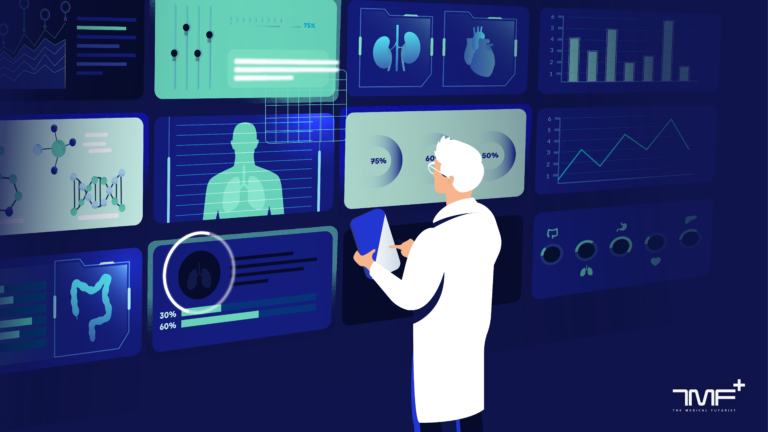
Recognizing the significance of these developments, we are excited to announce the release of the updated version of our ebook, “A Guide To Artificial Intelligence in Healthcare.” The new edition was updated to introduce the latest advancements and extended to include all you need to know about the quantum leap in the generative AI segment.
Let’s look at four evidence-based, real-life use cases of healthcare AI, all four already deployed in clinical practice!
1. SepsisWatch by Duke University Health System
SepsisWatch is an AI-based early warning system developed by Duke University to predict and manage sepsis, a life-threatening condition. This system utilises electronic health record (EHR) data to identify patients at risk of sepsis up to 36 hours before clinical symptoms manifest.
The algorithm continuously analyses vital signs, laboratory results, and medication administration to identify patterns that indicate a patient’s risk of developing sepsis. The system uses machine learning algorithms to learn from these patterns and develop a risk score for each patient. It has been integrated into the emergency department’s workflow at Duke University Hospital. The system provides real-time risk assessments and a dashboard for clinicians to monitor high-risk patients.
A study published in the JMIR found that SepsisWatch improved compliance with sepsis treatment protocols and reduced sepsis mortality rates by 31%. The Verge has an excellent interactive explainer about how such an algorithm works through the example of an imaginary patient, 58-year-old Alex.
2. AI for detecting diabetic retinopathy
Google Health and Verily have developed an AI system that uses deep learning algorithms to analyse retinal images and identify signs of retinopathy (DR). The AI system is trained on a large dataset of retinal images labeled by ophthalmologists for the presence or absence of DR. The algorithm learns to identify subtle patterns in the images associated with DR. Once trained, it can analyse new images and provide a probability that the image contains signs of DR.
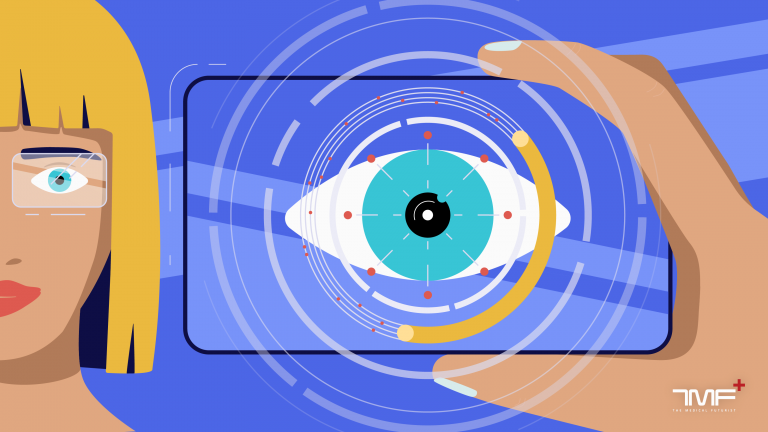
The AI system was tested in clinical settings in India, where it demonstrated high accuracy in identifying both moderate and severe DR. The system’s performance was comparable to that of ophthalmologists. In the EyePACS-1 dataset, it achieved a sensitivity of 90.3% and a specificity of 98.1% for detecting referable DR. In the Messidor-2 dataset, it achieved a sensitivity of 87.0% and a specificity of 98.5%.
This technology has the potential to make DR screening more accessible and affordable, particularly in low-resource settings. By enabling early detection and treatment, this AI system could help prevent millions of people from losing their vision.
3. AI for detecting atrial fibrillation in smartwatches
This is an excellent example of how AI directly serves patient health by providing continuous monitoring based on real data. Early detection and management of atrial fibrillation (aFib) can significantly lower serious health complications like stroke and heart failure. Previously, aFib detection was often sporadic because doctors only saw patients and conducted examinations occasionally but did not have access to complete, long-term data sets.
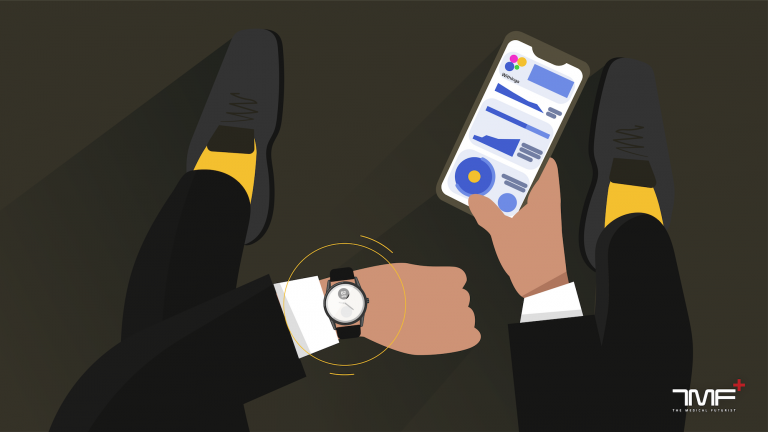
By now, many smartwatches and fitness bands come with AI-powered aFib detection features. Watches use built-in sensors to monitor the wearer’s heart rate and rhythm continuously and have advanced AI algorithms running in the background to analyse the data and detect irregular heartbeats that may indicate aFib.
When the AI system identifies a potential issue, it alerts the wearer to seek medical advice, allowing for timely intervention. Studies, such as the Apple Heart Study, which enrolled over 400,000 participants, found that the smartwatch was able to identify aFib with a high degree of accuracy, prompting users to seek medical evaluation. Other smartwatch brands have also undergone rigorous testing and validation, confirming their reliability in detecting aFib.
4. AI for improving gross motor function assessment in children with cerebral palsy
The Gross Motor Function Measure (GMFM-66) is a widely used assessment tool for evaluating gross motor function in children with cerebral palsy (CP). However, administering the full GMFM-66 assessment can be time-consuming, taking 45 to 60 minutes for a trained professional.
Researchers at the University of Cologne developed a reduced version of the GMFM-66 using AI to streamline the assessment process. It uses machine learning algorithms to identify the most informative items from the full GMFM-66, allowing clinicians to assess gross motor function accurately with fewer test items.
In a study of 1217 children with CP, the AI-backed process demonstrated excellent agreement with the full GMFM-66, both in single assessments and when evaluating changes over time.
AI is already used in medical practice
As these examples demonstrate, AI is not just a theoretical concept in medicine; it’s a reality that’s already improving patient care and saving lives.
However, to fully benefit from these AI tools, healthcare professionals (and regulators, policymakers, etc.) need a working knowledge and basic understanding of how AI operates and integrates into medical practice. The now well-known phrase captures this perfectly: AI won’t replace humans in medicine, but professionals using AI will replace those who don’t utilise these tools.
Our ebook, The Guide To Artificial Intelligence In Healthcare was written to equip all healthcare stakeholders with the knowledge they need to navigate this new reality. It provides a comprehensive yet accessible overview of AI in healthcare, covering everything from the basics to the latest advancements and challenges.
The ebook is divided into four major parts:
- Part I: THE BASICS OF ARTIFICIAL INTELLIGENCE – Get a solid foundation in the concepts and terminology that underpin AI, and get a general understanding of what it does, what it does not, and how it works.
- Part II: APPLYING ARTIFICIAL INTELLIGENCE IN HEALTHCARE – Discover how AI is being deployed in real-world medical settings, from the operating room to drug development, and look forward to understanding where this path will lead us; and how to make the most of it to ensure medicine gets more efficient, patients get better care without jeopardising safety and ethics.
- Part III: CHALLENGES OF ARTIFICIAL INTELLIGENCE – Explore the ethical, regulatory, and technical hurdles we must overcome before AI can be fully integrated into healthcare. Understand common misconceptions and overhyping, the issue of judgemental datasets and AI bias, and the need for robust regulation, alongside the impact of AI on the healthcare workforce crisis.
- Part IV: MEDICAL PROFESSIONALS, AI, AND THE ART OF MEDICINE – Understand how AI can augment, not replace, the expertise and compassion of healthcare providers.
Whether you’re looking to enhance your clinical practice, make informed policy decisions, or simply stay ahead of the curve, this book is your essential guide. Get your copy today or download the free update if you’ve previously purchased it.