A Promising Hub For Digital Health: Kazakhstan
Sharing borders with Russia, China, Kyrgyzstan, Uzbekistan, and Turkmenistan, you find the world’s largest landlocked country, the Republic of Kazakhstan. Conversely, with its population of […]

10 min |
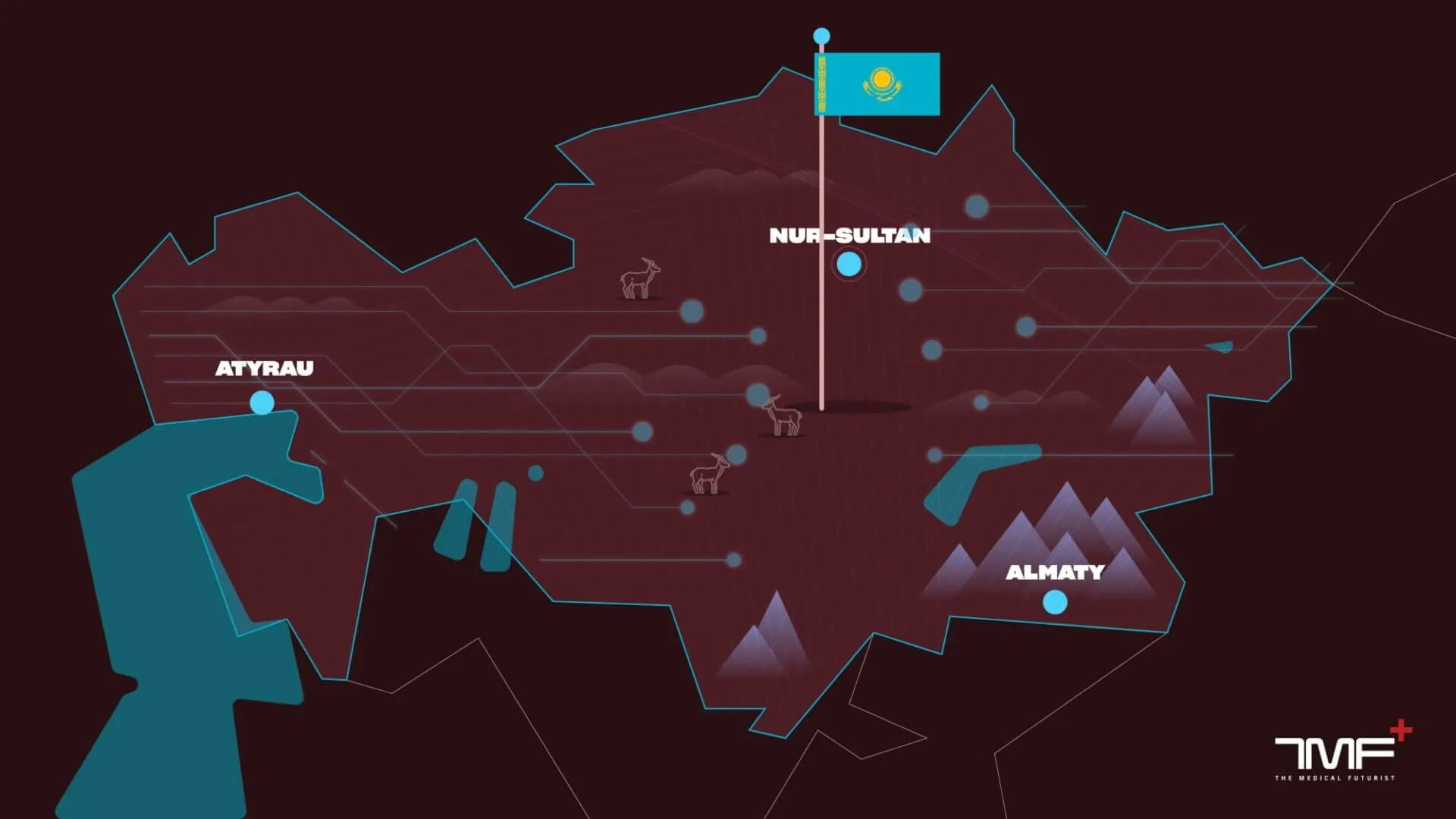
Sharing borders with Russia, China, Kyrgyzstan, Uzbekistan, and Turkmenistan, you find the world’s largest landlocked country, the Republic of Kazakhstan. Conversely, with its population of over 18 million spanning across an area of 2,724,900 km², the country also has one of the lowest population densities worldwide, at less than 6 people per square kilometre.
Being a relatively new republic and with its widespread inhabitants, Kazakhstan poses as an adequate hub for digital health to expand. Such a young republic’s ministry of health can develop around newer technologies and strategies brought forth with the advent of digital health like telemedicine to connect inhabitants of remote areas, mobile apps to allow patients to self-manage their health and robot-assisted surgeries for minimally invasive operations. In fact, these are already realities sprouting in the transcontinental country.

While the Kazakhstani healthcare landscape seems to be on the right track to digital health, there are still challenges to be overcome. We interviewed Dr. Olzhas Abishev, Vice Minister of Healthcare of the Republic of Kazakhstan, and Mr. Yerbol Spatayev, Public Health and Informatization Specialist at the same ministry, to have a better picture of the adoption of digital health in Kazakhstan.
Overcoming struggles
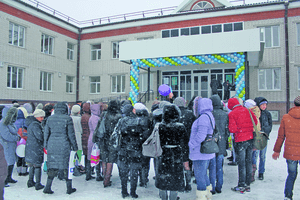
“In Kazakhstan you get [universal health coverage] only if you are ready to pay for it yourself,” said a pensioner living in the city of Kapchagay, Kazakhstan, to a World Health Organization (WHO) reporter in a 2019 bulletin. But this is about to change, according to the same bulletin. The Kazakh government has called to raise the total expenditure on health, education and science, forecasting to raise the overall health-care expenditure to 4.7% of GDP before 2023.
The healthcare system (medical service providers) in the country is mainly state-owned, and the government’s push to provide universal health coverage aims to reduce out-of-pocket expenses. To achieve this, one of the aspects that the Ministry of Healthcare is betting on is the digitization of the healthcare landscape. In fact, the ministry planned as far back as 2006 a “Unified Health Information System” project which aimed to create software to automate major functions like collecting medical data at the level of health care providers and monitoring the quality of medical services. However, it did not see the light of day.
“The project was delayed beyond the originally planned deadlines and by 2012 it became clear that its implementation and full-scale deployment was almost impossible due to a number of obstacles,” Mr Spatayev told us. He attributes these obstacles as being multifactorial from technological issues (outdated client-server architecture, software quality problems, etc.) to conceptual ones (lack of users involvement into the design and development process, leading to a low level of acceptance of changes and rejection among healthcare professionals; lack of sustainability of the proposed changes; etc.).
In the wake of this project’s demise, the Kazakh government doubled down on its efforts and drafted the eHealth Development Strategy for 2013-2020, planning to develop relevant institutional structures, regulatory frameworks, e-health systems and stimulate e-health market growth during that time period. When we inquired about the success of this plan given that we’ve arrived at its term, our interviewees told us that all areas of this strategy were fulfilled and that the Ministry is planning to assess the implementation of it and even develop a new strategic document for the next five-year period.
The key word is data
Dr. Olzhas Abishev shared with us that this year his ministry launched the “personalized medicine” 2020-2023 program. This ambitious project aims to analyze all possible data inside data centers of the Ministry of Healthcare, amounting to 16 terabytes, as well as over 300 terabytes worth of data from other sources related to disease trends so as to be able to forecast disease prognosis on a national scale.
While definitely an ambitious and forward-looking project, the challenges it might face is the lack of an integrated network as well as decades worth of data like for example Denmark, a leader in digital health, does. The Danish National Patient Registry has been keeping records that date 30-40 years back. For example, information on causes of death has been collected since 1875, and cancer incidence has been registered for the whole country since 1943. Such data can provide crucial insights for projects like forecasting disease trends.
Nevertheless, Kazakhstan seems to be on the right track, even if its digital health landscape is taking shape slowly. New data used for analytics will also be obtained with the Ministry’s push to encourage the use of health trackers.
As a matter of fact, Dr. Abishev further noted that the main goal of the 2020-2025 healthcare development plan will focus on a key digital health strategy: shifting from hospital-oriented medical care to patient-oriented medical care. This will bring in patient involvement through smartphones and wearables which will be able to feed data paramount to projects like the “personalized medicine” 2020-2023.
What about security?
While it’s laudable to empower patients and make them more proactive when it comes to their health, we questioned him about the steps that the Ministry of Healthcare of Kazakhstan has taken to ensure that patients can trust their data into their hands. After all, this issue is paramount when dealing with digitization and patient health data.

“A lot of work has been done in this direction,” replied Mr. Yerbol Spatayev. “It started with the introduction of legislative norms and standards that define the requirements, rights, and obligations regarding the access and use of personal medical data. All information systems and databases at the national level were transferred to secure data centers. All information systems of the Ministry have been certified for the requirements of national information security standards. Training on information security is constantly conducted.”
It seems like these measures were effective as they prevented 130,724 external attacks in 2019. Other countries like Estonia and Dubai are investing in blockchain for the security and transparency it offers in order to protect patients’ health records and it could be a technology for the Kazakh healthcare system to consider in the future.
Telemedicine: the promise and the reality
A telemedicine network was launched as early as 2004 in Kazakhstan in order to provide rural populations with access to specialized medical care based on the principle of “doctor-to-doctor”. It allows teleconsultation between healthcare professionals and specialists with extensive experience for diagnosis, treatment of patients, sharing of results and medical images. “In total, about 200,000 consultations were held during the existence of the telemedicine network,” reports Mr. Yerbol Spatayev.
It’s an effective move to help patients save time and reduce expenses over long trips for specialized care. Additionally, the telemedicine network can prove instrumental in providing medical access to the country’s remote and sparsely populated areas.

The Ministry of Healthcare also started an initiative for citizens to self-manage their health and take timely action when required. To this end, they partnered with some 40 different vendors offering digital health applications which can help users make a doctor’s appointment, follow a treatment plan, archive prescriptions and view lab tests. Some of them boast around 2 million users and over 200,000 patients have enrolled in the self-management program. However, compared to the country’s 18 million inhabitants, there is still progress to be made.
Another hindrance is digital literacy, as Dr. Olzhas Abishev pointed out. “We can’t implement standard international approaches to make citizens involved only through smartphones,” Dr Abishev added. “We are working with different types of interaction with our citizens via smartphones, SMS notifications, call centers and passive data analytics.” Nevertheless, the Ministry of Healthcare told us that reaching 2 million users is a definite achievement as this number of users represents 17% of the entire adult population of the country, including older people.

Making strides
Even if the digital health landscape is still taking shape in Kazakhstan, significant strides have been made to propel the vision. On top of the regular hackathons and the Digital Health Astana, an international conference and exhibition held in two consecutive years, we’ve seen practical examples of new technologies emerging from Kazakhstan’s healthcare landscape.
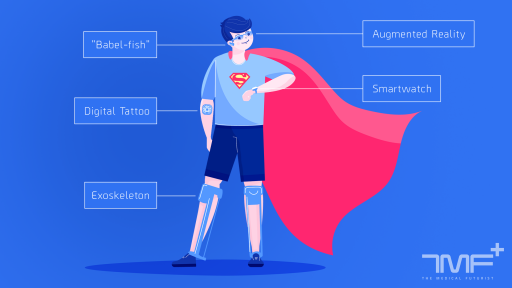
In early 2018, the country performed its first robot-assisted surgery to remove the gallbladder of a woman in a precise and minimally invasive way. At the 2019 Digital Health Astana exhibition, scientists demonstrated an exoskeleton that they had developed for post-stroke rehabilitation of patients which they plan for a Kazakh mass-market adoption starting 2021.
In addition, the National Electronic Health Record set up provides, as from July 2019, paperless reports and records, accessible medical information online and more via its free app.
Room for improvement
Despite the couple of practical examples and promising plans from the Kazakh Ministry of Healthcare, there is still room for improvement in the country. Progress of the digital health agenda can be sped up not only by the government and its ministry but also by its citizens.
Rather than emphasizing health IT, the Ministry of Healthcare should promote development along the lines of digital health. There are excellent examples of governments taking the right steps to make digital health a reality in their country. Rwanda with its telemedicine solutions, medical drones deliveries and phone-based health service is comparable to Black Panther‘s Wakanda. Estonia, dubbed as the “digital nation”, has plans to bring precision medicine to all of its citizens.
The neighbouring country Denmark has a robust digital health framework focused on data security while empowering patients and healthcare professionals. Germany has also invested in similar policies with its plan to equip all insured patients with electronic health records by 2021 while focusing on data privacy. These are some of the many cues that the Kazakh government could take and adapt to its country’s setting and position itself among the leaders in digital health.
Patients themselves should get more proactive in managing their health with the plethora of online resources and health trackers. They could join or create their own online communities, just like the diabetic community did to penetrate the ivory tower held by medtech companies and key policymakers and reshaped the diabetes care landscape.
Such a cultural transformation involving the empowerment of patients to make them the point of care is essential to the digital health vision. With proper internet access, digital health devices like portable ultrasound devices, digital stethoscopes and portable diagnostic devices can provide even areas without the proper infrastructures with state of the art care that can subsequently be analyzed and monitored by experts via the cloud. The Kazakh government itself should embrace this change and promote it to its citizens.
The key factor is time
Ultimately, only time will tell if Kazakhstan’s digital health strategy will turn out to be successful and provide all of its citizens with access to universal health coverage and empower their patients, even pensioners like the one from the WHO bulletin.
As the country’s Ministry of Healthcare deploys its plans, we are bound to see more practical examples of digital health from Kazakhstan. It’s an encouraging sign that the government is genuinely interested in developing their healthcare system along the digital health track. As outlined, the country is an adequate fit for digital health strategies to better attend to their patient needs. We’ll be keeping an eye on the progress over there.