A Guide To The Future For Medical Students
How can we train doctors today for the patients of the future? Medicine will be materially different, we listed the main aspects of change.

Pranavsingh Dhunnoo
18 March 2025
Key Takeaways
The major changes in medicine present new challenges to which medical students might not be prepared for.
Medical practices of the future will be marked with novel technologies and, importantly, a cultural transformation.
Here are eight cornerstones of this coming change
A medical student’s path has traditionally been one of the most challenging at higher education levels. Getting into medical school is the first boundary to cross, with less than 16% of applicants getting an offer in some cases. Once in, students undergo rigorous theoretical and practical training over the course of several years before joining the medical workforce. This process has been typical of a medical student’s journey and has come to be expected if one decides to pursue the medical profession.
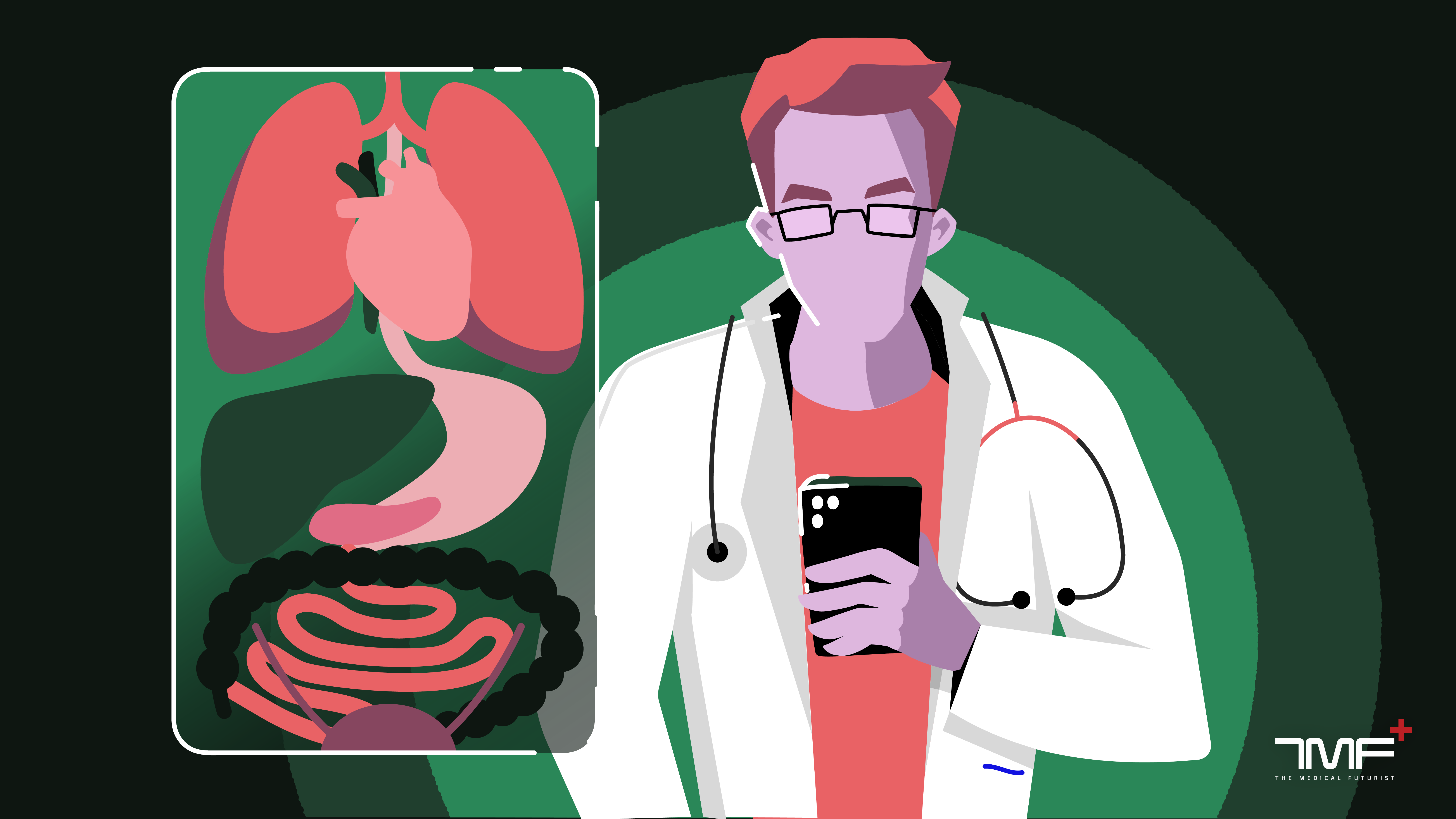
However, in recent years, a new challenge has presented itself to current and prospective medical students: what will their future profession look like? It has become increasingly apparent that medical practice is undergoing a significant change and is presenting new sets of challenges, which has been precipitated by the COVID-19 pandemic. Digital health approaches such as artificial intelligence (AI) assistance and remote care delivery are changing the medical landscape, while empowered patients are changing the doctor-patient relationship.
With such a rapidly evolving landscape, medical students might not feel prepared for the digital health-powered future that awaits them. As such, we aimed to write this article to guide medical students regarding what they can expect to see when they start practising medicine.
A cultural transformation will shape digital health practices
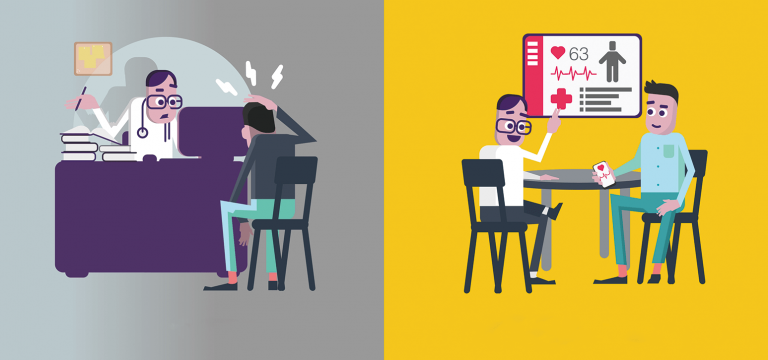
While digital health is fuelled by technological means, its effective implementation in medical practice relies on a cultural transformation. This means that new roles and new partnerships will be essential in achieving such implementation. In particular, the traditional, hierarchical model with one-way communication and decision-making between doctors and patients will no longer be relevant.
This is being replaced by an equal-level partnership where empowered patients bring insights about their own health through data collected by wearables and, using this data, discuss treatment plans with their physicians. The latter will, in turn, have to adopt the role of guides to recommend to patients which digital health products can assist patients in their condition management and provide clinical relevance to the data collected.
Learn to work with empowered patients
Future doctors must expect such a dynamic with empowered patients and should be able to support them in their digital health journey. This is because with a myriad of tools available for patients, they don’t need the permission of doctors to monitor their health but would benefit from medical supervision and advice.
With the paradigm shift that patient empowerment presents, patients essentially need to be considered as members of their own medical team and should be encouraged to have some input in their medical journey. Doctors will thus have to learn to work with them, understand their needs and guide them.
AI will assist, and not replace, doctors
Science fiction tropes often depict AI as overtaking humans, leading to a dystopian future. Recent developments in the AI field have led to real-life comparisons with such depictions, with fears of AI taking over the jobs of humans. This also includes the fear of AI replacing doctors but is very likely unfounded.
This is because while AI can handle specific, data-heavy tasks extremely well, medical practice is not linear and requires human creativity to handle complex tasks. Moreover, AI cannot replace the human touch nor the empathy required in care delivery. AI will have a place in the future of medical practice, handling repetitive tasks and assisting in decision-making. But delivering compassionate care will be the task of humans, and future doctors have to hone this skill.
Develop prompt engineering skills to interact with generative AI tools
Another skill that doctors in the near future will have to develop is the ability to work with generative AI tools. These have become popular in recent years and will only improve over time. Medical students would benefit from developing prompt engineering skills to interact more efficiently with generative AI tools. Effective prompts and queries can assist doctors in administrative tasks, improve patient engagement, as well as aid in research and education.
Such skills can further be transferred to other future AI models such as AI video generation. This will make future doctors more relevant in the digital health age, and it can further be said that doctors using AI will replace doctors that don’t use the technology.
Technologies will impact specialties in specific ways
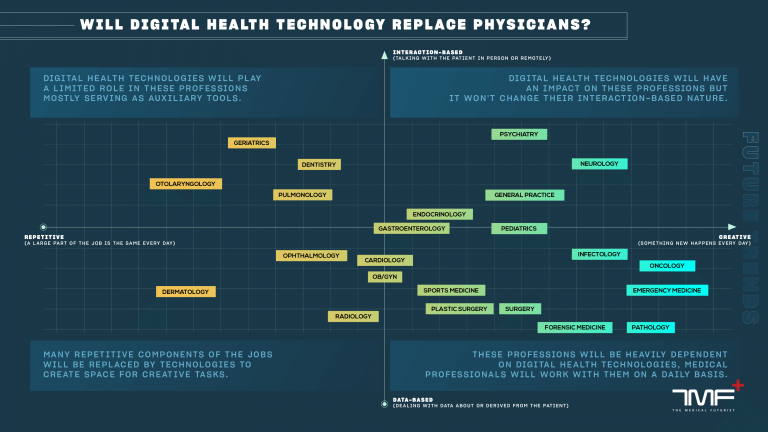
AI is not the only technology that future doctors will have to learn to work with. In particular, specific technologies will impact medical specialties in specific ways. For example, extended reality technologies will persist as drug-free alternatives for pain and phobia treatment, wearable glucose sensors will reduce the friction when monitoring diabetics condition, and stabilising utensils will help manage tremors and improve the independence of patients.
Medical students have to learn to cooperate with those specialty-specific technologies. They have to understand how they are impacting individual specialty and the skills required to interact and implement them in their practice.
Purposeful technologies are needed
There is and will continue to be an ocean of new technologies with purported healthcare applications. However, to be truly meaningful, they must meet a real-life patient or clinical need. Otherwise they are useless.
For example, at the annual Consumer Electronics Show, a number of promising digital health tools are showcased. But at the same time, much less useful ones are presented such as an eye mask that helps rest your eyes by having you do nothing. The market is filled with such gimmicks which can overwhelm patients. Doctors will have to be able to advise patients on which technologies are actually useful.
Understand and embrace patient design
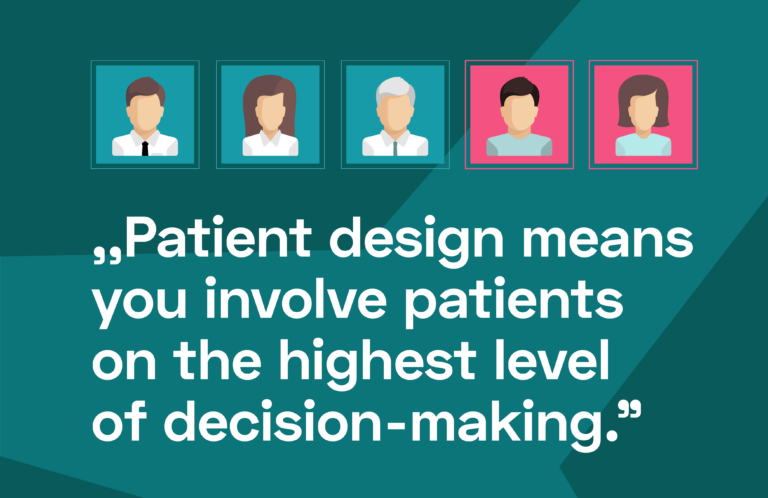
Some of the digital health technologies and approaches of the future will be influenced by patient design. The latter involves patients as active participants at the highest levels of decision-making in healthcare. Such an approach has led to improved surgical procedures and redesigned departments. Physicians of the future will have to get used to such an approach. They need to be able to welcome and encourage suggestions from their patients to improve the medical experience.
Digital health literacy is a must
To remain at the top of their game as future physicians, medical students need digital health literacy. Over the coming years, we should expect more tools, technologies and patient-led approaches to be implemented in healthcare. New AI techniques could have as significant of an impact as generative AI has had recently. Similarly, new wearables could provide patients with additional health data to assist their condition management.
Medical students will thus have to keep up with the intricacies of emerging digital health trends, approaches and technologies in order to deliver digitally-enabled care. They will need to have an open mind towards new practices and should be ready to keep learning. This will, in turn, enable them to guide and support their patients throughout their digital health journey. You can rest assured that The Medical Futurist will assist in making the digital health landscape digestible to the aspiring doctor.
Written by Dr. Bertalan Meskó & Dr. Pranavsingh Dhunnoo