The Age of A.I. Will Value Compassionate Care More Than Ever
While modern medicine created the professional, efficient, metric-driven medic alienated from the patients, the need for compassionate care is more urgent than ever. However, that’s not only up to the physician but also the organization, because individual attempts might result in burnout symptoms. Adoption of A.I. could change the situation for the better in the future, as it would create space for doctors and nurses to spend more quality time with patients. The question is, are doctors ready for it?

11 min | · Updated
|
THIS ARTICLE HAS NOT BEEN UPDATED SINCE 2019. THE INFORMATION SHARED IN THE ARTICLE WAS ACCURATE AT THE TIME OF ITS PUBLICATION, BUT IT MAY BE OUT OF DATE NOW. BROWSE OUR LATEST ARTICLES HERE |
While modern medicine created the professional, efficient, metric-driven medic alienated from the patients, the need for compassionate care is more urgent than ever. However, that’s not only up to the physician but also the organization, because individual attempts might result in burnout symptoms. Adoption of A.I. could change the situation for the better in the future, as it would create space for doctors and nurses to spend more quality time with patients. The question is, are doctors ready for it?
Medicating Albert, the plush armadillo
Two years ago, my niece had to spend two weeks in hospital as she partially ruptured her Achilles-tendon when she landed unfortunately in the sand after a broad jump in her sports class at school. The crying and scared 12-year-old was brought to the emergency room by her parents, calmed down and taken care of by a swarm of medical professionals buzzing around in her room almost every hour. They did not always come to see my niece – she was put in a hospital room shared with five other kids.
One of them was 6-year-old Mark, who suffered a traffic accident when his parents were underway to bring him home from pre-school. One of his legs was in a plaster cast from his toes up to the thighs, and he was unspeakably sad that he wouldn’t be able to play football for a very long time. However, every time he looked at Albert, the plush armadillo, his very best friend in the hospital, he could cheer up a little. My niece told me that the nurses brought in medication for Mark as well as Albert every single day. Of course, the plush armadillo did not get “real” painkillers, but little candies, but he had his own medication box, and Mark was convinced that the nurses are taking the best of care of his armadillo, too.
Compassionate care is paying attention to the needs of the others, listening to spoken or noticing unspoken wishes, imagining the other person’s situation and expressing acts of empathy to lessen suffering, pain or distress. If you need to feed a plush armadillo with candies and invent a bedhead board for a toy animal to make a patient feel better, than that’s compassionate care, but it could also be the right tone of voice, a simple touch, a loving glance or just sitting on the bed for a while to provide some company. As nurse and speaker, Joyce Hyam, penned it, when you give compassion it will always be remembered. When you receive it, you will always hold that memory in your heart. You can make a difference in someone’s life. Compassionate care is a crucial component of care. So, how come that it’s missing so much from healthcare these days?
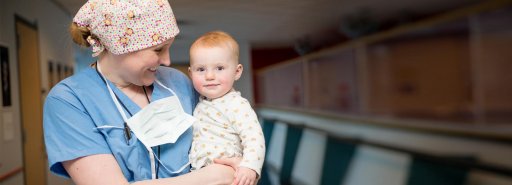
The scale from dispassionate healers to mother surrogates
Doctors, nurses and other medical professionals genuinely possess the traits of empathy, compassion and the intention to help others – otherwise, they wouldn’t have chosen medicine and care as their profession. However, as they progress through medical school, stress, anxiety, competitiveness and lack of time often start to erode their levels of compassion.
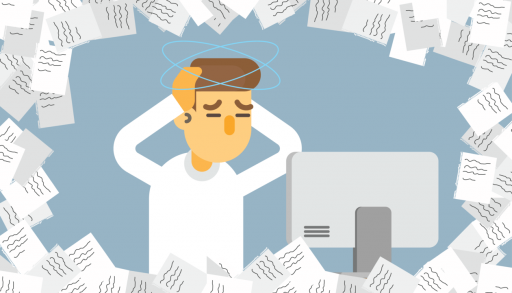
The same will continue on their professional journey: the patient will “get lost” in the ocean of CT scans, biopsies, charts, diagnoses, and administrative tasks. The doctor hides behind a pile of papers, badly designed IT interfaces, curses the monitor and alienates himself from the people in need. The phenomenon is quite understandable: expressing compassion and carrying the emotional burden together with patients is tough, energy-sucking and the environment gives no time for processing it. It is “easier” to handle 15 patients a day being shut down, otherwise, the risk of burnout gets higher. Also, the doctor’s figure is usually cemented as someone with authority and respect with less inclination to show signs of empathy and emotion in general.
That’s entirely the reverse in the case of the nurse. Since the era of Florence Nightingale, the founder of modern nursing, the profession was associated with an idea of doing God’s work through attending to those in need – which came into more and more contrast with the efficient, professional, “dispassionate healer”. Nurses are regarded as the ones who will provide attention, deliver words of kindness and hold their hands when patients are in agony.
The growing dichotomy between the need for the “surrogate parent” sitting at the bedside of patients and the performance-seeking medical professional is at the core of present-day calls for more compassionate care. Why is that so?
Calling for more compassionate care
In the last decades, medicine and healthcare were so focused on training “metrics-driven”, efficient elements in the systemic machine of healing patients reduced to numbers on papers and later in EHRs, that the “surrogate parent” was pushed completely to the background. No wonder – it’s expensive, but no one wants to pay for the costs of compassionate care. First, staff may have to engage in emotionally charged interactions, which can leave them feeling psychologically exhausted and at risk of burnout.
Second, for health professionals to be able to connect with patients and understand their unique situation while also addressing fundamental needs (e.g., hygiene, feeding) in a non-mechanistic manner, an appropriately resourced workplace is required. It’s not enough to be empathetic and compassionate on the individual level, the environment should provide a nurturing setting, too. Social norms, such as trust, concern, and empathy as well as leaders demonstrating the meaning of noticing, paying attention and compassion could provide that. As medical facilities are about efficiency than settings for the greater well-being of BOTH patients and physicians, the lack of it might be another explanation for the global physician burnout epidemic.
What if virtual reality is thrown into the pool?
In the last couple of years, the rapid technological development started to push the efficient medical professional to such a new level that the “surrogate parent” was almost wholly suppressed – although patients need and want both.
The place for empathy and compassion is so small in healthcare that medical schools already have to have training programs for more sympathy towards patients – with success. A study of 209 medical students at the Robert Wood Johnson Medical School found that the level of empathy could be maintained among third-year students who received specialized training. Also, digital health technologies have some potential in aiding the efforts to teach compassion.
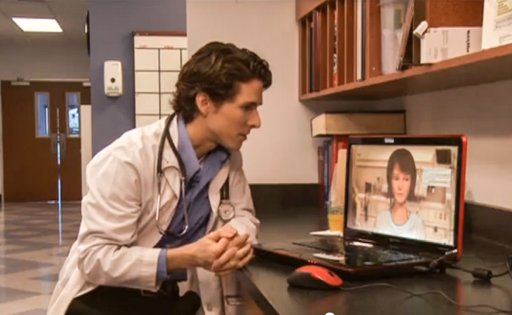
Researchers from Medical Cyberworlds Inc. and the University of Michigan conducted research with 421 medical students about the use of virtual reality in patient-doctor communication. They used the Mpathic-VR technology that allowed users to talk with emotive, computer-based virtual humans who can see, hear and react to them in real time. The virtual humans used a full range of behaviors expected of two people talking together. Applying this technique in future curriculums, med students could practice difficult conversations before going out and experiencing them in real life.
Technology improves care processes, but human skills will be needed
However, technology cannot fill the gaps in empathy, compassion, and social skills. In spite of efforts for robots to mimic empathy, that will remain the territory of humans far into the future. What technology can accomplish is the creation of space for compassionate care. While the first wave of innovation in healthcare started to bring EHRs, digital health sensors, big data, genomic reports, wearables to care facilities – and the promise to take some burden off the shoulder of medical professionals, the process might be longer than expected. The experience of the last years shows that care providers are even more burdened by administrative tasks, now also coupled with technological troubles and more extended working hours.
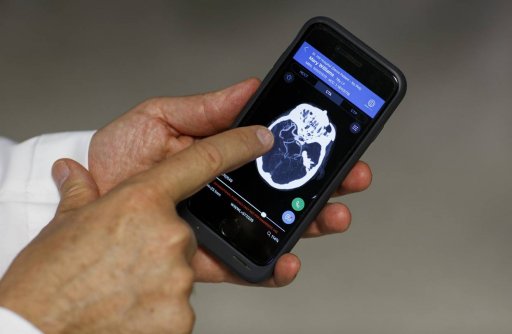
In the long term, artificial narrow intelligence has the potential to genuinely off-load the busy work of physicians. A.I. could accomplish repetitive and monotonous tasks, e.g., doing the paperwork, unlock insightful data for diagnosis, help in reporting quality measures or finding just the right studies relevant for the practice, while nurses and doctors could do what they should do best: care for patients and heal them.
What to do with more space for compassion?
Although the age of A.I. will undoubtedly open the door towards compassionate care, the medical profession might struggle to step over the threshold. While compassionate care should be the basis of medicine, many professionals, mostly doctors, are alienated from its expression – unlike nurses, for example.
As Yuval Noah Harari says in his latest book, 21 Lessons For The 21st Century, that “many doctors focus almost exclusively on processing information: they absorb medical data, analyze it, and produce a diagnosis. Nurses, in contrast, also need a good motor and emotional skills to give a painful injection, replace a bandage or restrain a violent patient. Hence, we will probably have an A.I. family doctor on our smartphone decades before we have a reliable nurse robot.”
The passage sheds light on the fact that with the appearance of A.I., doctors will lose some tasks that are traditionally part of their jobs and should get better at others that were considered conventionally as the area of nursing before. Thus, physicians have to get prepared to bring back their abilities to show empathy, compassion, paying attention and communicating with the patients. Of course, beyond their skills to work together with the A.I. and other technologies in a team. We are not saying that physicians will get replaced by smart algorithms, but it’s certain that their job will get transformed and if they cannot adapt to the new environment, they could find themselves looking for another occupation.
Thus, we amend our favorite saying here:
“A.I. will not replace physicians, but physicians who use A.I. and present social skills will replace those who don’t.”
Nursing will thrive
As life expectancy increases globally – the WHO estimates that it grew by 5.5 years between 2000 and 2016, the fastest growth since the 1960s – and people in developed countries tend to have fewer children, the significance of nursing and caretaking jobs in healthcare will amplify. The shift already shows in the statistics. The US Bureau of Labor Statistics predicts that while jobs for doctors and surgeons will rise by 14 percent between 2014 and 2024, the top three direct-care positions – personal-care aide, home-health aide, and nursing assistant – are expected to grow by 26 percent.
For that, as Livia Gershon writes here, we seriously need to rethink our perspective towards jobs requiring social skills; as they are usually underpaid and undervalued. As care work and other types of labor containing mainly soft skills cannot contribute to the GDP growth as effectively as different types, the global economic system cannot value it appropriately.
We expect that situation to change in the years to come. As the age of artificial intelligence and robots is coming, soft skills become much more valued and those who plan to enter the social care sector now will reap the benefit of it – not to speak about patients and society in general!
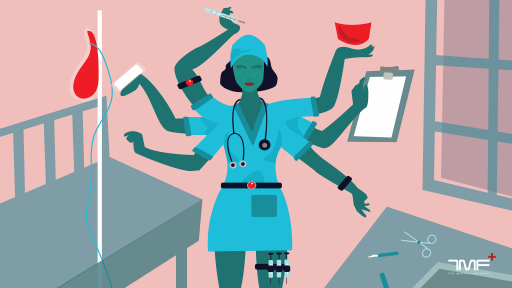
The Medical Futurist believes that compassionate care and all the areas of healthcare requiring soft skills, such as empathy, compassion, the ability to listen, pay attention and communicate will thrive much more in the age of artificial intelligence as we would expect. While social workers, nurses, and caregivers will finally (and hopefully) receive the recognition from society that they deserve, doctors have to keep in mind that to remain relevant they have to polish their social skills and learn how to cooperate with artificial intelligence.
|
At The Medical Futurist, we are building a community for making a bold vision about the future of healthcare reality today. If you’d like to support this mission, we invite you to join The Medical Futurist Patreon Community. A community of empowered patients, future-oriented healthcare professionals, concerned health policymakers, sensible health tech developers, and enthusiastic medical students. If there were ever a time to join us, it is now. Every contribution, however big or small, powers our research and sustains our future. Click here to support The Medical Futurist from as little as $3 – it only takes a minute. Thank you. |