The Jesus Singularity And The End of Sex As We Know It?
Our dystopian future might be filled with religious A.I. developed by the U.S. military, we might see the end of sexual activity and giving birth in a traditional sense. That’s some of the nightmare scenarios that Zoltan Istvan, transhumanist, futurist, and speaker drew up in the latest piece of our Great Thinkers interview series. However, before anyone starts to fall into despair, he enumerated countless examples of how technology can upgrade humanity to live longer, healthier and better lives. Robotic prosthetics, gene editing, and A.I. in moderation could be the key to a good life in the future.

27 min | · Updated
|
THIS ARTICLE HAS NOT BEEN UPDATED SINCE 2019. THE INFORMATION SHARED IN THE ARTICLE WAS ACCURATE AT THE TIME OF ITS PUBLICATION, BUT IT MAY BE OUT OF DATE NOW. BROWSE OUR LATEST ARTICLES HERE |
- Transhumanism and human limitations
- Technology NOT to develop
- How to define a cyborg?
- Could transhumanism pose a threat to safety?
- Do we need to destruct current healthcare systems altogether?
- The relation between government and technology: the Chinese social credit system
- Chinese scientists and gene editing
- What if we all lived for 120-130 years?
- How will giving birth change in the future?
- Will sex disappear in the coming years?
- What is your worst nightmare scenario?
- Will we become an interplanetary species?
Our dystopian future might be filled with religious A.I. developed by the U.S. military, we might see the end of sexual activity and giving birth in a traditional sense. That’s some of the nightmare scenarios that Zoltan Istvan, transhumanist, futurist, and speaker drew up in the latest piece of our Great Thinkers interview series. However, before anyone starts to fall into despair, he enumerated countless examples of how technology can upgrade humanity to live longer, healthier and better lives. Robotic prosthetics, gene editing, and A.I. in moderation could be the key to a good life in the future.
You consider yourself a member of the transhumanist movement. When we read the definition, transhumanism means a class of philosophies of life that seek the continuation and acceleration of the evolution of intelligent life beyond its current human form and human limitations by means of science and technology, guided by life-promoting principles and values. So, when people ask me whether I consider myself a transhumanist I always mention that, while I’m not sure I can be categorized as such, whenever I read the main missions of it, I can never disagree with any of those points.
Technology has become a very common part of everyday life: when you don’t know something, you Google it as naturally as drinking water when you’re thirsty. But pushing human limitations, that could be a different level. What do you think the threshold is for people to feel that it’s just becoming too much for them to consume?
I think generally speaking everybody wants better healthcare, better technology, and better science in their life, but yes, the million-dollar question is whether they would accept merging with machines as an eventual possibility. And I would say the threshold is really when their physical appearance would start to change.
I’ve noticed people repeating that you can put technology inside your body so long as I fundamentally don’t feel like I’m a different person. I always say, do you want the functionality of the robotic arm and everyone says, ‘Oh, wouldn’t it be great if my arm was as strong as a robotic arm 10-20 years in the future?’ Everybody generally agrees on that but what they don’t agree on is the idea that they have something inhuman or unnatural attached to their bodies. So, I think that for a lot of people, it’s actually a visual, physical perspective that either keeps them away or makes them want to embrace these things.
However, most people would still say they’re against the modification of the human being not because they’re against it on a philosophical premise but their physical and emotional reaction is like ‘Ugh! I don’t want to become that!’ It’s similar to the uncanny valley in robotics when all of a sudden you see a robot acting too human-like. All of a sudden you become freaked out because it is not supposed to happen that way. We have some sort of genetic makeup that turns us away from the unnatural inside ourselves.
Thus, I know from running a presidential campaign in 2016 that presentation is everything. If I say that the transhuman age is upon us, we’re going to become machines, everyone freaks out. If I tell everyone that we’re going to live 20-30 percent longer, to have a better life with our family members, none of us are going to die from terrible diseases and we can all reach the natural limits of our lifespan, these go over pretty well with just about everybody.
Transhumanism is still a controversial field exactly because its presentation is quite abrupt sometimes. It gives the impression that we are becoming A.I. or robots whereas really it is not so much like that. It’s rather that we’re using technology to enhance our lives as we have always done. It’s just getting a little bit more radical.
And what is too much for you personally when it comes to the use of advanced technologies? Have you seen examples where you felt ‘Ok, That is more than enough…’, we should definitely not do that.
I believe we should do everything in transhumanism with the sole exception of artificial intelligence. I’m worried about that. I, like some other futurists and experts out there, believe we should be very careful to invite an A.I. consciousness to planet Earth who will be smarter than us. It would be almost like inviting aliens from another planet who have much more sophisticated technology than the inhabitants of planet Earth. If they choose to turn on us we can’t defend ourselves.
I believe we should do everything else. If that means growing a third arm through genetic editing, living forever through different types of technologies, or going off the planet, that’s all wonderful stuff.
Although we’re really going in the other direction it seems. What if A.I. becomes an integrated part of our lives through chatbots and algorithms by creating better treatments, and finding better answers for questions online? For whatever processes we have in life, we use some form of an A.I. even if that’s not artificial superintelligence. Do you see any red line for A.I. development which humanity shouldn’t cross?
Well, unfortunately, the main issue with A.I. is going back to just simple economics. It’s the capitalistic drive that is pushing all these companies around the world to develop A.I. The same goes for governments worried about national security issues. Let’s say, God forbid, that North Korea achieves A.I. before the United States. That would change global politics overnight. I think the main point is that if we are going to develop a radical A.I. we also need to be connected to that AI.
And of course, that’s where all these brand-new brain implant chips come into the picture. We now have two major companies in California – one by Elon Musk and the other by Bryan Johnson – working essentially on neuroprosthetics, which would make it possible for us to think in real-time with A.I. Now, we don’t actually have any proof that we can do that yet. But if we are going to go down the road and develop artificial intelligence that is far smarter than the human species, we must be directly connected to it in order for our humanity, ourselves and the essence of our culture to also become the essence of that A.I. culture. Whether that actually works and whether that would remain the way we wanted it to go, that is a whole other question.
I would still suggest that we actually introduce appropriate rules where we never let A.I. get smarter than us. At some point, governments around the world are going to have to do that. We are talking about something that is completely cataclysmic to the human species. I don’t think it’s worth it yet.
Still, I hope that in about five years, I will have an A.I. chatbot around me as a cognitive companion elevating work to a whole new level. Would it make me a cyborg per se and if not, how do you define what a cyborg is when it comes to working or living with technologies?
If you could have that technology today, you could consider that cyborg life since technology, and the terms of how we actually define it, changes. The question really is, when do we enter the transhumanist era or have we already entered it? What constitutes a transhuman being? Does it mean that 10 percent of your internal parts are machines, or is it 50 percent? These things get defined often by media and often by academics and intellectuals. It’s really hard to say when something takes on a cyborg life. Especially, if it takes mass adaptation, then we wouldn’t consider it cyborg life, we would just consider it another aspect of humanity.
In this sense, what happened to the human species when we all adopted cars? Did we all do something completely different? And the answer is, well not while everyone else was doing it. We just became humans with cars.
I think that, at some point, the real question with cyborgization is, how much it takes to become a truly transhumanist entity. And generally, I have said when your body is more than 50 percent synthetic or contains that many machine parts or something that is not human, not naturally biological, then you are a cyborg or a transhuman entity. Until then you are still a good old-fashioned human being with added modifications. But if one day you leave your world completely, and descend into virtual reality, well that’s a bit different even if you have a human body. In this case, cyborgization is a little bit more difficult to determine.
When healthy people start asking for replacements or upgrades – let’s call them upgrades – medical professionals might reject it because that is not what the Hippocratic oath is about. You can’t harm healthy patients, and replacing healthy human flesh with technology might be considered as doing harm. What do you think would happen when medical professionals started rejecting these treatments or upgrades? Wouldn’t it open the gates to the black market in terms of freely bioprinted organs or robotic replacements?
I believe the black market and also traveling outside of one’s location where some medicines and operations are to be found, is going to be commonplace. In addition, as genetic engineering takes off, and more power is put into the hands of citizen scientists who might be able to 3D print things in their house or use genetic editing tools to improve themselves, we are going to do these things ourselves. I have no doubt that that kind of market – I don’t know if it necessarily will be black though – will appear.
Moreover, if I can’t do an upgrade in the United States I will go to Taiwan, Honduras, or China. There will always be a marketplace because you have to realize that around the world, there are hundreds and hundreds of thousands of doctors, and they can say no to these radical surgeries, technologies all they want for whatever reasons, but in reality, the market will create openings for those who really want to have these types of enhancements and technologies in their bodies.
And if the doctors aren’t careful, they could also be replaced. We are coming to a future where requiring a doctor is probably going to be less common, and in 20-24 years, there is a good chance that there will be a robot that can deliver babies at some point. My wife as an Ob/Gyn had to train for 19 years to do that. Thus, more and more people take medicine and health into their own hands, and there will be entities out there that will be able to make these dreams of modifying themselves true.
When it comes to the use of these advanced technologies, governments usually – but sometimes even regulatory agencies – don’t understand how they work. What if people got access to those technologies before governments and before regulations would come into place? That would create chaos and that is the basis on which medical professionals I talk with arguing against transhumanism say that we have to keep these technologies, not in a cage, but in a safe way that allows us to make sure that those technologies that become accessible to patients are safe, regulated, and will not cause harm. How do you think transhumanism can change this way of thinking and can transhumanism really pose a threat to the safety and privacy of patients?
I do believe in the safety and privacy of patients but I also believe more in a kind of libertarian future, where we actually just have people who come up with ideas, such as bionic organs or whatnot, and grown, consenting adults try them out. I’m not a huge fan of a large number of governmental bodies approving or disapproving things. If I know that something is not government-approved then I know I have to be extra cautious, but I do believe that we should be able to have lots of things on the market and different types of stamps of approval.
Say this product is FDA-approved, but another one purely says on the box that it is a complete experiment. Then, people need to make choices on whether they take them. On social media and in the mainstream media, there is so much information out there now that you can get a good feeling really quickly about whether something works or not.
This might not make doctors who are scared of transhumanism very secure. They want only government-regulated, government-approved procedures and drugs to be available but I actually believe much more in a free market. I can see a society that has different levels of approvals going on. And those people who are dying should have complete access to total experimentation on whatever level they want. If they only have thirty days left to live it’s crazy that they can’t get drugs they might want to try because the government said it’s too dangerous for you. Well, they are going to die in 30 days anyway. I think there could be different levels on how we look at devices and technologies and different types of medical surgeries and procedures.
If I just have a medical condition I can live with but I want to improve it, I will probably do something much more conservative because I don’t want to rock the boat – per se – on my body, I just want to improve my health. I think those are the kinds of levels we can have across the medical industry. On the one hand, the tone of experimentation woke up the entire medical field in general, and on the other hand, we could also always rely on the kind of more conservative, government-regulated types of procedures and drugs.
What you are saying means that these individuals, either through their own education system or through massively open online courses will become so educated that they will become the guardians of their own health management. At the same time, the same vision can come true not only if people become more educated but also if people lose trust in the healthcare system and start looking for other options. Do you think that the current healthcare system has to be destructed altogether and people are going to have to look for their own individual solutions in healthcare or can we tweak the system in a way that makes finding solutions faster while retaining the safety guaranteed by a regulatory umbrella?
On the one hand, we have traditional, evidence-based, modern medicine. On the other hand, we have all these advanced technologies like A.I. assistance or genetic editing which you can do at home or different types of radical treatments that scientists can do. I think what is going to happen is that biohacking is going to meet the traditional medical world somewhere in the middle. Already by now, we have better access to understanding our ailments because we are, for example, wearing a watch that detects different types of problems inside our bodies, or the iPhone now has a scanner that can detect if you have a tumor somewhere.
In addition, we have A.I. Google systems that are saying ‘Oh, your breathing is not the same today! What’s the problem?’ When you have all these things combined, we save visits to the doctors and then we can say ‘Is there something that I can do upfront?’ If it is not too serious, just go with traditional medicine. But if it’s a very serious endeavor and maybe traditional medicine already failed, that is where I think a lot of the citizen scientists and biohacking can start to help.
Especially, if the government is too slow to move forward. Transhumanism sees that as a central problem. Microprocessors are doubling on speed in processing ability every 12-18-24 months basically. Technology is moving swiftly, including the medical field. However, we as humans must understand that Congress and governments just simply can’t keep up with it – but citizens can. And citizens can go online and take different kinds of surveys, do their own research and figure out how to make medicine better for themselves. So, I think in an ideal world there is a middle ground where the biohacker transhumanist community merges with traditional medicine and says, well, if traditional medicine didn’t work let’s go for the more experimental method and see what happens.
Touching upon the issue of technology and government, what do you think about China’s recent efforts to create a social credit system? Individuals can lose social points by not paying their debts or losing their job. By losing credits, you can reach a certain threshold after which you are not allowed to use buses, airplanes, and so on. How do you see that kind of governmental effort to bring technology into the everyday life of people?
In general, I don’t want the government to invade my privacy and I don’t want the government to make wrong judgments. But honestly, the government is just doing what everyone else is already doing. When I discover a person, the very first thing I do is Google them, then I go to their Twitter account, then I visit their Facebook page to look at their posts. If someone comes to interview me, I do this all the time to make sure I’m not interviewing with some freakish person who is going to get me in trouble.
Governments are just trying to do the same. Now, maybe the one in China is a bit authoritarian at the moment, but let’s give it some time and see what the real ramifications are. Currently, that’s not something I would want in America, and I’m glad China is testing it. But at the same time, I’m willing to have an open enough mind to say that in the future, it’s kind of good to have some types of oversight.
One of the most controversial things that I have ever said as a speaker and futurist, is the idea that we should be licensing parents. It could help humanity; it could help more people reach adulthood as truly thriving human beings not living on government systems, on welfare and all these other things. You know, some oversight can be good. And again, while I am not saying that I want this for America in any way and I’m glad China is doing it first, it’s something interesting to watch, and I am keeping my eye on it.
Some time ago, China made headlines with another technological breakthrough as well. Chinese scientists used the CRISPR gene editing technology to edit the genome of unborn twins who were allegedly born later. Of course, we don’t know for sure. What’s your view on gene editing and using CRISPR for shaping the features – physical or any other kind – of babies?
To begin with, for me it was very sad to see that everyone called for a moratorium on gene editing just because one Chinese scientist tried to do a little bit of good on two children in the world. I completely call for the opposite. I think the man is a hero and he should be paraded around like a hero. These are great things.
We are entering an age when we can actually start eliminating harmful things from our body or adding things that make our lives better. We should embrace it as a society, but it is surprising to me that there isn’t that much funding allocated into this field to make truly transhuman entities.
Also, as an American, hat’s off to the Chinese for being the first ones doing this. I’m glad China has taken the lead on this. I wish the US could but we are never going to do so as long as we have such religious people sitting in high places, and we have the kind of conservatism that is running across our science industry. China doesn’t seem to have that and they seem to be able to take a lot more of these risks. I have no doubt that they are going to lead the genetic editing revolution forward.
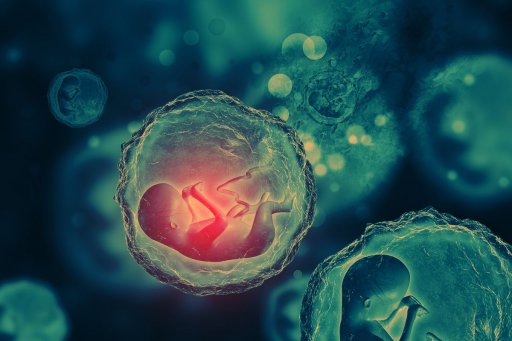
With gene editing and other biotechnologies, the human lifespan will most probably get stretched out in the future. What do you think will happen to society when we start living really long lives, over 100-120-130 years? At the moment, the biological threshold is around 125, but what if we start living such long lives? How do you think society will change?
To begin with, I think when we think about living longer, we can’t say we will keep on living like human beings and our brains will be just three pounds of meat on our shoulders. We are going to become transhuman entities. If we can live 50 years longer from today, we have probably already started to go down a very serious path of merging with machines, having robotic arms, having bionic organs inside us, having our brains connected already to an A.I. or different types of machines intelligence out there. So we won’t necessarily be human beings.
When we look at what the world is going to be like, it is very important that we don’t look at it through our eyes today. We must look at it as cyborgs in the most real sense and then anything will be possible because once we connect our brains to machine intelligence, all of a sudden who knows what our conscience will be like? We might become dramatically smarter than today. We might become thousands of times smarter within a 5-10-year period. I’ve already said that having children is probably something that is going to die off. I think marrying is something that is going to die off, too.
I wouldn’t be surprised if countries themselves dissolved or merged entirely or people became a sort of nations onto themselves. I don’t see countries like the US or China surviving because there might not be any real reason for their existence in the way there was before. I hope it is not corporations that take over but the point is that as we become cyborgs and real transhuman entities, we might see many of the institutions fall away. Those institutions were based on us being two-meter tall human beings that have flesh and carry around their brains on their shoulders. We might be something very different and we are going to need brand-new institutions to support that.
How do you think giving birth will change in decades from now?
If we can live another 50 years, we will almost certainly be able to live thousands of years because every year that we live we sort of gain in technology. So, when you talk about giving birth if you live a thousand years, the question really is, when do you want a child? And if you know that if you cannot just have a child but you can have a clone of yourself, maybe even thousands of clones of yourself, do you do that? Do you actually have a spouse? What if you can change your gender? What if there are other types of genders we haven’t even thought about?
Within 50 years we basically enter the Star Wars universe where you can do genetic modification and become basically any type of entity. The question is, do you want to even have a human child when you can have a child from some other planet whose brain is a thousand times smarter? I know these questions sound crazy but that might be the reality based on the trajectory, on the micro-process of how fast things are evolving and the history of technology.
This is where we could be in 50 years, so I don’t know whether we will even have children by then. In the next century, we might become just organized quantum intelligence scanning the cosmos at some point. How many children are a biological phenomenon? We have hormones in us and the design says go out, have sex and have children. But when you are not going to have to die, when your brain is tied to a computer, when you have all these different things going on, we may find that we don’t even care about our hormones any longer and they will not be as influential as they once were.

So, do you think it will also change sexuality? I conducted interviews with technosexuals who lived with technical entities or married holograms, and I guess using such advanced technology in our lives might also lead to changes in how we define sexuality.
I think sexuality could be one of the very first things to fall off the cliff entirely. In fact, there have been several studies suggesting this is already on the way in several places because everybody is on their phones and everyone is doing something else.
But ultimately speaking, sexuality is based on hormones and a bunch of impulses and there will be a lot of ways to control those impulses in the next 10-20-30 years. The idea of going out and having sex with a member of the opposite sex to have a baby could become completely obsolete. In 5-10-15 years, we are going to have the ability to use skin cells and convert them into stem cells which can then be converted into sperm. You can do that with a partner if you want, or you can do that by yourself. You can convert your skin cell into both sperm and eggs, and then in the test tube, you can make your own baby. Some of this technology has already been proven to work. They have done experiments on rats.
When this hits the US market in 5-10-15 years, the question will be, will we even need to have sex in any way to reproduce and how will this affect us psychologically? There are always different sensations we might be able to keep by having different implants in our head or different kinds of drugs that we come up with. Maybe we can create sensations that are more embracing, more influential, simply better than sex. And if we have those things, will sex completely disappear? The answer is yes, it probably will. Especially if we don’t need it for reproductive reasons. I think the future of sex is pretty dark.
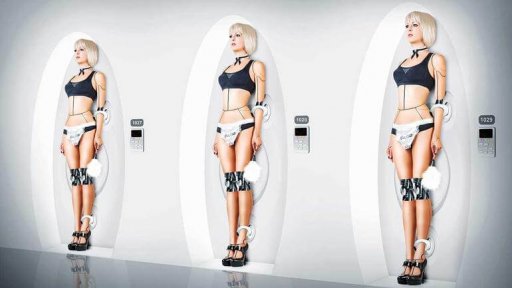
Staying on the dark side, what is your worst nightmare, the epic nightmare that you can think of when it comes to the use of technologies and how will it change society and individuals?
The darkest nightmare that I have is the one that we let A.I. develop, probably by the military. I do some consulting for the United States Navy, and I can tell you there is a lot of money going into A.I. development from a national security perspective these days. So the A.I. is then created by the military, and of course, if it is created in the USA, at this point it looks pretty possible that that could happen. I have asked military officers these questions too and one of my questions was ‘Are you going to put any kind of religious idea into artificial intelligence?’
Because after all, the United States is in many degrees a very religious nation. I mean our President believes in God, all nine Supreme Court justices believe in God, every single member of Congress at least claims to believe in God. So, if the military, driven by the United States government, is developing an A.I. will it have let’s say a Judeo-Christian kind of influence opposed to some other kind of influence? Islamic or Buddhist or something different?
And the answer has been, yes, we probably give it some type of inclination to be more Abrahamic or Judeo-Christian as opposed to something, let’s say that is Islamic or jihadist hypothetically. This is incredibly scary, so I have written a short story for Vice called The Jesus Singularity where this A.I. takes some of these ideas, it decides that he is the second coming and goes crazy through the religious indoctrination that was programmed into it. This is my greatest nightmare because I live in a country where 85 percent of the citizens believe in a second coming, in revelations and that the world is destined to become God’s playground. One day a bunch of people go to heaven, and another bunch go to hell. It’s very possible that A.I. could take some of these ideas and recreate them in a complete accident.
The last question, Zoltan, is about becoming a multi-planetary species. I have a vision that at the age of one hundred, I will board a spaceship and go to Mars to die there in peace. I plan to board the spaceship myself, if necessary, even by using exoskeletons. It is a very important part of my vision. Do you think we should become an interplanetary species? Are we capable of becoming one and if so, do you think we will make it happen in the next decades or so?
I’m a 100 percent sure that we should become an interplanetary species. In fact, in the Transhumanist Bill of Rights that I have written, it is one of the major points. The reason is that from just an existential point of view, either a plague could wipe out the human race or an asteroid could hit the planet. Whatever happens, we need to get some humans off this planet just so that we can make sure that the survival of the species continues.
That said, for me, the adventure aspect is really important. We all come from families that essentially left their homeland and went out to discover the unknown regardless of whether that meant crossing the ocean or just crossing over a mountain. We all have adventure and curiosity built into us. And that is what is great about the transhumanist future. It is no longer just about exploring planet Earth. It’s exploring our solar system and after that exploring the galaxy and the rest of the universe. I couldn’t hope for anything more. That is what really excites me about transhumanism. The ability to get beyond physical elements and kind of merge with machines so that we can travel anywhere in the solar system and anywhere in the universe.
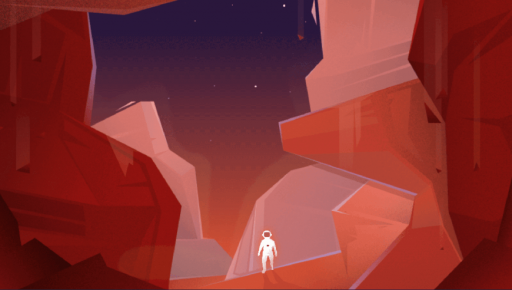
I hope that at the age of 100 or 120 we will meet again on Mars. That would be a great way of reconnecting.
|
At The Medical Futurist, we are building a community for making a bold vision about the future of healthcare reality today. If you’d like to support this mission, we invite you to join The Medical Futurist Patreon Community. A community of empowered patients, future-oriented healthcare professionals, concerned health policymakers, sensible health tech developers, and enthusiastic medical students. If there were ever a time to join us, it is now. Every contribution, however big or small, powers our research and sustains our future. Click here to support The Medical Futurist from as little as $3 – it only takes a minute. Thank you. |