Will AI Companions Change Our Lives And Relationships?
What if you loath the AI friend of your human friend? Will you be punched in the face because your AI Karen just told a random stranger in the supermarket they are talking nonsense? How will you deal with losing a friend to a hardware failure? We have so many questions…

Dr. Bertalan Mesko, PhD
24 August 2026
Key Takeaways
Technologically, we may be approaching a world of true AI assistants (and perhaps AI friends), but we rarely discuss that they might fundamentally reshape our social relationships, friendships, and emotional toolkits.
A host of unknown dilemmas arise, such as whether developers should prioritize widespread user acceptance or moral principles and the public good, or whether I’ll get punched if the AI hanging around my neck enlightens an overheard random stranger at the store about Earth not being flat.
Many questions remain unanswered, but it’s crucial to recognize the vastness of unfamiliar challenges we’ll encounter as AI companions become integrated into our lives.
Do you remember the movie Her? While it was ridiculously far-fetched in 2013, the film became an absolute hit due to its story about finding love in such an unusual way. Her was classified as sci-fi, comedy, and drama on IMDb. Fast forward a decade and forming an emotional relationship with an AI friend suddenly feels much less like sci-fi and more like comedy drama.
In the past year, we’ve seen a significant buzz around AI companions, with products such as the Humane AI Pin, the Rabbit R1, the ElliQ, and the latest hype simply called friend – a neck-worn AI pendant.
These products are currently very far from seamlessly integrating into our lives as virtual assistants. However, with the advancements in generative AI, it’s becoming plausible to envision a future where AI might become a highly efficient assistant or even a friend.
This raises the question: what significant social changes can we expect as AI companions become more integrated into our daily routines and relationships? To explore this, let’s consider some potential scenarios where AI companions may have a profound impact on how we interact with technology and with each other.
The AI companion elephant in the room
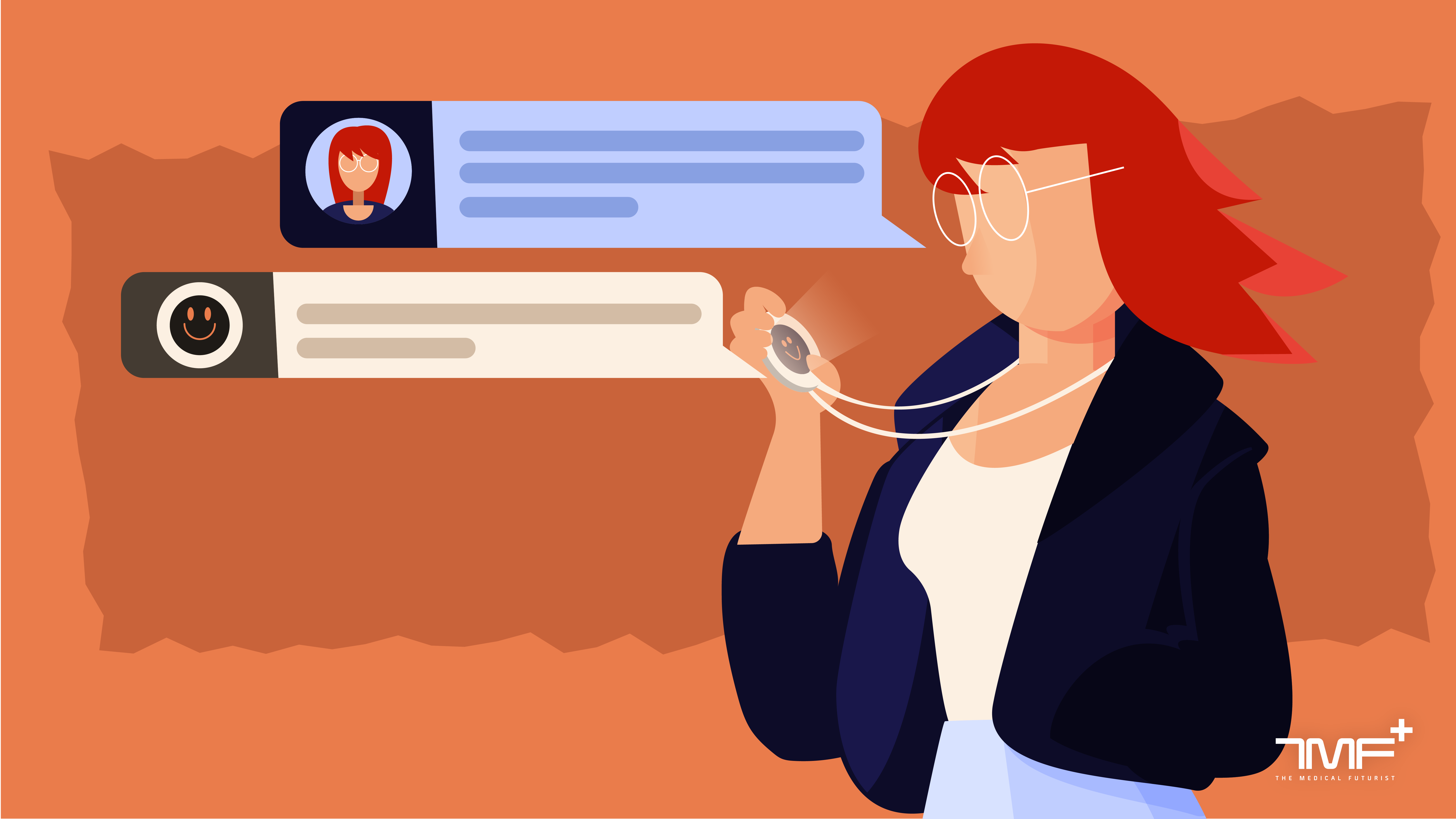
Imagine you’ve invited friends over for dinner. One arrives with a new companion – not a human friend, but their AI buddy, a sleek device they wear around their neck.
Would you feel comfortable sharing personal stories or opinions in the presence of this always-listening AI companion? Should your friend disclose that they have an AI companion present, or is it assumed to be an extension of themselves? Does an always-listening AI necklace differ materially from our always-listening phones?
The distinction between an AI companion and a smartphone may seem negligible, but the perceived intimacy and constant presence of the former feel more substantial both from an emotional and privacy point of view than in the case of the latter. An AI companion is designed to be a continuous presence, potentially recording and analysing every interaction.
Will the presence of an AI companion alter the group dynamic? It may change the flow of conversation, the types of jokes, or the level of intimacy. New dilemmas arise: including your friend’s AI companion in the conversation may feel unnatural and forced, but excluding it could be perceived as rude or insensitive. You will probably have mixed feelings about various AI entities, for instance liking the AI friend of Amy but loathing that of Jessica.
One of the most immediate social challenges posed by AI companions revolves around privacy. It is hard to figure out if and how we should signal our discomfort or imagine if it becomes so natural that there will be no discomfort at all.
Today it is normal to gently ask your friend to focus on you over the shared coffee instead of their Instagram feed. Will it be the same normal to ask them to leave AI Amy or AI James in their bags in the other room?

Would you have different feelings about the unannounced AI friend than if your friend brought along a human companion you didn’t know about? Should you extend the same courtesy and hospitality to an AI companion as a human guest?
If your friend seems deeply attached to their AI companion, would it affect their relationship or their ability to connect with others on a human level? Should you raise this subject with them?
Now these issues may become even more complicated in the doctor-patient relationship. Imagine you’re in a sensitive conversation with a patient. You notice an AI companion around their neck. Should you ask them to turn it off, citing privacy concerns? Imagine you are a patient and your doctor has such a device while you are about to share highly sensitive, deeply personal details. Can you ask them to turn it off?
Look who’s talking!
Thinking about omnipresent AI assistants and AI friends also raises new questions about communication etiquette, and the boundaries between human and AI interaction. First of all, finding the balance between helpfulness and being annoying will be crucial.
As AI companions become more sophisticated, new social conventions and signals will likely emerge to clarify who is speaking in multi-party conversations. Visual cues, distinct auditory signals, or even simple verbal identifiers could help distinguish between human and AI speech, minimizing confusion and ensuring smooth interactions.
AI companions will be programmed to contribute to conversations, but the extent to which they interject with information or opinions remains a key consideration. The level of familiarity between the AI companion and the people they interact with could also influence conversational dynamics. It’s conceivable that AI companions will be more assertive with their primary users, offering suggestions or insights more freely, while maintaining a more reserved stance with strangers.
Which raises some interesting questions. Will AI companions need to be taught the same social rules and safety precautions as children? Will they be able to discern appropriate topics and levels of engagement in different social contexts? Will they be allowed to talk to strangers? And thought not to tell anything private to strangers? Will they lie if necessary to protect sensitive info related to their primary user?
Look who’s making decisions and insulting people!
As you increasingly rely on AI to manage tasks like writing emails and organizing your schedules through voice commands, there’s a possibility that they might start making decisions on your behalf.
As AI companions become more sophisticated, their potential to influence your beliefs and behaviors raises important questions. Will they passively absorb your viewpoints, even if those views are inaccurate or harmful? Or will they actively challenge their humans, offering corrections and alternative perspectives on sensitive topics like conspiracy theories or controversial beliefs? The impact of such AI-driven interventions on our relationships and self-perception remains to be seen.

Beyond personal interactions, the broader social implications of AI companions’ truth-telling capabilities are equally complex. While it’s plausible that they might correct their users in private, their behavior in public settings is less predictable.
Imagine your AI companion publicly refuting a stranger’s beliefs in the grocery store – could this lead to social friction or even physical altercations? Who is responsible for the consequences of an AI companion’s outspokenness – the user or the AI itself? Will you get punched in the face because your AI Karen just told a stranger that the alkaline diet is bogus, but they should stop eating chips as it makes them fat?
Who gets to decide what’s right?
Building on our previous set of questions, it is intriguing to mull over how tolerant and/or suggestible our future AI friends and assistants should be. Should they be designed to mirror their users’ beliefs, even if those beliefs are harmful or discriminatory? Or should they be programmed to challenge and broaden their users’ perspectives, potentially sparking personal growth but also risking rejection?
If AI companions are designed to adhere to a specific set of scientific or “politically correct” values, this could alienate certain users and fuel accusations of bias or indoctrination, potentially even leading to a fragmented market with different AI companions catering to different ideological niches.
This ethical dilemma forces companies to weigh corporate responsibility against profit maximization. Can they afford to prioritize ethical design even if it impacts sales? Should they be held accountable for the social repercussions of their products?
Then, there is the question of who defines the moral compass for AI companions. Even if we agree that it is possible to define a universal set of “correct” principles, consent on who should be allowed to decide them will be one hell of a debate. Could government or international bodies play a role in ensuring ethical AI design?
Mental health benefits or mental health harm?
A critical consideration regarding the constant use of AI companions is their potential impact on mental health. How will the presence of an always-available AI companion affect your psychological well-being?
While AI companions may offer a safe space to express emotions and thoughts without fear of judgment, and provide personalised support for anxiety, depression, or loneliness, their constant availability and unwavering positivity could create unrealistic expectations for human relationships.
Over-reliance on AI companions may lead to social withdrawal and isolation from real-world interactions. The constant validation and support from an AI companion could hinder the development of coping mechanisms and resilience, pushing individuals to seek comfort in illusory virtual friendships instead of dealing with the challenges of human relations.
The possibility of forming genuine emotional connections with AI companions raises further questions. Is it possible to have real emotional connections with them? Could you experience feelings of love, loss, or grief about these digital entities? What are the ethical implications of developing AI companions that are designed to evoke emotional responses in humans? How will you cope if you lose your digital friend to a hardware failure?
It’s complicated…
We just started to think about potential future AI friends and already had dozens of questions, most non-trivial, about what this new reality will look like. Giving it more thought, there should be thousands of relevant dilemmas.
Integration of AI companions into our lives will impact our relationships, communication, decision-making, our profession, and even our understanding of ourselves. While the full extent of these changes remains to be seen, it’s crucial to deal with the ethical, social, and psychological questions raised by this emerging technology.