Welcome To The Virtual Ward!
The main difference between a ‘full-grown’ virtual wards and the earlier existing solutions is the available data: virtual wards provide the same data real time as would be available if the patient was hospitalised.

5 min |
The expression ‘virtual ward’ is trending. But is it just the expression we hear about more often, or is there a real trend? And by the way: what is a virtual ward? And what is it good for?
It is yet difficult to find one, generally accepted definition for the new phenomenon. The same phrase is used for a number of quite different solutions. For the sake of understanding, here is what we think about when we speak of virtual wards.
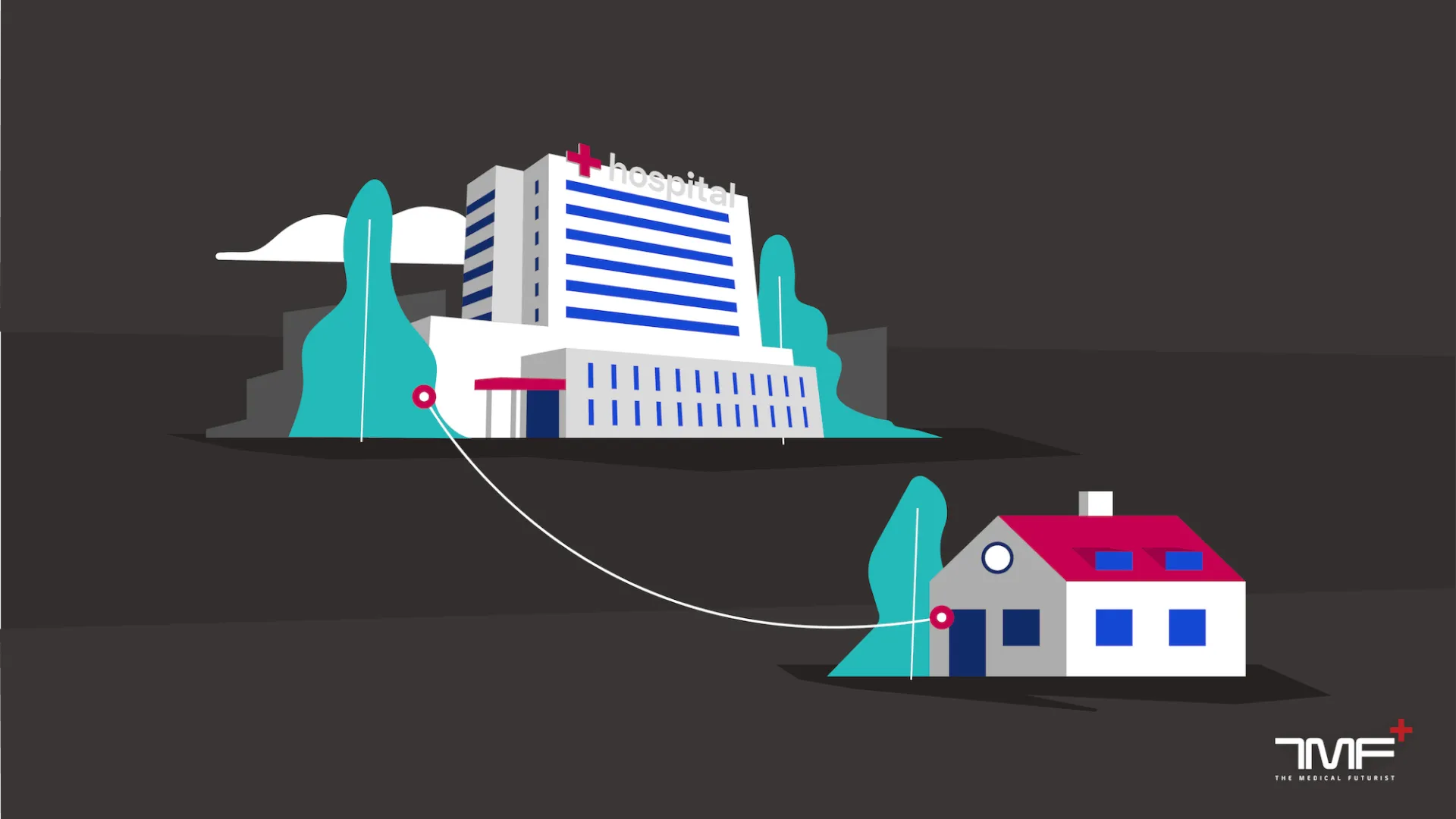
“A virtual ward is a solution that supports patients who would otherwise be in hospital to get the acute care, remote monitoring and treatment in their own homes, with the use of digital, remote monitoring health tools relaying real-time data to the hospital. The main difference between ‘full-grown’ virtual wards and the earlier existing solutions is the available data. Virtual wards provide the same data real-time as would be available if the patient was hospitalised.”
This is only possible through digital health technologies.
The arsenal tailored to the patients’ condition
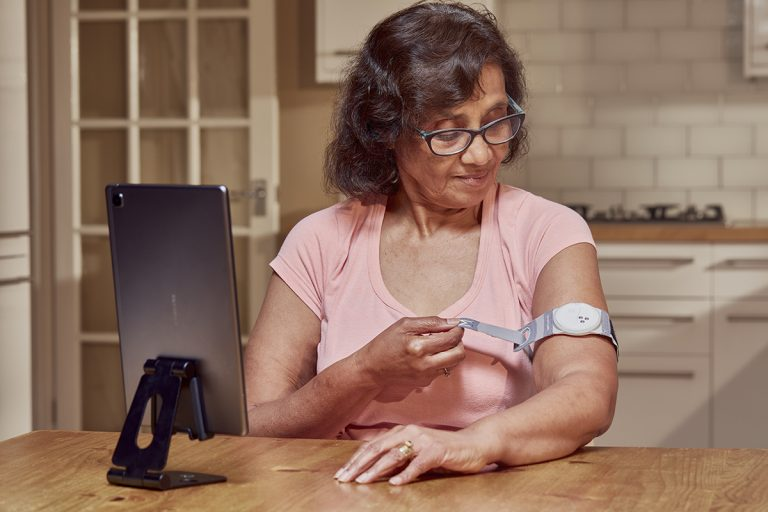
The digital health arsenal used is dependent on the patients’ condition, but generally measures health parameters such as heart rate, blood pressure, body temperature, and blood oxygen level monitoring besides other, condition-specific metrics. The data is displayed in real-time in the hospital, and the support staff follows it as closely as if the patient was monitored in the intensive care unit.
This is two-way communication. The patient has the option to immediately contact the health team, and real-time data allows healthcare providers to immediately intervene if measurements suggest deterioration in the patient’s condition.
In this model, everything that physically needs a trained professional, like blood tests, wound dressings, intravenous therapy and so on, are carried out by a visiting nurse.
The idea of allowing some patients to heal in the comfort of their homes is nothing new. There is a vast amount of data proving that people with certain symptoms heal better at home. They are not at risk of hospital infections. Not under the strain of missing the family. And so on, the benefits are numerous.
The COVID-accelerated ideate
But, of course, there has been a vast amount of obstacles too to make this a reality. Some of the obstacles were objective – lack of equipment, tools, methods, workforce and workflow -, some psychological. It is an idea that fundamentally differs from the century-old mental picture of healthcare. Changes of that magnitude never come easy.
It was a very tall mountain to climb, both for the healthcare professionals and the patients. We will never know how long it would have taken to really give it a go if COVID had not stretched healthcare way beyond its capacities.
The pandemic was, at least in this respect, the pressure and motivation the virtual ward idea needed. It quickly became not just real, but in many cases, the best possible solution. Reluctance to change, fear, and uncertainty were all swept away in an instant – just because there was too much at stake, and more importantly, because this was the only possible action available. To use a pop cultural reference, this was a Seldon crisis at its climax.
Many hospitals/healthcare systems from the UK to Singapore, from the US to Australia came to the same conclusion as their capacities were crumbling under the pressure of COVID waves. Some patients don’t actually need hospitalisation. They only need monitoring.
If they get better, all good. If they get worse, only then do they go to the hospital. According to the figures of Health Innovation Network, the COVID virtual ward model tested in Croydon was able to manage a cohort of up to 30 patients at one time using only a small team of clinicians.
Frailty, acute respiratory infection, DVT, Afib, and many more
Although virtual wards debuted during the pandemic, the model is capable of effectively treating a much wider array of symptoms and conditions. In fact, that was proven in the past two years. In some cases, COVID patients were involved in remote care, while elsewhere the focus was different, rather on offering treatment to anyone else while the hospitals were more than full with COVID patients.
The United Kingdom’s NHS subpage lists a number of examples:
- cellulitis (requiring IV antibiotics)
- deep vein thrombosis (DVT)
- mild-to-moderate PEs
- chest infection (low CURB score 0-1)
- urinary tract infection (UTI)
- chronic obstructive pulmonary disease (COPD) exacerbation
- acute urinary retention, catheter-related problems
The University Hospitals of Leicester NHS Trust is the first in the UK to create a remote 120 virtual-bed monitoring ward for patients with atrial fibrillation. The connected solution equips patients with the “usual” starting kit and a telemedicine ECG device providing detailed assessment of their heart rhythm. Data is captured by an app, which allows secure transmission to the hospital, where it can be viewed by clinicians remotely, 24/7.
The future of virtual wards
Virtual hospitalisation could be an option for a range of cases. The way to go is of course to launch pilot projects for new areas, and vigorously monitor the performance.
For that to become reality we need to meet three requirements.
- Investment in necessary technology (hospital and patient side) in the medical institution.
- Healthcare providers should be trained to analyse and handle the available real-time data.
- An established and working scenario to secure the transition to the hospital if a patient suddenly gets worse while at home.