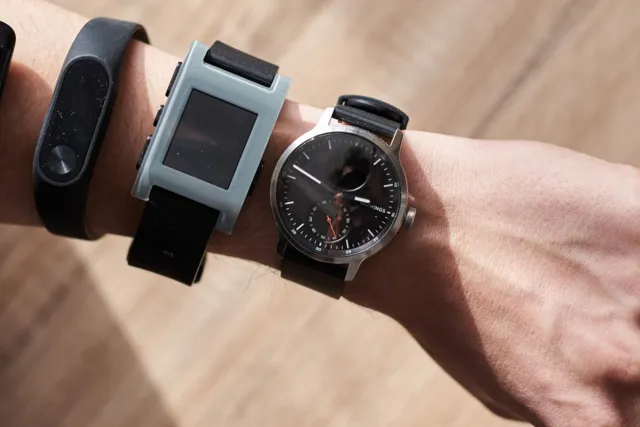
Top 5 Health Trackers For Running
We’ll list our favourite health tracking devices that we’ve tested and found appropriate for running.

7 min | · Updated

|
THIS ARTICLE HAS NOT BEEN UPDATED SINCE 2019. THE INFORMATION SHARED IN THE ARTICLE WAS ACCURATE AT THE TIME OF ITS PUBLICATION, BUT IT MAY BE OUT OF DATE NOW. BROWSE OUR LATEST ARTICLES HERE |
Looking for a device to track your running routine? Or you’d like to treat yourself to a little gadget for the end-of-year season that will supplement your workout? Maybe you just need a little push with the help of what technology can offer to get out of your apartment and hit the running track? We’ve got you covered! We’ll list our favourite health-tracking devices that we’ve tested and found appropriate for running.
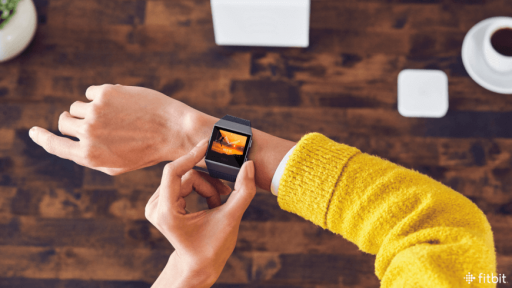
Fitbit Ionic: Almost perfect
The Fitbit Ionic, Fitbit’s very first fitness tracker-smartwatch hybrid, is something of a love child between Pebble and Fitbit. The device was released after Fitbit acquired Pebble and made use of the latter’s resources like a revamped OS, likely based on Pebble’s own, and a solid sleep tracking function with a detailed analysis of the user’s sleep activity.
Source: www.fitbit.com
Using the Ionic for running is a delight. Its Coach feature coupled with the built-in GPS and heart rate monitor will track your workout sessions in detail and will also motivate you through gamification as you check how you are progressing towards your set goals. Moreover, the additional “live coaching” function will give you immediate feedback on your performance. If you’d like to get some further motivation via your favourite tunes to keep up with your running routine, the device also allows you to load more than 300 tracks, which you can listen to through a pair of bluetooth headphones. Moreover, the Ionic carries enough juice to last up to 4 days!
It’s a great tracker in the realm of smartwatch-fitness tracker hybrids and we even labeled it as the best tracker at the time we reviewed it.
Polar H10 Chest Strap: levelling up your running game
This belt-like device might not entice you based on its aesthetics but don’t let its looks deceive you! The Polar H10 functions as a heart rate sensor add-on to many gym equipment, apps and smart devices via a bluetooth connection and is recommended if you want to take tracking your health parameters while on your running schedule to the next level.

Source: https://www.polar.com/
Even if it looks cumbersome, it is in fact comfortable to wear around your chest with its soft strap material. Once buckled up, your heart rate will be tracked by its sensor with accuracy and detail. The results can be subsequently analyzed with the companion Polar Beat app. However, the Polar H10 stores data for only one training session, but its 400 hours of battery life will give you some peace of mind.
The highlight feature which got this sensor to feature in this list is the Orthostatic Test. This analysis tool monitors how your body responds to training by measuring your heart rate parameters reflecting variations in your heart’s autonomic regulations. Ideally taken in the morning before breakfast, this 4-minute test will detail how your cardiovascular system is performing based on your personalized results. In so doing, you can tailor your running routine according to how much you can exert your abilities if, say you are recovering from an injury or building up towards your ideal silhouette. This feature will also serve as a handy reminder when to, quite literally, not go for the extra mile based on your cardiovascular system’s capacity.
Lumo Run: Running correctly
Even if this palm-sized wearable does not feature a fancy screen to display your notification on, it will analyze aspects that those snobbish wrist-worn devices won’t.
By means of its built-in sensors, the Lumo Run monitors cadence, bounce, braking, pelvic rotation, pelvic drop and, of course, step count. Clipping it to the user’s running shorts, it can be used without a phone as it will still record the performance. If it is paired to a phone while running, the “Real-time Audio Coaching” feature will be available, which gives audio feedback via headphones on your form as you run. The company even claims that “97% of Lumo Run users improved their running form within their first three runs”. If you want to run, might as well do it right, right?
However, the Lumo Run is only compatible with iPhones (5S and above) at the time of writing, leaving the huge Android market behind. Lumo also has another nifty device called the Lumo Lift that aims to help you correct your posture, but it would be great if this function was also implemented in the Lumo Run, as we pointed out in our review.
Wahoo TICKR X Heart Rate Monitor Strap: The better chest strap
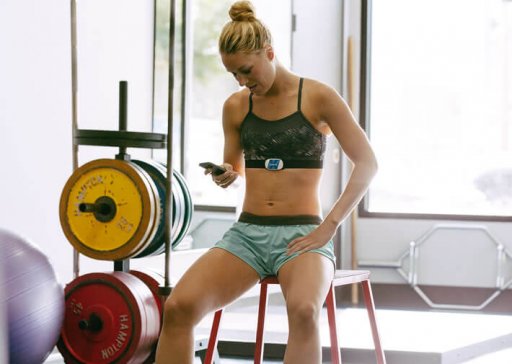
Chest straps are in fashion! This one is similar to the Polar H10 – a sensor strapped to your chest – but it was the first one we tested and left a lasting impression.
Source: www.wahoofitness.com
Similar to Polar’s device, Wahoo’s TICKR X Heart Rate monitor connects to a plethora of apps and smart devices with which it can sync its data. Unlike the Polar H10, the TICKR X stores up to 16 hours of workouts. It also tracks more than just heart rate parameters like real-time calorie burns, cycling cadence and running analytics (vertical oscillation, ground contact time). Those measured data subsequently allow you to analyze, through the companion app, your performance from various angles with interactive graphs detailing how you perform at your peak.
Packing a whopping 12 months of battery life, very light, user friendly and outputting highly detailed analysis, the TICKR X Heart Rate Monitor is the best chest strap wearable we’ve seen so far.
Amazfit Bip: To get started
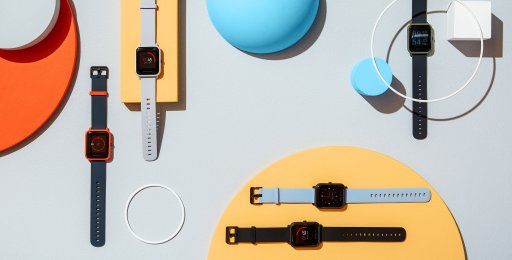
Coming from Xiaomi’s partner company is the Amazfit Bip. This device is also a smartwatch-fitness tracker hybrid but abides by a no-frills philosophy that just works.
Its color e-ink, always-on screen and up to a month of battery life reminded us of our dear Pebble. It will also allow you to read your phone’s notifications and incoming calls once connected but you can’t reply to them.
Using it for running is also very pleasant as the Amazfit Bip is extremely light and can be used without your phone as it will store your data on the device itself. Its built-in GPS and heart rate sensor are also very accurate and you can keep an eye on your other running parameters like pace, stride, uphill/downhill distance and steps in real-time.
It does not feature nice-to-have apps like coaching or meditation found on the Fitbit Ionic, nor does it store music, but the Bip presents itself as a great starting point to get into fitness tracking.
Bonus: it also analyzes your sleep quality, albeit without a smart alarm feature.
Source: https://en.amazfit.com/
That’s a wrap for our top health trackers for running. We hope this list will help you get your tech companion to tag along your next run. Whether it’s wrist or chest-worn, strap it up and hit that running track! With those detailed analysis collected, you will be able to tune your workouts to your own rhythm and be a more efficient runner. Oh, and treat yourself to that smoothie, you’ve deserved it!
Did we miss your favourite device? Let us know and we’ll give it a try next time we go for a run.
|
At The Medical Futurist, we are building a community for making a bold vision about the future of healthcare reality today. If you’d like to support this mission, we invite you to join The Medical Futurist Patreon Community. A community of empowered patients, future-oriented healthcare professionals, concerned health policymakers, sensible health tech developers, and enthusiastic medical students. If there were ever a time to join us, it is now. Every contribution, however big or small, powers our research and sustains our future. Click here to support The Medical Futurist from as little as $3 – it only takes a minute. Thank you. |