The Top 5 Practical Digital Health Technologies in the Fight Against COVID-19: An Infographic
We created an infographic to summarize all the digital health tech efforts against this pandemic.

Pranavsingh Dhunnoo
7 May 2020

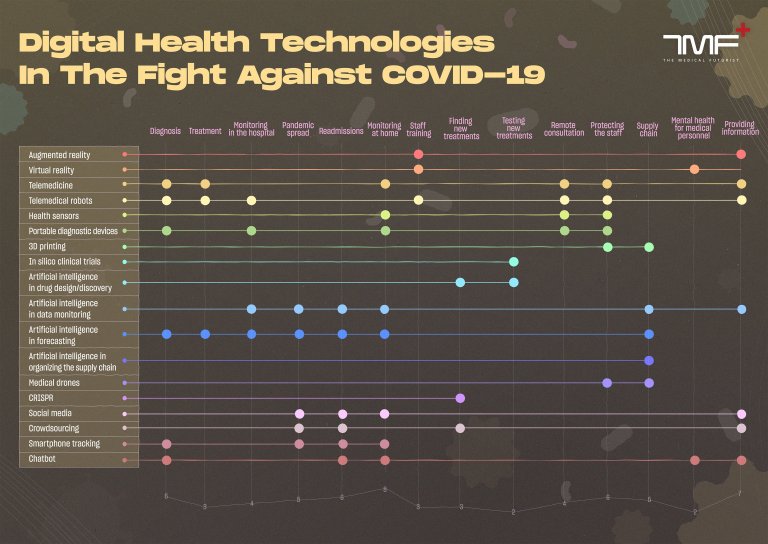
Despite COVID-19’s continuous spread, infecting millions worldwide, the practical applications of technology fighting this disease are also on the rise. We reported on how digital health came to the spotlight early on. As we learn more about the disease, we see digital health technologies increasingly getting adopted in this context. We created an infographic to summarize all the digital health tech efforts against this pandemic.
This will help caregivers and policymakers understand how we can rely on technologies in the fight against the novel coronavirus; and which sectors and phases of healthcare are aided by digital health.
In our infographic, listed on the Y-axis are the technologies making a significant impact in the fight against the pandemic. Indicated with dots on the X-axis are all the fields that the respective technology supports from diagnosis through staff training to information provision. Take a closer look by yourself below:
1. 3D-printing: when demand meets innovation
As the medical staff experience an unprecedented number of cases on a daily basis, healthcare institutions worldwide face a worrying shortfall of medical equipment. With lack of personal protective equipment (PPE) and even failing respirators, these shortages are putting at risk both healthcare personnel and patients. But as the saying goes, “necessity is the mother of invention”. To meet these demands in medical supplies, the maker community banded together with their 3D-printers. From garage hobbyists to established companies, people are 3D-printing equipment from face shields through swabs to ventilator parts.
Based in Spain, Coronavirus Makers open-sourced 3D-printing designs for masks and even mechanical ventilators for milder symptoms. Another group is printing parts that modify snorkeling masks into ventilator masks. TheFabLab startup in Italy 3D-printed valves connecting respirators to oxygen masks for hospitals due to a shortage in the supply chain. Formlabs is printing nasopharyngeal swabs required to collect samples for testing COVID-19. Another 3D-printing company, Materialise, released files allowing 3D-printer owners to make their hands-free add-on for common door handles so as to reduce transmission of the virus from inanimate surfaces.
2. Telemedicine: medical advice in home confinement
Given the virulence and ease of transmission of SARS-CoV-2, social distancing measures are a must. But what to do if you feel sick or are following an ongoing treatment? Should you risk going to the hospital and putting your health at further risk? As for hospitals, they are already overloaded with critical cases; isn’t there a way to reduce unnecessary visits?
For these issues, telemedicine is a ready-made option that saw a boom during the pandemic. Patients can consult doctors from the comfort of their homes regarding their symptoms or be monitored for other ailments. This reduces unnecessary hospital visits, allowing physicians to focus on urgent cases requiring prompt medical attention.
As a matter of fact, Amwell’s telemedicine app usage has gone up by 158% in the U.S. since January and appointments through PlushCare have increased by 70%. In comparison, only 1 in 10 U.S. patients used telemedicine services before the pandemic. Responding to the latter, Doctor on Demand and HeyDoctor added free coronavirus risk assessments to their telemedicine service. PlushCare and Everlywell further plan to release at-home COVID-19 testing kits. The pandemic gave telemedicine a much-needed boost and we might see it getting more and more adopted, even after the outbreak subsides.
3. Smartphone tracking: high tech contact tracing
As the novel coronavirus infects an exponential number of people, conventional tracing methods to identify those with the virus and to limit transmission aren’t enough. That’s why governments around the world have resorted to the use of technology for this purpose. By tracking smartphone users, authorities are able to identify who’s been where and subsequently alert those who might have been in proximity to someone with COVID-19.
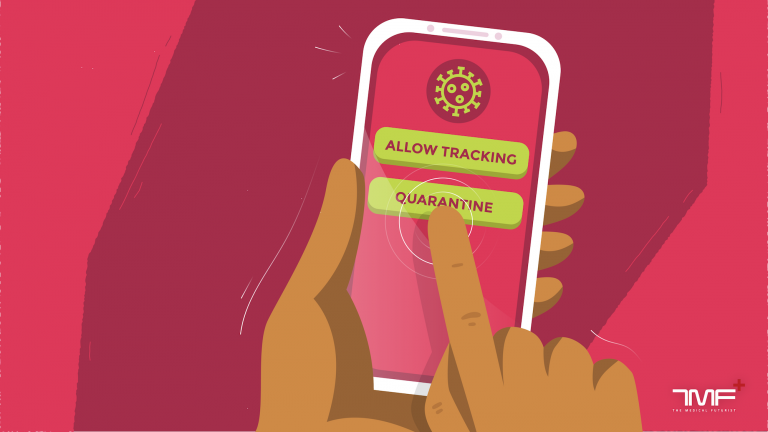
There are at least 10 countries employing such surveillance methods. Singapore’s opt-in app uses Bluetooth and wireless signals to trace users in proximity. South Korea’s successful management of the outbreak was in part thanks to tracking phone use, in addition to bank transactions and CCTV footage. Moscow launched a QR-based system to track the disease. Even the tech giants Apple and Google formed an unlikely partnership to include contact-tracing into their operating systems.
These intrusive methods blur the lines between civic duty and one’s privacy, somewhat eerily reminiscent to the dystopia George Orwell prophesied. Thankfully, there are ways to preserve privacy while allowing contact tracing that are in the works, as outlined in our recent article.
4. Artificial Intelligence: the smart aide against COVID-19
We believe that artificial intelligence (A.I.) will bring about the real era of the art of medicine. With the COVID-19 pandemic, the importance of this technology has been further accentuated. We reported early on how it helped epidemiologists issue the first warning of the new virus. The Zhongnan Hospital in China is using an A.I.-based system to screen lung CT scans and help doctors prioritize potential COVID-19 cases for further testing.
BarabasiLab is combining machine learning with network science to find new drug candidates against the virus. In less than 10 days since this endeavour, the team had a list of drugs for testing in human cell lines in an experimental lab.

Others are also finding uses for A.I. in better managing hospital resources during the pandemic. Qvetus developed such an algorithm. Researchers shared their findings on an A.I. framework to assist in prioritizing resources for critical cases.
While we must be cautious about unrealistic expectations of A.I.’s potential, we cannot ignore its help in such crises. As such, instead of fearing a Skynet-controlled future, we should see A. I. as an aide to augment the skills of healthcare professionals.
5. Virtual reality: from training to treatment of medical frontliners
Virtual reality (VR) might sound like a fancy tech that lets you play the latest Half-Life game, but the same tech has exciting applications in healthcare. In fact, according to a Harvard Business Review study, surgeons trained with VR showed a 230% improvement in their overall surgical performance as opposed to those trained with traditional methods. It’s also employed to develop empathy among medical students by putting them in different simulations to better understand patients. This can help in better addressing issues that COVID-19 patients are facing like isolation or stigma.
One of the unfortunate consequences that we will witness after the pandemic is the unprecedented psychologic toll that working in the frontlines will take on the medical staff. Witnessing scores of patients succumb to the illness while working in extreme conditions will lead to symptoms of post-traumatic stress disorder (PTSD) among the frontliners.
Thankfully, medical virtual reality is already a therapeutic option in these cases, with positive results. Through exposure therapy in virtual worlds, VR can help ease those PTSD symptoms.

These are some of the many digital health technologies being used in the fight against COVID-19. You can take a closer look at the infographic for a broader picture of the practical applications of other technologies. As mentioned above, we look forward to receiving your feedback so we can keep this infographic updated. Feel free to share it with anyone who might find it useful!