The Top 100 Digital Health Companies: An Infographic
The Medical Futurist decided to compile the 100 most promising digital health companies in an easy-to-understand infographic.

9 min | · Updated
According to some estimates, the global digital health market is expected to exceed $504.4 billion by 2025; that’s a nearly six-fold increase from its $86.4 billion 2018 valuation. The COVID-19 pandemic has accelerated both the adoption of and the innovation in digital health and will propel this growth in the coming years. The current situation led to the widespread adoption of telemedicine; people are using digital health apps to stay physically and mentally healthy while indoors; governments are promoting contact tracing apps to limit the virus’ spread.
This increased adoption of digital health solutions entices many startups to branch into digital health. Already in only a small (but significant) fraction of the digital health market, where startups use artificial intelligence in drug discovery, we find over 230 of such companies – and more keep popping up. But keeping track of those is hard. And to keep track of the promising companies in the digital health field as a whole is even harder.
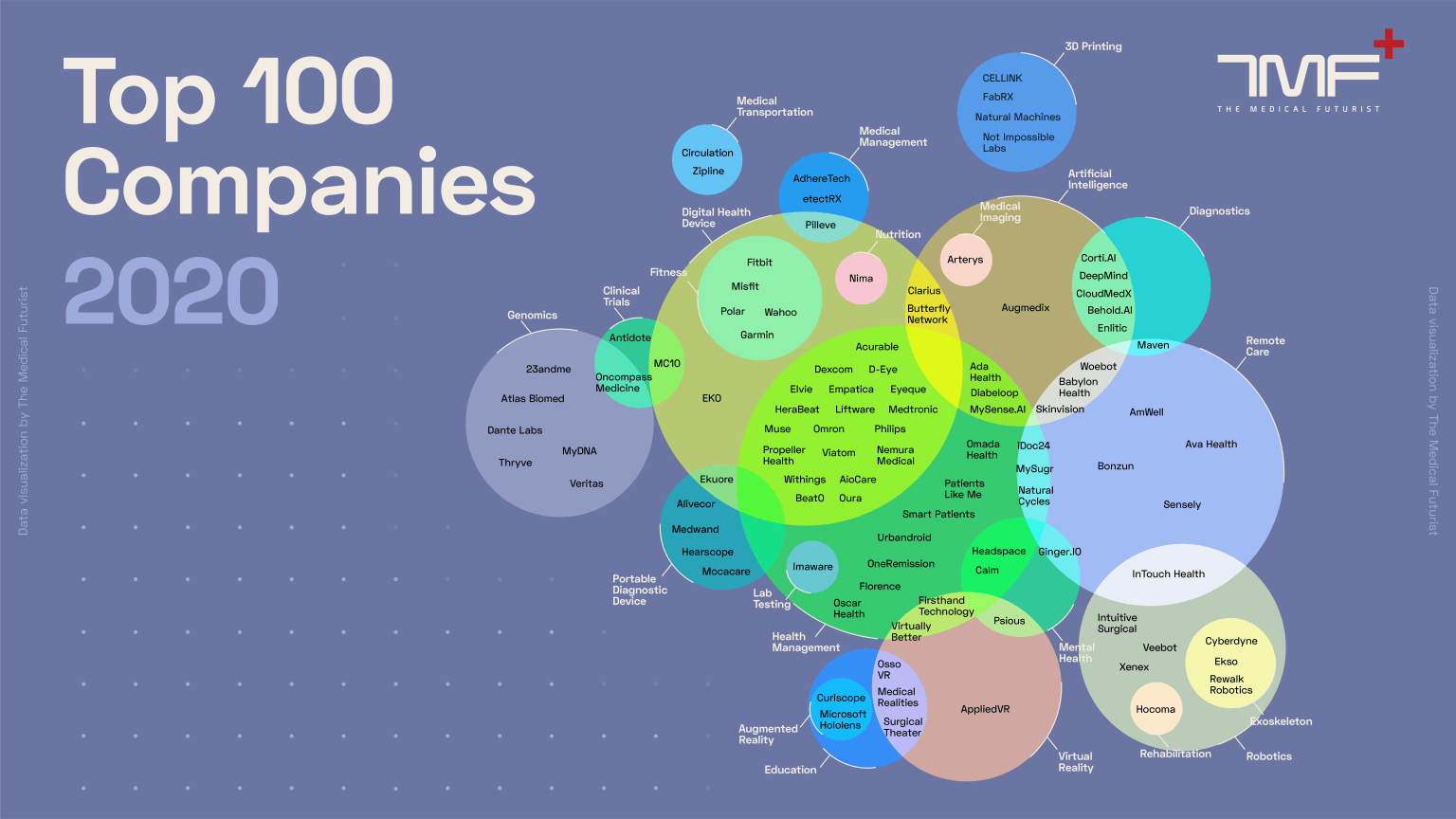
As such, The Medical Futurist decided to compile the 100 most promising digital health companies in an easy-to-understand infographic, which you can see below:
However, such a list can only be subjective by nature. Below, we discuss our selection criteria and follow up with three examples of companies that feature in this list.
Our selection criteria
Firstly, we must stress that we do not accept any sponsorship or financial support. We do not have any interest or connection in any of the companies listed in the infographic either. Additionally, grouping is not done in any particular order. Rather, companies are grouped according to the technological trend they belong to the most.
Our analyses are based on discussions we have with actors across the digital health landscape. From startups through government authorities to prominent innovators, we determined the major features that a company venturing into digital health must possess in order to hold potential in the field. The key values we suggest are as follows:
- Mindset for innovation
- Truly disruptive technology
- Viable business model
- Clear dedication to digital health

With these values in mind, we select those companies that fulfil these criteria. Over the years we came across thousands of digital health companies that propose innovative solutions for pressing issues within the healthcare sector. However, not many hold up their end of their bargain in this volatile sector. Several disappear as fast as they show up, while others refocus their business.
There’s also the issue of hyping one’s own technology so as to drive investments but only to prove that they were scams. This is notoriously exemplified by Elizabeth Holmes and the Theranos scam. And such cautionary tales jeopardise otherwise promising tech, as we explored in a recent article. If expectations are lowered and the CEOs are more truthful, these technologies are not just PR-hype. As such, it’s quite challenging to stay ahead of the buzzwords and hype that emanate from every direction; hence we came with our recommendations for the top 100 digital health companies to look out for.
Let’s take three examples
Now that we’ve discussed our selection criteria, let’s take a look at 3 of the companies that feature in our infographic. We’ll see how studies back Alivecor’s technology to make it reliable and trustworthy. We’ll also come across FabRx, a company that innovates in its field with sci-fi-like technology. Finally we’ll see how a Tech Giant with ample resources is bringing A.I. to the practice of healthcare through clinical collaborations
1. Alivecor: studies backing a technology
Alivecor specialises in handheld, connected ECG devices that fit in the user’s pocket. Long gone are the printed ECG readings requiring bulky carts. Alivecor’s KardiaMobile line of devices offer clinical-grade, FDA-approved ECG monitoring to patients anywhere as long as they have their phone to visualise the readings.

In fact, the company produced the first digital health device that Dr. Meskó saw and used and it represents the evolution of digital health. But it’s not nostalgia that gets Alivecor in this list. The company’s co-founder, David Albert, started experimenting with handheld, wireless ECG devices in the late 90s. The company he co-founded now produces affordable ECG devices that democratise access to care.
Additionally, Alivecor boasts 85 peer-reviewed clinical researches under its belt. This means that not only is the company dedicated to its innovative vision, but its technology is backed by studies.
2. FabRx: innovating the field with a sci-fi-like technology
Integrating disruptive technologies in a tightly-controlled industry as the pharmaceutical one is no easy task. It might even be more so with a technology like 3D-printed medication that upends the traditional manufacturing and distribution chains altogether. But U.K.-based FabRx is up for the challenge.
The company is at the forefront of innovation, pushing their technology’s limits further and backing it up with research. In 2019, FabRx’s directors participated in a study that successfully 3D-printed 6 different drugs into a multilayered polypill, and concluded that it can “improve personalisation for patients.” These polypills are made to contain several drugs with the aim to help patients adhere to their regimen and better manage their medications. Such a single pill with multiple medications can prove to be a boon for patients suffering from debilitating conditions like HIV and tuberculosis and need to concurrently manage multiple medications.
Again in 2019, they completed a clinical study using their 3D-printed medicines to treat a rare children’s metabolic disorder. Their technology enabled the on demand production of tailored medicine dosage. Additionally, they could produce pills of various dosages, colours and flavours to evaluate acceptance and therapy control among participants.
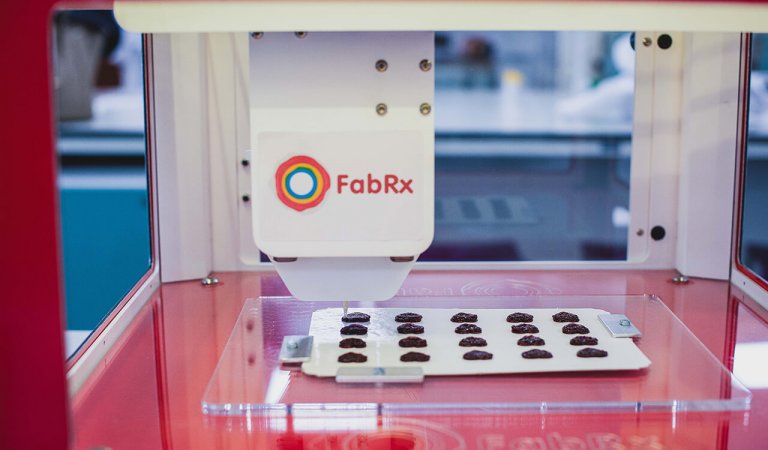
In April 2020, FabRx released M3DIMAKER, or the first pharmaceutical 3D printer to manufacture personalised medicines. Their device allows the user to print according to their manufacturing needs, which in some cases means one-month’s medication (28 pills) in around 8 minutes! “I truly believe that we are one step closer to personalised medicine thanks to the M3DIMAKER,” said Dr. Alvaro Goyanes, Director of Development at FabRx.
3. DeepMind: bringing A.I. to the practice of healthcare through clinical collaborations
From enhancing prosthetics through eliminating alarm fatigue to reducing wait times, the applications of artificial intelligence in the healthcare setting keep expanding. To bring these applications into the practice of healthcare, Google has the resources In 2019, the health team of DeepMind, Google’s A.I. branch, merged with Google Health so as to “build products that support care teams and improve patient outcomes.”
Through clinical collaborations, Google Health is tapping into A.I.’s potential to help in enhancing colonoscopy screenings, predicting patient outcomes, averting blindness, and more.

It’s also continuously forging ahead with novel A.I.-based solutions. In 2019, they published their findings of how A.I. can predict acute kidney injury 48 hours in advance and help prevent patient deterioration. In early 2020, the A.I. branch created an algorithm for breast cancer diagnosis. The A.I. even outperformed all human radiologists it was pitted against, on average by 11.5% on pre-selected datasets.
The company is showing no signs of slowing down in the medical A.I. sector and we don’t expect it to. The global market size for artificial intelligence in healthcare is expected to increase its $1 billion 2016 value to more than $28 billion in 2025. With its A.I. expertise, Google certainly plans to remain a major player in this market.
97 more to go
If the glimpse that we gave you on those 3 companies piqued your interest, then you’ll be happy to know that we have more! 97 more to be exact. Find them all in the list below, grouped according to their relevant fields:
| Company name | Primary field | Secondary field |
| CELLINK | 3D printing | |
| FabRX | 3D printing | |
| Natural Machines | 3D printing | |
| Not Impossible Labs | 3D printing | |
| CloudMedX | Artificial intelligence | Diagnostics |
| Corti.AI | Artificial intelligence | Diagnostics |
| DeepMind | Artificial intelligence | Diagnostics |
| Enlitic | Artificial intelligence | Diagnostics |
| Behold.AI | Artificial intelligence | Diagnostics |
| Ada Health | Artificial intelligence | Health management |
| MySense.AI | Artificial intelligence | Health management |
| Arterys | Artificial intelligence | Medical imaging |
| Augmedix | Artificial intelligence | |
| Curiscope | Augmented reality | Education |
| Microsoft Hololens | Augmented reality | Education |
| Antidote | Clinical trials | |
| Butterfly Network | Digital health device | Artificial intelligence |
| Clarius | Digital health device | Artificial intelligence |
| MC10 | Digital health device | Clinical trials |
| Fitbit | Digital health device | Fitness |
| Misfit | Digital health device | Fitness |
| Wahoo | Digital health device | Fitness |
| Polar | Digital health device | Fitness |
| Garmin | Digital health device | Fitness |
| Acurable | Digital health device | Health management |
| Dexcom | Digital health device | Health management |
| D-Eye | Digital health device | Health management |
| Elvie | Digital health device | Health management |
| Empatica | Digital health device | Health management |
| Eyeque | Digital health device | Health management |
| HeraBeat | Digital health device | Health management |
| Liftware | Digital health device | Health management |
| Medtronic | Digital health device | Health management |
| Muse | Digital health device | Health management |
| Omron | Digital health device | Health management |
| Philips | Digital health device | Health management |
| Propeller Health | Digital health device | Health management |
| Viatom | Digital health device | Health management |
| Withings | Digital health device | Health management |
| AioCare | Digital health device | Health management |
| Nemura Medical | Digital health device | Health management |
| BeatO | Digital health device | Health management |
| Oura | Digital health device | Health management |
| Pilleve | Digital health device | Medication management |
| Nima | Digital health device | Nutrition |
| Ekuore | Digital health device | Portable diagnostic device |
| EKO | Digital health device | |
| Oncompass Medicine | Genomics | Clinical trials |
| 23andme | Genomics | |
| Atlas Biomed | Genomics | |
| Dante Labs | Genomics | |
| MyDNA | Genomics | |
| Thryve | Genomics | |
| Veritas | Genomics | |
| Diabeloop | Health management | Artificial intelligence |
| Imaware | Health management | Lab testing |
| Headspace | Health management | Mental health |
| Calm | Health management | Mental health |
| Omada Health | Health management | |
| Patients Like Me | Health management | |
| Smart Patients | Health management | |
| Urbandroid | Health management | |
| OneRemission | Health management | |
| Florence | Health management | |
| Oscar Health | Health management | |
| Circulation | Medical transportation | |
| Zipline | Medical transportation | |
| AdhereTech | Medication management | |
| etectRX | Medication management | |
| Alivecor | Portable diagnostic device | Health management |
| Medwand | Portable diagnostic device | |
| Hearscope | Portable diagnostic device | |
| Mocacare | Portable diagnostic device | |
| Babylon Health | Remote care | Artificial intelligence |
| Skinvision | Remote care | Artificial intelligence |
| Woebot | Remote care | Artificial intelligence |
| Maven | Remote care | Diagnostics |
| iDoc24 | Remote care | Health management |
| MySugr | Remote care | Health management |
| Natural Cycles | Remote care | Health management |
| Ginger.IO | Remote care | Mental health |
| INTouch Health | Remote care | Robotics |
| AmWell | Remote care | |
| Ava Health | Remote care | |
| Bonzun | Remote care | |
| Sensely | Remote care | |
| Cyberdyne | Robotics | Exoskeleton |
| Ekso | Robotics | Exoskeleton |
| Rewalk Robotics | Robotics | Exoskeleton |
| Hocoma | Robotics | Rehabilitation |
| Intuitive Surgical | Robotics | |
| Veebot | Robotics | |
| Xenex | Robotics | |
| Medical Realities | Virtual reality | Education |
| Osso VR | Virtual reality | Education |
| Surgical Theater | Virtual reality | Education |
| Firsthand Technology | Virtual reality | Health management |
| Virtually Better | Virtual reality | Health management |
| Psious | Virtual reality | Mental health |
| AppliedVR | Virtual reality |