The Rise Of Digital Health Coaches, Health Navigators, And Medical Concierges
In this article, we explore some of the new roles and professions that have started to emerge in our current digital health era.

5 min | · Updated
Key Takeaways
To support the needs of patients in the digital health era, new roles and professions have started to emerge.
We explore some of these in this article and take a look at what to expect in the future.
Just a few years ago, many of today’s most sought-after digital skills didn’t even exist. With the rapid rise of new technologies like generative AI, people are now learning and developing new skills in order to work alongside such tools more effectively. Organisations are encouraging their employees to develop such skills, and new roles are emerging that didn’t seem relevant — let alone possible — not so long ago.
In a similar vein, healthcare roles and skillsets are evolving as we progress through the digital health era. This is because navigating healthcare has become more complex than ever; which in turn created the need for new roles and professions that could help address the evolving needs of patients in this era.
The rise of new professions lies in their need from patients needs, rather than the new skills physicians need to learn. In this article, we explore some of the new roles and professions that have started to emerge in our current digital health era.
1. Digital health coaches
Coaching is a common profession in the fitness industry where individuals pair up with a fitness coach and work together to reach a desired fitness goal. This concept has expanded to the broader healthcare landscape, which now includes digital health coaches.
Digital health coaching leverages digital tools to provide personalised insights and guidance in view of improving an individual’s health. This can involve tailored diets based on a specific condition, workout plans to improve their physical health or counselling to improve their mental well-being.

Several companies provide access to digital health coaches such as Headspace, Novi and Liva. Their services are usually accessed through mobile apps with additional insights from wearables. This approach, in addition to providing personalised insights, provides accessible and continuous healthcare support, leveraging the advantages of digital health solutions that were not possible a few decades earlier.
Experts even think that digital health coaching could be ideal to help individuals address lower-level challenges to improve their overall health. “It’s a great place to start when you know you need some help, but you might not have an official diagnosis of, say, depression or anxiety,” said Dr. Vaile Wright, a psychologist and senior director of health care innovation for the American Psychological Association.
2. Digital patient navigators
Originating from the USA, patient navigators help patients navigate through the complex healthcare system. This role can be adopted by both trained healthcare professionals and laypersons alike. Their assistance has been shown to improve follow-up rates of medical procedures and improve care coordination for chronic conditions.
With the increase in digitised healthcare services, patient navigators can help improve access to such services by taking into consideration varying levels of technological literacy. This can address health equity issues, while encouraging patients to become more involved in their health management.
To help practices make the most of digital tools, devices, and data, the American Psychiatric Association offers the Digital Health Navigator Training. It helps patient navigators develop and refine specific digital literacy skills in order to better assist patients along their digital health journey.
3. Concierge doctors
In the concierge medicine model, patients pay an annual membership fee to have an enhanced and more exclusive care experience. Concierge doctors consult fewer patients but spend more time with them individually. Patients have more direct access to their doctors, better networks of specialists and quicker appointments, often on the same day or next day.
Such services provide peace of mind to patients, while doctors have less workload and can dedicate more attention to their patients. For such reasons, concierge medicine has been on the rise. “You get access. You get time with your physician,” said Erin Sullivan, an associate professor of health care administration at Suffolk’s Sawyer Business School. “The health system is a very complex place to navigate.”
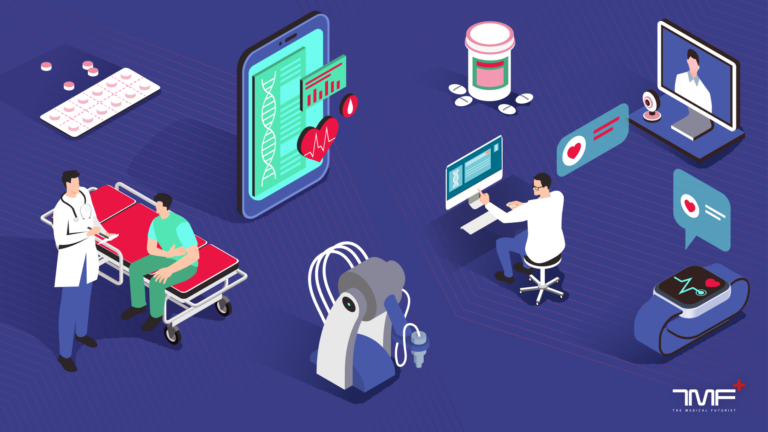
Aelan, PartnerMD and Laya Healthcare are some of the many companies that offer concierge medicine services. However, they don’t limit themselves to the “skip the line” approach to healthcare.
In the case of Aelan, the concierge doctors provide longevity coaching and lifestyle consultation for a personalised healthcare experience. Such offerings can better support the empowered patient, who has become the cornerstone of the digital health era.
What other professions and roles should we expect in the future?
While we explored 3 new rising roles and professions brought about by new paradigms in the digital health age, we can expect many more in the future. From bioprinted organ designers to virtual reality surgery planners, a conucopia of futuristic professions await in the healthcare horizon.
However, there is the need for a layer of caution with the rise of such new roles. Just like with the trend of adding “prompt engineer” to embellish one’s LinkedIn profile without necessarily having said skill, anyone can call themselves a digital health coach or patient navigator as they are not licensed medical professions.
Experts warn that patients should be cautious of newly minted roles by those with few or no credentials aiming to build a business or social media following. In other cases such as with concierge medical services, the shortage of providerscc ooand inequality of care access due to high costs can be exacerbated.
There is thus a need for performing some due diligence before seeking the services from such new digital health professions. At the same time, it indicates the need for more formal recognition among the medical community as we are bound to find new roles and professions emerge to address healthcare needs in the digital health era.
Written by Dr. Bertalan Meskó & Dr. Pranavsingh Dhunnoo