The Promise of the Medical Tricorder? Meet the Withings BeamO
Think of the medical tricorder from Star Trek—a handheld marvel that turns uncertainty into clarity with a simple scan.

5 min | · Updated
Key Takeaways
For decades, we’ve imagined a future where a small device can scan our body and deliver instant insights about our health.
We’re witnessing the gradual shift from clinic-based testing to home-based diagnostics. BeamO is built for that future.
For decades, we’ve imagined a future where a small device can scan our body and deliver instant insights about our health. Think of the medical tricorder from Star Trek—a handheld marvel that turns uncertainty into clarity with a simple scan. While we’re not quite there yet, one new gadget brings us surprisingly close.
Enter the Withings BeamO: a sleek, pocket-sized device that might just be the most impressive consumer health innovation of the year.
Disclaimer: As always, The Medical Futurist is not affiliated with the company, the review is not sponsored, and it reflects my opinion. Companies/service providers first read our reviews after publication.
What Is BeamO?
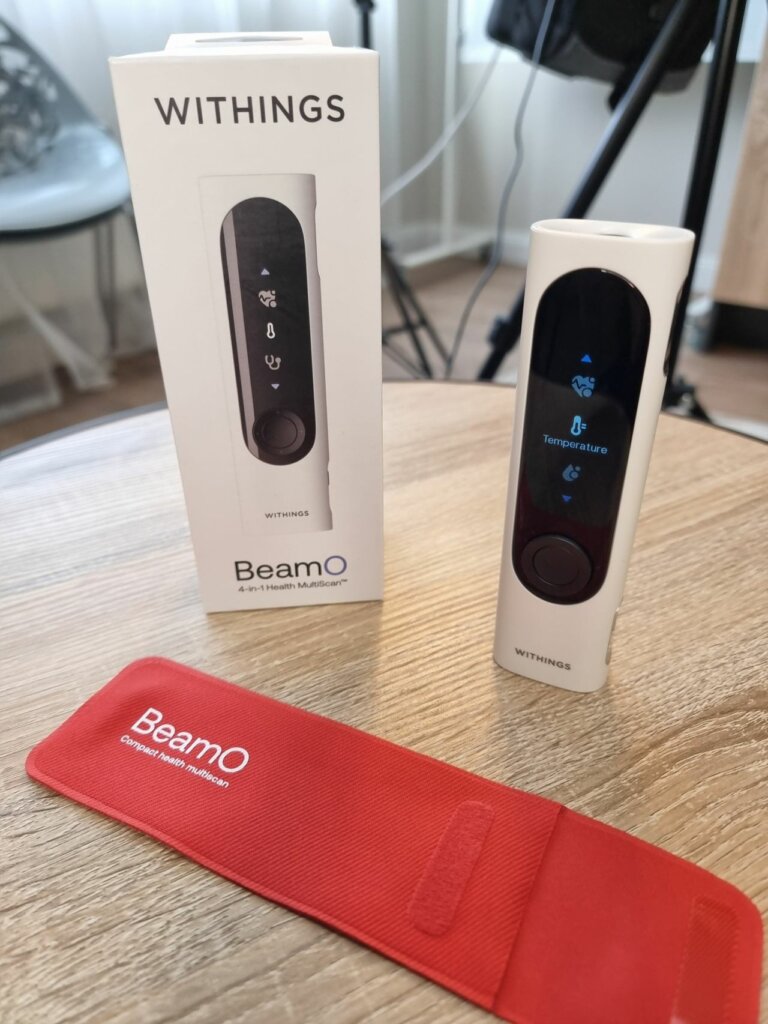
The BeamO is a 4-in-1 health tracking device designed for everyday use at home, with family, or during teleconsultations. It combines four core tools in one:
- Infrared thermometer for quick temperature readings
- Two-channel ECG with heart rate and atrial fibrillation (AFib) detection
- Pulse oximeter for measuring blood oxygen levels
- Digital stethoscope for recording heart and lung sounds
All of this is packed into a device about the size of a chocolate bar, styled more like a remote control than a medical tool. And yet, it represents a major step forward in at-home diagnostics.
Why It Matters
Every parent knows the anxiety of a child’s sudden fever. Every adult has faced the uncertainty of a lingering cough or chest discomfort. BeamO offers something powerful in those moments: clarity.
In just seconds, you can get reliable data on your temperature, heart rhythm, blood oxygen, and even your lung sounds. This isn’t just about convenience—it’s about confidence when making health decisions between check-ups or in the middle of the night.
We’re witnessing the gradual shift from clinic-based testing to home-based diagnostics. BeamO is built for that future. It’s not just a gadget—it’s a step toward empowering patients in their own homes.
The Tech Behind BeamO
Under the hood, BeamO uses four integrated sensor systems:
- Infrared thermography: to read forehead temperature quickly and contactlessly
- Photoplethysmography (PPG): for measuring heart rate and blood oxygen via the fingertip
- ECG sensors
- Digital auscultation: capturing and recording body sounds, such as heartbeat or breathing
- Bluetooth connectivity: to sync with the Withings Health Mate app for tracking and visualization
This seamless integration of sensors makes the device user-friendly and surprisingly powerful for non-clinical environments.
How It Works
The beauty of BeamO lies in its simplicity. Here’s how it works:
Temperature: Tap the device to your forehead and it gives an instant reading.
Heart Rate & Oximetry: Place your finger in the designated groove and it measures both metrics.
Heart & Lung Sounds: Gently press BeamO on your chest or back to capture internal sounds—just like a digital stethoscope.
Data Sync: All results are transmitted to your smartphone via the Health Mate app, where you can track trends, view past data, or share results with a clinician.
You can also create profiles for multiple family members, making it a versatile household tool.
Pricing
The BeamO is expected to retail at €250 / $250 in Europe and the US. That might sound steep, but considering it consolidates four high-quality medical tools into one device, it’s a reasonable investment—especially for families, caregivers, or those managing chronic conditions.
Limitations and Caveats
There are some caveats worth noting:
Not yet a certified medical device in the EU or US, which means it cannot replace clinical diagnosis or be used in regulated medical workflows.
The digital stethoscope is promising, but its usefulness is limited unless paired with AI analysis or professional review.
Like all smart health devices, factors like battery life, data privacy, and software compatibility will become more important over time.
Pros and Cons at a Glance
Pros:
- Four vital measurements in one compact device
- Modern, ergonomic design
- Fast and intuitive interface
- Family-profile support
- Seamless app integration
Cons:
- Lacks regulatory approval (for now)
- Limited functionality of the stethoscope without AI/doctor input
- Premium price for casual users
- Requires a stable internet connection for syncing
Final Thoughts
We’ve seen companies attempt this before—devices that promise to be the “tricorder of the future.” Most have struggled to deliver on that promise.
But Withings might be on to something with BeamO. It’s beautifully designed, packed with serious tech, and built with real use cases in mind. No gimmicks, just smart engineering for home health monitoring.
No, it’s not the final version of the medical tricorder. But it’s the best attempt we’ve seen so far—and perhaps the first to stick.
The future of healthcare is becoming more decentralized, data-driven, and personalized. Tools like the Withings BeamO hint at a time when a quick health check will be as easy as checking your weather app. As we await clinical validation and broader adoption, one thing is clear: the home is becoming the new frontline of healthcare.