The eICU Is Turning Night Into Day Through Telemedicine
Physicians and nurses deliver care from the other side of the Earth by working in daylight hours in Australia covering night shifts in Atlanta with the help of telemedicine. That’s the core concept of how night intensive care in the Emory eICU Center is carried out in partnership with Emory Healthcare, the Royal Perth Hospital in Australia and health technology company, Philips. Emory is the very first who’s bringing its staff to the other side of the globe for better patient care and more satisfied staff. The vision to turn “night into day” was co-developed by Timothy Buchman, Ph.D., MD, founding director of the Emory Critical Care Center. We asked him about their experiences, challenges and future expectations.

7 min | · Updated
|
THIS ARTICLE HAS NOT BEEN UPDATED SINCE 2019. THE INFORMATION SHARED IN THE ARTICLE WAS ACCURATE AT THE TIME OF ITS PUBLICATION, BUT IT MAY BE OUT OF DATE NOW. BROWSE OUR LATEST ARTICLES HERE |
Physicians and nurses deliver care from the other side of the Earth by working in daylight hours in Australia covering night shifts in Atlanta with the help of telemedicine. That’s the core concept of how night intensive care in the Emory eICU Center is carried out in partnership with Emory Healthcare, the Royal Perth Hospital in Australia and health technology company, Philips. Emory is the very first who’s bringing its staff to the other side of the globe for better patient care and more satisfied staff. The vision to turn “night into day” was co-developed by Timothy Buchman, Ph.D., MD, founding director of the Emory Critical Care Center. We asked him about their experiences, challenges and future expectations.
When and how was the concept of the eICU born?
The implementation of telemedicine into intensive care units, the so-called tele-ICU has a Philips-branded product, that’s the remote electronic intensive care unit, the eICU. The tele-ICU was first an experiment in Cleveland Ohio in the 1970s, relying on closed-circuit TV. With the advent of the internet and personal computers, Michael Breslow and Brian Rosenfeld of Johns Hopkins Hospital in Baltimore proposed, designed, and tested a system that combined an electronic medical record and two-way audio-video communication embedded in a client-server architecture running TCP/IP. They set up a company, VISICU, to sell the architecture. VISICU was subsequently acquired by Philips and rebranded.
Their original impetus was that Johns Hopkins Hospital took on more responsibility for a hospital located about 6 km away, currently known as Hopkins Bayview. There was then – as there is now – a shortage of qualified intensive care doctors. The idea was to have doctors in two places at once. Since then, the concept has been working well and spreading around.
How would you explain the eICU in a nutshell?
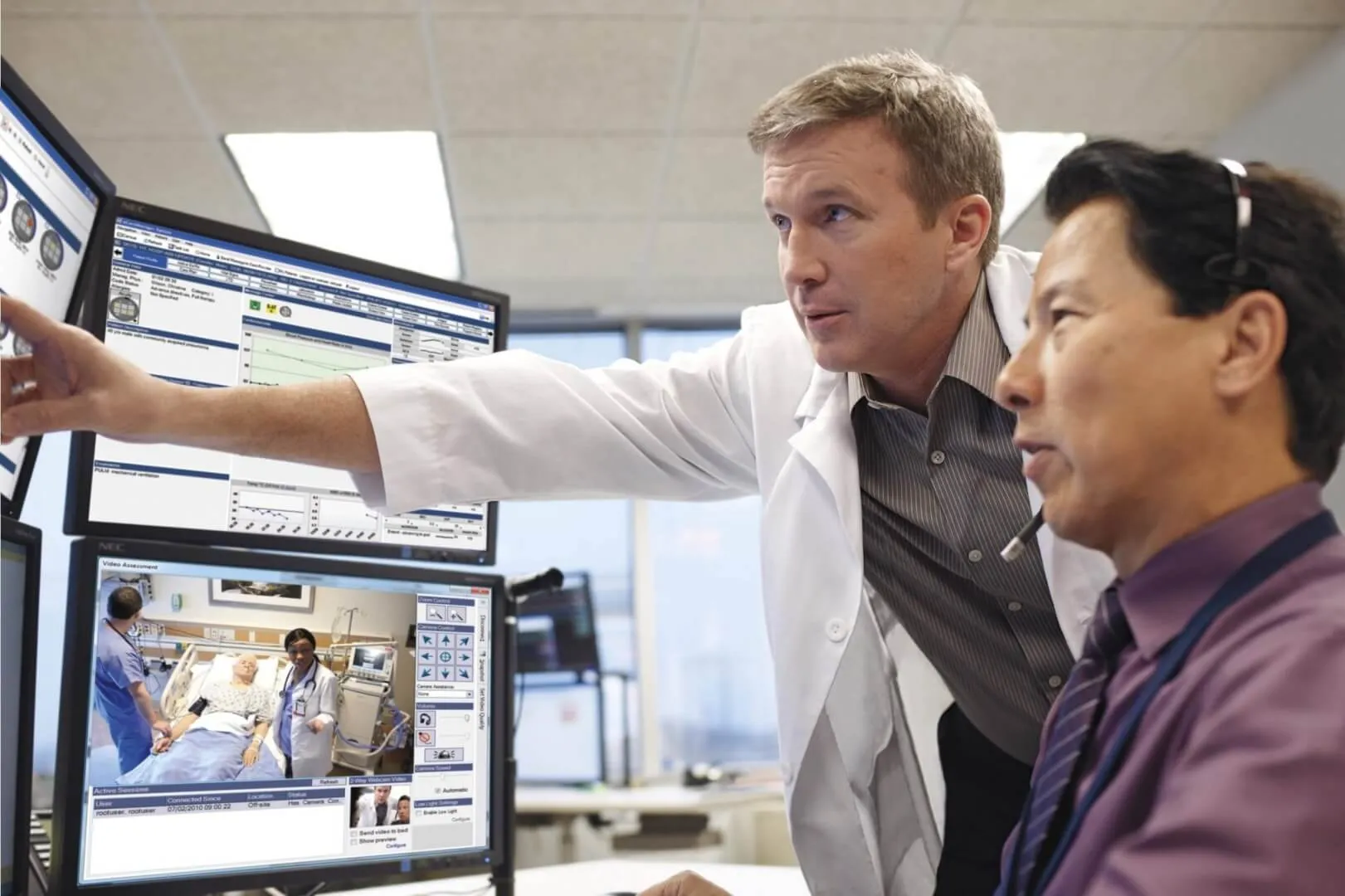
The basic service model is a hub-and-spoke model, with the hub housing teams of medical professionals and their workstations, while the spokes go out to client ICUs. There are currently approximately 50 eICU hubs in the US and several international ones. At the moment, we are about to bring on two more hospitals located in rural areas that are welcoming our expertise and access to experienced staff, especially during unsocial hours such as nights, weekends or holidays.
Each hub-and-spoke operates independently and each is staffed somewhat differently depending on perceived needs and services offered. The most typical model and one that we have at Emory has nurses performing surveillance day-and-night and physician support either 24/7 or (as in the Emory model) during unsocial hours. The idea is to complement and support (but not supplant) the teams at the bedside.
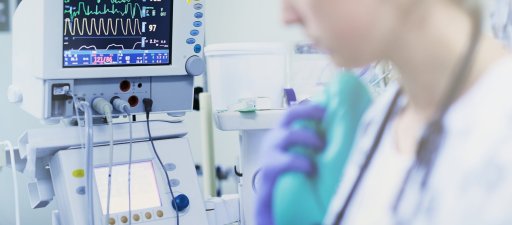
The eICU can be seen as a second layer of care. They are not only alarming bedside staff in cases of emergencies, but depending on resources immediately available, they perform evaluations, order and interpret tests (laboratory, radiographs, ECG, etc), order medications, consultations and so on. This allows for dynamic task reallocation. Local circumstances (such as an emergency in one room) can require rapid reallocation of tasks to ensure that the entire ICU – and hospital- maintain the highest levels of performance.
It quickly became apparent that the surveillance model would engage and propel nurses to the forefront of this second layer of care. The eICU hub staff typically includes specially trained ICU nurses with decades of bedside experience in the ICU. Their experience and insight are especially helpful to junior nurses.
What are the main benefits of the eICU for patients and for doctors?
The main benefit is “right care, right now, every patient, every time”. This is a benefit for patients, families, and the entire medical team. It allows for expertise to be taken to the patient whenever needed, leveraging expensive and scarce experienced personnel. As you can imagine, this is even more important as populations age and increasingly require ICU assistance. At present, about 16 percent of adult ICU beds in the US are covered by tele-ICU services, nearly all of those by Philips eICU.
On the other hand, by placing providers in a time zone with a 12-hour time difference, for example, the ICU staff comes to work in Perth, Australia at 7 a.m. but covers the night shift remotely in Emory Healthcare ICUs beginning at 7 p.m, the time change transforms the experience for health care providers working at night. It reverses two of the largest drawbacks of critical care night staffing: a shortage of senior clinicians willing to cover the night shifts and the toll that working nights takes on caregivers and their attention levels. With the eICUs, the enthusiasm of clinicians is palpably higher. Every clinician who has spent time in Australia on an eICU rotation wants to go back for additional ones.

Do you see any challenges in setting up eICUs around the world?
The challenges are primarily related to cost and the current architecture that relies (TCP/IP) on T1 or fiber connections. There is a cloud implementation on the horizon that will help, but the cost of the in-room systems, the hardware, and the software/licenses is still high. However, the marketplace is evolving, and there are competitors emerging to challenge the Philips model.
How did doctors react to the concept of the eICU, and what were their first experiences during the implementation?
Intensive care doctors embraced it due to the perceived support. Most resistance came from bedside nurses who thought it was a “big brother” system intended to review their care. Much effort goes into explaining the “why” of the system and to reassure especially nurses that the eICU is there to help. Usually, those concerns fade with the first disaster averted because the eICU noticed a problem that otherwise would have escaped attention. Consultants visiting the ICU are sometimes a bit taken aback by the fact that the intensivist is remote, but again that fades quickly. The most enthusiastic support comes from those who try out serving in the hub – they see the care process in a completely new light.
Technology can be a huge enabler, but it might cause issues as well. Did you experience any difficulty in setting up and running the eICU?
The systems are surprisingly stable. There are always occasional problems with “upgrades” and new hardware such as new in-room systems, but the computer world has become much more adept at “plug and play”, which spills over into stability in even such advanced systems as an eICU.
Where do you see gaps in the current care process that technology could bridge but we don’t have the right tools yet?
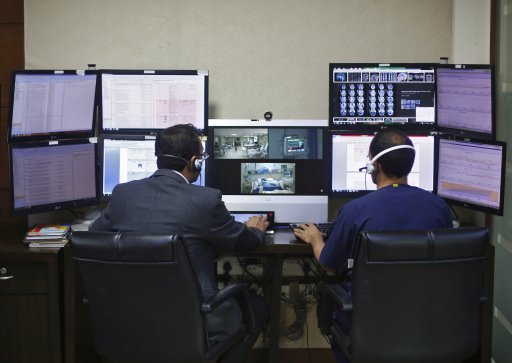
I think that the eICU will become key to the introduction and use of artificial intelligence in critical care. Bedside staff is overwhelmed with alerts and decisions that pull them away from tasks that can only be done by touching the patient. Implementing AI at this second level of care promotes collaboration among professionals and a more rational task allocation than is possible with a particular nurse or doctor at the bedside “doing everything”. Having the eICU hub staff constantly monitoring patients for deviation away from the desired/expected trajectory and having AI delivering computed decision support tools based on detailed experience is likely to improve outcomes, improve patient experience, lower costs, and add to provider joy.
|
At The Medical Futurist, we are building a community for making a bold vision about the future of healthcare reality today. If you’d like to support this mission, we invite you to join The Medical Futurist Patreon Community. A community of empowered patients, future-oriented healthcare professionals, concerned health policymakers, sensible health tech developers, and enthusiastic medical students. If there were ever a time to join us, it is now. Every contribution, however big or small, powers our research and sustains our future. Click here to support The Medical Futurist from as little as $3 – it only takes a minute. Thank you. |