Tech Goes Berserk: Murphy’s Day With Failing Medical Technology
Whatever can go wrong, will. Murphy’s law. As it can happen anytime, anywhere to anything and anyone, why would new technologies mean an exception? We imagined in a short story how would a day with constantly failing technology look in the future. Fasten your seat belts, doomsday is coming!

7 min | · Updated

|
THIS ARTICLE HAS NOT BEEN UPDATED SINCE 2019. THE INFORMATION SHARED IN THE ARTICLE WAS ACCURATE AT THE TIME OF ITS PUBLICATION, BUT IT MAY BE OUT OF DATE NOW. BROWSE OUR LATEST ARTICLES HERE |
Whatever can go wrong, will. Murphy’s law. As it can happen anytime, anywhere to anything and anyone, why would new technologies mean an exception? We imagined in a short story how a day with constantly failing technology would look in the future. Fasten your seat belts, doomsday is coming!
The.Worst.Morning.Ever.
Murphy slowly opened his eyes and looked around: he could hear noises from the street and his dog barking very loudly in front of the door. There was one thing he could absolutely not hear: his smart sleep alarm. When he looked down at his smartphone lying next to his bed, it was stone-dead. He jumped out of bed and tried to search for what time it is. Unfortunately, there was absolutely no electricity due to a blackout, so he couldn’t find any working electronic device with a time screen, but he suspected it should be late. Very late.
He ran out of his apartment without paying attention to the fact that he was only wearing underpants. He scared the neighbor, Mrs. Mulligan, to death but she told him that it’s way after 10 am. Murphy was supersonically late from work. Luckily he didn’t have any big presentation or meeting going on. Or at least he thought – he couldn’t see his calendar either as both his computer and his phone was dead. He could find only one power bank – but he forgot to charge it fully, so it was only enough for one phone call with his boss. The call went terribly as she had called him several times about the surprise visit of investors. They expected to see Murphy.
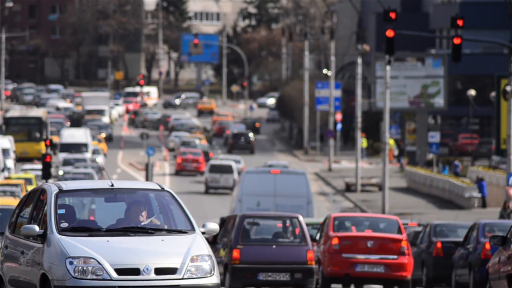
Now, facing work trouble and having a half-dead phone, our poor protagonist jumps into his self-driving car. After the morning’s tale of woes, Murphy hopes for the worst – but the car engine starts, they are on the road soon with some wild music on. As he screams “On Fire” to the windscreen, the car suddenly stops. To download the latest updates. In the middle of traffic. He cannot stop the program. At all.
And it’s only 11.30 in the morning.
Am I having a heart attack?
After Murphy arrived at his office (of course he called an Uber and left the car on the road as a giant traffic island – he even thought to himself that someone would plant huge palm trees on its top by the time he gets back to it), he could expect dozens of angry e-mails from his coworkers and his boss. His heart rate was sky-high, he could feel his heart pacing. In the next second, he got a notification from his ECG sensor packed into his fitness tracker that he should go to the doctor. Immediately. This might be a heart attack or a stroke.
After seconds, his doctor also called to tell him that an ambulance car is coming for him. His coworkers and his boss were as pale as death when the car arrived and saw how nervous Murphy was. However, when he arrived in the hospital, the doctor told him that it was only a false notification. The ECG sensor couldn’t update itself during the night and there was some bug in the new version. Murphy felt relieved and devastated at the same time. How could this ECG sensor prove to be so unreliable?
His doctor also felt embarrassed. So, he told him to go and have a nice meal for lunch. Murphy took up the recommendation and went to a nice restaurant. However, as he is gluten-intolerant, he always carries a food sensor with him to make sure that the meal is prepared in a way that’s not causing him any digestion troubles. But as you could guess that wasn’t working well on that cursed day. Instead of 2-3 minutes, it took the sensor 15 minutes to show the results. Murphy was already going crazy and almost gave up on eating as a habit altogether. And now, back to work!

Bugs in the AR glass, intruders’ access to genetic data
Our poor Murphy had an important meeting in the second half of the day, and as his boss got to know that the false heart attack was only the ECG sensor playing a fool with the entire team, she insisted that Murphy should show up. So, he went back to his office and shut the door so he could prepare for the meeting. However, the AR glass, which was supposed to project him the details of the project and significant background information, kept sending him weird signs. Something must have been mixed up in the code – so Murphy could absolutely not distinguish between projection and reality anymore. Pink dinosaurs flew in the air in-between investment data. He got so frustrated that he just threw the AR glass in the corner. Of course, he had to explain himself later…
However, that was nothing compared to what happened next. He received an e-mail from his insurance company that they received the case file about that morning’s ‘fake heart attack’, so they started to dig deeper in his case –they stumbled upon Murphy’s genetic test accidentally and they found risks for Alzheimer’s disease, Type 2 diabetes, as well as Parkinson’s disease. As a consequence, they have to increase his premium. As the insurance company has a corporate contract with Murphy’s company, it didn’t take long for Murphy’s boss to get to know this information. Now, the boss, who is already very frustrated with our poor protagonist’s performance, asks him for guarantees that he won’t be out of work due to such diseases in the future.
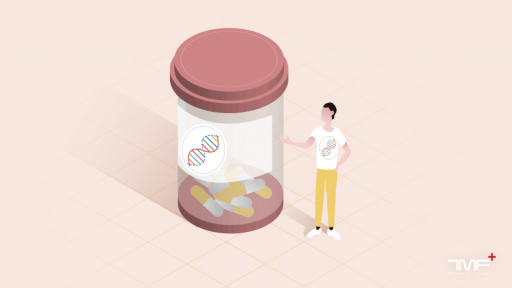
Murphy is devastated but promises to his boss to go to the doctor immediately. So, he goes back to the hospital to visit his GP’s office there. However, the online check-in was down due to a hacker’s “beneficial undertakings” and so he didn’t have any chance for telemedicine either – he had to wait for four hours. It was already late in the evening. When the doctor sees his nervousness, aggressivity, anger, and tiredness, he mistakes that for depression and prescribes him an antidepressant – based on his genetic background. As it later turns out, the test wasn’t that perfect in mapping Murphy’s pharmacogenomic background, so he received a medication that causes serious side effects.
Finally at home?
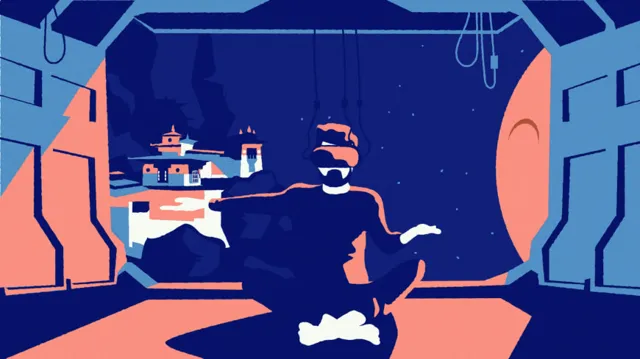
After an Uber ride home (a surprisingly calm and uneventful one), he believes that there’s nothing more that could happen to him that day. However, he forgot completely what he had left behind in the morning. He forgot to feed his dog and he left him in the apartment, so now the place is as if hurricane Dorian has just drifted through it. At that moment, Murphy wanted to just crash on the couch and immerse in other realities. So, he took his VR goggles, made some space on the couch covered in yogurt, and turned the device on to just go to Mars and never look back. However, he had to realize that his license had expired, and he forgot to renew it. Now, the terrain of Mars is full of ads about antidepressants and snake-oil for losing weight. He felt devastated. He screamed aloud, then shrugged his shoulders and decided to just go to bed.
Tomorrow’s gonna be another day. A way better day. He hoped.
|
At The Medical Futurist, we are building a community for making a bold vision about the future of healthcare reality today. If you’d like to support this mission, we invite you to join The Medical Futurist Patreon Community. A community of empowered patients, future-oriented healthcare professionals, concerned health policymakers, sensible health tech developers, and enthusiastic medical students. If there were ever a time to join us, it is now. Every contribution, however big or small, powers our research and sustains our future. Click here to support The Medical Futurist from as little as $3 – it only takes a minute. Thank you. |