When Politics Meets Genomics In the US
DNA collection from migrants who cross the US-Mexico border might be put in place soon, and the information will feed a large criminal database operated by the FBI, announced headlines early October. We’ve come a long way since the first direct-to-consumer (DTC) company, 23andme, started to offer ancestry DNA testing kits online. It seems as it was decades ago – while in fact, we’re speaking about 10-12 years. How has DTC genetic testing culminated in population genomics – and what can we expect in the future to come? In the second part of our article series about genomics and politics, we’ll try to see where ‘DNA and population management’ the United States is heading.

10 min | · Updated

|
THIS ARTICLE HAS NOT BEEN UPDATED SINCE 2019. THE INFORMATION SHARED IN THE ARTICLE WAS ACCURATE AT THE TIME OF ITS PUBLICATION, BUT IT MAY BE OUT OF DATE NOW. BROWSE OUR LATEST ARTICLES HERE |
DNA collection from migrants who cross the US-Mexico border might be put in place soon, and the information will feed a large criminal database operated by the FBI, announced headlines early October. We’ve come a long way since the first direct-to-consumer (DTC) company, 23andme, started to offer ancestry DNA testing kits online. It seems as if it was decades ago – while in fact, we’re speaking about 10-12 years. How has DTC genetic testing culminated in population genomics – and what can we expect in the future to come? In the second part of our article series about genomics and politics, we’ll try to see where ‘DNA and population management’ the United States is heading.
From DTC genetic testing to population management: the beginnings
When Anne Wojcicki co-founded 23andme in 2006 – we cannot emphasize this often enough: a little more than a decade ago –, her goal was twofold. She wanted to bring the power of genetic testing to everyday consumers so they can better manage their own health, and use the aggregated data from the tests to help doctors, scientists, hospitals, and researchers to discover new cures for diseases that emanate from troublesome genetic mutations.
Their service was radical and brand-new: with a mouse click, you could order up your past and potential future. At first, regulators were baffled by the novelty and couldn’t do anything about it for years. However, in 2014 the FDA restricted 23andme’s operations saying that their health information services were not clear or complete enough for customers. So, the genetic testing company scaled back its activity mostly to provide data about ancestry. They have also linked together long-lost family members and have built family trees. However, the process couldn’t be halted. DTC genetic testing companies multiplied and the genetic data that fell into the hands of these companies started to grow exponentially.
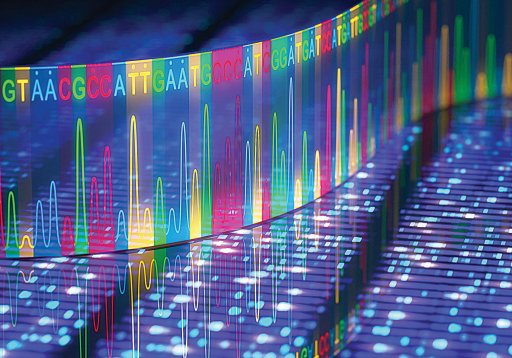
Around 26 million people’s genetic data is out there
Regulators had to realize that they cannot stop the flood, and everyone remains better off if they try to understand these services and lead the changes coming from personalized and widely accessible biotechnology. Thus, the FDA re-approved 23andme’s services in 2017, which aim to tell people to which diseases they are susceptible, and by now they have tested more than 9 million people according to the sources of MIT Technology Review. The company’s main competitor, AncestryDNA is estimated to have tested around 14 million so far. Beyond the ‘biggest fish’ on the market, the number of ventures offering genetic testing services has been skyrocketing, and by now they have managed to analyze around 3.5 million DNA samples, which brings the data up to 26 million. Of course, it doesn’t exclusively mean Americans’ genetic information, but the biggest bulk of the data stems from the US.
As the market started to boom, all kinds of outsiders took notice: charlatans, police officers, the FBI, etc. And while in some cases, it only means some out-of-place offerings: to know whether your kid is talented in football, whether your grumpy moods are coded in your genes, or to find your perfect match based on your DNA, when the police and the FBI appear on the scene, it doesn’t feel like it’s innocent toying around with genes anymore.

How the Golden State Killer’s case shows the way forward
The power of DNA testing for law enforcement was first publicly revealed when the case of the Golden State Killer was solved last year – after decades of mystery. Investigators took DNA collected years ago from one of the crime scenes and submitted it to one or more websites that have built up a vast database of consumer genetic information. The primary tool used was GEDmatch, a free open-source website that pools together genetic profiles uploaded by users seeking to conduct research or fill in gaps in their family trees, according to the Mercury News. And what’s more, investigators got access to GEDmatch’s database not with a court order, but by creating a fake profile and name on the site, according to the New York Times. And GEDmatch is just one open-source website with the promise to further analyse your raw genetic data.
As a consequence, police officers not only found the Golden State Killer after decades but also a powerful tool for their investigations. By now, it has become a best practice: dozens of murder cases and sexual assault crimes were solved through genetics. And where do they get their data from? Well, not only the aforementioned public databases but also from extrapolated genetic data and in the future, outright genetic data reporting duty, such as the one planned on the US-Mexico border – and these are worrying aspects of genomic data privacy.

How anonymized is genetic data?
Although testing establishments use anonymized data, when the DNA of a million people is collected, it will become possible to extrapolate anyone’s personality from the genetic data. The latest research by computational biologist Yaniv Erlich, published in October 2018 in Science Magazine stated that more than 60 percent of Americans with European ancestry can be identified through their DNA using open-access genetic genealogy databases, regardless of whether they’ve ever sent in a spit kit. That’s worrying – or at least it should make people more cautious and conscious when deciding for doing a genetic test.
As Arthur L. Caplan, Professor of Bioethics at the Department of Population Health at New York University told The Medical Futurist, big data banks are being formed all over the US. “Although the data is anonymized, identities can be figured out by correlating it with cell phone behavior, medical record or other indicators. It can quickly be figured out who is who”, he explained and added that that’s extremely dangerous – especially because there are basically no legal barriers that could close the door on data privacy abuses.

Legislation, where are you? We brought you cookies…
“We have some legal protection but they were written 25 years ago. They don’t really cover what genetics can do today,” commented Professor Caplan. Many privacy experts are just as concerned that the only law in the US currently covering genetic privacy, the Genetic Information Non-discrimination Act (also known as GINA) is too old and too narrow in its focus on banning employers or insurance companies from accessing this information. The GINA came into being in 2008 – just two years after the establishment of 23andme – and that’s worrying as we could see only from this piece how much has happened since. Still, other than that, there is literally nothing – the genetic information space is in many respects still uncharted legislative territory, and consumers are taking the genetic testing companies at their word.
That should worry consumers from many respects – some of that already specified above. Without proper legislation, companies could use and re-use genomic data for many purposes outside the sight of the consumer – for example a genomic big data market could evolve where genetic information of unsuspecting individuals is sold and bought in bulk – and it also gives more space for governments, law enforcement units, and courts to act upon such data. There should be legislation that strengthens the need for informed consent about genetic data usage, as well as stronger penalties for the release of genetic data to third parties without permission.
Population management through insurance – is Big Brother really coming?
What might be the fate of the genetic information that’s planned to be collected from migrants at the US-Mexico border? Professor Caplan says that the data could be used for example to check whether a claim about motherhood or fatherhood is true or with regards to potential disease risks. ‘It’s extremely controversial because they’re invading privacy, creating databases with no one’s permission, and there’s no control of who can use the data in the government – it could be the police, the military or almost anybody who chooses to look, he explained. And while he acknowledged how efficient that could be in enforcing anti-immigration policies, he ultimately sees it as a very dangerous development.
It’s easy to see the reason why. Genetic-based management and policing of certain groups in society could easily spill over from immigration to other parts of society. “In the political sphere is starting to be used a little bit to make predictions about things like who’s going to need health insurance or disability insurance. That’s politically controversial, too, as you would assume that insurance companies want to use this information to weed out people who are high risk”, Professor Caplan added. During the years, we could already follow how health insurance companies teamed up with huge corporations to offer fitness wearable data-based benefit programs – for example John Hancock, the U.S. division of Canadian insurance giant Manulife, requires customers to use activity trackers for life insurance policies in their Vitality program if they want to get discounts on their premiums and other perks. A huge step towards health insurance Big Brother – a state where insurance companies reward or penalize you based on constantly monitored behavior.
Will the next step be adding genetic data next to tracker information? Where would that lead? First of all, even more surveillance and even less freedom for the individual – in exchange for more security. But whose security? The security of the health insurance company on their bonds? The security of the state – from an immigrant? Where is the individual’s choice here? All these ethical and regulatory issues are at our doorsteps and need to be dealt with as quickly as possible – and not after another decade. Unfortunately, Professor Caplan doesn’t see that happening any time soon. ‘We would sadly need an outright crisis where a group of people are harmed – lose their benefits or can’t get jobs because of the abuse of genetic information. We need a scandal’, he explained as he doesn’t see politicians understanding genetics that much to legislate ahead, so he speculated that only when such cases would be taken to court could they be dealt with.
That certainly doesn’t sound rosy and promising at all. Here, we call upon regulators and policy-makers in the U.S. to try to avoid such a scenario from happening: genetic and genomic data issues are of utmost importance – and going to be even more significant in the future. So it’s their duty to understand it better and create timely legislation. GINA should not stand alone anymore.
|
At The Medical Futurist, we are building a community for making a bold vision about the future of healthcare reality today. If you’d like to support this mission, we invite you to join The Medical Futurist Patreon Community. A community of empowered patients, future-oriented healthcare professionals, concerned health policymakers, sensible health tech developers, and enthusiastic medical students. If there were ever a time to join us, it is now. Every contribution, however big or small, powers our research and sustains our future. Click here to support The Medical Futurist from as little as $3 – it only takes a minute. Thank you. |