Why Pharma Companies Must Stop Saying ‘Digital Transformation’
From education to lunch ordering, from work to dating, talking about “digital” has changed these past months – everything is online. Our entire social network […]

4 min | · Updated

From education to lunch ordering, from work to dating, talking about “digital” has changed these past months – everything is online. Our entire social network has transformed to such depths that it will be a long time to assess its effects. The operation of entire industries has changed, and, of course, healthcare is no exception. And although we have heard of the digital transformation in medicine for years now, what exactly it covers remains unclear.
I have worked with over 30 different pharmaceutical companies over the past 15 years, giving 100+ keynote speeches around the world live and online. Each one of them explained how they want to transform a conventional company through an organisational course towards a digital switchover. They all say:
- “We are a conservative company.”
- “We are going through an organisational journey/change.”
- “We want to embrace digital transformation.”
Based on these challenges, they often ask me to talk about the digital transformation and its direct impact on healthcare in my speeches. But I need to be honest: I don’t know what they mean by it. Let me explain why.
The healthcare industry is already using a gazillion of digital solutions. Medical professionals are actively using digital technologies, from mobile communications, telehealth solutions and digital analytics to chatbots and A.I. As such, medicine is going through a similar transformational journey as for example the banking sector did. Pharma companies feel the need to participate in this venture.
It only makes sense to challenge them if it’s a way of working or a way of thinking.
What IS digital transformation?
I consider myself a geek and I know how it is to live with data. My entire life is filled with technology, covering most facets of my life. I use technology, write about it, analyse reports and publish studies about it. I build my own PC and have been active on most digital channels for years. And still. I wouldn’t call this digital transformation.
But then again, what is it?
What do pharma executives mean when they talk about digital transformation?
Would they mean
that pharma representatives who go to see doctors
can also send them information through a digital channel?
Would they mean
all pharma employees should use a health tech that their consumers use
to better understand what they are going through (e.g. a health sensor or smartwatch for a healthier life)?
Would they mean
all elements of the supply chain
to be accessed, verified and analysed as digital data?
Or can they mean all drug purchases to be tracked at the data level,
and used to make better decisions with algorithms – right from drug design?
Trends shifting healthcare and pharma
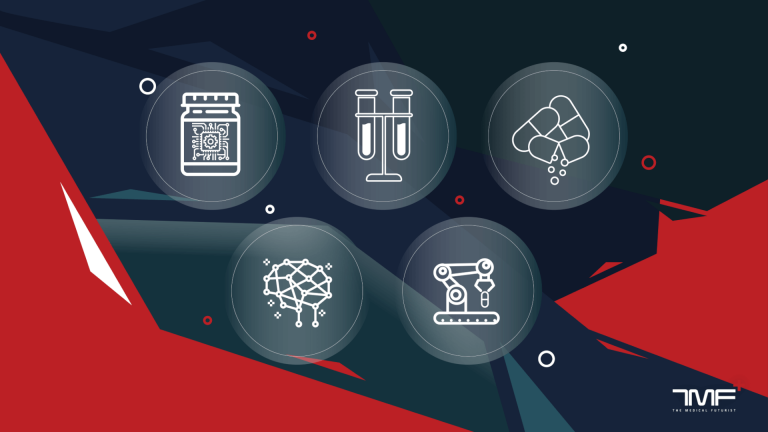
There are certain trends that are shaping the future of pharma. Patient design means patient inclusion in key decision-making processes. Integrating A.I. in drug development saves time and money, while 3D printing leads to personalised medicine. Automation supplements the supply chain with more effective solutions, from manufacturing processes to pill dispersion. We pointed out some of the most important changes in healthcare for pharmaceutical companies in this article and in our e-book.
This still isn’t digital transformation – these are steps towards; and pharma leaders need to see these technologies and solutions as such.
And not all these changes are digital – they are logical. First of all, no change will come (but a bucketload of money wasted) unless it is preceded by a cultural transformation. Moreover, there is a massive difference between health IT and digital health, and pharma executives tend to forget this fact.
But, most importantly, none of the above, data, algorithms, sensors, devices, tools, robots, channels, A.I. and the rest of the so-called digital transformational accessories make sense unless understood more deeply and analysed as a strategic concept.
An attempted “digital transformation” will only be understood and executed if pharma companies define what exactly they mean by it in terms of leadership, value creation and vision.
Without that, this empty phrase keeps on being more destructive than forward-looking.
|
At The Medical Futurist, we are building a community for making a bold vision about the future of healthcare reality today. If you’d like to support this mission, we invite you to join The Medical Futurist Patreon Community. A community of empowered patients, future-oriented healthcare professionals, concerned health policymakers, sensible health tech developers, and enthusiastic medical students. If there were ever a time to join us, it is now. Every contribution, however big or small, powers our research and sustains our future. Click here to support The Medical Futurist from as little as $3 – it only takes a minute. Thank you. |