Nanotechnology Will Break The Curse Running Through Generations
A fictional tale about the healing power of technology
The mutation of the CDH1 gene determines the fate of generations of men in a Czech small town. The great-grandfather dies unexpectedly upon returning home from the trenches of the first World War – he survives the bullets of the Italian front but gives in after a pint of beer and schnitzel. The grandfather was already diagnosed with an illness, gastric cancer, which required the removal of his entire stomach – but his life couldn’t be saved either. His son was luckier, he was diagnosed in time with an early stage hereditary diffuse gastric cancer and had endoscopic surgery for nipping the condition in the bud. But what will the grandson do? That’s when nanotechnology comes into the picture.

8 min | · Updated
|
THIS ARTICLE HAS NOT BEEN UPDATED SINCE 2019. THE INFORMATION SHARED IN THE ARTICLE WAS ACCURATE AT THE TIME OF ITS PUBLICATION, BUT IT MAY BE OUT OF DATE NOW. BROWSE OUR LATEST ARTICLES HERE |
A fictional tale about the healing power of technology
The mutation of the CDH1 gene determines the fate of generations of men in a Czech small town. The great-grandfather dies unexpectedly upon returning home from the trenches of the first World War – he survives the bullets of the Italian front but gives in after a pint of beer and schnitzel. The grandfather was already diagnosed with an illness, gastric cancer, which required the removal of his entire stomach – but his life couldn’t be saved either. His son was luckier, he was diagnosed in time with an early stage hereditary diffuse gastric cancer and had endoscopic surgery for nipping the condition in the bud. But what will the grandson do? That’s when nanotechnology comes into the picture.
Surviving war trenches, dying from beer and schnitzel
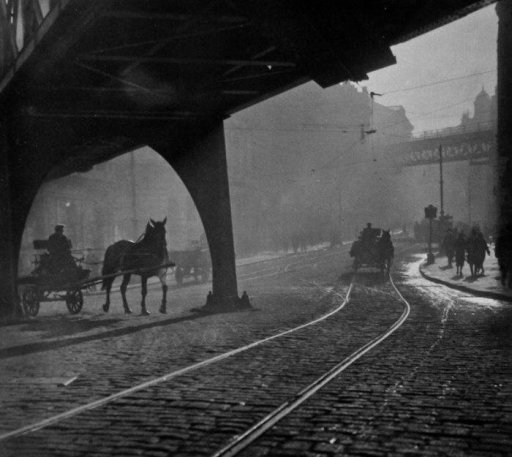
Janek left a sleepy Czech town in the uniform of the Austro-Hungarian Joint Army in the summer of 1915. His wife and mother couldn’t stop crying for weeks before he left, so by the time they escorted him to the train station, they couldn’t even have tears anymore. He went off to war with their photos, a pack of cigarettes in his trench coat, and a promise that by the time he would come back, his son would be born. His wife, Annie, was six months into her pregnancy. The train hauled and spewed smoke all over the station, and Janek vanished in the cloud of the vehicle heading to Italy.
Half a year passed by, and Janek finally received the authorization to go on leave – to see his baby son back in his hometown. His bony figure was clothed in the shreddy and dingy trenchcoat, but at least he survived countless attacks and he could still carry a single cigarette, as well as the photos of his loved ones in his pocket. He returned home with those as his only possessions.
Annie and his mother were all over him: they prepared the best meals they could from their almost empty food storage room, and they expected him to indulge in fine beer and great cuisine. Although he had no appetite at all (which was considered a good sign in times of war) and felt pain in his stomach all the time, he had a beer and schnitzel while watching his baby son sleep. But after a couple of moments, he felt unbearable pain in his stomach and after hours of agonizing, his breath became air.
Growing up without a father runs in the family
It never turned out what exactly happened to Janek. His son, Fredrik heard the story countless times and missed his practically unknown father dearly. Shortly after he reached the age of recruitment, Hitler annexed Czechoslovakia and life became utterly regulated according to Nazi rule. Fortunately, Fredrik survived the Second World War, even the street fights of the Prague Uprising at the end of the war. After the years of destruction and constant deprivation, times got more relaxed. He worked in the local beer brewery and in his spare time, helped rebuild houses across town. He married the blond Agneska with laughter that could also be heard in the next town.
When their third child, Jirí was born, into the setting of socialist Czechoslovakia, he started to feel some pain in his stomach. It came first as a breeze on a chilly November day. Then he started to lose weight and parallelly his appetite, too. Agneska asked him to go to the hospital and get it checked out. He refused and said she was overreacting. After a couple of weeks, he went to the doctor without having to be asked.
His face was as pale as dismayed his mood. When the physician said he had gastric cancer, he was not surprised, but when the specialist added that the only way to extend his life was a full stomach removal, he went into panic mode. How can you live without a stomach? In the end, his family convinced Fredrik to have the operation. The post-surgery recovery was painful and never seemed to end, but he managed. The end came when he suddenly got an infection in the hospital. His immune system was not strong enough to survive it. Jirí had to grow up without a father just as Fredrik.
The benevolent shadows of gastric cancer
As the youngest child of the family, Jirí always had a special place in his mother’s heart – he could practically do anything he wanted. While in socialist Czechoslovakia every youngster’s dream was emigrating to the West, Jirí in his twenties was rather in love with car racing. The sound of howling engines and the smell of newly painted vehicles always had a magnetic effect on him, even in his fifties. That’s when he ended up in hospital after not being able to take a bend in the Tatras. Luckily, his injuries were rather bruises, which healed relatively fast, however, his doctor told him that he should get checked out for signs of hereditary diffuse gastric cancer as his father lost his life due to that disease.
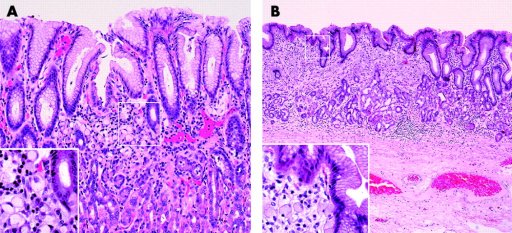
After the tests came back positive for the condition being in its early stages, he was crushed. Is it fatal? How many years does he have left? Who will take care of his sons and what will happen to his cars? His doctor told him that they luckily caught the diseases early, thus he doesn’t have to have his stomach removed, they could do an endoscopic submucosal dissection to remove the tumor as it has not entered the muscle layer yet. The surgery went well, but his physician recommended that his sons take a genetic test for the CDH1 gene mutation that causes the particularly silent, deadly disease.
Nanotechnology will step in
Jirí’s sons, Kamil and Bruno can be aware of exactly what the condition means and what their risks for the disease are. Stomach cancer is the second-leading cause of cancer death in the world. In the United States, more than 21,500 cases are diagnosed annually, and half of those patients will die. Although hereditary diffuse gastric cancer is relatively rare: around 150 families worldwide have been identified as carrying the gene mutation – although countless families haven’t been tested yet. Carriers are at extremely high risk – between 85-87 percent – of getting stomach cancer – and dying within the next five years. The disease has only a 28 percent survival rate.
What options do Kamil and Bruno have? Beyond genetic screening, constant monitoring, and endoscopic submucosal dissection, nanotechnology will join forces fighting against stomach cancer. In the coming years, microrobots as tiny as hair might be sent to the stomach in tiny digital capsules. When they arrive at the required place, they might precisely dose medication or help destroy cancerous cells. In the far away future, these teeny-tiny robots could even get so small that it would be difficult to see them with a human eye – they might even get a microscopic size and carry out tasks at the cellular level.
Nevertheless, we are not there yet – and it might take many decades until something like a nanobot appears. In one of the most forward-thinking experiments involving a simulation of the human esophagus and stomach, researchers at MIT, the University of Sheffield, and the Tokyo Institute of Technology have demonstrated a tiny origami robot that can unfold itself from a swallowed capsule and, steered by external magnetic fields, crawl across the stomach wall to remove a swallowed button battery or patch a wound. Imagine a future where a patient swallows a digital pill with such a monitorable origami robot placed inside of it, which would place drugs in the right place of the stomach. No need for opening up the patient, not even for an endoscope. Hopefully, nanotechnology will develop fast enough so that Kamil’s and Bruno’s sons would not have to grow up without their fathers.
|
At The Medical Futurist, we are building a community for making a bold vision about the future of healthcare reality today. If you’d like to support this mission, we invite you to join The Medical Futurist Patreon Community. A community of empowered patients, future-oriented healthcare professionals, concerned health policymakers, sensible health tech developers, and enthusiastic medical students. If there were ever a time to join us, it is now. Every contribution, however big or small, powers our research and sustains our future. Click here to support The Medical Futurist from as little as $3 – it only takes a minute. Thank you. |