Mapping the Future of Healthcare: Six Practical Foresight Methods You Can Use Today
In an era of exponential change, foresight isn’t a luxury—it’s a necessity. As technologies, systems, and societal expectations reshape medicine at an unprecedented speed, the […]

3 min |
Key Takeaways
This guide is not about abstract theory. It’s a toolkit to help you understand what lies ahead, make sense of disruption, and design better, more resilient systems.
It features case studies in medicine, healthcare and pharma too!
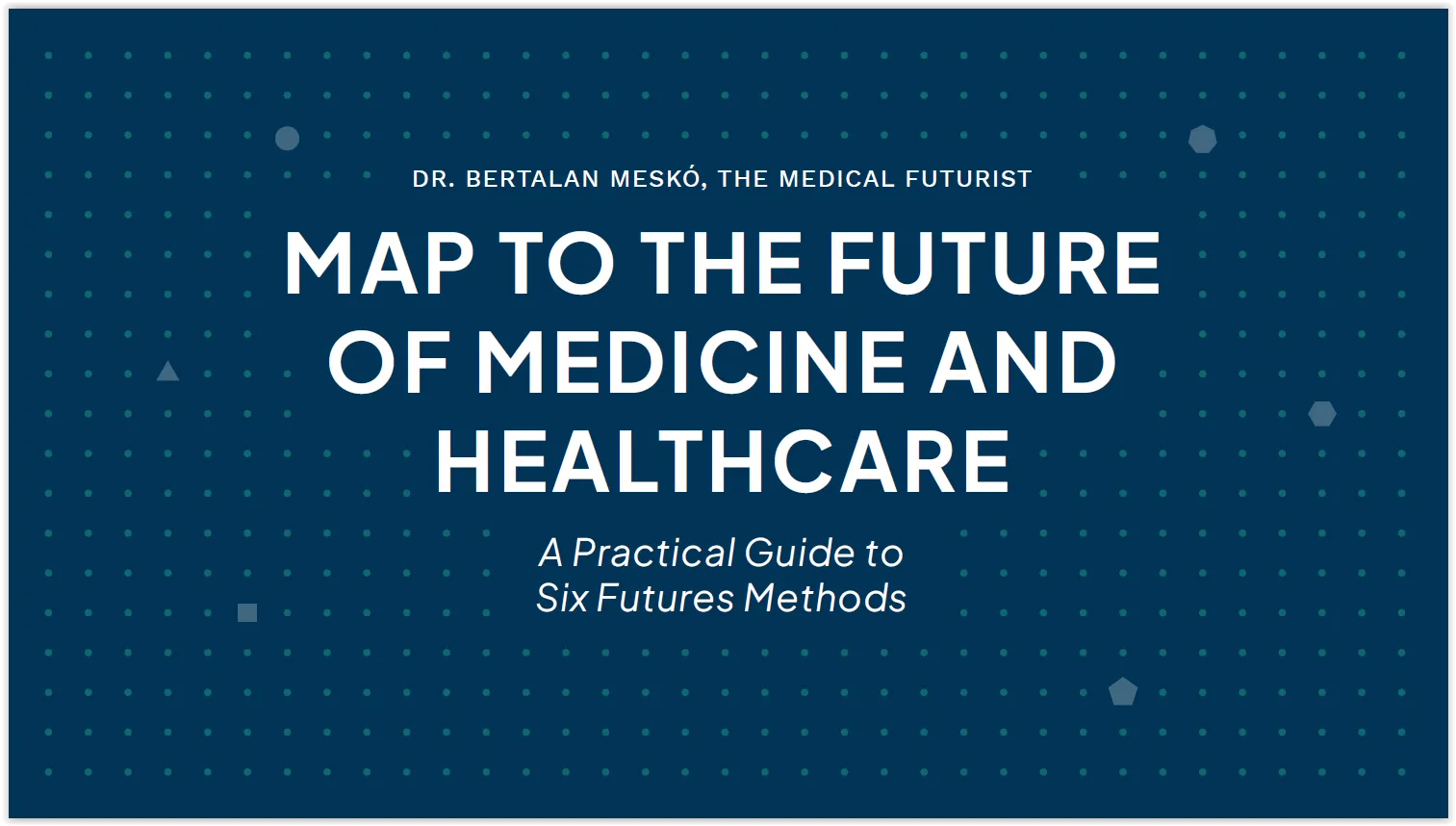
In an era of exponential change, foresight isn’t a luxury—it’s a necessity. As technologies, systems, and societal expectations reshape medicine at an unprecedented speed, the ability to anticipate and prepare for the future has become an essential skill for healthcare professionals. That’s why I created “Map to the Future,” a practical guide that introduces six actionable futures methods tailored specifically for the healthcare field.
It features case studies in medicine, healthcare and pharma too!
This guide is not about abstract theory. It’s a toolkit to help you understand what lies ahead, make sense of disruption, and design better, more resilient systems.
You can access it for free here.
Here’s a brief tour of the six methods featured in the book
- Vision Writing: Explore the future through storytelling
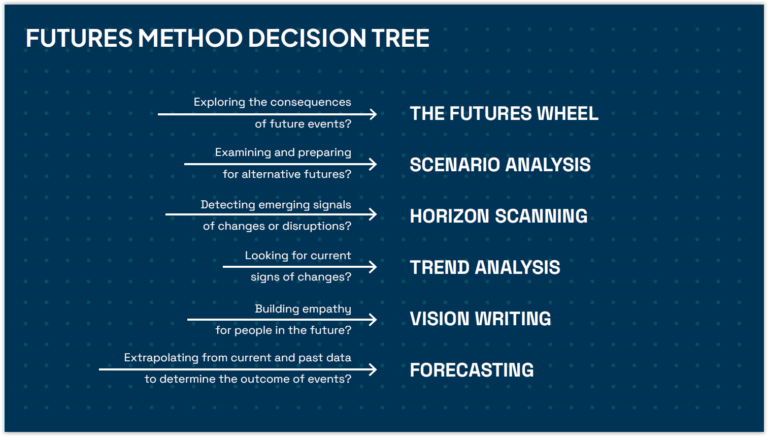
This method uses narrative imagination to step into possible futures. By writing from the perspective of a person in a future scenario—such as a 2040 medical student attending VR-based clinicals—you build empathy and uncover insights about human challenges, emotional responses, and social consequences. Start with: a diary entry, news headline, or press release set in the future. Ask: what does daily life look like?
- Forecasting: Make data-driven predictions
Forecasting leverages historical and current data to estimate the likelihood of future outcomes. Used widely in policy and public health, it supports probabilistic thinking over binary conclusions. Start with: a specific question and measurable timeframe. Assign probability estimates and update them as new information arises.
- Scenario Analysis: Prepare for multiple futures
Rather than predicting a single outcome, scenario analysis generates several plausible futures based on key drivers and uncertainties. This method enhances strategic agility and decision-making. Start with: defining one key driver and one major uncertainty. Then build four scenario narratives based on combinations of these factors.
- The Futures Wheel: Visualize ripple effects
A great team tool, the futures wheel maps primary, secondary, and tertiary consequences of an event or trend. It promotes systems thinking and uncovers indirect outcomes. Start with: a central future event (e.g., autonomous ambulances). Brainstorm cascading consequences outward.
- Trend Analysis: Spot patterns that shape the future
This method identifies evolving signals across data sources, industries, and social behavior. Trend analysis is crucial for proactive planning and early response. Start with: scanning news, social media, journals, and reports. Look for repeated signals and early signs of broader shifts.
- Horizon Scanning: Detect weak signals and wild cards
For those aiming to prepare for the unexpected, horizon scanning seeks early, low-visibility signs of change and rare but disruptive events. Start with: unconventional sources, speculative papers, or niche innovations. Evaluate their potential long-term impact and relevance.
Choosing the Right Method
A handy decision tree in the guide helps you match your purpose with the best method:
Your Next Step
This guide makes foresight practical, visual, and intuitive. Whether you’re a medical student, a healthcare leader, or simply future-curious, you can begin shaping the future today.
Also, check out my new book on the topic, Your Map to the Future!