The Nordic Saga: Genomics And Politics In Iceland
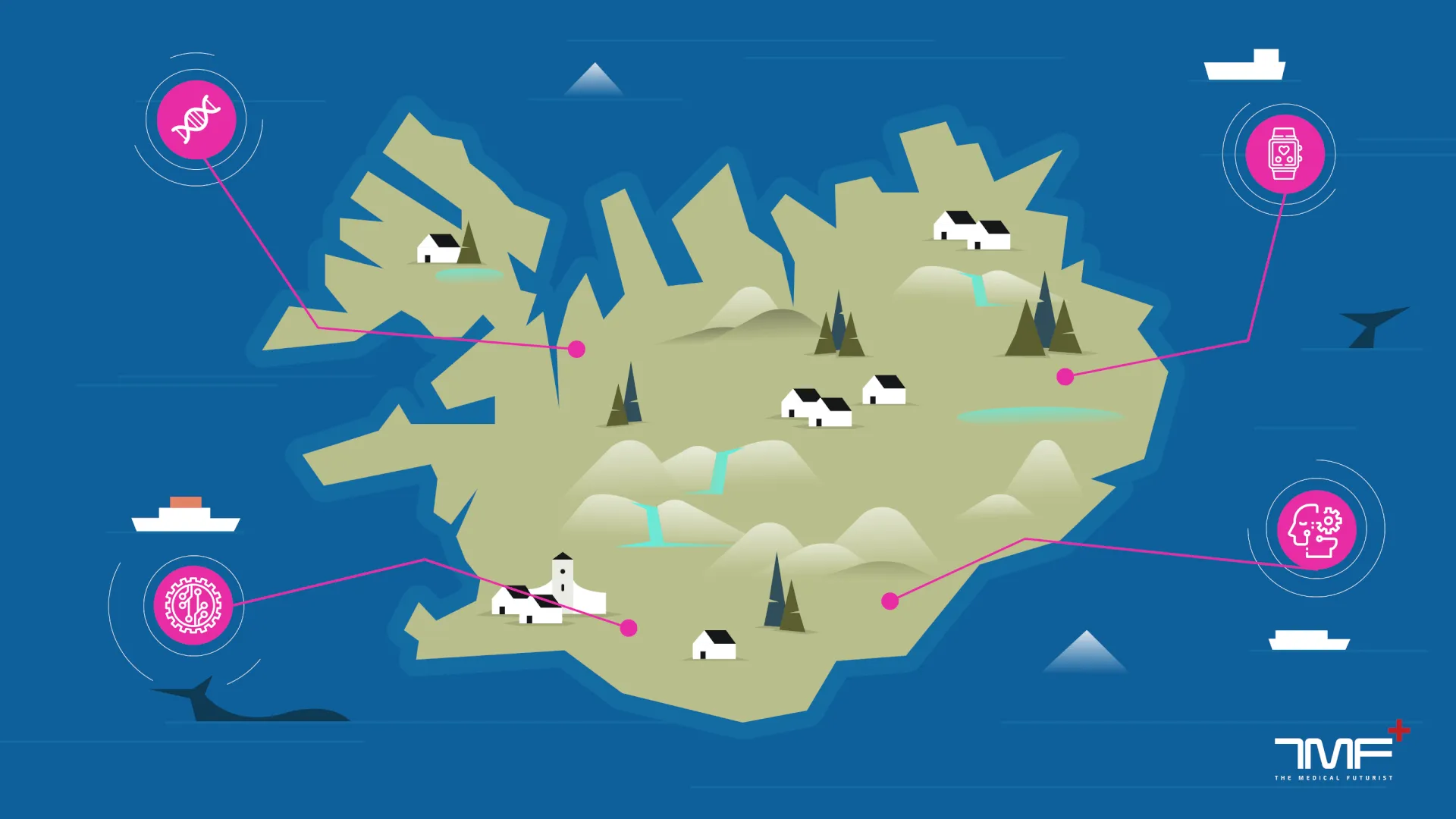
We guide you to a country where DNA analysis dates back to at least two decades, where Game of Thrones was shot, and where more sheep live than people. To the country of Ice and Fire. In the next stop of our genomics and politics series, let’s see how Iceland, a state with a tiny and homogenous population makes use of genomic data, and how private and public clashes over its regulatory issues.

8 min | · Updated
|
THIS ARTICLE HAS NOT BEEN UPDATED SINCE 2019. THE INFORMATION SHARED IN THE ARTICLE WAS ACCURATE AT THE TIME OF ITS PUBLICATION, BUT IT MAY BE OUT OF DATE NOW. BROWSE OUR LATEST ARTICLES HERE |
We guide you to a country where DNA analysis dates back to at least two decades, where Game of Thrones was shot, and where more sheep live than people. To the country of Ice and Fire. In the next stop of our genomics and politics series, let’s see how Iceland, a state with a tiny and homogenous population makes use of genomic data, and how private and public clash over its regulatory issues.
To share or not to share?
In the future, researchers in many countries will be able to reliably identify hundreds of people as carriers of cancer-related genes only by pressing a button. It won’t matter whether those individuals had or didn’t have a genetic test, or whether it was anonymized or not. Although testing establishments use anonymized data, when the DNA of a million people is collected, it will become possible to extrapolate anyone’s personality from the genetic data. The latest research by computational biologist Yaniv Erlich, published in Science Magazine in October 2018 stated that more than 60 percent of Americans with European ancestry can be identified through their DNA using open-access genetic genealogy databases, regardless of whether they’ve ever sent in a spit kit. That’s worrying – and there’s a country where the population already sees the advantages and disadvantages of this happening, sort of.
In Iceland with only around 320,000 people, a relatively uniform population, and extensive DNA databases, the Nordic country could easily pinpoint which of its people are predisposed to certain diseases and notify them immediately. Wouldn’t that be a great and wise step in preventing illnesses and protecting the population? People with this knowledge could take the necessary steps against getting certain conditions, so that should be an excellent development, right?
Well, in spite of the pressures coming from deCODE genetics, the Icelandic genetics company arguing along the above lines, the government has refused to implement this due to privacy concerns. No one should be notified without explicit consent, says the Icelandic regulator. How did the country with the most lunar landscapes end up here? Why did the governing body make this decision? Might we expect any change here? How could these issues be dealt with in the future? What if the government agrees to notify the citizens about their health risks? Where should the boundaries be drawn: should there be an age limit for notification? Would this only concern certain diseases with a high likelihood or every single one of them? Where should the threshold be put for ‘high’ or ‘low’ risk conditions from this perspective? Many-many questions, but as you will see – not that many responses.
From the Íslendingabók to the ‘incest alarm’ app
For understanding the situation in Iceland, let’s go back to Ari the Wise and the 12th century. Relax, we won’t stay long there. The Icelandic priest traced the country’s history, including its family trees, in a tome called Íslendingabók – the book of Icelanders. Since then, church records and censuses have kept track of births, deaths, and marriages, resulting in a detailed and ongoing picture of Icelandic ancestry.
This tradition received a modern makeover in 1996 when Icelandic geneticist Kári Stefánsson founded deCODE Genetics and curated all available genealogical information into a single online database, also called Íslendingabók. Accessible by anyone with an Icelandic social security number, the database proved popular among members of the public as well as scientists. By the mid-2000s, it was recording more than 1,000 log-ins per day, and in 2013, deCODE launched an app allowing users to determine their relatedness to any other Icelander – complete with an “incest alarm” feature.

Circumventing the authorities and building an extensive genetic database
However, deCODE did not settle for genealogical records: in 2006, it set out to combine this dataset with genetic data and also the health records for all citizens. Their aim was to discover disease genes for everyone on the island. However, the legislator was on a different opinion: deCODE failed to receive legal approval to use the health records without consent. To circumvent the problem, deCODE built a research database using DNA and clinical data for more than 120,000 research volunteers.
By 2015, MIT Review reported that DeCode Genetics collected full DNA sequences on 10,000 individuals, and by 2018, Stefánsson claimed the company could access a DNA database of 60,000 fully sequenced individuals and another 180,000 whose genetic code has been partially sequenced. And since the population in Iceland totals around 320,000 citizens, all relatively closely related, DeCode said it could extrapolate to accurately guess the DNA makeup of nearly the whole population of the country, including those who never participated in its studies.
Picking fights with the government
Stefánsson and deCODE genetics are prominent and powerful players of the Icelanding genomic research landscape. Although the company went bankrupt during the Icelandic economic crisis in 2009, it could recover with the help of Amgen, which purchased deCODE in 2012. Over the last six years, deCODE has helped identify among others a gene variant linked to late-onset Alzheimer’s and another one that increases the risk of osteoporosis.
As a pioneer in genomic research, and having a slashing style and media charisma, Stefansson was not tired of pushing forward his agenda in the government. Two years after founding deCODE, Stefansson and others in the company persuaded Iceland’s Parliament to pass the Health Sector Database Act, an effort to create a vast database of Icelanders’ genetic information and medical records, in an encrypted form, for research. The law also allowed a private licensee to control and access this data. Stefansson’s deCODE became that licensee.
Under the law, personal data of Icelanders were excluded from the database only if a person asked to opt out. Under normal research protocols, people are only included in a study if they explicitly consent. Later on, a young Icelandic woman went to court challenging the inclusion of her late father’s medical records in the database. In 2003, the Supreme Court of the country ruled in favor of her, and the decision practically ended the Health Sector Database – that was the point when deCODE was forced to use other means for data collection, basically based on ‘voluntary’ data transfer from individuals.
Stefánsson told McClatchy Magazine last year that the company could identify carriers of the BRCA2 gene in the 60,000 Icelanders whose DNA has been fully sequenced, and could extrapolate this data to pinpoint other carriers. But Icelandic regulators have repeatedly refused to let deCODE de-encrypt the data to identify these carriers and notify them. To circumvent this decision, deCODE started a website where people could sign up to be notified if they were carriers of the BRCA2 gene.
What might the future bring?
Thus, the basic dispute is around whether people should be notified about personal health risks that scientists might discover without their explicit consent. Icelandic regulators have determined that without that explicit consent, neither the government nor private industry can notify people of these risks. In the meantime, deCODE is pushing for a different approach. Stefansson openly raised the question in McClatchy Magazine earlier: ‘there is a tradition in Icelandic society to save people who are in life-threatening situations, without asking them for informed consent. Should there be a different rule if the danger is because of a mutated gene?’
We believe that the clashing views around the privacy of genetic information as well as the urgency of the intervention for life-saving reasons will appear soon in many other countries as well, not just in Iceland. We believe that Stefansson’s attitude of pushing forward the inclusion of genetic information into general public opinion as well as his concern for preventive health are more than welcome, but he might be years or decades ahead of legislation.
On the other hand, the interplay of the private company pushing the boundaries of legislation while the democratic government trying to preserve citizens’ privacy rights upholding it as an ultimate right could bring valuable lessons for other countries and other governments from the U.S. through Scandinavian countries until the UK. Especially keeping in mind that in Britain the Icelandic company joined the UK’s Wellcome Sanger Institute in September 2019 in sequencing 450,000 genomes as part of a massive project organized by the UK Biobank initiative. Now, we are really curious about how the genetic saga from the North will unfold in the future.
|
At The Medical Futurist, we are building a community for making a bold vision about the future of healthcare reality today. If you’d like to support this mission, we invite you to join The Medical Futurist Patreon Community. A community of empowered patients, future-oriented healthcare professionals, concerned health policymakers, sensible health tech developers, and enthusiastic medical students. If there were ever a time to join us, it is now. Every contribution, however big or small, powers our research and sustains our future. Click here to support The Medical Futurist from as little as $3 – it only takes a minute. Thank you. |