How To Predict The Future Of Healthcare: Method #1 – Forecasting
We can have a more accurate estimate of the future using the right prediction methods. Here is one, called forecasting. Part 1 of our “Futures series”

Dr. Bertalan Mesko, PhD
24 August 2026
Key Takeaways
Forecasting in healthcare is a powerful tool for anticipating trends, improving patient care, and making informed decisions.
Effective forecasting requires asking precise, well-designed questions and estimating probabilities rather than relying on binary outcomes.
Regularly practicing forecasting and updating predictions with new information can significantly improve accuracy.
Have you ever wished you could see what the future holds? What if I told you that while I can’t give you the all-knowing crystal orb of the legendary witches, you could, with a little effort, learn to predict much more accurately what comes next?
Futures methods, under the umbrella term futures studies, have been established techniques for decades in fields such as economics, statistics, and business management – however, they are largely overlooked in healthcare and medicine. This is a luxury: they provide accessible ways to anticipate and prepare for potential future scenarios, making strategic planning and decision-making much easier.
Many of these futures methods are robust and relatively straightforward to learn, even for those without a background in complex modeling or data analysis.
This is the first article in our new “How to predict the future of healthcare” series dedicated to teaching these basic futures methods. The “lessons” will include detailed explanations, practical examples, and a thorough written guide to help you learn and apply these techniques in the context of medicine and healthcare. By doing so, we aim to empower you with additional tools to navigate the future with confidence and proactive insight.
The skill we will be working on is anticipatory consciousness. This means the awareness and mindset that lets you systematically think about, prepare for, and shape possible future scenarios. It involves an active engagement with the future, the ability to anticipate changes, trends, and emerging issues, and to make informed decisions based on this foresight.
The most typical context we meet with “forecasting” is the weather forecast: someone tells you what to expect and you hope they are right and rain will not ruin the pool party. But, when thinking about forecasting as a futures method we mean the process of making predictions based on past and present data. Later these can be compared (resolved) against what happens. Risk and uncertainty are central to forecasting and prediction.
Now let’s get to work!
The power of prediction: why forecasting matters
Forecasting, the art and science of predicting future events based on current and historical data, is a powerful tool in healthcare. By anticipating trends and potential outcomes, medical professionals, but even more so decision-makers and regulators can make informed decisions, streamline operations, and ultimately improve patient care.
Examples of forecasting in healthcare
- Resource allocation: by predicting fluctuations in patient demand, healthcare organizations can optimize staffing levels, ensure adequate supplies of medications and equipment, and avoid unnecessary bottlenecks.
- Epidemic response: accurate forecasting can predict the spread of diseases, allowing for timely interventions. By anticipating the trajectory of an epidemic, public health officials can implement measures to control the spread and allocate resources where they are most needed.
- Patient care: anticipating patient needs can improve scheduling, reduce wait times, and enhance overall care quality.
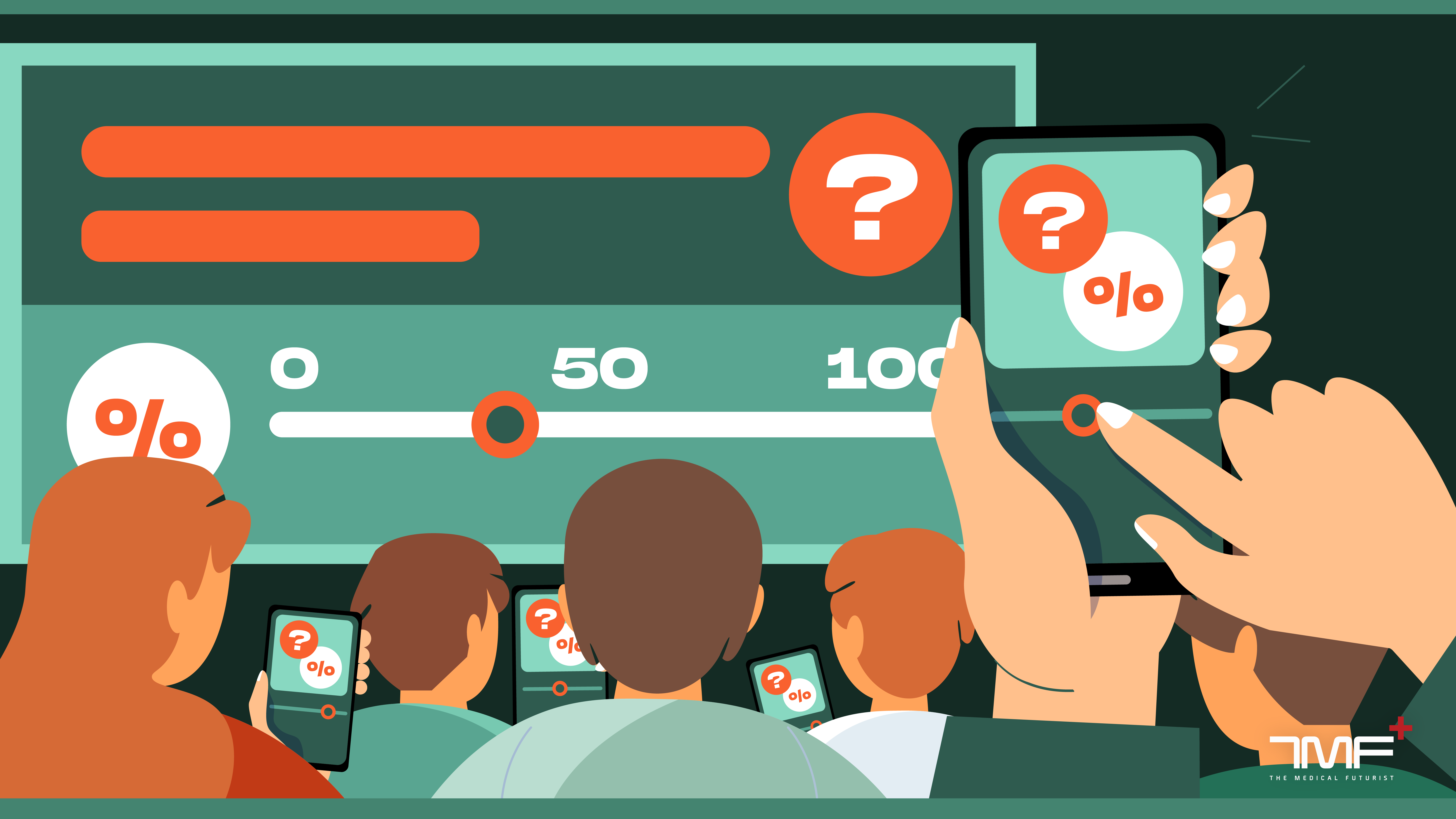
In the absolute simplest terms, forecasting is about asking incredibly precise and well-designed questions and then providing a probability between 0 and 100 about its outcome.

“Will the US FDA’s official database contain more than 1000 AI-based technologies by the end of 2024?”
Based on the current number of approved technologies (882) and the increasing frequency of database updates – they used to update the data every October, but suddenly added an extra, six-month update in May – we might assign a probability of 71%.
Let’s see how you use forecasts and bring this knowledge to your group, business, company, or institution
1) Ask the right question
There are a handful of typical mistakes in forecasting, but not asking the right question tops the list. Let’s see what it means.
“Will AI be used in healthcare?” – well, this is certainly a good question for a dinner party chat with friends, but way too broad and unspecific for forecasting purposes. You can snap-answer yes, and move on – but gain nothing meaningful from it. So we need to get more specific.
“Will AI be used in healthcare in the US by the end of 2025?” – slightly better, but still not specific enough about the scope or nature of AI use.
“Will AI diagnostic tools be used in healthcare in the US by the end of 2025?” – this is more specific but lacks clarity on the extent and availability.
“Will AI diagnostic tools be used by at least one hospital in the US by the end of 2025?” Now we are getting somewhere. This question is specific, focuses on a particular type of AI application (diagnostic tools), includes a clear timeframe, and considers the scope of accessibility.
By refining questions in this manner, we get closer and closer to useful, act-upon insights.
2. Mastering probability
Estimating probabilities is the cornerstone of effective forecasting. Here are some practical tips and tricks to sharpen your forecasting skills.
Use historical data
Analyze historical data relevant to your question. Look for trends, patterns, and anomalies that can inform your predictions. For example, if forecasting flu season severity, review past flu season data and consider variables like weather patterns and vaccination rates.
Break down the problem into smaller chunks
Decompose complex questions into smaller, manageable parts. For example, if predicting the likelihood of a new healthcare policy being implemented, break it down into factors like political support, public opinion, and funding availability.
Think in probabilities
Avoid binary thinking (yes/no, will/won’t happen). Instead, assign probabilities to different outcomes. For example, instead of predicting that a drug will either pass or fail clinical trials, estimate a 70% chance of passing and a 30% chance of failing.
Consider the outside view
Use the “outside view” by comparing your question to similar past events. This helps avoid overconfidence and provides a broader context. For example, if predicting the success of a new medical device, look at the success rates of similar devices in the past.
Update your forecasts with new information
Continuously update your forecasts as new information becomes available. This might include recent studies, changes in regulations, or new expert opinions. Adjusting your probabilities with new data improves accuracy. Many “beginner forecasters” think that once you make your prediction, you are done, and consider adjusting their valuation as cheating. However, the opposite is true: regularly revising questions and reevaluating our expectations in light of recent developments helps you keep your feet on the ground.
Avoid cognitive biases
Be aware of common cognitive biases that can affect forecasting, such as confirmation bias (favoring information that confirms your beliefs) and anchoring (relying too heavily on the first piece of information). Practice critical thinking and question your assumptions. Also, be aware of areas where your judgment might be less objective, and make a conscious effort to adjust.
Practice regularly
Like any skill, forecasting improves with practice. Engage in regular forecasting exercises, participate in forecasting tournaments, and take advantage of online platforms like the Good Judgment Open to practice and refine your skills.
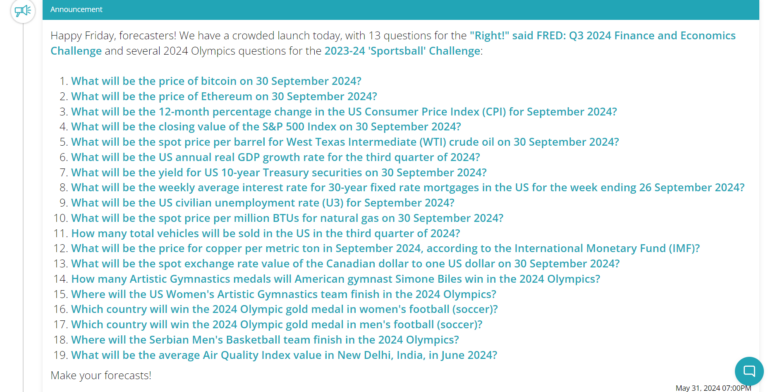
If you are interested in other practicing opportunities, there is a brilliant book, titled Superforecasting, from the founders of the Good Judgment Project.
In this first article of our series on predicting the future of healthcare, we’ve introduced you to the concept of forecasting. As we’ve explored, it is not about eliminating uncertainty but rather about handling it.
By understanding and applying futures methods, you can enhance your anticipatory consciousness, which, in turn, will help in making informed decisions. As we progress, you’ll discover many additional techniques, tools, and resources to enhance your predictive capabilities, by continuously learning, refining, and adapting.