How Does a BRCA Genetic Test Work? – The Dante Labs Review
Dante Labs offered me their BRCA genetic test, which I gladly accepted as I never had an evaluation focused on my BRCA1 and BRCA2 genes. These are very important as their mutations increase the risk of breast cancer and ovarian cancer in women, and prostate cancer in men. Here is my verdict.

7 min | · Updated

|
THIS ARTICLE HAS NOT BEEN UPDATED SINCE 2017. THE INFORMATION SHARED IN THE ARTICLE WAS ACCURATE AT THE TIME OF ITS PUBLICATION, BUT IT MAY BE OUT OF DATE NOW. BROWSE OUR LATEST ARTICLES HERE |
Dante Labs offered me their BRCA genetic test, which I gladly accepted as I never had an evaluation focused on my BRCA1 and BRCA2 genes. These are very important as their mutations increase the risk of breast cancer and ovarian cancer in women, and prostate cancer in men. Here is my verdict.
The Angelina effect and why BRCA genes matter
The concept and practice of BRCA genetic testing became extremely popular after Hollywood actress Angelina Jolie publicized her results in 2013 alongside her decision to undergo a double mastectomy. A merciless but effective way to avoid getting breast cancer. Researchers even found that many women rushed to genetic testing the days after her announcement. The “Angelina effect” was so strong that based on insurance claims for nearly 10 million women aged 18 to 64, BRCA testing rose 64 percent in the US in the 15 days after Jolie described her BRCA results and surgery.

Although that was the outcome of an overhyped event, it is worth looking at what risks are associated with BRCA genes and what a BRCA genetic test can tell a tester. As described on the website of the US National Cancer Institute, BRCA1 and BRCA2 are genes producing tumor suppressor proteins, which help repair damaged DNA. When either of these genes is mutated or altered, such that its protein product either is not made or does not function correctly, DNA damage may not be repaired properly. As a result, cells are more likely to develop additional genetic alterations that can lead to cancer.
Together, BRCA1 and BRCA2 mutations account for about 20-25 percent of hereditary breast cancers; and about 5-10 percent of all breast cancers, which means a quite elevated risk. These numbers are even higher in the case of ovarian cancers: mutations in BRCA1 and BRCA2 account for 15 percent of that cancer type overall. Looking at prostate cancer cases, Prostate Cancer UK found that only 0.44 percent and 1.2 percent of such cases carry mutations in BRCA1 and BRCA2 respectively. So, while the risk of prostate cancer increases with these mutations, most of the prostate cancer cases are not linked to BRCA1 or BRCA2 mutations. That’s one of the reasons why I decided that instead of me undergoing the Dante Labs genetic test, I will ask an enthusiastic female volunteer.
Should everyone rush to get a BRCA genetic test?
Before going into the details how Dante Labs’ test performed, I must set some things straight. As every other genetic test, also the pioneering BRCA tests cannot tell anyone for sure whether they will get cancer in the future, it only talks about risks. No matter that the method was already introduced in 1996, new studies come along every year which might change what the test results mean. That’s why it is very important to interpret the results appropriately, with the help of a genetic counselor. Moreover, the Stanford Cancer Institute created an online decision tool for women to help them analyze cancer risks. It is especially important since such irreversible medical procedures might follow as removing ovaries or breasts.
Also, I would rather recommend the test for those in whose families breast cancer is already present; as harmful BRCA1 or BRCA2 mutations can be inherited from a person’s mother or father. The US National Cancer Institute says that a child of a parent who carries a mutation in one of these genes has a 50 percent chance (or 1 chance in 2) of inheriting the mutation. Luckily, you can already assess online with various risk calculators e.g. here or here whether you might even carry BRCA risks before testing.
But if you find out that you might have an elevated risk for having harmful BRCA1 or BRCA2 mutations, you can take a genetic test at several laboratories. The most famous and oldest company for providing BRCA genetic testing is Myriad Genetics, but you might look up Ambry Genetics, GeneDx – or of course Dante Labs.

Dante Labs and their genetic test
The company works with leading genetic labs in the United States, Europe, and Asia; and partnered with Harvard University, Amazon, the Global Alliance for Genomics & Health or Privacy Shield Framework. Their technology is based on next generation sequencing (NGS), for which Illumina provides the appropriate technology.
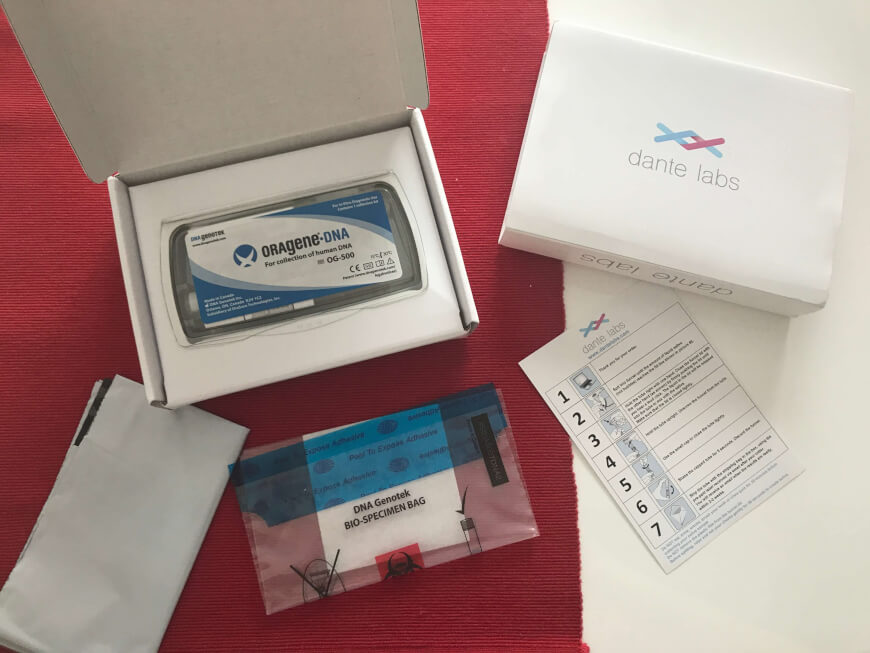
Dante Labs promises to send you the BRCA testing kit within 2-3 business days after having placed your order for $349. When you get your package, you only have to do a simple cheek swab test, and send it back to the company. As I already had several experiences with genetic testing – I reviewed Navigenics, Pathway Genomics, Gentle Lab, and Futura Genetics (here) –, I have to say the results came back after too much waiting. For Dante Labs, it took eight weeks to send back the results in .pdf format. Alongside the document, I received the raw data what is beneficial as you can further analyse the secrets of your genes.
The results are thorough but difficult to analyse
Although I don’t have the means to check the efficiency of the genetic analysis, as they work together with certified labs, I have no doubt about the accuracy of the results. When we looked at the results with our anonymous test person, we actually looked into two documents. The first .pdf provides a basic description of the BRCA1 and BRCA2 genes and a very detailed scientific explanation of the results with all kinds of specific indicators and markings, which was very difficult to make sense of. I had to ask for the help of a genetic counselor to understand whether the findings have any risks.
On the other hand, the second .pdf included an explanation in plain language about the possible consequences of the findings. According to which, our anonymous tester has a 12-13 percent risk of developing breast and ovarian cancer during her lifetime. It is considered to be equal to that of a woman in the general population.
I appreciated Dante Labs approach towards the results, though. They acknowledge that these results are never definitive as they only represent the current stage of science. The company specified in the results that they found some “unusual change” or “variant” classified as of unknown significance. This means that there is a portion of the gene that looks different from the way it’s normally expected to be. However, researchers haven’t confirmed whether this variant is a harmless change or a risk factor. Dante Labs reaffirmed that these variants remain on a “watch list” as researchers collect information to determine whether people who have it are at increased cancer risk.

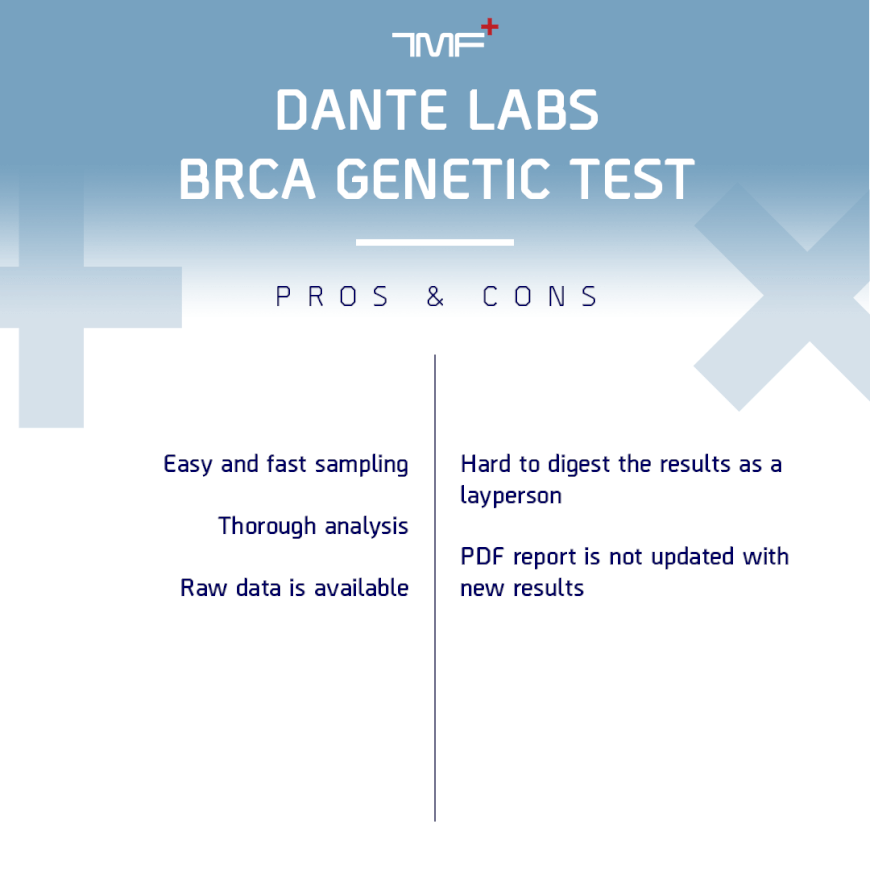
All in all, the Dante Labs BRCA testing process is easy coupled with fast sampling. The company provides a thorough analysis and the raw data, but the results are hard to digest for the average person and the .pdf report is not updated with the latest results. Otherwise, I recommend everyone to get around BRCA or any other genetic tests cautiously and assess the results with the utmost care involving medical professionals and genetic counselors.
Subscribe To The Medical Futurist℠ Newsletter
- News shaping the future of healthcare
- Advice on taking charge of your health
- Reviews of the latest health technology
|
At The Medical Futurist, we are building a community for making a bold vision about the future of healthcare reality today. If you’d like to support this mission, we invite you to join The Medical Futurist Patreon Community. A community of empowered patients, future-oriented healthcare professionals, concerned health policymakers, sensible health tech developers, and enthusiastic medical students. If there were ever a time to join us, it is now. Every contribution, however big or small, powers our research and sustains our future. Click here to support The Medical Futurist from as little as $3 – it only takes a minute. Thank you. |