Exoskeletons: Robotic Structures Making Paralyzed People Walk Again
A paraplegic man made the first kick of the World Cup in Brazil in 2014; another paralyzed man was able to move all four of his limbs through mind-control, and yet another could walk down the aisle with the love of his life due to robotic structures called exoskeletons. These are just a few mind-blowing and heart-warming stories about their current power, but they haven’t reached their full potential yet. We looked around what exoskeleton technology can do today and what it promises for tomorrow.

10 min | · Updated
|
THIS ARTICLE HAS NOT BEEN UPDATED SINCE 2019. THE INFORMATION SHARED IN THE ARTICLE WAS ACCURATE AT THE TIME OF ITS PUBLICATION, BUT IT MAY BE OUT OF DATE NOW. BROWSE OUR LATEST ARTICLES HERE |
A paraplegic man made the first kick of the World Cup in Brazil in 2014; another paralyzed man was able to move all four of his limbs through mind-control, and yet another could walk down the aisle with the love of his life due to robotic structures called exoskeletons. These are just a few mind-blowing and heart-warming stories about their current power, but they haven’t reached their full potential yet. We looked around what exoskeleton technology can do today and what it promises for tomorrow.
Exoskeleton becomes as real as a donut
Remember the huge mechanic beasts fighting against the indigenous people on moon Pandora in Avatar? Or what about Tom Cruise extending his powers by exosuits in The Edge of Tomorrow or Matt Damon ‘getting a way out’ by turning into a robotic structure himself in Elysium? Science fiction movies fantasized about ways to give fragile humans more muscle power, protection, and endurance through metallic solutions for years – until they finally appeared in the form of exoskeletons.
These are basically robotic structures that are attached to the joints in order to substitute muscle power when it’s needed. The mobile frameworks contain a computer in the backpack that can power the robotic components for hours. Their aim is to provide back, shoulder, waist, and thigh support, sense the user’s motion, and assist movement for lifting and holding heavy items while lowering back stress. The first prototypes couldn’t really mimic the way we walk but they are definitely getting better, the elements are getting thinner, their energy source is getting stronger, and as the latest news showed they can be mind-controlled by now.
While they seem to be easy to make, mechanical engineers have serious challenges to overcome: how do you supply enough power to the structure? How will you ensure joint flexibility? How do you detect and control invalid movements? How do you decrease the weight of the components so that it won’t be too heavy to wear for a long time? How do you customize them? And finally, how do you make them easier to adapt to? At the moment, it takes serious effort from the user: typical patients need between 20-70 sessions to learn how to use these wearable robots.
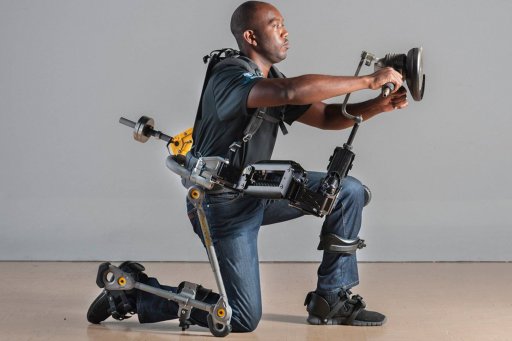
Still, we believe these mobile frameworks have a bright future in giving back the sense of movement for the paralyzed, in assisting doctors during long hours of surgery, or even keeping pensioners longer in blue-collar jobs requiring heavy lifting. Let’s break down their potential here.
Miraculous help for the paralyzed
115 million – that’s the number of steps that the exoskeletons of Ekso Bionics, a California-based company founded in 2005, helped paralyzed people take that otherwise would not have been possible. Their robotic structures are used by individuals with various degrees of paralysis stemming by a variety of causes, but mainly spinal cord injury, as well as by various industry players for strength enhancing purposes. Its Ekso GT suit won FDA approval in 2015.
Russ Angold, Chief Technology Officer of Ekso Bionics told The Medical Futurist that ‘it is really interesting that we had over 3000 different individuals in our database in less than 2 years. The device is helping a lot of people who otherwise could not work, or their therapy would take a long time. Our job is giving them the technology that allows them to stay healthy and live a full life.’ Angold pointed out that any new technology faces obstacles, and that paralysis can be emotionally trying for patients. While the company is careful not to overpromise what the device can do, they are working to gain great acceptance among medical professionals and patients who can benefit from their exoskeletons.
Another great company with inspiring human stories is Israel’s ReWalk Robotics. Dr. Amit Goffer founded the company in 2001, following a life-altering accident that rendered him a quadriplegic. He pioneered the invention and the development of the ReWalk Robotics wearable exoskeleton, enabling individuals with lower-limb paralysis to walk again. Even though the technology does not currently enable him to walk again due to the extent of his injuries, his tenacity to develop a wearable exoskeleton so that others could walk paved the way for the ReWalk Rehabilitation and Personal systems to be used by more than 1,000 people around the world today. By now, the FDA also appreciated the company’s operation: it approved the ReWalk Personal System in 2014.
Exoskeleton technology skyrockets
In the last years, the number of companies with the aim to create exoskeletons that can help the paralyzed has multiplied. Countless examples can be mentioned here. In 2018, Japanese robotics company Cyberdyne has received approval from the FDA to make its lower-body exoskeleton, known as Hybrid Assisted Limb or HAL, available to U.S. patients.
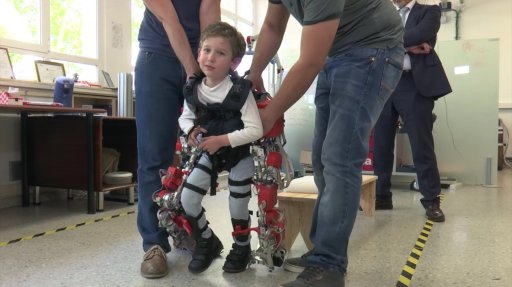
Italian engineers at the Perceptual Robotics Laboratory developed what they called a Body Extender, a robot that can help move heavy objects as an exoskeleton by lifting about 50 kilograms in each of its hands. However, teams at Swiss companies Hocoma and Reha Technology are also working on robotic structures helping those in need, and a lot more startups are joining them all around Europe. For example, a French startup, Wandercraft, developed an exoskeleton to allow users to walk hands-free, or Spanish Marsi Bionics has been working on a wearable gait structure specifically designed for children with neuromuscular diseases.
Now, that’s just the beginning of the glorious conquest of the exoskeleton market. Researchers estimate that the global market is already worth more than $125.6m and generates well over $100m in revenue each year, but its size is expected to hit nearly $1.9bn by 2025.
Robot-powered surgeons and…
These metallic structures can not only help stroke or spinal cord injury patients, but they could also greatly support the medical staff. Imagine the emergency rescue team moving away huge rocks covering people under collapsed buildings, nurses carrying around heavy patients more easily, or doctors assisted by exoskeletons enduring long hours of surgery.
When a surgeon in the US who currently uses a wheelchair applied for health insurance coverage of an exoskeleton, the health plan initially denied it. But a review board determined that the exoskeleton was necessary because it allowed the doctor to walk thus ruled that the exoskeleton was “medically necessary”. The ReWalk robotic exoskeleton costs $69,500 and the decision could be a major turning point for people with spinal cord injuries, as well as for members of the medical staff who believe using an exoskeleton in their work could make a difference.
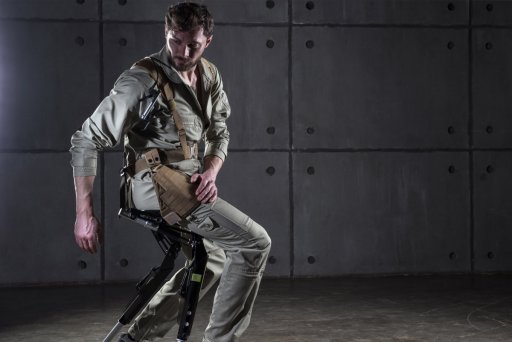
And it definitely started to have an influence. In March 2019, doctors in a Southern Russian hospital said they had the first surgery in Europe with the help of exoskeletons. ExoChair, developed with help from Sberbank’s robotics division, is designed to support the lower limbs and pelvic region to help reduce fatigue and improve efficiency. The exoskeleton was used by doctors during a 12-hour urological surgery. We believe more examples like these are likely to line up in medical institutions soon.
…exosuited nurses
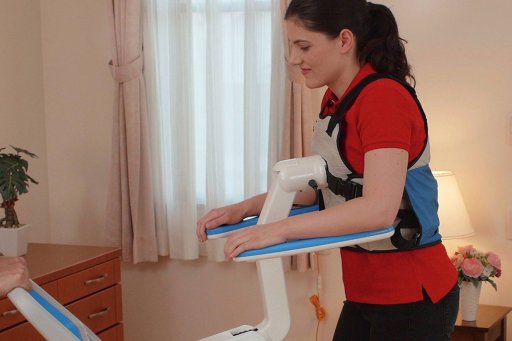
Not only doctors but also nurses could benefit from the gentle metallic beasts. For instance, Keijiro Yamamoto and his team at the Kanagawa Institute of Technology in Japan have designed and built a prototype “power suit” with a jointed metal framework that straps on to the wearer’s limbs in order to literally take the burden off the shoulders (and backs) of nurses. The main role of the Power Assist Suit is helping nurses and physiotherapists lift patients on and off beds. In tests, a nurse weighing 64 kilograms was able to pick up and carry a patient weighing 70 kilograms. As for example, only in the National Health Service in the UK, 3600 nurses have to take time off work because of back problems every year, exoskeletons could mean a huge relief.
In 2019, a group of professionals conducted an experiment at Tampere University on how nurses regard the use of exoskeleton vests. While the perception of the metallic structures is rather positive generally – as nurses believe that the aids that they can use currently are less reliable and they tend to turn to technology -, the feelings after the experiment towards the exoskeletons were mixed. They believed that the structures still need to be developed: to be as easy to wear and as light as possible beyond being one-hundred-percent reliable. Plus, nurses need to get used to the exoskeletons as nursing students who haven’t got so much experience could adapt to them more easily than those who were already adjusted to using their own methods when dealing with patients.
The future holds pensioners in exoskeletons
Still, we believe that due to their potential and the exponential drop in the price in the next years, exoskeletons will become truly widespread soon. So much so, that The Medical Futurist even expects himself to board a spaceship to Mars in an exoskeleton upon reaching the age of one-hundred.
And we don’t even have to wait so long. Rogier Barents, the founder of Dutch Laevo Delft believes that in 10 years every household will have some sort of exoskeleton type solution. Gaurav Genani, the founder of another Dutch exoskeleton startup, SkelEx, also thinks that ‘in 10 years, powered exoskeletons that augment human strength substantially should be commonplace. In 25 years wearable technologies should have evolved exponentially, resulting in a fusion of advanced materials, sensors, and actuators with the human body’.
So, these metallic structures will be used for assembling complicated products, such as aircraft, lifting heavy machinery, packages or even humans around in various industries. For example, even the state-owned French railway company is developing a versatile exoskeleton, which will aid workers from the risk of physical ailments. The exoskeletons, an articulated brace developed in an “innovation partnership” with the specialist company Ergosanté Technologie, has been designed to assist in the maintenance of the trains, and offers support in maintaining three positions by mechanical means: the cervical when the worker looks upwards, the posture of the arms in the air and the bending of the trunk forward.
And thinking even further outside the box, imagine how exoskeletons could help our aging societies. They could aid pensioners to keep their jobs longer as physical strength and endurance will not be a limitation to working anymore. And imagine the entire universe of exoskeletons linked to the ultimate aim of developments: brain-control. What perspectives could be opened for healthy people when wearing exoskeletons, especially brain-controlled ones? Could we end up at the first stage of cyborgization? We very easily believe so.
So, the above examples? Just the very beginning.
|
At The Medical Futurist, we are building a community for making a bold vision about the future of healthcare reality today. If you’d like to support this mission, we invite you to join The Medical Futurist Patreon Community. A community of empowered patients, future-oriented healthcare professionals, concerned health policymakers, sensible health tech developers, and enthusiastic medical students. If there were ever a time to join us, it is now. Every contribution, however big or small, powers our research and sustains our future. Click here to support The Medical Futurist from as little as $3 – it only takes a minute. Thank you. |